
Business
“Could a Tweet Start a War?” – Implications of the 2020 Twitter Hack


On July 15, 2020, the social media world received a shock as a number of high-profile Twitter accounts were hacked in what Twitter referred to as a “social engineering attack”. Among the targets were the verified accounts of billionaires Bill Gates, Jeff Bezos and Elon Musk, as well as major political figures Barack Obama and Joe Biden. The coordinated attack has been identified as an elaborate Bitcoin scam, with the hacked accounts all sharing a variation of a similar message promising the public doubled funds in return for sending $1,000 Bitcoin within a 30 minute window.
Twitter responded rapidly, removing the false tweets and suspending activity on a number of verified accounts while launching a full investigation. However, the incident has raised a number of concerns regarding cyber security and the potential dangers of a significant social platform with a major public following being turned into a forum for a personal political agenda.
With debates surrounding the Coronavirus and the Black Lives Matter movement continuing to dominate the social and political spheres around the world, social responsibility for celebrities and influencers remains at an all time high. In a digital world where the line between fact and fiction is often blurred and information travels entire continents in the blink of an eye, the Internet does not forgive, and it never forgets. In this reality, social channels such as Facebook and Twitter carry significant political weight. Statements by influential public figures absolutely have the power to fuel controversy, incite public action, bring people together or deepen the divide.
According to Brandwatch, a total of 1.3 billion accounts have been created since Twitter’s inception, and there are approximately 330 million active monthly users, with 145 million users active daily. The combined public reach of the impacted accounts is extensive, with some of the largest audiences including Barack Obama’s 120.6 million followers and Bill Gates 51.2 million.
With this kind of reach, the potential for the rapid dissemination of false information, negative narratives and damaging statements is untold. Although President Donald Trump was not among the accounts accessed, users have highlighted the dangerous possibilities if ever hackers were to gain access to Trump’s account for more malicious purposes than a Bitcoin scam.
Twitter user @DotDotDot_John says, “A hacker could take over his account and say ANYTHING damaging both foreign and domestically. The possibilities are endless. The ramifications could be catastrophic.”
Another user, @Jar0fGhosts asks, “What if @realDonaldTrump’s account had been hacked, and a message was posted that the US is launching an attack on China, Russia, or North Korea? What would be their immediate response? Could a tweet start a war?”
As Twitter works to contain the situation and undo the damage of yesterday’s incident, the public continues to debate the frightening potential of social media as a political weapon, adding #twitterhacked to 2020’s already outrageous timeline.
For more stories, see Todayville Calgary.


From LifeSiteNews
By Matt Lamb
They got rid of all the older children essentially and just had younger children who were too young to be diagnosed and they stratified that, stratified the data
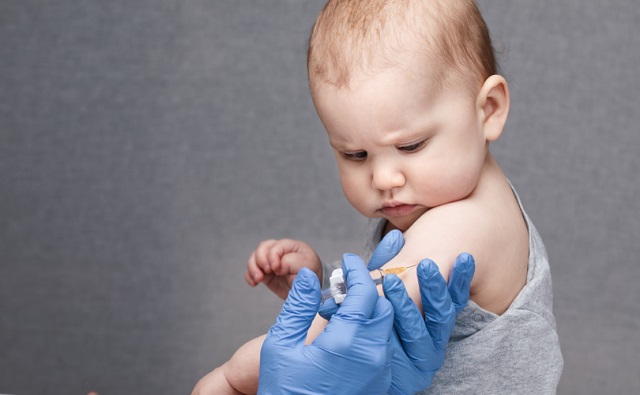
The Centers for Disease Control and Prevention (CDC) found newborn babies who received the Hepatitis B vaccine had 1,135-percent higher autism rates than those who did not or received it later in life, Robert F. Kennedy Jr. told Tucker Carlson recently. However, the CDC practiced “trickery” in its studies on autism so as not to implicate vaccines, Kennedy said.
RFK Jr., who is the current Secretary of Health and Human Services, said the CDC buried the results by manipulating the data. Kennedy has pledged to find the causes of autism, with a particular focus on the role vaccines may play in the rise in rates in the past decades.
The Hepatitis B shot is required by nearly every state in the U.S. for children to attend school, day care, or both. The CDC recommends the jab for all babies at birth, regardless of whether their mother has Hep B, which is easily diagnosable and commonly spread through sexual activity, piercings, and tattoos.
“They kept the study secret and then they manipulated it through five different iterations to try to bury the link and we know how they did it – they got rid of all the older children essentially and just had younger children who were too young to be diagnosed and they stratified that, stratified the data,” Kennedy told Carlson for an episode of the commentator’s podcast. “And they did a lot of other tricks and all of those studies were the subject of those kind of that kind of trickery.”
But now, Kennedy said, the CDC will be conducting real and honest scientific research that follows the highest standards of evidence.
“We’re going to do real science,” Kennedy said. “We’re going to make the databases public for the first time.”
He said the CDC will be compiling records from variety of sources to allow researchers to do better studies on vaccines.
“We’re going to make this data available for independent scientists so everybody can look at it,” the HHS secretary said.
— Matt Lamb (@MattLamb22) July 1, 2025
Health and Human Services also said it has put out grant requests for scientists who want to study the issue further.
Kennedy reiterated that by September there will be some initial insights and further information will come within the next six months.
Carlson asked if the answers would “differ from status quo kind of thinking.”
“I think they will,” Kennedy said. He continued on to say that people “need to stop trusting the experts.”
“We were told at the beginning of COVID ‘don’t look at any data yourself, don’t do any investigation yourself, just trust the experts,”‘ he said.
In a democracy, Kennedy said, we have the “obligation” to “do our own research.”
“That’s the way it should be done,” Kennedy said.
He also reiterated that HHS will return to “gold standard science” and publish the results so everyone can review them.
From LifeSiteNews
By Robert Jones
The Tesla CEO warned that Trump’s $5 trillion plan erases DOGE’s cost-cutting gains, while threatening to unseat lawmakers who vote for it.
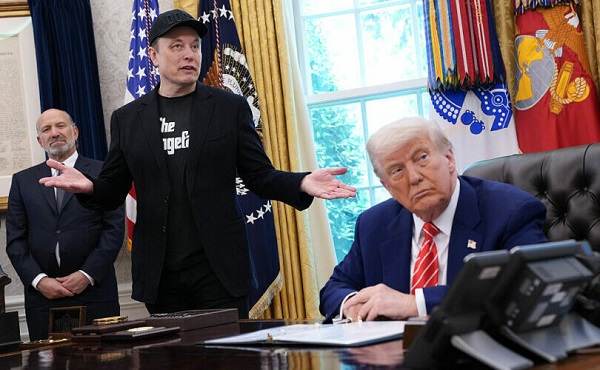
Elon Musk has reignited his feud with President Donald Trump by denouncing his “Big Beautiful Bill” in a string of social media posts, warning that it would add $5 trillion to the national debt.
“I’m sorry, but I just can’t stand it anymore. This massive, outrageous, pork-filled Congressional spending bill is a disgusting abomination. Shame on those who voted for it: you know you did wrong. You know it,” Musk exclaimed in an X post last month.
I’m sorry, but I just can’t stand it anymore.
This massive, outrageous, pork-filled Congressional spending bill is a disgusting abomination.
Shame on those who voted for it: you know you did wrong. You know it.
— Elon Musk (@elonmusk) June 3, 2025
Musk renewed his criticism Monday after weeks of public silence, shaming lawmakers who support it while vowing to unseat Republicans who vote for it.
“They’ll lose their primary next year if it is the last thing I do on this Earth,” he posted on X, while adding that they “should hang their heads in shame.”
Every member of Congress who campaigned on reducing government spending and then immediately voted for the biggest debt increase in history should hang their head in shame!
And they will lose their primary next year if it is the last thing I do on this Earth.
— Elon Musk (@elonmusk) June 30, 2025
The Tesla and SpaceX CEO also threatened to publish images branding those lawmakers as “liars.”
Trump responded on Truth Social by accusing Musk of hypocrisy. “He may get more subsidy than any human being in history,” the president wrote. “Without subsidies, Elon would probably have to close up shop and head back home to South Africa… BIG MONEY TO BE SAVED!!!”
( @realDonaldTrump – Truth Social Post )
( Donald J. Trump – Jul 01, 2025, 12:44 AM ET )Elon Musk knew, long before he so strongly Endorsed me for President, that I was strongly against the EV Mandate. It is ridiculous, and was always a major part of my campaign. Electric cars… pic.twitter.com/VPadoTBoEt
— Donald J. Trump 🇺🇸 TRUTH POSTS (@TruthTrumpPosts) July 1, 2025
Musk responded by saying that even subsidies to his own companies should be cut.
Before and after the 2024 presidential election, Musk spoke out about government subsidies, including ones for electric vehicles, stating that Tesla would benefit if they were eliminated.
This latest exchange marks a new escalation in the long-running and often unpredictable relationship between the two figures. Musk contributed more than $250 million to Trump’s reelection campaign and was later appointed to lead the Department of Government Efficiency (DOGE), which oversaw the termination of more than 120,000 federal employees.
Musk has argued that Trump’s new bill wipes out DOGE’s savings and reveals a deeper structural problem. “We live in a one-party country – the PORKY PIG PARTY!!” he wrote, arguing that the legislation should be knows as the “DEBT SLAVERY bill” before calling for a new political party “that actually cares about the people.”
It is obvious with the insane spending of this bill, which increases the debt ceiling by a record FIVE TRILLION DOLLARS that we live in a one-party country – the PORKY PIG PARTY!!
Time for a new political party that actually cares about the people.
— Elon Musk (@elonmusk) June 30, 2025
In June, Musk deleted several inflammatory posts about the president, including one claiming that Trump was implicated in the Jeffrey Epstein files. He later acknowledged some of his comments “went too far.” Trump, in response, said the apology was “very nice.”
With the bill still under Senate review, the dispute underscores growing pressure on Trump from fiscal hardliners and tech-aligned conservatives – some of whom helped deliver his return to power. Cracks in the coalition may spell longer term problems for the Make America Great Again movement.


What Connor Should Say To Oilers: It’s Not You. It’s Me.
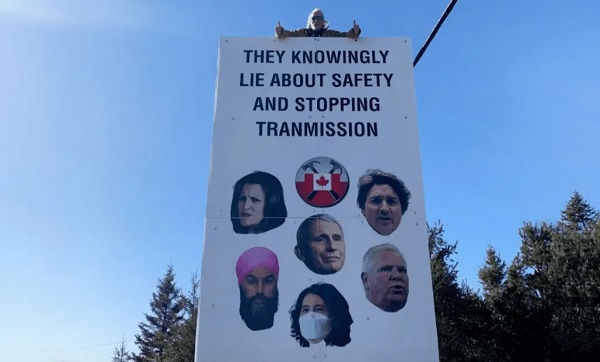
Ontario man launches new challenge against province’s latest attempt to ban free expression on roadside billboards
Federal fiscal anchor gives appearance of prudence, fails to back it up
The Passage of Bill C-5 Leaves the Conventional Energy Sector With as Many Questions as Answers
-
COVID-191 day ago
Ontario man launches new challenge against province’s latest attempt to ban free expression on roadside billboards
-
 Energy2 days ago
This Canada Day, Celebrate Energy Renewal
-
 COVID-1914 hours ago
New Peer-Reviewed Study Affirms COVID Vaccines Reduce Fertility
-
 Business10 hours ago
Ottawa Funded the China Ferry Deal—Then Pretended to Oppose It
-
 Alberta1 day ago
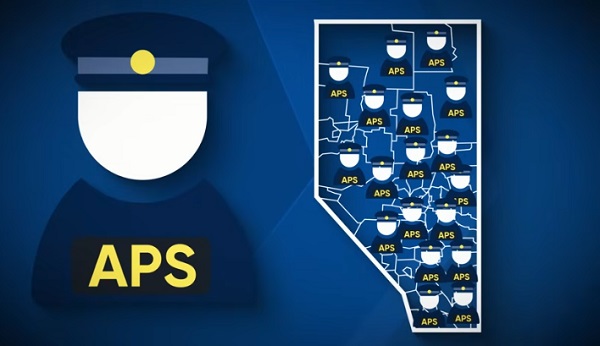
Alberta Next Takes A Look At Alberta Provincial Police Force
-
 Alberta2 days ago
Canadian Oil Sands Production Expected to Reach All-time Highs this Year Despite Lower Oil Prices
-
 MAiD12 hours ago
Canada’s euthanasia regime is not health care, but a death machine for the unwanted
-
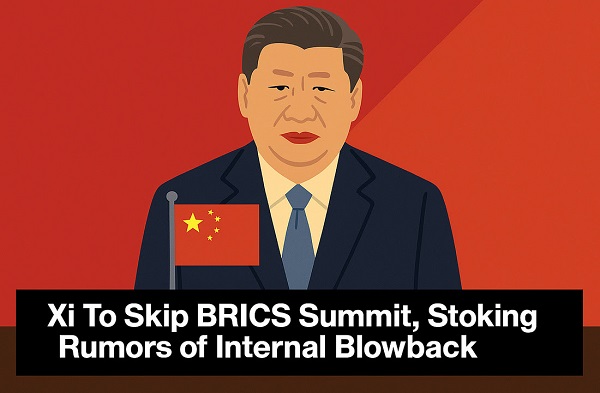 International2 days ago
President Xi Skips Key Summit, Adding Fuel to Ebbing Power Theories