
Calgary
You Don’t Realize This, But You Do Have Faith, Just Like The Rest of Us


The human Ego is a fascinating force for both good and evil. Ego can drive someone’s greed, or it can drive innovation. It can cause destruction, or protect against it. Your ego is like a firearm, it’s only dangerous if you use it with hostile intentions, against good people.
Out of control, our Ego will demand that we be “right”, and will savagely resist being proven wrong. A weak Ego will cause us to brag about our accomplishments, and be offended when our weaknesses are exposed. A weak Ego will feel pain when our friends improve their lives, or outshine us. Instead of cheering you on, people with a weak ego will diminish your accomplishments so as to preserve their own identity.
Ego is a force amplifier for ignorance. Ignorance is the rejection of information, without examination…which is sometimes exhibited as faith.
Our personal belief system is almost entirely faith based, though most would argue vehemently otherwise, as if they were defending their children from a vicious animal. Most people like to think that their beliefs and decisions are based on logic, science, and previous experience, though that is rarely true. The truth is, upon close examination, our decisions are made largely based on our trust, or faith in what we believe to be a credible source.
Sources of faith:
- Our own judgement
- Our perception of what constitutes Science
- People with what we perceive to be “credentials”
- Books
- Gut instinct (intuition)
- The intuition of others
- Others who inspire confidence
- Our perception of history
- Our perception of our own personal experiences
- Those in authority
- The “News” from sources we judge to be “credible”
Social media is chaulked full of statements of “fact”, which are exclaimed as the unblemished “truth”. Often the phrase “credible sources” is used as a baton to beat senseless, those who question the validity of the sources. How short our memory seems to be, when our “credible sources” get it dead wrong time and time again, yet we continue to give credence to their blathering.
My question I’m asking you to ponder is this: What do you REALLY know for certain? If you were to make a list, it may look something like this:
- The world is a rotating sphere, in orbit around the sun, and is the 3rd rock from the sun.
- I am a human being
- Science is reliable and trustworthy
- Most Medical Doctors have our best interests at heart
- Perpetual motion is impossible
- Free energy does not exist
- The Covid19 Virus is very dangerous, and I should be afraid for myself and others
- Gravity works
- Aliens are not real
Pick any of the above, or choose a “fact” of your own, and I will show you how you don’t actually “know”, but instead you are assuming the truth in your belief.
Lets try the first one, “The world is a rotating sphere, in orbit around the sun, and is the 3rd rock from the sun”. Is this a belief, or is it a fact? I personally believe it is true, and I can make a strong argument as to why I believe it is true, however I can not prove this to be true, and neither can you.
- I am not an astrophysicist
- I have never personally been to space
- I can not prove that pictures from space are real, and undoctored…because I did not take them myself.
- I can’t prove that I’m not experiencing a computer generated simulation, and that I myself am only a computer program.
Although I trust that the world is very likely a sphere, I can not prove it. Instead, I prefer to trust the accounts of Astronauts who have gazed from space in wonder at the glory of creation. They say that the planet is a sphere, and I choose to believe them. I choose to have faith in both their honesty, and the accuracy of their perceptions.

If your information is not first hand…then no matter what the topic, you are putting your faith in your sources. If you’re not the scientist who did the research, or performed the experiments, then you are simply reciting what you were told. You don’t know..you are acting out of faith. If you are listening to the scientist who didn’t do the research, or perform the experiments, then you are basing your opinions on the second hand information of someone who doesn’t actually know.
Soctrates was reported as saying, “The only true wisdom, is in knowing that you know nothing”.
Do I know for a fact that this quote is from Socrates? Nope. I don’t know for sure, but I agree with the sentiment all the same. I don’t speak ancient Greek, nor do I know of anyone who does. I have not verified the authenticity of the volume in which this quote was recorded, nor do I personally know anyone who has. I’m guessing. I’m placing my faith in the internet, but I do not know for sure.
Humans like to be certain. Certain of their environment, level of safety, and of their personal identity. Often, we mistake people with higher education as being more certain, but unfortunately, having more information in your brain, doesn’t mean you have a higher understanding of that information. Nor does having information necessarily mean you have the ability to be totally objective. Objectivity is a skill which is accumulated only by those who have a high level of self awareness, and have the ability to accept new information instead of rejecting it without examination.
RE: Covid 19: We don’t know what is true, and what is not. All we can do is our best, but we must be cautious about the motives of our Government during this crisis. Now is not the time for blind faith in Government, it is the time for critical oversight. People with power tend to expand their power at every opportunity. Power is the greatest aphrodisiac known to humankind, and Government power has expanded around the Globe at an alarming pace. Is this all for our own good? I hope so. I also believe that now is the time for vigilance, and critical thinking. The cost of not thinking for ourselves, could be more than any of us are willing to pay.
Asking questions comes at a price. You will be socially shamed, accused of being a conspiracy theorist, and told to put on your tin-foil hat. Just know, the attacks are being generated by weak Egos, which NEED to be certain, and can not tolerate the uncertainty which results from asking questions. It’s not a personal attack on you, it’s a defense of their own fragile Ego…though it certainly feels personal.
It is curiosity, not certainty which is the sign of higher intelligence. The great part, is that you can CHOOSE to be curious, just as you can choose to pretend to be certain. Neither choices require either a high IQ, nor an advanced education.
Which do you choose?
For more stories, visit Todayville Calgary
Why Many Military Veterans Aren’t Scared, Instead They Are Prepared



From LifeSiteNews
It is not yet clear if the flag motion applies to other flags, such as LGBT ones.
Western Canada’s largest city has put in place what amounts to a ban on politically charged flags from flying at city-owned buildings.
“Calgary’s Flag Policy means any country recognized by Canada may have their flag flown at City Hall on their national day,” said Calgary’s new mayor Jeromy Farkas on X last month.
“But national flag-raisings are now creating division. Next week, we’ll move to end national flag-raisings at City Hall to keep this a safe, welcoming space for all.”
The motion to ban foreign flags from flying at government buildings was introduced on December 15 by Calgary councilor Dan McLean and passed by a vote of 8 to 7. He had said the previous policy to allow non-Canadian flags to fly, under former woke mayor Jyoti Gondek, was “source of division within our community.”
“In recent months, this practice has been in use in ways that I’ve seen have inflamed tensions, including instances where flag raisings have been associated with anti-Semitic behavior and messaging,” McLean said during a recent council meeting.
The ban on flag raising came after the Palestinian flag was allowed to be raised at City Hall for the first time.
Farkas, shortly after being elected mayor in the fall of 2025, had promised that he wanted a new flag policy introduced in the city.
It is not yet clear if the flag motion applies to other flags, such as LGBT ones.
Despite Farkas putting forth the motion, as reported by LifeSiteNews he is very much in the pro-LGBT camp. However, he has promised to focus only on non-ideological issues during his term.
McLean urged that City Hall must be a place of “neutrality, unity, and respect” for everyone.
“When City Hall becomes a venue for geopolitical expressions, it places the city in the middle of conflicts that are well beyond our municipal mandates,” he said.
As reported by LifeSiteNews, other jurisdictions in Canada are considering banning non-Canadian flags from flying over public buildings.
Recently a political party in British Columbia, OneBC, introduced legislation to ban non-domestic government flags at public buildings in British Columbia.
Across Canada there has also been an ongoing issue with so-called “Pride” flags being raised at schools and city buildings.
From the Fraser Institute
By Tegan Hill and Austin Thompson
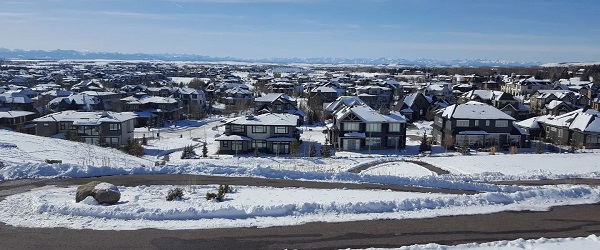
Calgary’s new mayor, Jeromy Farkas, has promised to scrap “blanket rezoning”—a policy enacted by the city in 2024 that allows homebuilders to construct duplexes, townhomes and fourplexes in most neighbourhoods without first seeking the blessing of city hall. In other words, amid an affordability crunch, Mayor Farkas plans to eliminate a policy that made homebuilding easier and cheaper—which risks reducing housing choices and increasing housing costs for Calgarian families.
Blanket rezoning was always contentious. Debate over the policy back in spring 2024 sparked the longest public hearing in Calgary’s history, with many Calgarians airing concerns about potential impacts on local infrastructure, parking availability and park space—all important issues.
Farkas argues that blanket rezoning amounts to “ignoring the community” and that Calgarians should not be forced to choose between a “City Hall that either stops building, or stops listening.” But in reality, it’s virtually impossible to promise more community input on housing decisions and build more homes faster.
If Farkas is serious about giving residents a “real say” in shaping their neighbourhood’s future, that means empowering them to alter—or even block—housing proposals that would otherwise be allowed under blanket rezoning. Greater public consultation tends to give an outsized voice to development opponents including individuals and groups that oppose higher density and social housing projects.
Alternatively, if the mayor and council reform the process to invite more public feedback, but still ultimately approve most higher-density projects (as was the case before blanket rezoning), the consultation process would be largely symbolic.
Either way, homebuilders would face longer costlier approval processes—and pass those costs on to Calgarian renters and homebuyers.
It’s not only the number of homes that matters, but also where they’re allowed to be built. Under blanket rezoning, builders can respond directly to the preferences of Calgarians. When buyers want duplexes in established neighbourhoods or renters want townhomes closer to work, homebuilders can respond without having to ask city hall for permission.
According to Mayor Farkas, higher-density housing should instead be concentrated near transit, schools and job centres, with the aim of “reducing pressure on established neighbourhoods.” At first glance, that may sound like a sensible compromise. But it rests on the flawed assumption that politicians and planners should decide where Calgarians are allowed to live, rather than letting Calgarians make those choices for themselves. With blanket rezoning, new homes are being built in areas in response to buyer and renter demand, rather than the dictates of city hall. The mayor also seems to suggest that city hall should thwart some redevelopment in established neighbourhoods, limiting housing options in places many Calgarians want to live.
The stakes are high. Calgary is not immune to Canada’s housing crisis, though it has so far weathered it better than most other major cities. That success partly reflects municipal policies—including blanket rezoning—that make homebuilding relatively quick and inexpensive.
A motion to repeal blanket rezoning is expected to be presented to Calgary’s municipal executive committee on Nov. 17. If it passes, which is likely, the policy will be put to a vote during a council meeting on Dec. 15. As the new mayor and council weigh changes to zoning rules, they should recognize the trade-offs. Empowering “the community” may sound appealing, but it may limit the housing choices available to families in those communities. Any reforms should preserve the best elements of blanket rezoning—its consistency, predictability and responsiveness to the housing preferences of Calgarians—and avoid erecting zoning barriers that have exacerbated the housing crisis in other cities.

Tegan Hill
Director, Alberta Policy, Fraser Institute

Austin Thompson


Death by a thousand clicks – government censorship of Canada’s internet

Chinese Billionaire Tried To Build US-Born Baby Empire As Overseas Elites Turn To American Surrogates
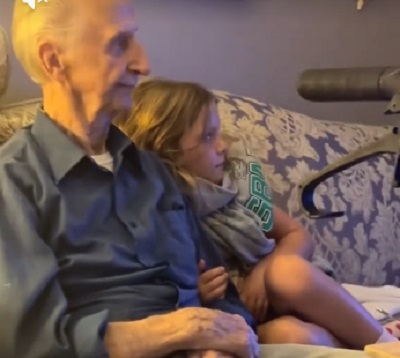
Viral TikTok video shows 7-year-old cuddling great-grandfather before he’s euthanized

Politicians should be honest about environmental pros and cons of electric vehicles
-
 Agriculture2 days ago
Why is Canada paying for dairy ‘losses’ during a boom?
-
 Alberta2 days ago
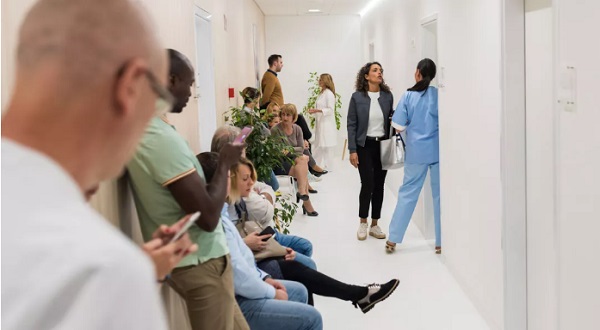
Alberta’s new diagnostic policy appears to meet standard for Canada Health Act compliance
-
 Bruce Dowbiggin1 day ago
Hunting Poilievre Covers For Upcoming Demographic Collapse After Boomers
-
 Business1 day ago
State of the Canadian Economy: Number of publicly listed companies in Canada down 32.7% since 2010
-
 Censorship Industrial Complex23 hours ago
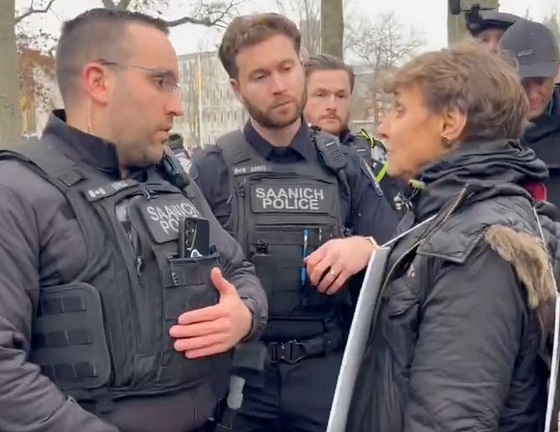
Canadian university censors free speech advocate who spoke out against Indigenous ‘mass grave’ hoax
-
 Alberta1 day ago
Housing in Calgary and Edmonton remains expensive but more affordable than other cities
-
 Censorship Industrial Complex2 days ago
Top constitutional lawyer warns against Liberal bills that could turn Canada into ‘police state’
-
 Digital ID2 days ago
Canadian government launches trial version of digital ID for certain licenses, permits