
Indigenous
There are no Indian Residential School denialists, so why criminalize them?

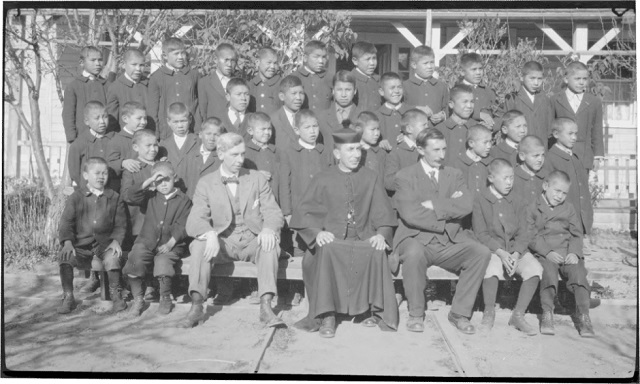
From the Frontier Centre for Public Policy
By Rodney A. Clifton, professor emeritus at the University of Manitoba and a senior fellow at the Frontier Centre for Public Policy. (He was a former Senior Boys’ Supervisor in Stringer Hall, the Anglican residence in Inuvik.)
” both sides agree that Indian Residential Schools existed, and that some children were harmed. But they disagree on the evidence needed to prove whether children were murdered and buried unceremoniously in residential schoolyards. “
In a recent Canadian Press story, Kimberly Murray, the government’s special interlocutor on unmarked graves of missing Indigenous children from residential schools, is reported as saying: “We could … make it an offense to incite hate and promote hate against Indigenous people by … denying that residential (schools) happened or downplaying what happened in the institutions.” Not surprisingly, the Liberal government of Prime Minister Justin Trudeau is sympathetic to the special interlocutor’s call to action.
Ms. Murray says that Indigenous leaders across the country support her call for legislation. The Assembly of Manitoba Chiefs (AMC), for example, asked the Justice Minister, Arif Virani, to amend the criminal code to criminalize denialism. AMC Grand Chief Cathy Merrick said that enacting such a law would provide “an opportunity for Canada to demonstrate an honest commitment to reconciliation…. to deny the existence of these institutions is a form of violence.”
The focus on missing and murdered Indigenous children at residential schools became a national disgrace at the end of May 2021 when the Kamloops First Nation announced that stories from Knowledge Keepers and evidence from ground-penetrating radar (GPR) had “discovered” the graves of 215 children in the schoolyard of the Kamloops Indian Residential School.
Since that announcement, first nations across the country have discovered many more “graves,” also relying on Knowledge Keepers stories and GPR evidence. But so far, no bodies of IRS students have been exhumed from the schoolyards, even though the Chief TRC Commissioner, Justice Murry Sinclair, told CBC Radio host Matt Galloway a couple of years ago that as many as 15,000 to 25,000 Indian Residential School students are missing.
Surprisingly, these claims are not included in the Truth and Reconciliation Commission (TRC) Report. In fact, only one story of a murdered child is reported in the TRC Report, and it is the unverified story told by Doris Young about seeing a child’s murder at the Anglican Elkhorn Indian Residential School in Manitoba. The Commission reported this alleged murder but did not investigate the claim. Indeed, the Commission spent $60 million over six years and did not report any evidence, other than the Doris Young’s claim, of the murder of Indigenous children at residential schools.
What does this mean for criminalizing denialism?
There are at least three problems with potential legislation to criminalize denialism. First, Canada already has legislation on hate speech, and so new legislation is unnecessary.
Second, the definition of “denialism,” as reported above, is so vague that it would be almost impossible to convict anyone.
Finally, and most importantly, from what can be gathered from both Ms. Murray’s interim report and recent news items, practically no Canadians deny that Indian Residential Schools existed or that some children were harmed at those schools.
What Canadians seem to disagree on is the evidence that is needed to prove that IRS students were murdered, and their bodies were unceremoniously buried in unmarked graves in residential schoolyards.
On Ms. Murray’s side, supporters’ reason that “hear-say” evidence from Indigenous Knowledge Keepers and shadows on GPR screens are adequate to prove the claim. On the other side, the so-called “deniers” reason that forensic evidence from exhumed bodies is needed.
So, both sides agree that Indian Residential Schools existed, and that some children were harmed. But they disagree on the evidence needed to prove whether children were murdered and buried unceremoniously in residential schoolyards.
The Canadian law enforcement and justice system is the proper agency for an impartial investigation of this claim, and if evidence is obtained, to criminally charge those Indigenous and non-Indigenous IRS employees responsible and to report their names and crimes if they are deceased.
Surely Canadians would support such an impartial investigation leading to possible criminal charges. Till that happens, there is no reason to demonize the so-called “deniers” by those who disagree with the evidence they think is necessary to answer this important question. Without an independent investigation along with a public report, Canada cannot reach a fair and just reconciliation between Indigenous and non-Indigenous Canadians.
Indeed, many people are wondering why such a rigorous, systematic, investigation has not yet been conducted. It is the time to settle this issue so that both sides—indeed all Canadians—can move on from being pitted against each other over an issue that can be easily resolved with an independent investigation by competent justice officials.
Rodney A. Clifton is a is a professor emeritus at the University of Manitoba and a senior fellow at the Frontier Centre for Public Policy. He lived for four months in Old Sun, the Anglican Residential School on the Blackfoot (Siksika) First Nation, and was the Senior Boys’ Supervisor in Stringer Hall, the Anglican residence in Inuvik. Rodney Clifton and Mard DeWolf are the editors of From Truth Comes Reconciliation: An Assessment of the Truth and Reconciliation Commission Report (Frontier Centre for Public Policy, 2021). A second and expanded edition of this book will be published in 2024.


From the Frontier Centre for Public Policy
Those who claim there are unmarked burials have painted themselves into a corner. If there are unmarked burials, there have had to be murders because why else would anyone attempt to conceal the deaths?
The Federal Government released its Budget 2024 last week. In addition to hailing a 181% increase in spending on Indigenous priorities since 2016, “Budget 2024 also proposes to provide $5 million over three years, starting in 2025-26, to Crown-Indigenous Relations and Northern Affairs Canada to establish a program to combat Residential School denialism.” Earlier this spring, the government proclaimed:
The government anticipates the Special Interlocutor’s final report and recommendations in spring 2024. This report will support further action towards addressing the harmful legacy of residential schools through a framework relating to federal laws, regulations, policies, and practices surrounding unmarked graves and burials at former residential schools and associated sites. This will include addressing residential school denialism.
Like “Reconciliation,” the exact definition of what the Federal government means by “residential school denialism” is not clear. In this vague definition, there is, of course, a potential for legislating vindictiveness.
What further action is needed to address “the harmful legacy of residential schools” except to enforce a particular narrative about the schools as being only harmful? Is it denialism to point out that many students, such as Tomson Highway and Len Marchand, had positive experiences at the schools and that their successful careers were, in part, made possible by their time in residential school? If the study of history is subordinated to promoting a particular political narrative, is it still history or has it become venal propaganda?
Since the sensational May 27, 2021, claim that 215 children’s remains had been found in a Kamloops orchard, the Trudeau government has been chasing shibboleths. The Kamloops claim remains unsubstantiated to this day in two glaring ways: no names of children missing from the Kamloops IRS (Indian Residential Schools) have been presented and no human remains have been uncovered. For anyone daring to point out this absence of evidence, their reward is being the target of a witch hunt. As we recently witnessed in Quesnel, B.C., to be labeled as a residential school denialist is to be drummed out of civil society.
If we must accept a particular political narrative of the IRS as the history of the IRS, does our freedom of conscience and speech have any meaning?
To the discredit of the Truth and Reconciliation Commission, fictions of missing and murdered children circulating long before the Commission’s inception were subsumed by the TRC (Truth and Reconciliation Commission). Unmarked graves and burials were incorporated into the TRC’s work as probable evidence of foul play. In the end, the TRC found no evidence of any murders committed by any staff against any students throughout the entirety history of the residential schools. Unmarked graves are explained as formerly marked and lawful graves that had since become lost due to neglect and abandonment. Unmarked burials, if they existed, could be construed as evidence of criminal acts, but such burials associated with the schools have never been proven to exist.
Those who claim there are unmarked burials have painted themselves into a corner. If there are unmarked burials, there have had to be murders because why else would anyone attempt to conceal the deaths? If there are thousands of unmarked burials, there are thousands of children who went missing from residential schools. How could thousands of children go missing from schools without even one parent, one teacher, or one Chief coming forward to complain?
There are, of course, neither any missing children nor unmarked burials and the Special Interlocutor told the Senate Committee on Indigenous People: “The children aren’t missing; they’re buried in the cemeteries. They’re missing because the families were never told where they’re buried.”
Is it denialism to repeat or emphasize what the Special Interlocutor testified before a Senate Committee? Is combating residential school denialism really an exercise in policing wrongthink? Like the beleaguered Winston in Orwell’s 1984, it is impossible to keep up with the state’s continual revision of the past, even the recent past.
For instance, the TRC’s massive report contains a chapter on the “Warm Memories” of the IRS. Drawing attention to those positive recollections is now considered “minimizing the harms of residential schools.”
In 1984, the state sought to preserve itself through historical revision and the enforcement of those revisions. In the Trudeau government’s efforts to enforce a revision of the IRS historical record, the state is not being preserved. How could it be if the IRS is now considered to be a colossal genocide? The intent is to preserve the party in government and if it means sending Canada irretrievably down a memory hole as a genocidaire, so be it.
Michael Melanson is a writer and tradesperson in Winnipeg.
From the Frontier Centre for Public Policy
All Canadians deserve decent housing, and indigenous people have exactly the same legal right to house ownership, or home rental, as any other Canadian. That legal right is zero.
$875,000 for every indigenous man, woman and child living in a rural First Nations community. That is approximately what Canadian taxpayers will have to pay if a report commissioned by the Assembly of First Nations (AFN) is accepted. According to the report 349 billion dollars is needed to provide the housing and infrastructure required for the approximately 400,000 status Indians still living in Canada’s 635 or so First Nations communities. ($349,000,000,000 divided by 400,000 = ~$875,000).
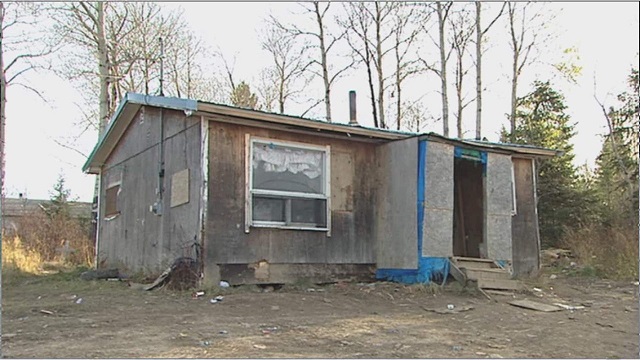
St Theresa Point First Nation is typical of many of such communities. It is a remote First Nation community in northern Manitoba. CBC recently did a story about it. One person interviewed was Christina Wood, who lives in a deteriorating house with 23 family members. Most other people in the community live in similar squalor. Nobody in the community has purchased their own house, and all rely on the federal government to provide housing for them. Few people in the community have paid employment. Those that do have salaries that come in one way or another from the taxpayer.
But St. Theresa Point is a growing community in the sense that birth rates are high, and few people have the skills or motivation needed to be successfully employed in Winnipeg, or other job centres. Social pathologies, such as alcohol and other drug addictions are rampant in the community. Suicide rates are high.
St. Theresa Point is one of hundreds of such indigenous communities in Canada. This is not to say that all such First Nations communities are poor. In fact, some are wealthy. Those lucky enough to be located in or near Vancouver, for example, located next to oil and gas, or on a diamond mine do very well. Some, like Chief Clarence Louis’ Osoyoos community have successfully taken advantage of geography and opportunity and created successful places where employed residents live rich lives.
Unfortunately, most are not like that. They look a lot more like St. Theresa Point. And the AFN now says that 350 billion dollars are needed to keep those communities going.
Meanwhile, all of Canada is in the grip of a serious housing crisis. There are many causes for this, including the massive increase in new immigrants, foreign students and asylum seekers, all of whom have to live somewhere. There are various proposals being considered to respond to this problem. None of those plans come anywhere near to suggesting that $875,000 of public funds should be spent on every Canadian man, woman or child who needs housing. The public treasury would not sustain such an assault.
All Canadians deserve decent housing, and indigenous people have exactly the same legal right to house ownership, or home rental, as any other Canadian. That legal right is zero. Our constitution does not give Canadians – indigenous or non-indigenous- any legal right to publicly funded home ownership, or any right to publicly funded rental property. And no treaty even mentions housing. In all cases it is assumed that Canadians – indigenous and non-indigenous – will provide for themselves. This is the brutal reality. We are on our own when it comes to housing. There are government programs that assist low income people to buy or rent homes, but they are quite limited, and depend on a person qualifying in various ways.
But indigenous people do not have any preferred right to housing. The chiefs and treaty commissioners who signed the treaties expected indigenous people to provide for their own housing in exactly the same way that all other Canadians were expected to provide for their own housing. In fact, the treaty makers, chiefs and treaty commissioners – assumed that indigenous people would support themselves just like every other Canadian. There was no such thing as welfare then.
Our leaders today face difficult decisions about how to spend limited public funds to try and help struggling Canadians find adequate housing in which to raise their families, and get to and from their places of employment. Indigenous Canadians deserve exactly as much help in this regard as everyone else. Finding sensible, affordable ways to do this is vitally important if Canada is to thrive.
And one of hundreds of these difficult and expensive housing decisions our leaders must deal with now is how to respond to this new demand for 350 billion dollars – a demand that would result in indigenous Canadians receiving hundreds of times more housing help than other Canadians.
Our leaders know that authorising massive spending like that in uneconomic communities is completely unfair to other Canadians – for one thing doing so means that there would be no money left for urban housing assistance. They also know that pouring massive amounts of money into uneconomic, dysfunctional communities like St. Theresa’s Point – the “unguarded concentration camps” Farley Mowat described long ago- only keeps generations of young indigenous people locked in hopeless dependency.
In short, they know that the 350 billion dollar demand makes no sense.
Our leaders know that, but they won’t say that. In fact it is not hard to predict how politicians will respond to the 350 billion dollar demand. None of their responses will look even remotely like what I have written above. Instead, they will say soothing things, while pushing the enormous problem down the road. Eventually, when forced by circumstances to actually make spending decisions they will provide stopgap “bandage” funding. And perhaps come up with pretend “loan guarantee” schemes – loans they know will never be repaid. Massive loan defaults in the future will be an enormous problem for our children and grandchildren. But today’s leaders will be gone by then.
So, in a decade or so communities, like St. Theresa Point, will still be there. Any new housing that has been built will already be deteriorating and inadequate. The communities will remain dependent. The young people will be trapped in hopeless dependency.
And the chiefs will be making new money demands.
At some point this country will have to confront the reality that most of Canada’s First Nations reserves, particularly the remote ones, are not sustainable. Better plans to educate and provide job skills to the younger generations in those communities, and assist them to move to job centres, will have to be found. Continuing to pretend that this massive problem will sort itself out by passing UNDRIP legislation, or pretending that those depressed communities are “nations” is only delaying the inevitable.
When Joey Smallwood told the Newfoundland fishermen, who had lived in their outports for generations, that they must move for their own good, there was much pain. But the communities could no longer support themselves, and it had to be done. Entire communities moved. It worked out.
The northern First Nations communities are no different. The ancestors of the residents of those communities supported themselves by fishing and hunting. It was an honourable life. But it is gone. The young people there now will have to move, build new lives, and become self-supporting like their ancestors.
Brian Giesbrecht, retired judge, is a Senior Fellow at the Frontier Centre for Public Policy



Maxime Bernier warns Canadians of Trudeau’s plan to implement WEF global tax regime
WHO Official Admits the Truth About Passports
A Coup Without Firing a Shot

Coyotes Ugly: The Sad Obsession Of Gary Bettman
-
 Education23 hours ago
Support a young reader through the Tim Hortons Smile Cookie campaign
-
 Alberta2 days ago
Alberta’s vision for passenger rail
-
 John Stossel2 days ago
Why Biden’s Just Wrong: NO ONE “Knows How to Make Government Work.”
-
 Education2 days ago
Rebels earn Jim Donlevy Memorial Trophy as WHL Scholastic Team of the Year
-
 RCMP2 days ago
Red Deer RCMP arrest two individuals following ramming of police vehicle
-
 Alberta2 days ago
Three Calgary massage parlours linked to human trafficking investigation
-
 Business23 hours ago
WEF panelist suggests COVID response accustomed people to the idea of CBDCs
-
 COVID-192 days ago
States move to oppose WHO’s ‘pandemic treaty,’ assert states’ rights