
Community
Scott: Healthier weight while taking anti-psychotic meds


This story was originally published on the PCN website in May 2018.
Scott: Healthier weight while taking anti-psychotic meds
My health issue is schizophrenia and the side effects associated with the anti-psychotic medication I take. I had a conversation with my family doctor about the bariatrics clinic at the hospital and he assessed my obesity and referred me to the Health Basics course. I had hoped to get control of my body weight because I have had chronic pain, injuries, and intense frustration with my physical abilities.
A major barrier to my mental concentration was the lack of structure regarding my knowledge around health. I had been advised to control my eating by family and friends but I felt that my weight would naturally sort itself out if I could just get my medications decreased. I had previously connected with a dietitian through AHS however I could not keep a food journal or make adjustments that she recommended.
In the Health Basics program, I committed to the group therapy process and began journaling for the first time. I increased the proportion of fruits and vegetables in my diet. I now plan snacks and focus on “in-control” eating. Further, I practice the 80/20 rule regarding the Healthy Road vs. Easy Street and this keeps my spirits up when I slack off. I simply remind myself that I can make a better choice in any moment to “save the day”.

The last I weighed myself, I had dropped fourteen pounds and my waist was quite a bit smaller. I am getting comments about my physique. I am working through the side effects of my medication with gratitude for the treatment team that helps me, and I am overall noticing less symptoms of depression. In addition, I am maintaining my active lifestyle and achieving the high level of performance that I demand from myself.

I recommend anyone needing weight loss and a healthier lifestyle to take the Health Basics course and attend and participate for yourself AND the others in the group. Make your nutrition a priority because I believe “you are what you eat”. Find a career that forces you to exercise at a high intensity. One big motivator to me is that I need to start a family and I believe that I can have more fun in life with a body that I am happy with.
I am on track to continue to be healthy. I eat enough fruits and vegetables. I continue to journal my food intake. I drink water as my main beverage. I stretch daily. I make my soccer referee job the priority in my career. I am currently participating in the sleep course at the PCN to make sure that I am improving other areas of my health as well.
Here are some other stories from Primary Care Network:
About the Red Deer Primary Care Network:
We (RDPCN) are a partnership between Family Doctors and Alberta Health Services. Health professionals such as psychologists, social workers, nurses and pharmacist work in clinics alongside family doctors.
In addition, programs and groups are offered at the RDPCN central location. This improves access to care, health promotion, chronic disease management and coordination of care. RDPCN is proud of the patient care offered, the effective programs it has designed and the work it does with partners in health care and the community.



From the Fraser Institute
By Jake Fuss and Grady Munro
There would have been 1.5 million more Canadians who donated to charity in 2023—and $755.5 million more in donations—had Canadians given to the same extent they did 10 years prior
According to recent polling, approximately one in five Canadians have skipped paying a bill over the past year so they can buy groceries. As families are increasingly hard-pressed to make ends meet, this undoubtedly means more and more people must seek out food banks, shelters and other charitable organizations to meet their basic necessities.
And each year, Canadians across the country donate their time and money to charities to help those in need—particularly around the holiday season. Yet at a time when the relatively high cost of living means these organizations need more resources, new data published by the Fraser Institute shows that the level of charitable giving in Canada is actually falling.
Specifically, over the last 10 years (2013 to 2023, the latest year of available data) the share of tax-filers who reported donating to charity fell from 21.9 per cent to 16.8 per cent. And while fewer Canadians are donating to charity, they’re also donating a smaller share of their income—during the same 10-year period, the share of aggregate income donated to charity fell from 0.55 per cent to 0.52 per cent.
To put this decline into perspective, consider this: there would have been 1.5 million more Canadians who donated to charity in 2023—and $755.5 million more in donations—had Canadians given to the same extent they did 10 years prior. Simply put, this long-standing decline in charitable giving in Canada ultimately limits the resources available for charities to help those in need.
On the bright side, despite the worrying long-term trends, the share of aggregate income donated to charity recently increased from 0.50 per cent in 2022 to 0.52 per cent in 2023. While this may seem like a marginal improvement, 0.02 per cent of aggregate income for all Canadians in 2023 was $255.7 million.
The provinces also reflect the national trends. From 2013 to 2023, every province saw a decline in the share of tax-filers donating to charity. These declines ranged from 15.4 per cent in Quebec to 31.4 per cent in Prince Edward Island.
Similarly, almost every province recorded a drop in the share of aggregate income donated to charity, with the largest being the 24.7 per cent decline seen in P.E.I. The only province to buck this trend was Alberta, which saw a 3.9 per cent increase in the share of aggregate income donated over the decade.
Just as Canada as a whole saw a recent improvement in the share of aggregate income donated, so too did many of the provinces. Indeed, seven provinces (except Manitoba, Nova Scotia and Newfoundland and Labrador) saw an increase in the share of aggregate income donated to charity from 2022 to 2023, with the largest increases occurring in Saskatchewan (7.9 per cent) and Alberta (6.7 per cent).
Canadians also volunteer their time to help those in need, yet the latest data show that volunteerism is also on the wane. According to Statistics Canada, the share of Canadians who volunteered (both formally and informally) fell by 8 per cent from 2018 to 2023. And the total numbers of hours volunteered (again, both formal and informal) fell by 18 per cent over that same period.
With many Canadians struggling to make ends meet, food banks, shelters and other charitable organizations play a critical role in providing basic necessities to those in need. Yet charitable giving—which provides resources for these charities—has long been on the decline. Hopefully, we’ll see this trend turn around swiftly.


|

|
|

|
|
|



Trump DOJ seeks to quash Pfizer whistleblower’s lawsuit over COVID shots

Alberta introducing three “all-season resort areas” to provide more summer activities in Alberta’s mountain parks

Trump admin wants to help Canadian woman rethink euthanasia, Glenn Beck says

Growing Alberta’s fresh food future
-
 Business2 days ago
Ottawa Pretends To Pivot But Keeps Spending Like Trudeau
-
 International2 days ago
Bondi Beach Shows Why Self-Defense Is a Vital Right
-
 Censorship Industrial Complex2 days ago
How Wikipedia Got Captured: Leftist Editors & Foreign Influence On Internet’s Biggest Source of Info
-
 Crime1 day ago
Bondi Beach Survivor Says Cops Prevented Her From Fighting Back Against Terrorists
-
 Automotive1 day ago
Ford’s EV Fiasco Fallout Hits Hard
-
 Energy2 days ago
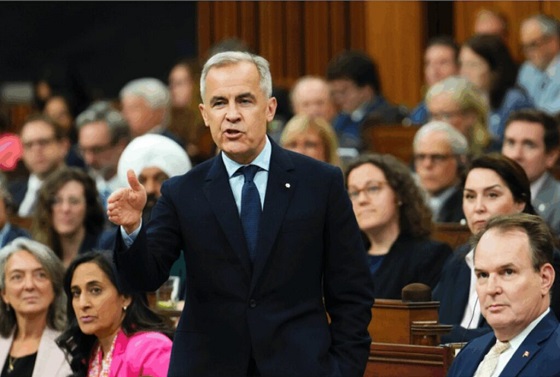
Liberals Twisted Themselves Into Pretzels Over Their Own Pipeline MOU
-
 Frontier Centre for Public Policy23 hours ago
Canada Lets Child-Porn Offenders Off Easy While Targeting Bible Believers
-
 Crime2 days ago
The Uncomfortable Demographics of Islamist Bloodshed—and Why “Islamophobia” Deflection Increases the Threat