
Opinion
RAGING FIRES, BUILDING BRIDGES

Open Letter to Canadians
January 11, 2021
FOR IMMEDIATE RELEASE
Red Deer – Mountain View, AB
“We’ve been conditioned to think that only politicians can solve our problems. But at some point, maybe we will wake-up and recognize that it was the politicians who created our problems.”
“We, the American people are not each other’s enemies. The enemies are those people behind the curtain jerking everybody’s chains and trying to divide us up by age, by race, by income.”
- Ben Carson, a retired neurosurgeon and a 2016 Republican Party presidential candidate.
While the quotes are tailored to the American political climate, both should resonate with Canadians.
Many Canadian politicians have stated their shock in response to the events that unfolded in Washington, DC on January 7, 2021. Sadly, anyone paying attention to American political discourse over the past number of years likely isn’t surprised.
Right vs. left. Conservative vs. Liberal. Poor vs. rich. Black vs. white. Old vs. young. Identity politics has become mainstream in recent years. What happen to the term “Canadians”?
Each time a crisis unfolds, politicians are quick to stoke the flames of division. Sides are drawn, guards put up and the fires rage out of control. A political system rooted in division benefits no one and is not sustainable in the long-term. In this political climate, we all lose.
We have given up a significant amount of autonomy and freedom over the past year in the name of the “greater good”. But have we stopped to ask why politicians are in a better place than us to make decisions that impact our families?
Reliance on government to make personal decisions and provide basic necessities is detrimental to our society. It creates a culture of dependence, increases corporate lobbying and results in larger, more inefficient government. It creates winners and losers and further stokes raging fires. Politicians leverage this division to maintain power. This needs to change if we are to regain trust within our communities and return to prosperity.
The backbone of a prosperous society is freedom of speech and debate. We cannot look to silence those whose opinions we disagree with.
Instead, we must bring all ideas to the table and rationally determine which ideas bring the most benefit to the largest number of Canadians.
We must embrace our differences and learn that there is no single path to success. It is through a balanced approached that we will find solutions to our most challenging problems.
We must learn to build bridges. To meet on common ground. To think of others.
We must realize that no one political party or politician is our saviour. The problems we face can be defeated through our own merits. We do not need government to solve our problems, we are born with that inherent capacity.
How can we accomplish this? How can we tackle all of the major problems that plague this country?
Self-reliance and personal responsibility.
We all have talents and abilities to be contributing and successful members of Canada. We do not need government to dictate the path we take. We do not require approval of establishment politicians in order to decide what is best for ourselves and our families. We are free citizens of a free nation and we can succeed if we come together.
The road forward is not easy. The devastation many have seen over the past year will not soon be forgotten or repaired. Now is not the time for economic experiments or utopian dreams.
We must be grounded in the principles that have benefited us in the past; hard work, innovation, determination and a spirit of resiliency. We must expect the same from our elected leaders.
Canada is the greatest nation on earth. But this badge of honour does not come without hard work and sacrifice. Together, we can overcome the challenges we face and the obstacles in our path. We can calm raging fires. We can build bridges.
In closing, I urge Canadians to come together. To realize that your neighbours’ success is ultimately your success. When Western Canada prospers, Eastern Canada prospers and vice versa. We are all inter-connected and interdependent. We are Canadians.
Sincerely,
Jared Pilon
Candidate for Red Deer – Mountain View, AB
https://www.jaredpilon.com/

International
Trump Says U.S. Strike Captured Nicolás Maduro and Wife Cilia Flores; Bondi Says Couple Possessed Machine Guns




Military strike part of a wider confrontation with cartel-state alliances and Iran-linked networks.
President Donald Trump said early Saturday that the United States carried out a “large scale strike” in Venezuela and that President Nicolás Maduro and his wife, Cilia Flores, were “captured and flown out of the Country,” in an operation conducted jointly with U.S. counter-narcotics agencies.
Attorney General Pam Bondi said Maduro and Flores “have been indicted in the Southern District of New York,” and that Maduro has been charged with narco-terrorism conspiracy, cocaine importation conspiracy, possession of machine guns and destructive devices, and conspiracy to possess destructive devices against the United States.
Bondi said they will “soon face the full wrath of American justice on American soil in American courts,” and credited “our brave military” for what she called a successful mission to capture “two alleged international narco traffickers.”
Bondi’s statement builds on the Justice Department case first unveiled on March 26, 2020, when federal prosecutors in Manhattan unsealed an indictment accusing Maduro and other current and former Venezuelan officials of leading a long-running narcotics conspiracy tied to multi-ton cocaine shipments, with linkages to terrorist actors.
Bondi has also linked Maduro’s regime to fentanyl-tainted trafficking networks, while senior lawmakers — including Senator Tom Cotton — have cast Maduro’s alleged operations as intertwined with Iranian regime activity and broader hostile-state plots against the United States.
The dramatic U.S. announcement followed a night of explosions and rolling power outages in Caracas and other parts of Venezuela, with witnesses reporting flare-like streaks crossing the sky before blasts hit near major military installations in the capital, including the Fuerte Tiuna complex and the La Carlota area.
The Associated Press reported the strike “lasted less than 30 minutes,” with at least seven blasts that sent residents into the streets as videos and photos showed smoke plumes and a fireball over the city. The early fallout remained murky—questions persisted about casualties, and how fully Congress and senior military leadership were consulted—while Venezuelan authorities demanded proof of life for Maduro and declared an emergency, as uncertainty spread over who controls the country’s government apparatus following the strike and extraction operation.
After sunrise, Reuters reported Caracas appeared relatively calm, with soldiers patrolling some areas; separately, Reuters said Venezuela’s oil facilities appeared to be operating normally, though the port of La Guaira sustained severe damage.
Previously, Bondi has described the 2020 indictment as the backbone of the administration’s claim that Maduro ran a state-protected trafficking enterprise aligned with cartel partners to push cocaine toward the United States, including cocaine allegedly mixed with fentanyl-laced additives. The Bureau has also reported Bondi’s earlier assertion that authorities seized more than $700 million in assets linked to Maduro, including private jets, and nearly seven tons of cocaine allegedly tied directly to him.
The evidentiary foundation for those allegations, U.S. officials have repeatedly said, is the Southern District of New York indictment itself — along with related prosecutions and investigative records that, in the government’s telling, map a long-running alliance among Venezuelan officials, Colombian armed actors, and international facilitators.
One of the most consequential bridges between narcotics trafficking and terrorism claims in the Maduro case emerged in May 2020, when the U.S. Drug Enforcement Administration announced charges against former Venezuelan legislator Adel El Zabayar. In that statement, officials alleged that El Zabayar supported the Cártel de los Soles and worked “in coordination with designated Foreign Terrorist Organizations … Hizballah and Hamas,” including allegations that the cartel sought to recruit operatives from those groups to assist in plotting attacks against U.S. interests.
The Southern District of New York superseding indictment against Maduro also underscores the government’s contention that the alleged conspiracy’s footprint extended beyond Latin America — listing the offense as “begun and committed” in multiple jurisdictions, including Venezuela, Colombia, Mexico, Iran, and Syria.
Senator Tom Cotton amplified the administration’s message Saturday, saying he had spoken with Secretary of State Marco Rubio, who “confirmed that Maduro is in U.S. custody and will face justice for his crimes against our citizens.”
Cotton added that “the interim government in Venezuela must now decide whether to continue the drug trafficking and colluding with adversaries like Iran and Cuba or whether to act like a normal nation and return to the civilized world,” urging Venezuelan authorities to “choose wisely.”
The escalation also comes as Iran faces intensifying internal unrest, with protests and crackdowns that U.S. officials and allied analysts have framed as additional pressure on Tehran at the same time Washington signals willingness to use direct force against governments it portrays as cartel-state partners.
Early Friday morning, in a social media post, Trump commented on the growing movement against Iran’s clerical leadership, warning that if security forces opened fire on demonstrators, the United States was “locked and loaded and ready to go.”
As of early Saturday, the U.S. government had not publicly released new court filings detailing the capture operation itself or clarifying whether prosecutors filed additional charges beyond the New York case first unsealed in 2020, and it remained unclear when Maduro and Flores would make their first appearance in a U.S. federal court.
President Trump said he will speak on the operation against Maduro later this morning in Florida.
The Bureau is a reader-supported publication.
To receive new posts and support my work, consider becoming a free or paid subscriber.
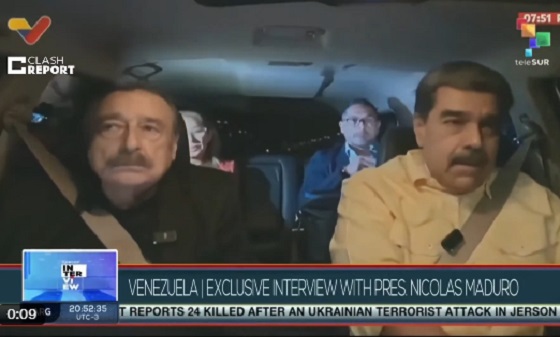

President Trump stunned the world early Saturday with a dramatic announcement saying Venezuela’s socialist strongman Nicolás Maduro and his wife, Cilia Flores, had been captured and removed from the country following U.S. military action that rocked Caracas overnight. In a post on Truth Social, Trump said the United States “successfully carried out a large-scale strike against Venezuela and its leader,” adding that Maduro and Flores were “captured and flown out of the country” in an operation conducted alongside U.S. law enforcement.
The announcement came just hours after multiple explosions were reported across Caracas and other parts of the country, with witnesses describing airstrikes and widespread power outages. Trump’s statement was quickly amplified by senior administration officials, including Pete Hegseth and Karoline Leavitt, who shared the message on X as speculation swirled about the scope and targets of the operation.
Maduro, who has clung to power through what critics and international observers have long described as rigged elections, has been a top target of U.S. law enforcement for years. Washington has accused him of running—or at minimum directing—the Cartel of the Suns, an international cocaine trafficking network allegedly embedded within Venezuela’s regime. In 2020, U.S. prosecutors charged Maduro with narco-terrorism, accusing him and senior officials of conspiring to “flood” the United States with cocaine. A $50 million U.S. reward remains in place for information leading to his arrest or conviction.
Venezuela’s government had not formally responded to Trump’s claim as of early Saturday, but local reporting painted a picture of chaos and uncertainty on the ground. The Venezuelan daily El Nacional reported that large portions of Caracas were without electricity, with residents evacuating areas around Fuerte Tiuna, the country’s main military complex long believed to house Maduro’s personal bunker. The outlet also said La Carlota, Venezuela’s principal military airport, was struck during the overnight bombardment.
Shortly before Trump’s announcement, Venezuela’s defense minister, Vladimir Padrino López, addressed the nation in a video posted to Instagram, denouncing the strikes as an “invasion” and “the greatest outrage suffered by Venezuela.” Padrino López, who is himself wanted by U.S. authorities on drug trafficking charges, dismissed the narco-terrorism allegations and claimed the attacks were part of a U.S.-led regime-change effort. “Desperation is the invader’s ally,” he said, urging Venezuelans to avoid “chaos and anarchy” and calling on the international community to condemn the United States.
Trump said further details on the operation, including how Maduro was taken into custody and where he was flown, would be released later in the day during a press conference at Mar-a-Lago, setting the stage for what could be one of the most consequential developments in U.S.–Venezuela relations in decades.
(AP Photo/Ariana Cubillos)
Georgia county admits illegally certifying 315k ballots in 2020 presidential election

ICYMI: Largest fraud in US history? Independent Journalist visits numerous daycare centres with no children, revealing massive scam
Alberta project would be “the biggest carbon capture and storage project in the world”
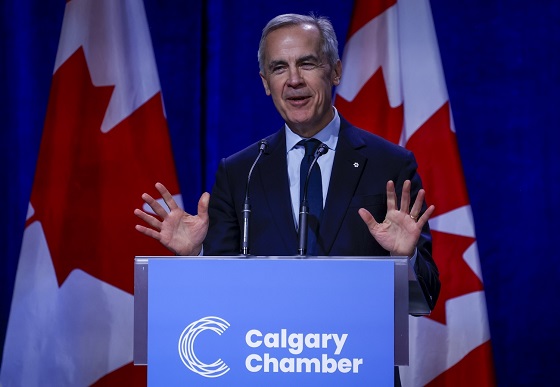
Canada’s debate on energy levelled up in 2025
-
 Energy1 day ago
Rulings could affect energy prices everywhere: Climate activists v. the energy industry in 2026
-
 Digital ID1 day ago
The Global Push for Government Mandated Digital IDs And Why You Should Worry
-
 Bruce Dowbiggin1 day ago
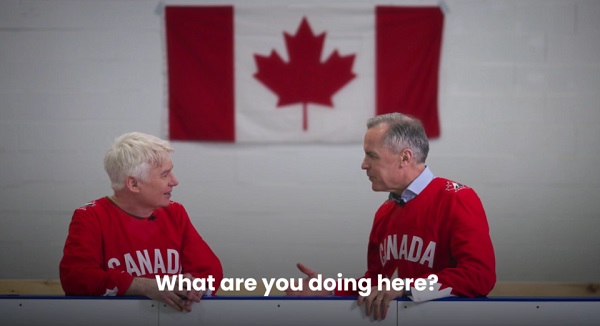
The Rise Of The System Engineer: Has Canada Got A Prayer in 2026?
-
International1 day ago
Maduro says he’s “ready” to talk
-
 International1 day ago
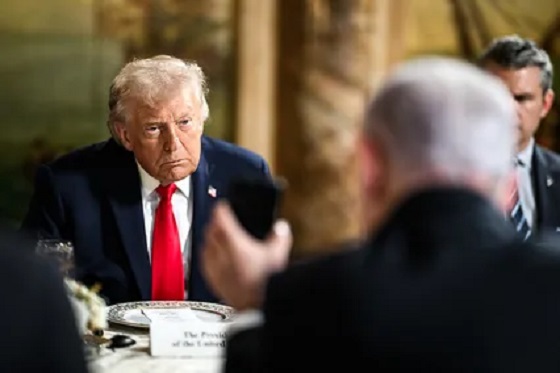
LOCKED AND LOADED: Trump threatens U.S. response if Iran slaughters protesters
-
International4 hours ago
“Captured and flown out”: Trump announces dramatic capture of Maduro
-
International3 hours ago
Trump Says U.S. Strike Captured Nicolás Maduro and Wife Cilia Flores; Bondi Says Couple Possessed Machine Guns
-
 Business3 hours ago
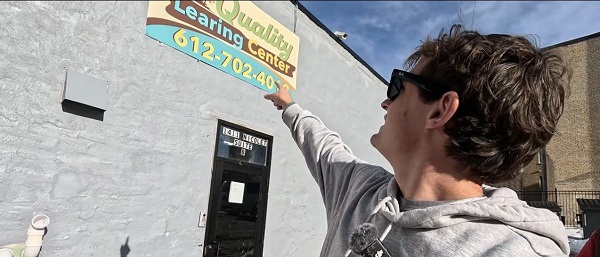
Vacant Somali Daycares In Viral Videos Are Also Linked To $300 Million ‘Feeding Our Future’ Fraud