
Community
Engaging in Mindfulness


Engaging in Mindfulness
Renee will lead you in two short mindfulness practices. Try some short mindfulness practices to engage in the present moment, this small gratitude and loving kindness practice to help you be more mindful. We’ve also included “6 Mindfulness Exercises You Can Try Today” by Alfred James.
6 Mindfulness Exercises You Can Try Today
By Alfred James
In this busy world of ours, the mind is constantly pulled from pillar to post, scattering our thoughts and emotions and leaving us feeling stressed, highly-strung and at times quite anxious. Most of us don’t have five minutes to sit down and relax, let alone 30 minutes or more for a meditation session. But it is essential for our wellbeing to take a few minutes each day to cultivate mental spaciousness and achieve a positive mind-body balance.

So if you are a busy bee like me, you can use these simple mindfulness exercises to empty your mind and find some much-needed calm amidst the madness of your hectic day. I’m going to cover 6 exercises that take very little effort and can be done pretty much anywhere at any time:
- Mindful breathing
- Mindful observation
- Mindful awareness
- Mindful listening
- Mindful immersion
- Mindful appreciation
Let’s get started…
- Mindful Breathing – This exercise can be done standing up or sitting down, and pretty much anywhere at any time. All you have to do is be still and focus on your breath for just one minute. 1. Start by breathing in and out slowly. One breath cycle should last for approximately 6 seconds. 2. Breathe in through your nose and out through your mouth, letting your breath flow effortlessly in and out of your body. 3. Let go of your thoughts. Let go of things you have to do later today or pending projects that need your attention. Simply let thoughts rise and fall of their own accord and be at one with your breath. www.pocketmindfulness.com 2 4. Purposefully watch your breath, focusing your sense of awareness on its pathway as it enters your body and fills you with life. 5. Then watch with your awareness as it works work its way up and out of your mouth and its energy dissipates into the world. If you are someone who thought they’d never be able to meditate, guess what? You are half way there already! If you enjoyed one minute of this mind-calming exercise, why not try two or three?
- Mindful Observation – This exercise is simple but incredibly powerful because it helps you notice and appreciate seemingly simple elements of your environment in a more profound way. The exercise is designed to connect us with the beauty of the natural environment, something that is easily missed when we are rushing around in the car or hopping on and off trains on the way to work. 1. Choose a natural object from within your immediate environment and focus on watching it for a minute or two. This could be a flower or an insect, or even the clouds or the moon. 2. Don’t do anything except notice the thing you are looking at. Simply relax into watching for as long as your concentration allows. 3. Look at this object as if you are seeing it for the first time. 4. Visually explore every aspect of its formation, and allow yourself to be consumed by its presence. 5. Allow yourself to connect with its energy and its purpose within the natural world.
- Mindful Awareness – This exercise is designed to cultivate a heightened awareness and appreciation of simple daily tasks and the results they achieve. Think of something that happens every day more than once; something you take for granted, like opening a door, for example. www.pocketmindfulness.com 3 At the very moment you touch the doorknob to open the door, stop for a moment and be mindful of where you are, how you feel in that moment and where the door will lead you. Similarly, the moment you open your computer to start work, take a moment to appreciate the hands that enable this process and the brain that facilitates your understanding of how to use the computer. These ‘touch point’ cues don’t have to be physical ones. For example: Each time you think a negative thought, you might choose to take a moment to stop, label the thought as unhelpful and release the negativity. Or, perhaps each time you smell food, you take a moment to stop and appreciate how lucky you are to have good food to eat and share with your family and friends. Choose a touch point that resonates with you today and, instead of going through your daily motions on autopilot, take occasional moments to stop and cultivate purposeful awareness of what you are doing and the blessings these actions brings to your life.
- Mindful Listening – This exercise is designed to open your ears to sound in a non-judgmental way, and indeed to train your mind to be less swayed by the influence of past experiences and preconception. So much of what we “feel” is influenced by past experience: For example, we may dislike a song because it reminds of us of a breakup or another period of life when things felt negative. So the idea of this exercise is to listen to some music from a neutral standpoint, with a present awareness that is unhindered by preconception. Select a piece of music you have never heard before. You may have something in your own collection that you have never listened to, or you might choose to turn the radio dial until something catches your ear. 1. Close your eyes and put on your headphones. 2. Try not to get drawn into judging the music by its genre, title or artist name before it has begun. Instead, ignore any labels and neutrally allow yourself to get lost in the journey of sound for the duration of the song. www.pocketmindfulness.com 4 3. Allow yourself to explore every aspect of track. Even if the music isn’t to your liking at first, let go of your dislike and give your awareness full permission to climb inside the track and dance among the sound waves. 4. Explore the song by listening to the dynamics of each instrument. Separate each sound in your mind and analyze each one by one. 5. Hone in on the vocals: the sound of the voice, its range and tones. If there is more than one voice, separate them out as you did in step 4. The idea is to listen intently, to become fully entwined with the composition without preconception or judgment of the genre, artist, lyrics or instrumentation. Don’t think; hear.
- Mindful Immersion– The intention of this exercise is to cultivate contentment in the moment and escape the persistent striving we find ourselves caught up in on a daily basis. Rather than anxiously wanting to finish an everyday routine task in order to get on with doing something else, take that regular routine and fully experience it like never before. For example: if you are cleaning your house, pay attention to every detail of the activity. Rather than treat this as a regular chore, create an entirely new experience by noticing every aspect of your actions: Feel and become the motion when sweeping the floor, sense the muscles you use when scrubbing the dishes, develop a more efficient way of wiping the windows clean. The idea is to get creative and discover new experiences within a familiar routine task. Instead of labouring through and constantly thinking about finishing the task, become aware of every step and fully immerse yourself in the progress. Take the activity beyond a routine by aligning yourself with it physically, mentally and spiritually. Who knows, you might even enjoy the cleaning for once!
- Mindful Appreciation – In this last exercise, all you have to do is notice 5 things in your day that usually go unappreciated. These things can be objects or people; it’s up to you. Use a notepad to check off 5 by the end of the day. The point of this exercise is to simply give thanks and appreciate the seemingly insignificant things in life, the things that support our existence but rarely get a second thought amidst our desire for bigger and better things. For example: electricity powers your kettle, the postman delivers your mail, your clothes provide you warmth, your nose lets you smell the flowers in the park, your ears let you hear the birds in the tree by the bus stop, but…
- Do you know how these things/processes came to exist, or how they really work?
- Have you ever properly acknowledged how these things benefit your life and the lives of others?
- Have you ever thought about what life might be like without these things?
- Have you ever stopped to notice their finer, more intricate details?
- Have you ever sat down and thought about the relationships between these things and how together they play an interconnected role in the functioning of the earth?
Once you have identified your 5 things, make it your duty to find out everything you can about their creation and purpose to truly appreciate the way in which they support your life. For more advanced mindfulness exercises, and two 30-minute meditation music mp3s… Click here to read more about my bestselling book. Copyright © Alfred James. If you would like to reproduce this content in part or full, please contact [email protected]



From the Fraser Institute
By Jake Fuss and Grady Munro
There would have been 1.5 million more Canadians who donated to charity in 2023—and $755.5 million more in donations—had Canadians given to the same extent they did 10 years prior
According to recent polling, approximately one in five Canadians have skipped paying a bill over the past year so they can buy groceries. As families are increasingly hard-pressed to make ends meet, this undoubtedly means more and more people must seek out food banks, shelters and other charitable organizations to meet their basic necessities.
And each year, Canadians across the country donate their time and money to charities to help those in need—particularly around the holiday season. Yet at a time when the relatively high cost of living means these organizations need more resources, new data published by the Fraser Institute shows that the level of charitable giving in Canada is actually falling.
Specifically, over the last 10 years (2013 to 2023, the latest year of available data) the share of tax-filers who reported donating to charity fell from 21.9 per cent to 16.8 per cent. And while fewer Canadians are donating to charity, they’re also donating a smaller share of their income—during the same 10-year period, the share of aggregate income donated to charity fell from 0.55 per cent to 0.52 per cent.
To put this decline into perspective, consider this: there would have been 1.5 million more Canadians who donated to charity in 2023—and $755.5 million more in donations—had Canadians given to the same extent they did 10 years prior. Simply put, this long-standing decline in charitable giving in Canada ultimately limits the resources available for charities to help those in need.
On the bright side, despite the worrying long-term trends, the share of aggregate income donated to charity recently increased from 0.50 per cent in 2022 to 0.52 per cent in 2023. While this may seem like a marginal improvement, 0.02 per cent of aggregate income for all Canadians in 2023 was $255.7 million.
The provinces also reflect the national trends. From 2013 to 2023, every province saw a decline in the share of tax-filers donating to charity. These declines ranged from 15.4 per cent in Quebec to 31.4 per cent in Prince Edward Island.
Similarly, almost every province recorded a drop in the share of aggregate income donated to charity, with the largest being the 24.7 per cent decline seen in P.E.I. The only province to buck this trend was Alberta, which saw a 3.9 per cent increase in the share of aggregate income donated over the decade.
Just as Canada as a whole saw a recent improvement in the share of aggregate income donated, so too did many of the provinces. Indeed, seven provinces (except Manitoba, Nova Scotia and Newfoundland and Labrador) saw an increase in the share of aggregate income donated to charity from 2022 to 2023, with the largest increases occurring in Saskatchewan (7.9 per cent) and Alberta (6.7 per cent).
Canadians also volunteer their time to help those in need, yet the latest data show that volunteerism is also on the wane. According to Statistics Canada, the share of Canadians who volunteered (both formally and informally) fell by 8 per cent from 2018 to 2023. And the total numbers of hours volunteered (again, both formal and informal) fell by 18 per cent over that same period.
With many Canadians struggling to make ends meet, food banks, shelters and other charitable organizations play a critical role in providing basic necessities to those in need. Yet charitable giving—which provides resources for these charities—has long been on the decline. Hopefully, we’ll see this trend turn around swiftly.


|

|
|

|
|
|



Death by a thousand clicks – government censorship of Canada’s internet

Chinese Billionaire Tried To Build US-Born Baby Empire As Overseas Elites Turn To American Surrogates
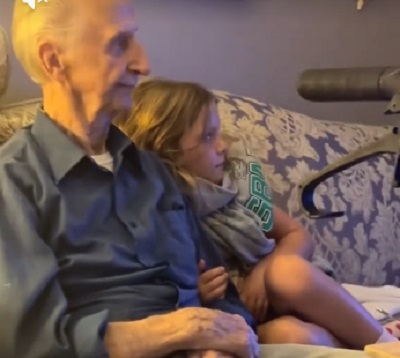
Viral TikTok video shows 7-year-old cuddling great-grandfather before he’s euthanized

Politicians should be honest about environmental pros and cons of electric vehicles
-
Censorship Industrial Complex22 hours ago
Death by a thousand clicks – government censorship of Canada’s internet
-
Daily Caller23 hours ago
Chinese Billionaire Tried To Build US-Born Baby Empire As Overseas Elites Turn To American Surrogates
-
Great Reset1 day ago
Viral TikTok video shows 7-year-old cuddling great-grandfather before he’s euthanized
-
Automotive1 day ago
Politicians should be honest about environmental pros and cons of electric vehicles
-
 Digital ID21 hours ago
Canada releases new digital ID app for personal documents despite privacy concerns
-
Community18 hours ago
Charitable giving on the decline in Canada
-
 Alberta1 day ago
Schools should go back to basics to mitigate effects of AI
-
 Bruce Dowbiggin20 hours ago
NFL Ice Bowls Turn Down The Thermostat on Climate Change Hysteria