
Opinion
The Dystopian Future of Canada, Part 2-Corona Virus Testing Cause or Curse?


Pandemic Elements 1: PCR Testing-
During this ‘pandemic,’ world citizens have been subjected to a daily dose of case numbers from provincial or federal health ministers both sides of the border that have the power to paralyze or to set communities and citizens free from constraining governmental measures.

Decreasing ‘numbers’ spread hope that the curve is flattening while increasing ‘positives’ send frightened citizens and companies into a tailspin.
At the heart of the debate is the PCR test which magnifies RNA strands anywhere from 30 to 40 times to create the reaction necessary for a ‘conclusive’ test. Yet according to medical professionals forensic technicians only use a magnification of 17 in their quest for trace compounds during investigations.

Even Dr. Anthony Fauci has admitted that the chances of a positive result being accurate at 35 cycles are “miniscule,” yet the Alberta Government relies on such testing levels (35) to determine the severity of the Covid 19 infection. Other groups such as the Ontario Government, the FDA, the CDC and the World Health Organization recommend 40 to 45 cycles.
REF: Your Coronavirus Test Is Positive. Maybe It Shouldn’t Be. – The New York Times (nytimes.com)
The PCR test was developed in 1985 by Dr. Kary Mullis for a primary application in biomedical research and criminal forensics yet it has become the foremost tool for Covid 19 detection. (see end of article for video)
In a 2019 interview, Mullis noted that it was never intended for detecting disease he felt that ‘Scientists are doing an awful lot of damage to the world in the name of helping it.’
Further research into PCR testing has yielded interesting results.
In addition to the inaccuracy of cycles above 17 which provide 100 % accuracy which drops to 20% with 33-34 cycles according to Dr. Mercola, the spectre of exactly what the test is searching for is raised.
With more than one Covid 19 test available, RNA (PCR), rapid (Antigen) or Serology (Antibody) there are also claims from the CDC that they do not have a sample of Covid 19 that they can produce to create a test from!
With numbers in the range that the Province of Alberta is reporting, the ‘pandemic,’ if PCR testing is performed with 17 cycles, would drop to a mere 8500 and across Canada, to 63,000. Looking at deaths, 11, 265 deaths have been attributed to Covid 19, yet according to many statistics 10% of deaths can only be attributed directly TO Covid 19 with the remainder being linked with co-morbidities. A comparison of death rates across Canada shows that from January to September 2018, 2019 and 2020 are nearly identical in total numbers despite our ‘pandemic.’
Another suspicious fact is that Dr. Hinshaw stated recently that there have been NO cases of the Flu reported (Global News November 13, 2020). If this is a flu season, where are the sick people? Could they have been tagged as Covid patients?
On November 18, 2020 Dr. Roger Hodgkinson, Hodkinson, Chairman of the Royal College of Physicians and Surgeons committee in Ottawa, CEO of a large private medical laboratory in Edmonton, Alberta and Chairman of a Medical Biotechnology company that sells Covid 19 tests addressed Edmonton City Council and passionately chastised the government response to the ‘pandemic.’
The video can be found at: https://www.youtube.com/watch?v=uEo3rnU12jw
“There is utterly unfounded public hysteria driven by the media and politicians. This is the biggest hoax ever perpetrated on an unsuspected public. There is absolutely nothing that can be done to contain this virus. This is nothing more than a bad flu season. It’s politics playing medicine and that’s a very dangerous game. There is no action needed,” he said. “Masks are utterly useless!”
“Positive testing results do NOT indicate clinical infection. It is simply driving public hysteria and ALL testing should STOP immediately,” he added. “The scale of the response is utterly ridiculous…all kinds of business closures, suicides …. you’re being led down the garden path by the Health Minister of this province.”
There is another side to danger of PCR testing; fraud.

Reports of positive tests results have been reported with NO testing done by labs in Red Deer on patients who registered to test but left before any test could be performed. From anecdotal evidence, there are at least 4 cases the writer has heard of the week of November 15th! I can imagine that there Legally speaking, if 4 false cases have been reported in addition to a 20% accuracy rate, then the government response is incredibly over the top and lockdowns, mask bylaws and cohort regulations are unwarranted.
During an October 24, 2020 rally in Edmonton (a, retired Dr. Lorna Levesque called on provincial and federal politicians to let ‘teachers teach instead of playing doctor,’ and to ‘stop testing and give our rights and freedoms back.’

The video can be found at:
She also represented the Great Barrington Declaration (https://gbdeclaration.org/), signed by close to 50,000 doctors and 640,000 citizens which calls on governments to stop lockdowns and mandatory masks. A short summary of the declaration follows:
“Current lockdown policies are producing devastating effects on short and long-term public health. The results (to name a few) include lower childhood vaccination rates, worsening cardiovascular disease outcomes, fewer cancer screenings and deteriorating mental health – leading to greater excess mortality in years to come, with the working class and younger members of society carrying the heaviest burden. Keeping students out of school is a grave injustice. “
“Why are my colleagues silent,” she asked. “When we took our Hippocratic Oath we swore to ‘do no harm,’ and yet here we are silent while our government mandate masks which are bacteria factories if not sterile and decrease oxygen into our lungs while increasing carbon dioxide. I am stunned by your silence!”
She also noted that ‘we cannot control the virus but Vitamin D helps build immunity just as Zinc does.’
The big question asked by citizens across Alberta is WHY are we using a flawed test procedure to decide the future of our economic, social and spiritual futures? Why do citizens have NO say in how we respond as a society?
In my November 18th piece, I answer that question. (https://www.todayville.com/the-dystopian-future-of-canada-part-i/)
“The pandemic gives us an opportunity to reshape society…” Justin Trudeau said in his UN speech.
Further information from Dr. Mullis is below: (language warning)
A late addition to this piece is the following letter from Dr. Stephen Malthouse to the BC Minister of Health, due to the length of the piece, I include a link but add this short excerpt:
“Why are you still using PCR testing? The Deputy Chief Medical Officer for Health in Ontario has publicly stated that the PCR test yields over 50% false positives. A New York Times investigative report found that PCR testing yields up to 90% false positives due to excessive amplification beyond the recommendations of the manufacturer. The PCR test was never designed, intended or validated to be used as a diagnostic tool. Even the Alberta Health Services COVID-19 Scientific Advisory Group has stated “clinical sensitivity and specificity values have not been determined for lab developed RT-PCR testing in Canada”.8 Despite expert consensus, you continue to use this inappropriate and inaccurate test to report so-called “cases” and justify your decisions.9-18“
Footnotes in original letter.
https://www.pandemicdebate.com/post/letter-by-dr-stephen-malthouse-md-to-dr-bonnie-henry-b-c-provincial-health-officer
If you have any comments, please contact me through comments OR via email at [email protected]
Be awake, aware and alert for our enemy the devil seeks to destroy, deceive and create confusion….

Censorship Industrial Complex
US Under Secretary of State Slams UK and EU Over Online Speech Regulation, Announces Release of Files on Past Censorship Efforts



Sarah Rogers’ comments draw a new line in the sand between America’s First Amendment and Europe’s tightening grip on online speech.
|
|


Federal prosecutors say Minnesota’s exploding social-services fraud scandal may now rival nearly the entire economy of Somalia, with as much as $9 billion allegedly stolen from taxpayer-funded programs in what authorities describe as industrial-scale abuse that unfolded largely under the watch of Democrat Gov. Tim Walz. The staggering new estimate is almost nine times higher than the roughly $1 billion figure previously suspected and amounts to about half of the $18 billion in federal funds routed through Minnesota-run social-services programs since 2018, according to prosecutors. “The magnitude cannot be overstated,” First Assistant U.S. Attorney Joe Thompson said Thursday, stressing that investigators are still uncovering massive schemes. “This is not a handful of bad actors. It’s staggering, industrial-scale fraud. Every day we look under a rock and find another $50 million fraud operation.”
Authorities say the alleged theft went far beyond routine overbilling. Dozens of defendants — the vast majority tied to Minnesota’s Somali community — are accused of creating sham businesses and nonprofits that claimed to provide housing assistance, food aid, or health-care services that never existed, then billing state programs backed by federal dollars. Thompson said the opportunity became so lucrative it attracted what he called “fraud tourism,” with out-of-state operators traveling to Minnesota to cash in. Charges announced Thursday against six more people bring the total number of defendants to 92.
BREAKING: First Assistant U.S. Attorney Joe Thompson revealed that 14 state Medicaid programs have cost Minnesota $18 billion since 2018, including more than $3.5 billion in 2024 alone.
Thompson stated, "Now, I'm sure everyone is wondering how much of this $18 billion was… pic.twitter.com/hCNDBuCTYH
— FOX 9 (@FOX9) December 18, 2025
Among the newly charged are Anthony Waddell Jefferson, 37, and Lester Brown, 53, who prosecutors say traveled from Philadelphia to Minnesota after spotting what they believed was easy money in the state’s housing assistance system. The pair allegedly embedded themselves in shelters and affordable-housing networks to pose as legitimate providers, then recruited relatives and associates to fabricate client notes. Prosecutors say they submitted about $3.5 million in false claims to the state’s Housing Stability Services Program for roughly 230 supposed clients.
Other cases show how deeply the alleged fraud penetrated Minnesota’s health-care programs. Abdinajib Hassan Yussuf, 27, is accused of setting up a bogus autism therapy nonprofit that paid parents to enroll children regardless of diagnosis, then billed the state for services never delivered, netting roughly $6 million. Another defendant, Asha Farhan Hassan, 28, allegedly participated in a separate autism scheme that generated $14 million in fraudulent reimbursements, while also pocketing nearly $500,000 through the notorious Feeding Our Future food-aid scandal. “Roughly two dozen Feeding Our Future defendants were getting money from autism clinics,” Thompson said. “That’s how we learned about the autism fraud.”
The broader scandal began to unravel in 2022 when Feeding Our Future collapsed under federal investigation, but prosecutors say only in recent months has the true scope of the alleged theft come into focus. Investigators allege large sums were wired overseas or spent on luxury vehicles and other high-end purchases. The revelations have fueled political fallout in Minnesota and prompted renewed federal scrutiny of immigration-linked fraud as well as criticism of state oversight failures. Walz, who is seeking re-election in 2026 after serving as Kamala Harris’ running mate in 2024, defended his administration Thursday, saying, “We will not tolerate fraud, and we will continue to work with federal partners to ensure fraud is stopped and fraudsters are caught.” Prosecutors, however, made clear the investigation is far from finished — and warned the final tally could climb even higher.


Ottawa’s Newly Released Defence Plan Crosses a Dangerous Line

Hunting Poilievre Covers For Upcoming Demographic Collapse After Boomers

Carney Floor Crossing Raises Counterintelligence Questions aimed at China, Former Senior Mountie Argues

Canadian university censors free speech advocate who spoke out against Indigenous ‘mass grave’ hoax
-
 International1 day ago
Ottawa is still dodging the China interference threat
-
 Business1 day ago
There’s No Bias at CBC News, You Say? Well, OK…
-
 Automotive1 day ago
Canada’s EV gamble is starting to backfire
-
 International1 day ago
2025: The Year The Narrative Changed
-
 Alberta2 days ago
Alberta project would be “the biggest carbon capture and storage project in the world”
-
 Daily Caller2 days ago
While Western Nations Cling to Energy Transition, Pragmatic Nations Produce Energy and Wealth
-
 Business2 days ago
Residents in economically free states reap the rewards
-
 Bruce Dowbiggin2 days ago
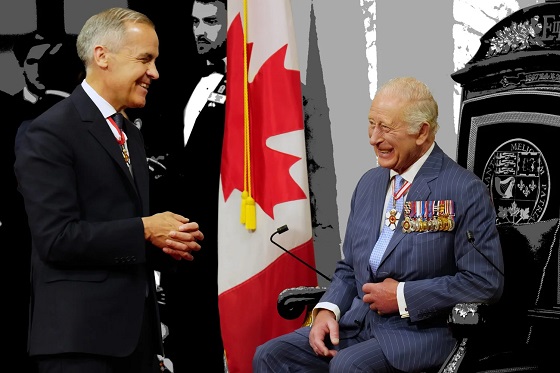
Be Careful What You Wish For In 2026: Mark Carney With A Majority