
Health
Kenyan doctor condemns WHO for sterilizing African women with vaccines



Dr. Wahome Ngare
From LifeSiteNews
In 2014 and 2015, the WHO campaigned for the eradication of Tetanus in Africa, pushing a vaccine that, according to Dr. Ngare, made women “sterile.”
A Kenyan doctor denounced the World Health Organization (WHO) before Uganda’s president for being untrustworthy as shown by its African vaccination campaigns, including a Tetanus shot push that caused infertility in women.
Dr. Wahome Ngare, the director of Kenya Christian Professionals Forum (KCPF), warned President Yoweri Museveni in a speech posted online Tuesday, as the WHO was negotiating amendments to the International Health Regulations (IHR), that the massively influential global health body has a recent history of working against the best interests of Africans.
As a glaring example of this, he told how in 2014 and 2015, the WHO campaigned for the eradication of Tetanus in Africa, pushing a vaccine that, according to Dr. Ngare, made women “sterile.” He explained that the vaccine combined the Tetanus virus with a substance that produces antibodies against a hormone needed to maintain pregnancy, called human chorionic gonadotropin (hCG).
“When we inject a woman with that vaccine, she produces antibodies against that hormone and therefore is rendered sterile,” Dr. Ngare noted. A paper has been published in the journal Vaccine Weekly echoing the Kenyan doctor’s claim, asserting that “similar tetanus vaccines laced with hCG” (to produce antibodies against the natural hormone) “have been uncovered in the Philippines and in Nicaragua.”
The article’s abstract pointed out that a former president of Human Life International (HLI) “asked Congress to investigate reports of women in some developing countries unknowingly receiving a tetanus vaccine laced with the anti-fertility drug.”
Dr. Ngare said he and other doctors in Africa have noticed increasing cases of young couples who appear medically “normal” but cannot conceive children, as well as couples who are losing as many as “three, four, or five” children before the mother can carry a child to term.
He went on to argue that another reason the WHO cannot be trusted is that it has proposed the vaccination of African children against malaria despite the fact that it is a “treatable disease.”

He pointed out that the U.K. “was able to eradicate malaria in 1921,” and the U.S. eliminated the disease in 1951, but the WHO has seemingly not yet worked out how to rid the African continent of malaria. Dr. Ngare argued that in fact, there is a natural treatment for malaria, found in the trees used to create quinine, which is known to treat malaria. There is further a plant, known as Artemisia annua or sweet wormwood plant, grown in Africa, that also treats malaria.
“One of our doctors in Congo wrote a paper that demonstrated how well the Artemisia tea worked and compared it to conventional medicine and even demonstrated it works better than conventional medicine. And two years later, his paper was pulled out. It was retracted. We do not need a vaccine for our children to treat malaria,” Dr. Ngare told Museveni.
The WHO continues to push novel, untested biological interventions in Africa, such as genetically modified (GMO) mosquitoes, which Dr. Ngare noted “sterilize” natural mosquitoes, and have an unknown potential for damage to humans — as if it’s “not enough” to cause poverty by introducing patented GMO seeds, the doctor lamented.
Dr. Ngare has previously advised African countries to “collectively treat all vaccination programs as a national security risk,” stating, “If you cannot determine what is in the vaccine that is being given to your people, you may be opening a door to destroy the African population.”
The WHO has been under heavy fire recently from politicians and activists around the world for its proposed “pandemic agreement” and amendments to the International Health Regulations (IHR), on which the WHO failed to gain consensus from its member states this week. A more modest “consensus package of (IHR) amendments” will be presented this week, and The New York Times reported that negotiators plan to ask for more time to come to an agreement.
WHO Director-General Tedros Adhanom Ghebreyesus has also suggested that efforts to come to an agreement on the proposals will continue.
“We all wish that we had been able to reach a consensus on the agreement in time for this health assembly and crossed the finish line,” Tedros said, reported The Straits Times. “But I remain confident that you still will, because where there is a will, there is a way.”

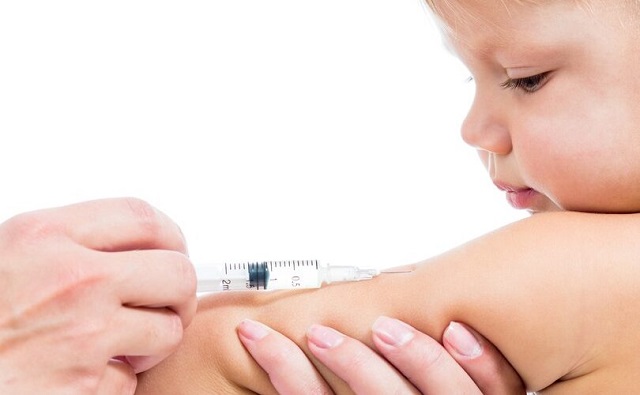


After unnecessary hepatitis B vaccine dropped for 3.6 million annual healthy live births, POTUS calls for entire ACIP schedule to better align with other countries
After the CDC ACIP panel voted 8-3 to drop the hepatitis B vaccine for millions of healthy babies born from seronegative mothers, President Trump who has previously said the ACIP schedule is a “disgrace” has ordered a review of the US vaccine schedule in relationship to the countries. Alter AI assisted in this review.
 |
Based on the 2025 immunization schedules published by health authorities worldwide — including the CDC/ACIP (U.S.), Public Health England/UKHSA, Health Canada, Australia’s Department of Health, and the EU’s national public health programs — there are significant differences in how intensively children are vaccinated from birth to age 18.
Although all developed countries recommend broadly similar vaccines (targeting diphtheria, measles, polio, etc.), the United States stands at the top in total injections and doses, followed by Canada, France/Germany, the UK, Australia, Sweden, and Japan.
 United States — Approx. 30–32 vaccine doses (counts combination products as single dose) before age 18
The 2025 CDC/ACIP schedule (see CDC PDF schedule, 2025) remains the most aggressive among Western nations.
By age one, a typical American baby receives 20+ doses spanning nine diseases (Hepatitis B, Rotavirus, DTaP, Hib, Pneumococcal, Polio, COVID‑19, Influenza, RSV). By age two, 32 individual antigens including monoclonal antibodies have been received in utero and after birth.
By age six, most children have accumulated around 27 to 29 doses, and around 30–32 total doses by age 18 (including HPV, meningococcal, Tdap boosters, annual flu shots, and now COVID boosters). Doses include combination products, so the number of antigens is much greater approximately 72-93 depending on maternal injections and other factors.
The U.S. uniquely begins vaccination at birth with Hepatitis B (now restricted to ~25,000 seropositive/carrier mothers) and adds multiple annual vaccines regardless of local exposure risk. It also promotes simultaneous injection of up to six vaccines at once (“combination vaccines” or same-visit stacking), magnifying early childhood exposure to adjuvants and preservatives.
 Canada — ≈ 25–28 doses
Canada’s national and provincial schedules (see Health Canada) mirror the U.S., but some provinces delay or skip optional vaccines (like flu or COVID‑19 for healthy children). Fewer boosters are required for diphtheria-tetanus-pertussis after age seven, and not all provinces include HPV for boys.
Canada therefore averages 2–4 fewer total doses than the United States.
 France /
  Germany — ≈ 22–25 doses
European Union countries vary widely:
- France mandates 11 childhood vaccines (including Hep B and Hib), but does not recommend early COVID‑19 or influenza vaccination for all children.
- Germany (STIKO guidelines) offers a schedule very similar to the U.S. through age 2 but limits repeated influenza and COVID vaccination to high-risk groups, capping childhood totals around 22–24 doses.
European nations also tend to delay vaccination start ages to 8–12 weeks instead of giving Hep B or other shots at birth, resulting in fewer injections during infancy and more gradual immune stimulation.
 United Kingdom — ≈ 20–21 doses
The UK’s NHS and UKHSA recommend a smaller, slower schedule than North America’s. Infants receive about 16–18 doses by age 5, increasing to 20–21 by age 18.
Notably:
- The UK still does not include chickenpox (varicella) as a routine childhood vaccine (unlike the U.S.).
- No routine flu or COVID vaccination for healthy children under school age.
- Uses combined 6‑in‑1 (DTaP/Hep B/Polio/Hib) and MMR vaccines, minimizing injections.
 Australia — ≈ 20 doses
Australia’s National Immunisation Program (NIP) mirrors the UK more closely than the U.S.
Infants start at 6–8 weeks, not at birth (Hep B exception). Only one influenza vaccine per year is recommended, and chickenpox is given later. No universal COVID vaccine for healthy under‑5s.
Total injections: about 20 by adulthood.
 Sweden /
  Norway — ≈ 16–18 doses
Nordic countries follow some of the world’s most minimalist Western schedules:
- No routine chickenpox, no birth shots, no annual flu or COVID for healthy kids.
- Combined vaccines reduce needle count.
- Emphasis on fewer but spaced doses (e.g., 3‑dose DTaP schedule instead of 5).
Children typically receive around 16–18 total injections before 18 — roughly half the U.S. burden — without suffering higher rates of “vaccine‑preventable” illness, challenging the dogma that more vaccines equal better outcomes.
 Japan — ≈ 14–16 doses
Historically the most cautious industrialized nation, Japan delayed and later reduced its vaccine schedule after serious adverse events in the 1990s.
Although it now recommends many standard vaccines, lower frequency, single-antigen use, and minimal early‑life stacking mean the total doses remain lowest in the developed world, around 14–16 through adolescence.
Japan’s infant mortality and autism rates are lower than in the U.S., prompting renewed scientific interest in whether slower schedules might lower iatrogenic risk.
 Summary — Total Vaccine Doses (Ages 0–18 Years)
Rank Country Approx. cumulative doses Notes on schedule intensity 1 United States 30–32 Most intensive; starts at birth; annual flu + COVID 2 Canada 25–28 Slightly milder than U.S.; fewer mandatory boosters 3 France / Germany 22–25 Similar core vaccines; delayed start; selective flu use 4 United Kingdom 20–21 No varicella or universal flu/COVID; efficient combinations 5 Australia ≈ 20 Spaced schedule; limited COVID coverage 6 Sweden / Norway 16–18 Simplified; no birth or seasonal routine vaccines 7 Japan 14–16 Most delayed; minimal birth and combination doses
 Interpretation
The data show a clear gradient: the United States vaccinates children more frequently and at earlier ages than any other Western nation, often stacking combinations before immune maturity. Nations with slower, smaller schedules — Sweden and Japan most notably — maintain equal or superior child health metrics, casting doubt on the premise that maximal dosing guarantees better outcomes.
The U.S. model prioritizes population‑wide compliance and theoretical herd immunity, while Europe and Japan incorporate a more individualized risk‑based approach. Given the expanding scientific literature on rising childhood allergic and neuropsychiatric illnesses, these cross‑national differences underscore the need for independent, transparent studies comparing long‑term health outcomes by cumulative vaccine burden — something major regulatory agencies have conspicuously avoided.
FOCAL POINTS (Courageous Discourse) is a reader-supported publication.
To receive new posts and support my work, consider becoming a free or paid subscriber.
Please subscribe to FOCAL POINTS as a paying ($5 monthly) or founder member so we can continue to bring you the truth.
Peter A. McCullough, MD, MPH
Daily Caller
Trump Orders Review Of Why U.S. Childhood Vaccination Schedule Has More Shots Than Peer Countries


From the Daily Caller News Foundation
By Emily Kopp
President Donald Trump will direct his top health officials to conduct a systematic review of the childhood vaccinations schedule by reviewing those of other high-income countries and update domestic recommendations if the schedules abroad appear superior, according to a memorandum obtained by the Daily Caller News Foundation.
“In January 2025, the United States recommended vaccinating all children for 18 diseases, including COVID-19, making our country a high outlier in the number of vaccinations recommended for all children,” the memo will state. “Study is warranted to ensure that Americans are receiving the best, scientifically-supported medical advice in the world.”
Trump directs the secretary of the Health and Human Services (HHS) and the director of the Centers for Disease Control and Prevention to adopt best practices from other countries if deemed more medically sound. The memo cites the contrast between the U.S., which recommends vaccination for 18 diseases, and Denmark, which recommends vaccinations for 10 diseases; Japan, which recommends vaccinations for 14 diseases; and Germany, which recommends vaccinations for 15 diseases.
Dear Readers:
As a nonprofit, we are dependent on the generosity of our readers.
Please consider making a small donation of any amount here.
Thank you!
HHS Secretary Robert F. Kennedy Jr. has long been a critic of the U.S. childhood vaccination schedule.
The Trump Administration ended the blanket recommendation for all children to get annual COVID-19 vaccine boosters in perpetuity. Food and Drug Administration (FDA) Commissioner Marty Makary and Chief Medical Officer Vinay Prasad announced in May that the agency would not approve new COVID booster shots for children and healthy non-elderly adults without clinical trials demonstrating the benefit. On Friday, Prasad told his staff at the Center for Biologics Evaluation and Research that a review by career staff traced the deaths of 10 children to the COVID vaccine, announced new changes to vaccine regulation, and asked for “introspection.”
Trump’s memo follows a two-day meeting of vaccine advisors to the Centers for Disease Control and Prevention in which the committee adopted changes to U.S. policy on Hepatitis B vaccination that bring the country’s policy in alignment with 24 peer nations.

Total vaccines in January 2025 before the change in COVID policy. Credit: ACIP
The meeting included a presentation by FDA Center for Drug Evaluation and Research Director Tracy Beth Høeg showing the discordance between the childhood vaccination schedule in the U.S. and those of other developed nations.
“Why are we so different from other developed nations, and is it ethically and scientifically justified?” Høeg asked. “We owe our children science-based recommendations here in the United States.”


Media bound to pay the price for selling their freedom to (selectively) offend

Sometimes An Ingrate Nation Pt. 2: The Great One Makes His Choice

Recent price declines don’t solve Toronto’s housing affordability crisis

Tech Mogul Gives $6 Billion To 25 Million Kids To Boost Trump Investment Accounts
-
National1 day ago
Media bound to pay the price for selling their freedom to (selectively) offend
-
Bruce Dowbiggin1 day ago
Sometimes An Ingrate Nation Pt. 2: The Great One Makes His Choice
-
Business14 hours ago
Recent price declines don’t solve Toronto’s housing affordability crisis
-
Daily Caller15 hours ago
Tech Mogul Gives $6 Billion To 25 Million Kids To Boost Trump Investment Accounts
-
 MAiD16 hours ago
Health Canada report finds euthanasia now accounts for over 5% of deaths nationwide
-
 Automotive8 hours ago
Power Struggle: Governments start quietly backing away from EV mandates
-
 Energy7 hours ago
Unceded is uncertain
-
 Business9 hours ago
New Chevy ad celebrates marriage, raising children