
Community
Isolation 101


Ilan Cooley is an Edmonton based entrepreneur and writer. She is a an avid traveller, rescue dog mama and advocate of kindness and community.
You can read a recent story featuring Ilan that was published in the Globe and Mail on April 27, 2020. Wath this recent video story featuring Ilan and this topic on Global TV Edmonton.
__________________________________
Original article follows
Isolation has been a predicted social epidemic for a while now. Younger generations don’t know a world before apps and social networks, and our large population of beloved boomers will face increasing challenges of loss and solitude. Then last week happened.
I have had this itchy need to write something about this for a while, but now it is impossible to ignore. The things I write often demand to be let out. I didn’t want to seem like a doom spreader, because I’m actually an optimistic realist, and I know nobody wants just another seemingly negative thing in their feed.
However, I feel uniquely qualified to express this.
I cannot deny I have a blessed life. I have a roof over my head, a successful business (for now), two quirky pets, good friends and a loving family, but I am alone most of the time. Solo entrepreneurship and, let’s call them ‘a series of unfortunate events’, led me to being alone more since last summer than I have ever been. For the first time ever, I felt the negative effects of it.
It’s been awful.
I’ve always been a lone wolf, fiercely independent, and comfortable in my own company. I felt I was prepared to handle whatever came my way. With all of its ups and downs, I thought I was as likely as anyone else to continue to handle life’s many lessons. I’m a strong person. I’m resilient. I’m a fighter.
I was wrong.
Like all things, dealing with a challenge is a process. The pity party portion of the program lasted four months. I spent most of that time alone. I focused on the things knew how to do, like running my business, but there were also some pretty major changes in the workisphere, and even that didn’t feel familiar.
“…In the midst of this, I experienced something else. A peripheral ‘noise’ detox of sorts…”
Around Christmas I hit my breaking point. I usually love getting together with friends, sharing the fudge I make, exchanging gifts, and spreading the cheer and joy of the season, but aside from a few people who lovingly stood by me and knew what I was going through, I suffered mostly in silence.
Many of the people usually present in my life were not there. To be fair, some of them died, which were some of the unfortunate events. Other people I care about were also struggling, for which I have endless compassion. Some just disappeared. I still have two undelivered Christmas gifts in my closet, lovingly tagged for close friends I haven’t seen in months. I hope I will still get the chance to give them. It has been a very unusual time.
The pity party involved endless tears, wine, unspeakable sadness and a trip into a place I didn’t like. A place of agonizing isolation. The second phase of the process is still ongoing. It involves accepting the friendship of those who still choose to be in my life, guitar lessons, long overdue trauma counselling for my chronic pain, yoga, group training sessions, eating better, reading more, and no wine. I even saw a medium. Apparently, even in isolation, I’m not idle.
In the midst of this, I experienced something else. A peripheral ‘noise’ detox of sorts. It gets really strange when things grind to a halt. I describe it as what I imagine it might feel like to blaze through the earth’s atmosphere as a meteor. You feel hot, and it’s like you’re about to explode, or implode, or both. It is a fiery ball of chaos, until you break through. It feels foreign to shed the ‘too much of everything’ our world constantly throws at us. The cycle of too many meetings, phone calls, deadlines, texts and commitments. Take solace in this pause. I actually think that part is healthy. Once the detox is done, I promise it feels better.
“…My advice is to be kind with other people’s pain and struggles…”
The reason I’m writing this now is I feel a strange sense of community forming around the isolation that is being imposed on the collective “us.” I’ve lived alone and worked alone for many of my 18 years as an entrepreneur, but this recent experience has been different. It has gutted me, tested me, and brought me to my knees. It made me dig deep inside for the strength to get up. My mum says, “you’re like me. We get knocked down, but we get back up again.” I hope she’s right. I think she’s right. I’m trying.
This has not been easy. It’s not comfortable to admit things like, I’m hurting, I’m struggling, I’m lonely. I need help. I’ve found expressing this kind of truth doesn’t sit well with most other people. There have been a lot of blank stares, interjections that it can’t be that bad, some unreturned phone calls, and texts that went into the abyss.
Being alone can be wonderful, but being lonely is another thing. It can be devastating. I fear many more people will soon understand how it feels and that worries me. I want others to be okay, so maybe I can help, even just a little. My advice is even if you’re struggling and even if at first people don’t seem to understand, don’t let go of the ones you care about. Let them stay tethered to you. We need each other. Don’t let someone else’s struggle make you walk away.
I believe we are inherently social beings. We gravitate towards love, laughter, joy, congregation, sharing and caring for one another. The obstacles currently in our way are not going to make us feel good. It’s going to be really tough, but we can take some comfort in knowing we are all in it together.
My advice is to be kind with other people’s pain and struggles. We do not know how a situation or circumstances may impact an individual. Don’t try to explain away someone’s reality as unimportant. If you don’t know how to respond, just say “I’m here for you,” “I care about you,” “you are important to me,” or “I love you.” If you can’t ask “what can I do to help?” because you have nothing left to give, that’s okay. Be honest and communicate. Don’t just walk away. We need each other now more than ever.
So, from my isolated little world to yours, I’m still here. I’m here for myself, but I can also be here for other people too. I can still do that. I want to do that. If isolation gets you down, don’t stop telling people how you’re feeling and don’t stop checking in on others. Rely on the people who want to be there for you. I promise there are people who do.
This story was published originally on March 18th, 2020.

Ilan Cooley is an Edmonton based entrepreneur and writer. She is a an avid traveller, rescue dog mama and advocate of kindness and community.


From the Fraser Institute
By Jake Fuss and Grady Munro
There would have been 1.5 million more Canadians who donated to charity in 2023—and $755.5 million more in donations—had Canadians given to the same extent they did 10 years prior
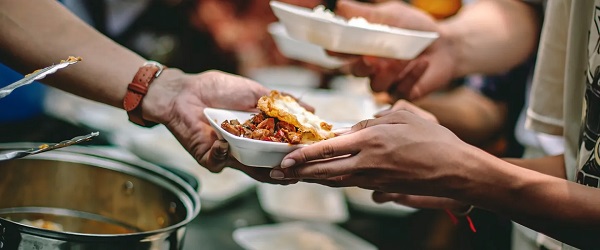
According to recent polling, approximately one in five Canadians have skipped paying a bill over the past year so they can buy groceries. As families are increasingly hard-pressed to make ends meet, this undoubtedly means more and more people must seek out food banks, shelters and other charitable organizations to meet their basic necessities.
And each year, Canadians across the country donate their time and money to charities to help those in need—particularly around the holiday season. Yet at a time when the relatively high cost of living means these organizations need more resources, new data published by the Fraser Institute shows that the level of charitable giving in Canada is actually falling.
Specifically, over the last 10 years (2013 to 2023, the latest year of available data) the share of tax-filers who reported donating to charity fell from 21.9 per cent to 16.8 per cent. And while fewer Canadians are donating to charity, they’re also donating a smaller share of their income—during the same 10-year period, the share of aggregate income donated to charity fell from 0.55 per cent to 0.52 per cent.
To put this decline into perspective, consider this: there would have been 1.5 million more Canadians who donated to charity in 2023—and $755.5 million more in donations—had Canadians given to the same extent they did 10 years prior. Simply put, this long-standing decline in charitable giving in Canada ultimately limits the resources available for charities to help those in need.
On the bright side, despite the worrying long-term trends, the share of aggregate income donated to charity recently increased from 0.50 per cent in 2022 to 0.52 per cent in 2023. While this may seem like a marginal improvement, 0.02 per cent of aggregate income for all Canadians in 2023 was $255.7 million.
The provinces also reflect the national trends. From 2013 to 2023, every province saw a decline in the share of tax-filers donating to charity. These declines ranged from 15.4 per cent in Quebec to 31.4 per cent in Prince Edward Island.
Similarly, almost every province recorded a drop in the share of aggregate income donated to charity, with the largest being the 24.7 per cent decline seen in P.E.I. The only province to buck this trend was Alberta, which saw a 3.9 per cent increase in the share of aggregate income donated over the decade.
Just as Canada as a whole saw a recent improvement in the share of aggregate income donated, so too did many of the provinces. Indeed, seven provinces (except Manitoba, Nova Scotia and Newfoundland and Labrador) saw an increase in the share of aggregate income donated to charity from 2022 to 2023, with the largest increases occurring in Saskatchewan (7.9 per cent) and Alberta (6.7 per cent).
Canadians also volunteer their time to help those in need, yet the latest data show that volunteerism is also on the wane. According to Statistics Canada, the share of Canadians who volunteered (both formally and informally) fell by 8 per cent from 2018 to 2023. And the total numbers of hours volunteered (again, both formal and informal) fell by 18 per cent over that same period.
With many Canadians struggling to make ends meet, food banks, shelters and other charitable organizations play a critical role in providing basic necessities to those in need. Yet charitable giving—which provides resources for these charities—has long been on the decline. Hopefully, we’ll see this trend turn around swiftly.


|

|
|

|
|
|




-
 International2 days ago
“Captured and flown out”: Trump announces dramatic capture of Maduro
-
 International2 days ago
Trump Says U.S. Strike Captured Nicolás Maduro and Wife Cilia Flores; Bondi Says Couple Possessed Machine Guns
-
Energy1 day ago
The U.S. Just Removed a Dictator and Canada is Collateral Damage
-
 International1 day ago
US Justice Department Accusing Maduro’s Inner Circle of a Narco-State Conspiracy
-
 Haultain Research1 day ago
Trying to Defend Maduro’s Legitimacy
-
 Business2 days ago
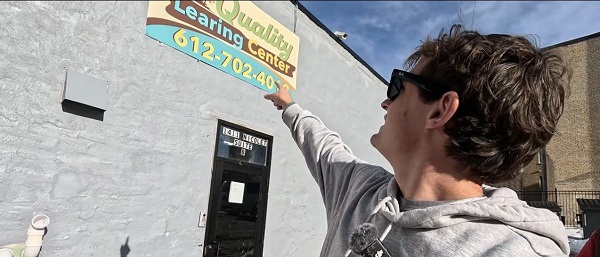
Vacant Somali Daycares In Viral Videos Are Also Linked To $300 Million ‘Feeding Our Future’ Fraud
-
 Daily Caller22 hours ago
Trump Says US Going To Run Venezuela After Nabbing Maduro
-
International1 day ago
U.S. Claims Western Hemispheric Domination, Denies Russia Security Interests On Its Own Border