
COVID-19
How far is too far? How much is too much? The role of reason in pandemic control


How far is too far????
I have been watching with interest the great extremes Canadian municipalities have gone to in the great cause of ‘protecting’ Canadians.
While I do not deny the devastating effects of Covid 19 on those who are most vulnerable to its potential respiratory destruction, nor the basket of symptoms from fever to loss of taste, I am incredibly cynical of the extremism displayed in measures enacted by governmental bodies in each province!
The level of care exhibited by medical and health care professionals is awe inspiring, so much so that those in the medical front lines have bee publicly lauded and thanked, though probably not enough.
Those who are working in what is deemed essential services have been exemplary as well-grocery stores, drug stores and other retail outlets with goods necessary for survival.
Firstly, I have to question a few things. How was the list of essential services arrived at? And more importantly, what makes a church NON ESSENTIAL when a liquor store is still open? Spiritual care is far more long lasting (eternal) and beneficial to mental and family health than a retail outlet whose products, if mis used for self medication has led to destruction of marriages and incredible social destruction?
Secondly, if we are looking to banning activities with an eye to public safety, why is going to busy retail outlets deemed ‘safe’ when activities conducted outdoors, like going to parks or playgrounds are not safe or recommended.
It would make sense to me that any activity that occurs where there are few people, or protection via real glass or real distance, like camping and fishing or walking amidst our many parks and dog walk areas would be encouraged as opposed to being banned.

If anyone has gone into a Walmart or Superstore, and they are vulnerable or not necessarily well, the close contact with other shoppers accidental or on purpose, clearly does not fall under the no-contact or isolation recommendations.
Thirdly, if we, as a country are concerned about keeping people employed, why is there not a protocol in place to allow healthy workers to return to their employment to keep our economy going instead of keeping the 90 plus percent home and allowing our businesses to stagnate or potentially close? Why don’t we keep the vulnerable and symptom exhibiting Canadians home?
If anyone has been traveling, stay home.
With the isolation order and economic shut down in place, all of Canada is being considered guilty (carrier or ill with symptoms) instead of innocent (healthy) first!
Fourthly, where is our national, provincial and local leadership? With our national health spokesperson telling us to stay home for everyone’s protection, where is the voice of leadership that looks at this with a voice of reason and balance? One that provides guidance and humility that says, we can’t handle this on our own without REASON and without fear?
We also need to realize that without spiritual leaders coming to the forefront and providing calm, spiritually based principles for coping in this time where fear is the common currency and panic is the common denominator amongst communities.
In truth, science alone will not help us through this crisis, but rather a balanced approach that recognizes the sovereignty of God in our lives will take us through this. We need leaders who publicly espouse faith and humility, not a changing narrative in science that is being questioned worldwide.
Let us pray that the voice of reason and faith is louder than the cries of fear in our nation.


From LifeSiteNews
A judge ruled that the Ontario Court of Justice is already ‘satisfied’ with Chris Barber’s sentence and taking away his very livelihood would be ‘disproportionate.’
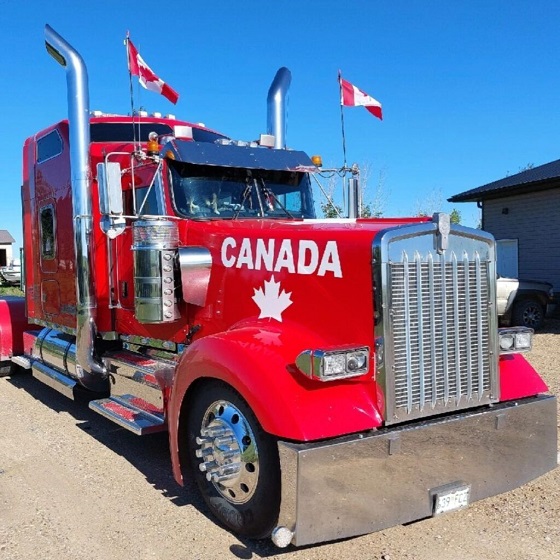
A Canadian judge has dismissed a demand from Canadian government lawyers to seize Freedom Convoy leader Chris Barber’s “Big Red” semi-truck.
On Friday, Ontario Court of Justice Judge Heather Perkins-McVey denied the Crown’s application seeking to forfeit Barber’s truck.
She ruled that the court is already “satisfied” with Barber’s sentence and taking away his very livelihood would be “disproportionate.”
“This truck is my livelihood,” said Barber in a press release sent to LifeSiteNews.
“Trying to permanently seize it for peacefully protesting was wrong, and I’m relieved the court refused to allow that to happen,” he added.
Criminal defense lawyer Marwa Racha Younes was welcoming of the ruling as well, stating, “We find it was the right decision in the circumstances and are happy with the outcome.”
John Carpay, president of the Justice Centre for Constitutional Freedoms (JCCF), said the decision is “good news for all Canadians who cherish their Charter freedom to assemble peacefully.”
READ: Freedom Convoy protester appeals after judge dismissed challenge to frozen bank accounts
“Asset forfeiture is an extraordinary power, and it must not be used to punish Canadians for participating in peaceful protest,” he added in the press release.
As reported recently by LifeSiteNews, the Canadian government claimed that Barber’s truck is an “offence-related property” relating to his involvement in the 2022 protests against Canada’s COVID mandates.
At this time, the court ruling ends any forfeiture proceedings for the time being, however Barber will continue to try and appeal his criminal conviction and house arrest sentence.
Barber’s truck, a 2004 Kenworth long-haul he uses for business, was a focal point in the 2022 protests. He drove it to Ottawa, where it was parked for an extended period of time, but he complied when officials asked him to move it.
On October 7, 2025, after a long trial, Ontario Court Justice Perkins-McVey sentenced Barber and Tamara Lich, the other Freedom Convoy leader, to 18 months’ house arrest. They had been declared guilty of mischief for their roles as leaders of the 2022 protest against COVID mandates, and as social media influencers.
Lich and Barber have filed appeals of their own against their house arrest sentences, arguing that the trial judge did not correctly apply the law on their mischief charges.
Government lawyers for the Crown have filed an appeal of the acquittals of Lich and Barber on intimidation charges.
The pair’s convictions came after a nearly two-year trial despite the nonviolent nature of the popular movement.
From LifeSiteNews
Protestor Evan Blackman’s legal team argues Trudeau’s Emergencies Act-based bank account freezes were punitive state action tied directly to protest participation.
A Freedom Convoy protester whose bank accounts were frozen by the Canadian government says a judge erred after his ruling did not consider the fact that the funds were frozen under the Emergencies Act, as grounds for a stay of proceedings.
In a press release sent out earlier this week, the Justice Centre for Constitutional Freedoms (JCCF) said that Freedom Convoy protestor Evan Blackman will challenge a court ruling in his criminal case via an appeal with the Ontario Superior Court of Justice.
“This case raises serious questions about how peaceful protest is treated in Canada and about the lasting consequences of the federal government’s unlawful use of the Emergencies Act,” noted constitutional lawyer Chris Fleury. “The freezing of protestors’ bank accounts was part of a coordinated effort to suppress dissent, and courts ought to be willing to scrutinize that conduct.”
Blackman was arrested on February 18, 2022, during the police crackdown on Freedom Convoy protests against COVID restrictions, which was authorized by the Emergencies Act (EA). The EA was put in place by former Prime Minister Justin Trudeau’s Liberal government, which claimed the protests were violent, despite no evidence that this was the case.
Blackman’s three bank accounts with TD Bank were frozen due to his participation in the Freedom Convoy, following a directive ordered by Trudeau.
As reported by LifeSiteNews, in November of this year, Blackman was convicted at his retrial even though he had been acquitted at his original trial. In 2023, Blackman’s “mischief” and “obstructing police” charges were dismissed by a judge due to lack of evidence and the “poor memory of a cop regarding key details of the alleged criminal offences.”
His retrial resulted in Blackman getting a conditional discharge along with 12 months’ probation and 122 hours of community service, along with a $200 victim fine surcharge.
After this, Blackman’s application for a stay of proceedings was dismissed by the court. He had hoped to have his stay of proceedings, under section 24(1) of the Charter of Rights and Freedoms, allowed. However, the judge ruled that the freezing of his bank accounts was legally not related to his arrest, and because of this, the stay of proceedings lacked standing.
The JCCF disagreed with this ruling, noting, it “stands in contrast to a Federal Court decision finding that the government’s invocation of the Emergencies Act was unreasonable and violated Canadians’ Charter rights, including those targeted by the financial measures used against Freedom Convoy protestors.”
As of press time, a hearing date has not been scheduled.
In 2024, Federal Court Justice Richard Mosley ruled that Trudeau was “not justified” in invoking the Emergencies Act.
In early 2022, the Freedom Convoy saw thousands of Canadians from coast to coast come to Ottawa to demand an end to COVID mandates in all forms. Despite the peaceful nature of the protest, Trudeau’s federal government enacted the EA in mid-February.
After the protesters were cleared out, which was achieved through the freezing of bank accounts of those involved without a court order as well as the physical removal and arrest of demonstrators, Trudeau revoked the EA on February 23, 2022.


Death by a thousand clicks – government censorship of Canada’s internet

Chinese Billionaire Tried To Build US-Born Baby Empire As Overseas Elites Turn To American Surrogates
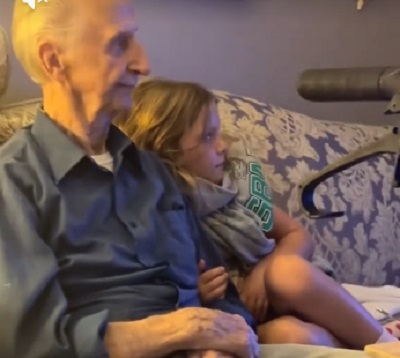
Viral TikTok video shows 7-year-old cuddling great-grandfather before he’s euthanized

Politicians should be honest about environmental pros and cons of electric vehicles
-
 Alberta1 day ago
Alberta’s huge oil sands reserves dwarf U.S. shale
-
 Alberta1 day ago
Canada’s New Green Deal
-
 Energy1 day ago
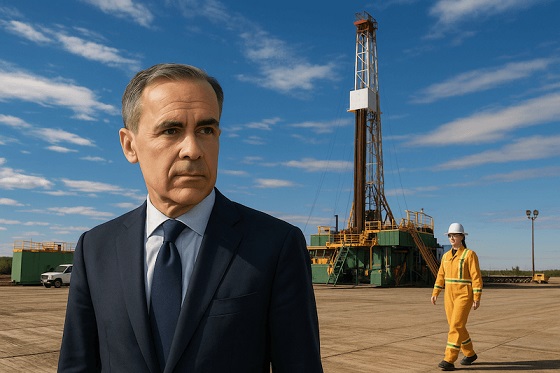
Canada’s sudden rediscovery of energy ambition has been greeted with a familiar charge: hypocrisy
-
 Business1 day ago
COP30 finally admits what resource workers already knew: prosperity and lower emissions must go hand in hand
-
 armed forces2 days ago
Ottawa’s Newly Released Defence Plan Crosses a Dangerous Line
-
 Indigenous1 day ago
Residential school burials controversy continues to fuel wave of church arsons, new data suggests
-
 Business1 day ago
Ottawa Pretends To Pivot But Keeps Spending Like Trudeau
-
 Daily Caller1 day ago
Paris Climate Deal Now Decade-Old Disaster