
Alberta
Fraser Institute says Albertans should get annual dividend to promote Heritage Fund


From the Fraser Institute
By Tegan Hill and Joel Emes
An Alberta Dividend: The Key to Growing the Heritage Fund
If the government of Alberta wants to build the Heritage Fund over the longer term, it should start paying dividends to Albertans, finds a new study published today by the Fraser Institute, an independent non-partisan Canadian think-tank.
“The Alberta government has promised to ‘re-build’ the Heritage Fund, but it will require a consistent commitment over the long term,” said Tegan Hill, director of Alberta Policy at the Fraser Institute and co-author of An Alberta Dividend: The Key to Growing the Heritage Fund.
In 1976, the province established the Alberta’s Heritage Savings Trust Fund to save a share of the province’s resource revenues to provide ongoing benefits to Albertans. Since its creation, however, resource revenue contributions have only been made in 11 of 48 years of the fund’s existence and just 3.9 per cent of total resource revenue has been deposited to the fund over its lifetime.
Learning from Alaska’s success with its resource revenue savings fund—the Alaska Permanent Fund—the study proposes that Alberta should introduce a dividend to provincial residents to create public buy-in that generates political pressure to adhere to fiscal rules around the Heritage Fund’s operation—such as consistent resource
revenue contributions and inflation-proofing of the fund’s principal—to ensure its growth over time.
For perspective, the Permanent Fund was started the same year as Alberta’s Heritage Fund but has grown to US$78.0 billion in 2022/23—or C$88.6 billion—compared to a balance of just C$19.0 billion in Alberta’s Heritage Fund.
Using two alternatives based on Alaska, which includes mandatory 25 per cent resource revenue contributions and consistent inflation proofing of the fund’s principal, the Heritage Fund has the potential to pay each Albertan a total of $571 to $1,108 in dividends over the next three years—equivalent to $2,284 to $4,430 per family of four.
Under these rules, the Heritage Fund would be worth between $35.8 billion and $38.7 billion by 2026/27, while paying out between $2.9 billion to $5.5 billion in dividends to Albertans.
“As demonstrated in Alaska, by giving citizens an ownership share in the state’s resource fund, they demand that sound rules regarding the governance of the fund be adhered to.” said Hill.
- The Smith government has promised to “re-build” the Heritage Fund so that eventually its earnings are significant enough to replace volatile resource revenue in the budget. While this is a worthy goal, it will require a long-term commitment.
- Building on work from Hill, Emes, and Clemens (2021), this bulletin uses Alaska’s success with its resource revenue savings fund—the Alaska Permanent Fund—to demonstrate how the Smith government can introduce new fiscal rules to ensure growth in the Heritage Fund with a focus on the annual dividend.
- As demonstrated in Alaska, by giving citizens ownership shares in the state resources, they recognize their vested interest and demand that the state maximizes returns from such resources. Put simply, by creating public buy-in, the dividend generates political pressure to enforce robust fiscal rules around the fund’s operation to ensure its growth.
- Using two illustrative models based on the Alaska Permanent Fund, which includes mandatory 25 percent resource revenue contributions and consistent inflation proofing of the fund’s principal, each Albertan could be paid an estimated $148 to $297 in dividends in 2024/25, equivalent to $594 to $1,187 per family of four. From 2024/25 to 2026/27, each Albertan could receive a total of $571 to $1,108 in dividends, equivalent to $2,284 to $4,430 per family of four.
- Under these rules, the Heritage Fund would be worth between $35.8 billion and $38.7 billion by 2026/27, while paying out between $2.9 billion to $5.5 billion in dividends to Albertans.
Authors:


Alberta
Alberta school boards required to meet new standards for school library materials with regard to sexual content


Alberta’s government has introduced new standards to ensure school library materials are age-appropriate.
School libraries should be safe and supportive places where students can learn and explore without being exposed to inappropriate sexual content. However, in the absence of a consistent standard for selecting age-appropriate library materials, school boards have taken different approaches, leading to concerns about safeguards in place.
In response to these concerns, and informed by feedback from education partners and the public, Alberta’s government has created standards to provide school boards with clear direction on the selection, availability and access to school library materials, such as books.
“Our actions to ensure that materials in school libraries don’t expose children to sexual content were never about banning books. These new standards are to ensure that school boards have clear guidance to ensure age-appropriate access to school library materials, while reflecting the values and priorities of Albertans.”
The new standards set clear expectations for school library materials with regard to sexual content and require school boards to implement policies to support these standards.
Standards for school library materials
Under the new standards, school libraries are not permitted to include library materials containing explicit sexual content. Non-explicit sexual content may be accessible to students in Grade 10 and above, provided it is age-appropriate.
“Protecting kids from explicit content is common sense. LGBTQ youth, like all children, deserve to see themselves in stories that are age-appropriate, supportive and affirming – not in material that sexualizes or confuses them.”
School boards must also regularly review their school library collections, publish a full list of available materials and ensure that a staff member supervises students’ access to school library materials. School boards will have to remove any materials with explicit sexual content from their school libraries by October 1.
School board policies and procedures
All school boards must have publicly available policies that align with the new standards for selecting and managing library materials by January 1, 2026. School boards can either create new policies or update existing ones to meet these requirements.
These policies must outline how school library materials are selected and reviewed, how staff supervise students’ access throughout the school day, and how a student, parent, school board employee or other member of the school community can request a review or removal of materials in the school library. School boards are also required to clearly communicate these policies to employees, students and parents before January 2026.
“A robust, grade- and age-appropriate library catalogue is vital for student success. We welcome the ministry’s initiative to establish consistent standards and appreciate the ongoing consultation to help craft a plan that will serve our families and communities well.”
“Red Deer Public Schools welcomes the new provincial standards for school library materials. Our division is committed to maintaining welcoming, respectful learning spaces where students can grow and thrive. Under the new standards for school libraries, we remain dedicated to providing learning resources that reflect our values and support student success.”
Quick facts
- The new standards will apply to public, separate, francophone, charter and independent schools.
- The ministerial order does not apply to municipal libraries located within schools or materials selected for use by teachers as learning and teaching resources.
- From May 26 to June 6, almost 80,000 people completed an online survey to provide feedback on the creation of consistent standards to ensure the age-appropriateness of materials available to students in school libraries.
Related information
- Ministerial Order
- School library standards engagement
- Reference Materials: Content warning: this document contains graphic content that may be disturbing to viewers and is not appropriate for young viewers. Viewer discretion is advised.

Regional health councils give Albertans a voice
Albertans want a health care system that reflects where they live and adapts to the unique needs of their communities. As part of the province’s health care refocus, Alberta’s government committed to strengthening community voices by providing more opportunities for Albertans to bring forward their local priorities and offer input on how to improve the system.
The regional advisory councils, made up of 150 members from 71 communities, will advise Alberta’s four health ministries and the newly refocused health agencies: Primary Care Alberta, Acute Care Alberta, Assisted Living Alberta and Recovery Alberta. Each council will explore solutions to local challenges and identify opportunities for the health system to better support community decision-making.
“By hearing first-hand community feedback directly, we can build a system that is more responsive, more inclusive and ultimately more effective for everyone. I am looking forward to hearing the councils’ insights, perspectives and solutions to improve health care in all corners of our province.”
“Regional advisory councils will strengthen acute care by giving communities a direct voice. Their insights will help us address local needs, improve patient outcomes and ensure timely access to hospital services.”
“A ‘one-size-fits-all’ approach does not address unique regional needs when it comes to mental health and addiction challenges. These councils will help us hear directly from communities, allowing us to tailor supports and services to meet the needs of Albertans where they are.”
“Every community has unique needs, especially when it comes to seniors and vulnerable populations. These regional advisory councils will help us better understand those needs and ensure that assisted living services are shaped by the people who rely on them.”
Members include Albertans from all walks of life, health care workers, community leaders, Indigenous and municipal representatives, and others with a strong tie to their region. About one-third of members work in health care, and more than half of the council chairs are health professionals. Almost one-quarter are elected municipal officials, including 10 serving as chairs or vice-chairs. Ten councils also include a representative from a local health foundation.
Council members will share local and regional perspectives on health care services, planning and priorities to help ensure decisions reflect the realities of their communities. By engaging with residents, providers and organizations, they will gather feedback, identify challenges and bring forward ideas that may not otherwise reach government.
Through collaboration and community-informed solutions, members will help make the health system more responsive, accessible and better able to meet the needs of Albertans across the province.
“As Primary Care Alberta works to improve access to primary health care services and programs across Alberta, we are grateful to have the opportunity to tap into a dedicated group of community leaders and representatives. These people know their communities and local needs, and we look forward to learning from their experiences and knowledge as we shape the future of primary care in Alberta.”
“The regional advisory councils will help to bring forward the voices of patients, families and front-line providers from every corner of Alberta. Their insights will help us plan smarter and deliver care that’s timely, effective and truly local. We look forward to working closely with them to strengthen hospital and surgical services across the province.”
“Nobody understands the health care challenges unique to a community better than the people who live there. The regional health advisory councils are made up of those living and working on the front lines across the province, ensuring we are getting the perspective of Albertans most affected by our health care system.”
“Alongside Recovery Alberta’s staff and physician team, these regional advisory councils will build upon the high standard of mental health, addiction and correctional health services delivered in Alberta.”
Indigenous Advisory Council
Alberta’s government continues to work directly with Indigenous leaders across the province to establish the Indigenous Advisory Council to strengthen health care services for First Nation, Métis and Inuit communities.
With up to 22 members, including Indigenous health care workers, community leaders and individuals receiving health care services, the council will represent diverse perspectives across Alberta. Members will provide community perspectives about clinical service planning, capital projects, workforce development and cultural integration in health care.
Related information



FDA requires new warning on mRNA COVID shots due to heart damage in young men

Before Trudeau average annual immigration was 617,800. Under Trudeau number skyrocketted to 1.4 million annually

“This is a total fucking disaster”
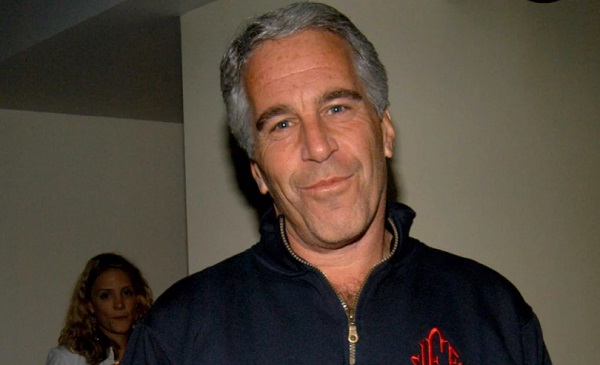
News Jeffrey Epstein did not have a client list, nor did he kill himself, Trump DOJ, FBI claim
-
 Also Interesting2 days ago
9 Things You Should Know About PK/PD in Drug Research
-
 Business2 days ago
‘Experts’ Warned Free Markets Would Ruin Argentina — Looks Like They Were Dead Wrong
-
 Business2 days ago
Cannabis Legalization Is Starting to Look Like a Really Dumb Idea
-
 Bruce Dowbiggin1 day ago
The Covid 19 Disaster: When Do We Get The Apologies?
-
 Media2 days ago
CBC journalist quits, accuses outlet of anti-Conservative bias and censorship
-
 Business1 day ago
Carney government should recognize that private sector drives Canada’s economy
-
 Automotive2 days ago
America’s EV Industry Must Now Compete On A Level Playing Field
-
Alberta1 day ago
Fourteen regional advisory councils will shape health care planning and delivery in Alberta