
Energy
Navigating New Political Currents: How the U.S. Election Could Impact Canadian Energy – Resource Works

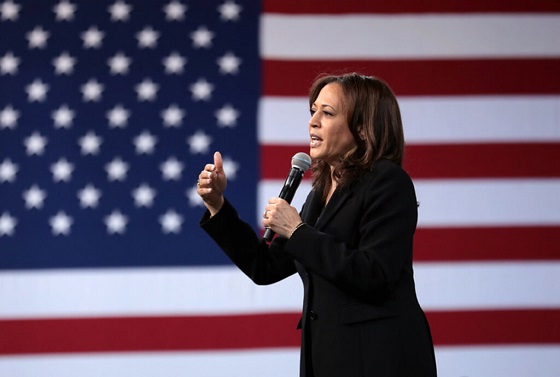
From EnergyNow.ca
By Resource Works
More News and Views From Resource Works Here
As Stewart Muir, CEO of Resource Works, attends the annual Pacific North West Economic Region (PNWER) conference in Whistler this week, the unexpected news that President Joe Biden won’t be on the November 5 presidential ballot sent shockwaves through the policy and trade discussions.
For policy wonks like those I’m gathered with in Whistler this week, could there be a better gift than the conundrums unleashed over the past week onto the U.S. political landscape?
The rise of Donald Trump and the potential presidential candidacy of Kamala Harris conjure up a staggering range of possibilities. When it comes to trade, international relations, and the future of the foundational natural resource sectors that unify the ten sub-national jurisdictions making up PNWER, this is what everyone is going to be talking about..
With Trump securing the Republican nomination last week, Canadian energy producers were left pondering what his potential return to the White House might mean for their industry. Like a wildcatter drilling an exploratory well, Trump’s energy policies promise both gushers of opportunity and dry holes of risk for our oil and gas sector.
On the upside, his pledge to unleash American energy production could boost overall demand and prices, indirectly benefiting Canadian exporters. His promised regulatory reforms may also grease the wheels for new pipelines and LNG terminals, easing the flow of our energy products southward. It’s enough to make an Albertan oilman shed a tear of joy into his Stampede pancakes.
But before we break out the champagne (or perhaps a nice Canadian ice wine), consider the potential downsides. Trump’s “America First” trade policies and tariff threats loom like storm clouds on the horizon for Canadian exporters. His vow to gut environmental regulations faster than you can say “EPA” could leave Canadian producers at a competitive disadvantage, burdened by our quaint commitment to responsible production practices.
Yet in this potential regulatory race to the bottom, I spy an opportunity as golden as the fields of Saskatchewan canola. By doubling down on our world-class environmental and safety standards, Canadian energy could position itself as the responsible choice in global markets.
Picture it: “Canadian crude – now with 50% less guilt!” We could be the Tesla of fossil fuels, if you will.
Of course, there’s a risk in tooting our own sustainability horn too loudly. Trump isn’t known for his fondness of perceived criticism, and antagonizing him could lead to retaliatory tariffs faster than you can say “covfefe.” We’ll need to navigate this terrain as carefully as a pipeline through the Rockies.
On the other hand, if Kamala Harris, Biden’s preferred successor, retakes the White House, the landscape will look markedly different. Harris is likely to continue the Biden administration’s focus on climate action and clean energy. This could mean stronger support for renewables, potentially benefiting Canadian sectors involved in green technology and clean energy exports. However, stricter environmental regulations and a push for rapid decarbonization might challenge traditional oil and gas industries.
A Harris administration might prioritize cross-border collaboration on climate initiatives, providing opportunities for joint projects in carbon capture and storage (CCS), hydrogen development, and renewable energy. This could foster closer ties and create a more integrated North American energy market focused on sustainability.
Bloomberg reports that while Harris wouldn’t be likely to make major shifts to the direction Biden charted on climate change, her opposition to offshore drilling and fracking suggests her signature move as president could be bringing fierce oil industry antagonism to the White House. As California attorney general, she brought lawsuits against energy companies, prosecuted a pipeline company over an oil leak and investigated Exxon Mobil Corp. for misleading the public about climate change.
Yet, such a focus on environmental standards could also mean increased scrutiny and regulatory hurdles for Canadian energy projects seeking to enter the U.S. market. Canadian producers will need to balance compliance with high environmental standards while remaining competitive.
In either scenario, navigating the U.S. political landscape will require strategic adaptability from Canadian energy producers. Trump’s potential return could mean deregulation and a push for fossil fuel dominance, while a Harris presidency could emphasize clean energy and environmental collaboration.
And for anyone lamenting the potential Trump threat to renewables growth, remember the number one test for The Donald: “Can I make money off it?” From Texas to Alberta, solar is a huge growth opportunity in the “and more” rather than the “and/or” category of energy opportunities that are creating investor profits. There’s no reason for him to fire opportunities like those.
Speaking of careful navigation, let’s ponder the electric vehicle conundrum. If Trump follows through on scrapping EV mandates, Canada may find itself stuck between a Chevy Bolt and a hard place. Do we follow suit and risk our climate goals, or forge ahead solo and risk becoming an automotive island? It’s enough to make one long for the simpler days of the horse and buggy.
But fear not, dear reader. For in the potential pairing of a Trump presidency and a Pierre Poilievre prime ministership, I see a silver lining as shiny as a freshly polished oil rig. Their aligned views on energy could usher in a new era of continental cooperation, turning the 49th parallel into a veritable pipeline of mutual prosperity. If current trends of market-driven decarbonization continue, this would actually be positive for the climate (and yes, I can already hear the chorus of those saying such a thing is impossible).
In the end, navigating the Trump energy landscape will require all the nimbleness of a Fort McMurray worker on an icy road. But with a dash of ingenuity, a sprinkle of diplomacy, and perhaps a generous helping of maple syrup to sweeten the deal, Canadian energy producers may yet find themselves not just surviving, but thriving in the turbulent waters of a potential Trump 2.0 era.


From the Fraser Institute
Two recent events exemplify the fundamental irrationality that is Canada’s electric vehicle (EV) policy.
First, the Carney government re-committed to Justin Trudeau’s EV transition mandate that by 2035 all (that’s 100 per cent) of new car sales in Canada consist of “zero emission vehicles” including battery EVs, plug-in hybrid EVs and fuel-cell powered vehicles (which are virtually non-existent in today’s market). This policy has been a foolish idea since inception. The mass of car-buyers in Canada showed little desire to buy them in 2022, when the government announced the plan, and they still don’t want them.
Second, President Trump’s “Big Beautiful” budget bill has slashed taxpayer subsidies for buying new and used EVs, ended federal support for EV charging stations, and limited the ability of states to use fuel standards to force EVs onto the sales lot. Of course, Canada should not craft policy to simply match U.S. policy, but in light of policy changes south of the border Canadian policymakers would be wise to give their own EV policies a rethink.
And in this case, a rethink—that is, scrapping Ottawa’s mandate—would only benefit most Canadians. Indeed, most Canadians disapprove of the mandate; most do not want to buy EVs; most can’t afford to buy EVs (which are more expensive than traditional internal combustion vehicles and more expensive to insure and repair); and if they do manage to swing the cost of an EV, most will likely find it difficult to find public charging stations.
Also, consider this. Globally, the mining sector likely lacks the ability to keep up with the supply of metals needed to produce EVs and satisfy government mandates like we have in Canada, potentially further driving up production costs and ultimately sticker prices.
Finally, if you’re worried about losing the climate and environmental benefits of an EV transition, you should, well, not worry that much. The benefits of vehicle electrification for climate/environmental risk reduction have been oversold. In some circumstances EVs can help reduce GHG emissions—in others, they can make them worse. It depends on the fuel used to generate electricity used to charge them. And EVs have environmental negatives of their own—their fancy tires cause a lot of fine particulate pollution, one of the more harmful types of air pollution that can affect our health. And when they burst into flames (which they do with disturbing regularity) they spew toxic metals and plastics into the air with abandon.
So, to sum up in point form. Prime Minister Carney’s government has re-upped its commitment to the Trudeau-era 2035 EV mandate even while Canadians have shown for years that most don’t want to buy them. EVs don’t provide meaningful environmental benefits. They represent the worst of public policy (picking winning or losing technologies in mass markets). They are unjust (tax-robbing people who can’t afford them to subsidize those who can). And taxpayer-funded “investments” in EVs and EV-battery technology will likely be wasted in light of the diminishing U.S. market for Canadian EV tech.
If ever there was a policy so justifiably axed on its failed merits, it’s Ottawa’s EV mandate. Hopefully, the pragmatists we’ve heard much about since Carney’s election victory will acknowledge EV reality.

Kenneth P. Green
Senior Fellow, Fraser Institute
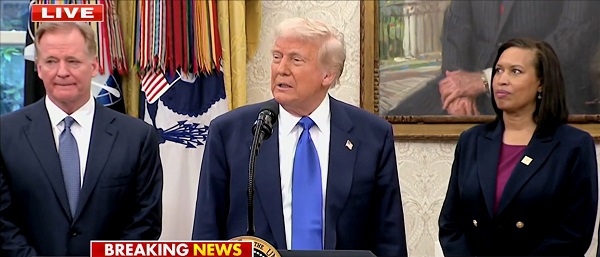

From the Daily Caller News Foundation
By Audrey Streb
President Donald Trump issued an executive order calling for the end of green energy subsidies by strengthening provisions in the One Big Beautiful Bill Act on Monday night, citing national security concerns and unnecessary costs to taxpayers.
The order argues that a heavy reliance on green energy subsidies compromise the reliability of the power grid and undermines energy independence. Trump called for the U.S. to “rapidly eliminate” federal green energy subsidies and to “build upon and strengthen” the repeal of wind and solar tax credits remaining in the reconciliation law in the order, directing the Treasury Department to enforce the phase-out of tax credits.
“For too long, the Federal Government has forced American taxpayers to subsidize expensive and unreliable energy sources like wind and solar,” the order states. “Reliance on so-called ‘green’ subsidies threatens national security by making the United States dependent on supply chains controlled by foreign adversaries.”
Dear Readers:
As a nonprofit, we are dependent on the generosity of our readers.
Please consider making a small donation of any amount here.
Thank you!
Former President Joe Biden established massive green energy subsidies under his signature 2022 Inflation Reduction Act (IRA), which did not receive a single Republican vote.
The reconciliation package did not immediately terminate Biden-era federal subsidies for green energy technology, phasing them out over time instead, though some policy experts argued that drawn-out timelines could lead to an indefinite continuation of subsidies. Trump’s executive order alludes to potential loopholes in the bill, calling for a review by Secretary of the Treasury Scott Bessent to ensure that green energy projects that have a “beginning of construction” tax credit deadline are not “circumvented.”
Additionally, the executive order directs the U.S. to end taxpayer support for green energy supply chains that are controlled by foreign adversaries, alluding to China’s supply chain dominance for solar and wind. Trump also specifically highlighted costs to taxpayers, market distortions and environmental impacts of subsidized green energy development in explaining the policy.
Ahead of the reconciliation bill becoming law, Trump told Republicans that “we’ve got all the cards, and we are going to use them.” Several House Republicans noted that the president said he would use executive authority to enhance the bill and strictly enforce phase-outs, which helped persuade some conservatives to back the bill.



Before Trudeau average annual immigration was 617,800. Under Trudeau number skyrocketted to 1.4 million annually

FDA requires new warning on mRNA COVID shots due to heart damage in young men

Alberta Next: Immigration

“This is a total fucking disaster”
-
 Also Interesting1 day ago
9 Things You Should Know About PK/PD in Drug Research
-
 Business2 days ago
‘Experts’ Warned Free Markets Would Ruin Argentina — Looks Like They Were Dead Wrong
-
 Business1 day ago
Cannabis Legalization Is Starting to Look Like a Really Dumb Idea
-
 Business2 days ago
WEF-linked Linda Yaccarino to step down as CEO of X
-
 Business1 day ago
Carney government should recognize that private sector drives Canada’s economy
-
 Bruce Dowbiggin1 day ago
The Covid 19 Disaster: When Do We Get The Apologies?
-
 Media1 day ago
CBC journalist quits, accuses outlet of anti-Conservative bias and censorship
-
 Automotive2 days ago
America’s EV Industry Must Now Compete On A Level Playing Field