
Agriculture
EU Farmers Rise Against the Climate Cult


From the Brownstone Institute

The EU Commission is playing a dangerous game. On the one hand, they are attempting to placate farmers by making expedient short-term concessions to them. On the other hand, they are holding fast to their commitment to cut greenhouse gas emissions in Europe by 90% by 2040
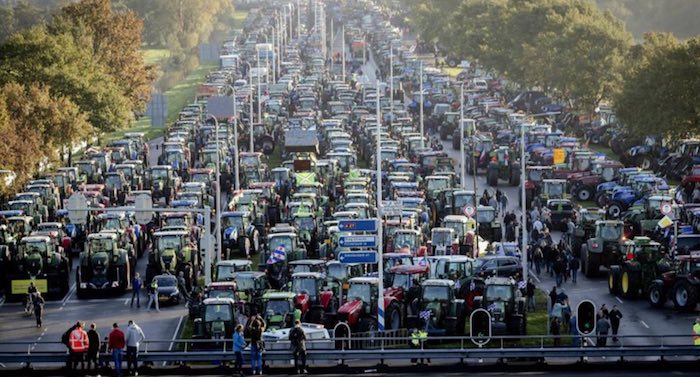
Many major arteries connecting Europe have been obstructed or brought to a standstill in recent days by a wave of protests by farmers against what they claim are overly burdensome environmental targets and unsustainable levels of bureaucracy associated with EU and national farming regulations.
The warning shots of this showdown between policymakers and farmers had already been fired on 1st October 2019, when more than 2,000 Dutch tractors caused traffic mayhem in the Netherlands in response to an announcement that livestock farms would have to be bought out and shut down to reduce nitrogen emissions. Early last year, Polish farmers blocked the border with the Ukraine demanding the re-imposition of tariffs on Ukrainian grain.
But it was not until early this year that an EU-wide protest was ignited. German and French protests and tractor blockades made international news, and the blockades were soon replicated in Spain, Portugal, Belgium, Greece, Netherlands, and Ireland. Major highways and ports were blocked and manure was poured over government buildings, as farmers across Europe expressed their frustration at rising farming costs, falling prices for their produce, and crippling environmental regulations that made their products uncompetitive in the global market.
It seems the farmers have European elites rattled, which is hardly surprising, given that EU elections are just around the corner. While the European Commission announced Tuesday it was still committed to achieving a 90% reduction of greenhouse gas emissions in Europe by 2040, it conspicuously omitted any mention of how the farming sector would contribute to that ambitious target. Even more tellingly, the Commission has backed down or fudged on key climate commitments, at least temporarily.
According to politico, EU Commission President Ursula von der Leyen announced on Tuesday that “she was withdrawing an EU effort to rein in pesticide use.” The climbdown on this and other Commission proposals relating to farming was rather embarrassing for the Commission but politically inevitable, given that the protests were spreading rapidly and farmers were showing no signs of going home until their demands were met. As reported by politico,
A note on the possibility of agriculture cutting down on methane and nitrous oxides by 30 percent, which was in earlier drafts of the Commission’s 2040 proposal, was gone by the time it came out on Tuesday. Similarly excised were missives on behavioral change — possibly including eating less meat or dairy — and cutting subsidies for fossil fuels, many of which go to farmers to assist with their diesel costs. Inserted was softer language about the necessity of farming to Europe’s food security and the positive contributions it can make.
The EU Commission is playing a dangerous game. On the one hand, they are attempting to placate farmers by making expedient short-term concessions to them. On the other hand, they are holding fast to their commitment to cut greenhouse gas emissions in Europe by 90% by 2040, while fudging on the fact that a 90% emission cut in 16 years would have drastic implications for farming.
It is clearly politically expedient, especially in an election year, to put out this fire of farming discontent as soon as possible, and buy some peace ahead of June’s European elections. But there is no avoiding the fact that the Commission’s long-term environmental goals, as currently conceived, almost certainly require sacrifices that farmers are simply not willing to accept.
Independently from the merits of EU climate policy, two things are clear: first, EU leaders and environmental activists appear to have vastly underestimated the backlash their policies would spark in the farming community; and second, the apparent success of this dramatic EU-wide protest sets a spectacular precedent that will not go unnoticed among farmers and transport companies, whose operating costs are heavily impacted by environmental regulations like carbon taxes.
The Commission’s embarrassing concessions are proof that high-visibility, disruptive tactics can be effective. As such, we can expect more of this after June’s EU elections if the Commission doubles down again on its climate policy goals.
Republished from the author’s Substack
Author


From Heartland Daily News
By Andrew Weiss
Economics aside, this policy will have no effect on global temperatures. Even if the entire European Union halted all emissions (including livestock) the global temperatures would be reduced by only 0.12 degrees Celsius by the year 2100, assuming the highest climate sensitivity to carbon.
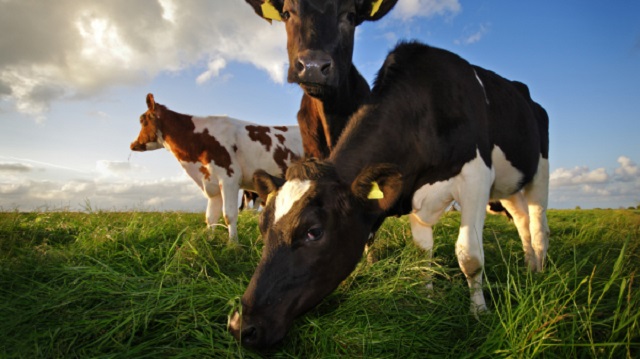
As Europeans generate greenhouse gas emissions by driving or flying off on their long summer holidays, Denmark is trying to lower those emissions by taxing cow burps and flatulence to combat climate change.
The Danish government believes that taxing methane produced by animals will improve the lives of citizens by lowering global temperatures. Therefore, beginning in 2030, livestock farmers will be taxed $17 per ton of carbon dioxide-equivalent emitted by their livestock. That tax will increase to $43 by 2035.
The average cow emits the CO2 equivalent of about three tons per year in methane, so each cow will cost farmers $50 in 2030, reaching about $125 by 2035.
Other livestock such as sheep and pigs are also subject to the methane tax, but they emit less methane because of differences in the chemistry of their digestive systems.
But two professors—William A. van Wijngaarden of York University in Canada and William Happer of Princeton University—argue that restrictions on methane emissions are “not justified by facts.”
CO2 currently makes up about 420 ppm (parts per million), which is 0.042% of the atmosphere. Methane is a much lower 1.9 ppm, or about 0.0002% of the atmosphere.
Methane is increasing in the atmosphere at a rate of about 0.0076 ppm per year, while CO2 is increasing at a rate 300 times faster, or 2.3 ppm a year.
The methane molecule is about 30 times better at trapping heat than the carbon dioxide molecule. Therefore, methane contributes about one-tenth the warming of CO2.
Effect on the Economy
Denmark’s new animal tax will raise food prices. Prices for beef and milk will go up, percolating throughout the nation’s economy. Denmark’s economy contracted 1.8% last quarter and the inflation rate is 2.1%, but expect to see inflation increase with the new animal tax. The tax will disproportionately affect middle-income earners and the poor.
At the same time, farmers will see smaller profit margins. Some farmers will reduce their numbers of cows and shift to other animals or grain. Others might sell their farms and change occupations.
In America, the majority of beef farms are run by small operations. According to the U.S. Department of Agriculture, 54% of farms with beef cattle had fewer than 20 cows. On such a farm, raising a cow costs about $900 per year.
A U.S. methane tax identical to Denmark’s would be the same as an additional 15% tax on cattle. This would be devastating to small ranchers who are already pinched by increased overhead costs.
The Danish policy taxes carbon at $43 per ton. This so-called social cost of carbon is priced even higher here in America, and is an easily manipulated price tag that the government puts on carbon emissions.
Last fall, the U.S. Environmental Protection Agency proposed $190 per ton as the social cost of carbon to make its policies seem worth the regulatory burden. If taxed at this price level, a 20-cow operation would owe Uncle Sam an additional $11,000 per year.
Effect on Carbon Emissions
All 1.5 million cows in Denmark account for about 0.1% of the European Union’s annual 3.6 billion tons of greenhouse emissions.
The chart below compares greenhouse gas emissions by Danish cattle to emissions in all of Denmark and in the entire European Union.

When it comes to the atmospheric concentration of carbon dioxide, CO2 emitted in Denmark is no different than CO2 emitted anywhere else in the world.
If Danish lawmakers are concerned about CO2-caused climate change, the cost of the tax policy needs to be weighed against the global effect on emissions.
In 2022, India emitted 189 million metric tons more than it did in 2021. This is more than four times the entire carbon footprint of Denmark.
Effect on Global Climate
Economics aside, this policy will have no effect on global temperatures. Even if the entire European Union halted all emissions (including livestock) the global temperatures would be reduced by only 0.12 degrees Celsius by the year 2100, assuming the highest climate sensitivity to carbon.

These numbers are calculated using The Heritage Foundation’s climate calculator, which uses a government climate model. (You can use the calculator for yourself here.)
From Denmark to California
Although such policies may seem unlikely to take hold in freedom-loving America, similarly intrusive regulations already have been implemented across multiple sectors. These regulations affect everything in the U.S. from large-scale power plants and the automotive industry to everyday household items such as gas stoves, water heaters, and lawn equipment.
In some states, including New York and California, building codes now prohibit gas hookups in many new construction projects, denying residents the right to decide for themselves what energy sources to use.
As of Jan. 1, it became illegal to buy gas-powered lawn equipment such as lawnmowers, leaf blowers, or chainsaws in California. This law will cost landscaping businesses over $1 billion and raise the price of landscaping services, causing some to lose their jobs and business closures.
It is time to stop perpetuating the fairy tale that taxing cow burps will reduce global temperatures. Such regulations only increase food costs and inflation in general, making poverty even worse.
Andrew Weiss is a research assistant for domestic policy at The Heritage Foundation.
Originally published by The Daily Signal. Republished with permission.
From the Brownstone Institute
By
In my previous two articles, we covered the global war on farmers and the culprits behind this agenda. Today, we will dive into the tactics these organizations use to foist their dystopian vision on the rest of us.
Perhaps you remember Event 201, the pandemic simulation run in late 2019 that served as a dress rehearsal for the 2020 Covid response. Such simulations have been used in the War on Food as well. Take, for example, the Food Chain Reaction Game, a 2015 wargame that simulated the time period from 2020 to 2030. Cargill and the other participants have removed the Food Chain Reaction Game data from their websites, but Cargill’s version was archived by independent researchers, so you can still see it here.
In the simulation, the decade brought “two major food crises, with prices approaching 400 percent of the long term average; a raft of climate-related extreme weather events; governments toppling in Pakistan and Ukraine; and famine and refugee crises in Bangladesh, Myanmar, Chad and Sudan.” When the game ended, its organizers had imposed meat taxes in Europe, capped CO2 emissions, and instituted a global carbon tax. The time period of the Food Chain Reaction Game handily coincides with the 2020 Covid crisis and ends with the culmination of Agenda 2030. If you don’t think those dates are significant, you aren’t paying attention.
The parties behind this simulation include the World Wildlife Fund, the Center for American Progress, the Center for Naval Analyses, and Cargill. Note the participation of US military and intelligence-linked organizations in this simulation, much as they appeared throughout the Covid power grab. Cargill, as I mentioned before, is one of the most powerful members of the global Big Ag cartel and have excelled in crushing independent farmers globally to establish total control of the food supply. The Center For American Progress is a Soros and Podesta-affiliated think tank.
The World Wildlife Fund has a shady Malthusian history dating to its eugenicist founders like Prince Bernhard of the Netherlands, co-founder of the Bilderberg Group; transhumanist Julian Huxley (brother of Brave New World author Aldous Huxley); and Britain’s Prince Philip, who said he wanted to be reincarnated “as a deadly virus, to contribute something to solving overpopulation.”
Note that the measures these conspirators concocted – meat taxes and a global carbon tax – have nothing to do with increasing the food supply to end famine – much as Event 201’s participants obsessed about vaccines and controlling misinformation rather than providing effective early treatment for disease. To state the obvious, neither simulation is really about solving hunger or viral contagion. They are designed to game out how to ram an agenda down the throats of an unwilling populace.
Both exercises are classic examples of Hegelian Dialectic, the problem-reaction-solution strategy whereby a problem is created or used to stimulate public demand for a solution. The solution always involves pre-planned actions or legislation that never would have passed public approval before the problem was created. To quote Rahm Emanuel, President Obama’s Chief of Staff, “Never let a serious crisis go to waste. By that I mean, it’s an opportunity to do things you think you could not do before.”
The goal of the Food Chain Reaction Game simulation and the global elites who share this vision is simple but devastating: the controlled demolition of the current food supply and supply chain network – not to end factory farming and replace it with regenerative, earth healing agriculture – but to replace it with a global, centralized, fully surveilled, and tightly controlled food system based on lab-created and industrially processed so-called foods, with little dietary choice and abysmal health outcomes for all but the elites, using climate change as the excuse for it all.
As Bertrand Russell predicted, diet will not be left to individuals, but will be such as the best biochemists recommend.
If you’re new to this topic, you may feel that statement is hyperbolic. It is hard to grasp that there are people planning something this far-reaching and diabolical – it’s as far-fetched as a network of global elites using a lab-escaped virus as an excuse to destroy the economies of the world and forcibly inject billions with experimental poisons. But it is reality, and as the quotes from Bertrand Russell and Monsanto’s CEO hint, this agenda has been in the works for decades.
In my next article, we will look at some of the publicly acknowledged projects that are in the pipeline for achieving this goal.



The Media Refuses to Accept Covid Reality

Hawley: Whistleblowers say Trump’s security detail was unprepared, inexperienced

Court decision allows Trudeau gov’t to avoid accountability on COVID travel app, top legal group says

Claims about ‘safer supply’ diversion aren’t disinformation
-
Brownstone Institute1 day ago
The Media Refuses to Accept Covid Reality
-
 Alberta1 day ago
‘Fireworks’ As Defence Opens Case In Coutts Two Trial
-
 National1 day ago
Liberals offer no response as Conservative MP calls Trudeau a ‘liar’ for an hour straight
-
 COVID-191 day ago
Leaked documents: German gov’t lied about shots preventing COVID, knew lockdowns did more harm than good
-
 Business1 day ago
Federal government seems committed to killing investment in Canada
-
 International1 day ago
Switzerland’s new portable suicide ‘pod’ set to claim its first life ‘soon’
-
 Business1 day ago
Estonia’s solution to Canada’s stagnating economic growth
-
 Economy1 day ago
Kamala Harris’ Energy Policy Catalog Is Full Of Whoppers