
Opinion
Could You Be Abusing Someone on Behalf of a Narcissist?


Today is World Narcissistic Abuse Awareness Day. Yes, believe it or not, it is a real thing. And it hurts.
We are all good people, right? At least, deep down, I hope we believe that; I mean, what person would intentionally, consciously, go out of their way to hurt and destroy another human being?
We probably have all been in contact with a narcissist at some point in our life. Maybe a boss. A friend. A neighbor. Or like me, even a member of your own immediate family.
Narcissists are very smart and calculating. They have had to be; they have been doing this for a very long time. They are self-absorbed, controlling, intolerant to others and their needs, and insistent that others see them as they wish to be seen, even though their front is a façade. “Victimized narcissists” can say hurtful things, but if you dare say something back to defend yourself, you are the enemy and considered abusive. There is no sense in debating with a narcissist; they will shift the blame at all costs. They will never see things through your eyes; they are incapable of reflection or feeling empathy. For this reason, sadly, they don’t have the conscious insight that we do to know that they exhibit this behavior.
Narcissists will suck the life out of you and leave you struggling to breathe. Narcissists don’t care that they pit one family member against another, even sibling against sibling if the narcissist happens to be a parent. Yes, the most excruciating pain is the reality that moms and dads can also be narcissists, leaving their children sometimes hating each other. And the one that dares to speak out to this abuse is left feeling defeated, battered, and bruised by the people they love most in this world even though the wounds are invisible to the naked eye (which is another reason why innocent people get caught in the trap of defending the narc).
And if the relationship becomes so intolerable with a narc that you are forced to make a painful decision of quitting your job, moving, ending a friendship, getting a divorce, or even going low or no contact with one or both of the people who brought you into this world, you become public enemy number one; the narc will attempt to destroy you and your reputation at all costs.
“Narcissist’s will DESTROY your life and erode your self-esteem. They do it with such PERSUASION that you are left feeling like YOU are the one letting them down.”
A narcissist’s public persona is very important to them, which is why they don’t publicly attack you—that would make them look bad. Instead, they carefully choose people in their circle to be their puppets. The narc delivers believable-sounding lies to sympathetic ears, ones that can be easily manipulated. Of course, very decent, loving, caring individuals can be caught in the trap of the narcissist and innocently become what is called “flying monkeys.”
A Flying Monkey? Up until a few months ago, I had never even heard the term. But I felt attacked from all directions and so on my quest to understand and survive this abuse I found this in Wikipedia and finally it all made perfect sense. The complicated pieces all came together in my mind: “Flying monkeys is a phrase used in popular psychology mainly in the context of narcissistic abuse. They are people who act on behalf of a narcissist to a third party, usually for an abusive purpose. Flying monkeys are distinct from enablers…. Enablers just allow or cover for the narcissist’s (abuser’s) own bad behavior.”
This is a phrase made popular by the movie The Wizard of Oz—the Wicked Witch sent her flying monkeys after Dorothy and her friends. In most cases, it is a humorous way of saying “Don’t make me come after you.” But there is nothing humorous about being hated and harassed by a flying monkey on its mission to destroy an innocent person. It is unfair, cruel and causes more pain to someone that is already struggling.
So, beware.
You may be a flying monkey if:
You find yourself believing gossip, even though the facts don’t add up.

You are an adult, yet you take sides, instead of staying impartial.
You are mad, stop speaking to someone and possibly hate someone else who has done nothing to you at all.
You accept someone’s version of the truth although you have no first-hand knowledge of the story.
You believe that the one you are defending is the only one deserving of sympathy.
You are overly involved, feeling the need to defend at all costs.
You are attacking someone else over something that quite frankly is none of your business.
And what should you do if you are on the receiving end of this hatred and smear campaign either from a narcissist or their flying monkey?
It is easier said than done sometimes, but keep calm and do not engage. DON’T ENGAGE. The narc is looking for you to react. It gives them fuel. Strength. Power. And they hate nothing more than the silent treatment, as they are then not getting their narcissistic supply.
Breathe. Ignore it. Read books and articles on narcissism. See a therapist. Write. Cry (it does make you feel better). Cry some more if you have to. Heal. Keep breathing.
Live a beautiful, healthy, productive, and happy life and don’t look back. Narcissists hate that and it does make them angrier. But don’t do it out of spite; do it because you are entitled to that. You are. And never let anyone make you feel guilty or beaten down or ashamed that you choose to do what is best for your life.
We are all responsible for our choices and behaviors and the consequences. Knowledge is a gift and you can always change. Say sorry. Forgive. So, if you believe that you have unintentionally been used by a narcissist as their flying monkey, what you do with that knowledge is up to you.
But know that, moving forward, what you do now IS intentional and conscious.
Jodee Prouse is a Sister. Wife. Mom. Friend. And outspoken advocate to help empower ACOA’s through their journey of life; trauma, truth, addiction & breaking free from family chaos to live YOUR best life. She is the author of the powerful memoir, The Sun is Gone: A Sister Lost in Secrets, Shame, and Addiction and How I Broke Free. To learn more visit www.jodeeprouse.com


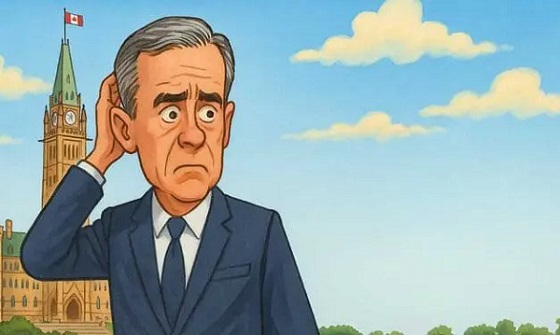
This article supplied by Troy Media.

Carney’s attempt to ease Canada’s dependence on the U.S. stirs a backlash in B.C., raises Indigenous concerns and rattles his own party
The Memorandum of Understanding (MOU) between Prime Minister Mark Carney and Alberta Premier Danielle Smith has opened a political hornet’s nest, exposing deep divisions within the Liberal Party and forcing a national debate that has been avoided for years.
Carney was under mounting pressure to respond to U.S. tariffs that threaten to carve billions out of Canada’s economy. The United States buys more than 95 per cent of Canada’s oil exports, leaving the country highly exposed to U.S. policy decisions. That pressure is now driving his push for a route to the Pacific, a project that could change Canada’s economic future but also destabilize his already fragile minority government.
Carney knows the political risk. His government could fall at any time, which only raises the stakes. Even so, he has pressed ahead. The agreement with Alberta lays early groundwork for a new pipeline to the Pacific. It would expand the oil sands, ease some environmental obligations and revive a proposal industry leaders have pushed for years.
The route is far from settled, but it is expected to run to B.C.’s northern coast and open access to Asian buyers. A Pacific route would finally give Canada a direct path into Asian energy markets, where demand remains strong and prices are often higher than in the United States.
If Carney expected broad support, he did not get it, especially in British Columbia. Because B.C. is the only province with a deep-water port capable of handling large crude carriers, it is the only path a west-coast pipeline can take. The province is now the central battleground, and whether the project succeeds will depend on what happens there.
B.C. Premier David Eby criticized the lack of consultation. “It would have been good for B.C. to be at the table,” he said, warning that the project risks undermining Indigenous support for the province’s liquefied natural gas plans. He also noted that the pipeline has no private backer and no commitments from First Nations, two obstacles that have tripped up projects before.
The backlash quickly spread to Ottawa. Steven Guilbeault, the former environment minister and the most prominent environmentalist ever to serve in a federal cabinet, resigned from cabinet in direct response to the MOU. He said the proposed pipeline “would have major environmental impacts”. Green Party Leader Elizabeth May said his departure “dashes the last hope that Mark Carney is going to have a good climate record ever.”
Several B.C. Liberal MPs echoed concerns about the political cost. CBC News reported anger inside the caucus, with some MPs “seething” over the agreement and worried about losing climate-focused voters.
The voters those MPs fear may not be as opposed as they think. An October Angus Reid Institute survey found that a solid majority of Canadians support a pipeline from northern Alberta to the northwest B.C. coast. In British Columbia, support outweighs opposition by a wide margin. That challenges Eby’s claim that the project lacks public backing. Carney may have more room to manoeuvre than his critics admit.
The most significant challenge, however, comes from Indigenous leaders. British Columbia is the only province that has formally adopted the United Nations Declaration on the Rights of Indigenous Peoples (UNDRIP) into law, giving First Nations a stronger legal position in major project decisions. Court rulings over the past two decades have affirmed a duty to consult and, in some cases, accommodate Indigenous communities, giving them major influence over large projects.
A group representing Coastal First Nations in B.C. said the pipeline “will never happen”. The Union of B.C. Indian Chiefs said it is “loudly objecting” to the MOU, arguing it was drafted without involvement from coastal First Nations and does not meet consultation standards outlined in UNDRIP. “The answer is still no and always will be,” said UBCIC Grand Chief Stewart Phillip. He also said lifting the crude oil tanker ban would amount to bulldozing First Nation rights. Without Indigenous consent, the project cannot proceed, and Carney knows this is the single largest barrier he faces.
Carney’s reasoning is straightforward. The long-term danger of relying on one market outweighs the short-term turbulence created by the pipeline fight. The MOU suggests Ottawa is prepared to reconsider projects once thought politically impossible in order to protect Canada’s economic future. He is betting that doing nothing is the bigger risk.
Whether this pipeline moves forward is uncertain, and the obstacles are real. One fact, however, remains clear. Canada cannot keep betting its stability on a single market.
Toronto-based Rashid Husain Syed is a highly regarded analyst specializing in energy and politics, particularly in the Middle East. In addition to his contributions to local and international newspapers, Rashid frequently lends his expertise as a speaker at global conferences. Organizations such as the Department of Energy in Washington and the International Energy Agency in Paris have sought his insights on global energy matters.
Troy Media empowers Canadian community news outlets by providing independent, insightful analysis and commentary. Our mission is to support local media in helping Canadians stay informed and engaged by delivering reliable content that strengthens community connections and deepens understanding across the country.
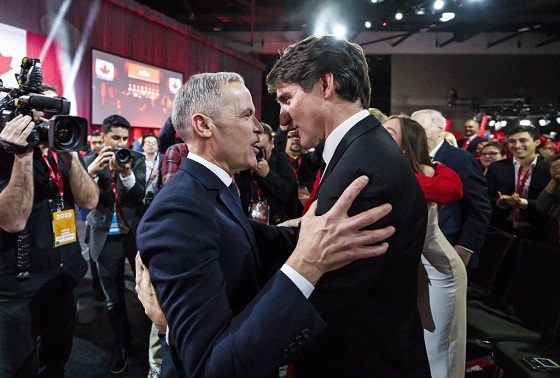
From the Frontier Centre for Public Policy
By Jay Goldberg
Rosy projections, chronic deficits, and opaque budgeting. If nothing changes, Carney’s credibility could collapse under the same weight.
Carney promised a fresh start. His budget makes it look like we’re still stuck with the same old Trudeau playbook
It turns out the Trudeau government really did look at Canada’s economy through rose-coloured glasses. Is the Carney government falling into the same pattern?
New research from the Frontier Centre for Public Policy shows that federal budgets during the Trudeau years “consistently overestimated [Canada’s] fiscal health” when it came to forecasting the state of the nation’s economy and finances over the long term.
In his research, policy analyst Conrad Eder finds that, when looking specifically at projections of where the economy would be four years out, Trudeau-era budgets tended to have forecast errors of four per cent of nominal GDP, or an average of $94.4 billion.
Because budgets were so much more optimistic about long-term growth, they consistently projected that government revenue would grow at a much faster pace. The Trudeau government then made spending commitments, assuming the money would be there. And when the forecasts did not keep up, deficits simply grew.
As Eder writes, “these dramatic discrepancies illustrate how the Trudeau government’s longer-term projections consistently underestimated the persistence of fiscal challenges and overestimated its ability to improve the budgetary balance.”
Eder concludes that politics came into play and influenced how the Trudeau government framed its forecasts. Rather than focusing on the long-term health of Canada’s finances, the Trudeau government was focused on politics. But presenting overly optimistic forecasts has long-term consequences.
“When official projections consistently deviate from actual outcomes, they obscure the scope of deficits, inhibit effective fiscal planning, and mislead policymakers and the public,” Eder writes.
“This disconnect between projected and actual fiscal outcomes undermines the reliability of long-term planning tools and erodes public confidence in the government’s fiscal management.”
The public’s confidence in the Trudeau government’s fiscal management was so low, in fact, that by the end of 2024 the Liberals were polling in the high teens, behind the NDP.
The key to the Liberal Party’s electoral survival became twofold: the “elbows up” rhetoric in response to the Trump administration’s tariffs, and the choice of a new leader who seemed to have significant credibility and was disconnected from the fiscal blunders of the Trudeau years.
Mark Carney was recruited to run for the Liberal leadership as the antidote to Trudeau. His résumé as governor of the Bank of Canada during the Great Recession and his subsequent years leading the Bank of England seemed to offer Canadians the opposite of the fiscal inexperience of the Trudeau years.
These two factors together helped turn around the Liberals’ fortunes and secured the party a fourth straight mandate in April’s elections.
But now Carney has presented a budget of his own, and it too spills a lot of red ink.
This year’s deficit is projected to be a stunning $78.3 billion, and the federal deficit is expected to stay over $50 billion for at least the next four years.
The fiscal picture presented by Finance Minister François-Philippe Champagne was a bleak one.
What remains to be seen is whether the chronic politicking over long-term forecasts that plagued the Trudeau government will continue to be a feature of the Carney regime.
As bad as the deficit figures look now, one has to wonder, given Eder’s research, whether the state of Canada’s finances is even worse than Champagne’s budget lets on.
As Eder says, years of rose-coloured budgeting undermined public trust and misled both policymakers and voters. The question now is whether this approach to the federal budget continues under Carney at the helm.
Budget 2025 significantly revises the economic growth projections found in the 2024 fall economic statement for both 2025 and 2026. However, the forecasts for 2027, 2028 and 2029 were left largely unchanged.
If Eder is right, and the Liberals are overly optimistic when it comes to four-year forecasts, then the 2025 budget should worry Canadians. Why? Because the Carney government did not change the Trudeau government’s 2029 economic projections by even a fraction of a per cent.
In other words, despite the gloomy fiscal numbers found in Budget 2025, the Carney government may still be wearing the same rose-coloured budgeting glasses as the Trudeau government did, at least when it comes to long-range fiscal planning.
If the Carney government wants to have more credibility than the Trudeau government over the long term, it needs to be more transparent about how long-term economic projections are made and be clear about whether the Finance Department’s approach to forecasting has changed with the government. Otherwise, Carney’s fiscal credibility, despite his résumé, may meet the same fate as Trudeau’s.
Jay Goldberg is a fellow with the Frontier Centre for Public Policy.


Landmark 2025 Study Says Near-Death Experiences Can’t Be Explained Away

STUDY: TikTok, Instagram, and YouTube Shorts Induce Measurable “Brain Rot”
Blacked-Out Democracy: The Stellantis Deal Ottawa Won’t Show Its Own MPs
Red Deer’s Jason Stephan calls for citizen-led referendum on late-term abortion ban in Alberta
-
 Business1 day ago
Recent price declines don’t solve Toronto’s housing affordability crisis
-
 Daily Caller1 day ago
Tech Mogul Gives $6 Billion To 25 Million Kids To Boost Trump Investment Accounts
-
 Alberta1 day ago
Alberta will defend law-abiding gun owners who defend themselves
-
 Business1 day ago
Ottawa’s gun ‘buyback’ program will cost billions—and for no good reason
-
 Business1 day ago
Canada’s future prosperity runs through the northwest coast
-
 National1 day ago
Canada Needs an Alternative to Carney’s One Man Show
-
 Artificial Intelligence2 days ago
The Emptiness Inside: Why Large Language Models Can’t Think – and Never Will
-
 Alberta17 hours ago
This new Canada–Alberta pipeline agreement will cost you more than you think