
Alberta
AUDITOR GENERAL MUST INVESTIGATE CASH BONUS SCHEME: NDP


From the Alberta NDP
Alberta’s NDP is requesting the Auditor General investigate the UCP government’s process for pandemic management bonuses as new bonus pay policies were only recently approved in March.
According to CBC News, the Government of Alberta paid out $2.4 million in extra compensation to Government of Alberta managers in 2021 for work related to the pandemic.
An updated “Extra or special services compensation directive” was approved by the Alberta Public Service Commission in March 2022, reporting to then-finance minister Travis Toews. The directive includes two processes for lump-sum payouts, one that requires Treasury Board approval and one that does not.
The directive on the website in February. The creation of a more recent compensation directive suggests considerable effort went into reviewing the policy, raising questions as to how Toews could possibly have no knowledge of the management bonus structure prior to media reports.
“For many Albertans, including members of our caucus who have served as ministers and on Treasury Board, MLA Toews’ claims defy belief,” wrote Alberta NDP Finance Critic Shannon Phillips in a letter to Auditor General Doug Wylie.
“Not only did he have ministerial authority over the policy, but such significant payments, on such a widespread scale, would — as a standard operating procedure — be brought to the attention of the Minister or be considered by the Treasury Board Committee as whole for their appropriateness.”
The Alberta NDP is asking the Auditor General to investigate the following questions:
- Was then Minister of Finance Travis Toews ever briefed on COVID bonus pay? And likewise, did the then Minister verbally approve of these payments? Was the Treasury Board Committee of Cabinet ever informed of these payments, either as an item For Decision or For Information?
- Was the policy on management bonus pay followed appropriately, during the fiscal year in question?
- As the directive on “Extra or special services compensation directive” was reviewed and updated under former Minister Toews, what role did he play in its development and approval? Likewise, what was the timeline on updating this directive?
- Did any members of the political staff, in either the Premier’s Office or a Minister’s Office receive bonus payments for COVID19 related actions, which were not in alignment with their employment contract?
- In addition to the extraordinary bonus payments paid in 2021, how many bonus payments were made thus far in 2022?
——
Letter sent by NDP Finance Critic Shannon Phillips to Alberta Auditor General Doug Wylie
Dear Mr. Wylie,
I am writing to request a performance audit of the Government of Alberta’s bonus payment structure and process related to the COVID-19 pandemic response, and in particular, the actions of the President of Treasury Board and Minister of Finance.
As you are likely aware, and as originally reported by the CBC, the Chief Medical Officer of Health received $227,911 in cash benefits in calendar year 2021 on top of her regular salary of $363,634. While this bonus amounted to 63 per cent of her base pay – or roughly $19,000 per month – media has also reported an additional 106 government employees received supplemental bonus pay.
By all indications, the scale and scope of these bonus payments are unique in Alberta’s history, and are out of line with other provinces who faced similar pandemic demands and challenges.
According to responses provided to media by the government, the Public Service Commission overseen by then-Minister of Finance Travis Toews was responsible for the bonus payment policy, and the payments made to these employees..
Subsequent to these bonus payments becoming public and entering the public conversation, former Minister Toews stated on Aug. 2 through a campaign spokesperson, that he did not authorize or have knowledge of these payments.
On Aug. 3, Mr. Toews promised that, as Premier, no bonuses would be paid “without a ministerial signature.” The implication of this commitment was that the Minister responsible for the bonus payments was, at the time, entirely in the dark.
For many Albertans, including members of our caucus who have served as ministers and on Treasury Board, MLA Toews’ claims defy belief. Not only did he have ministerial authority over the policy, but such significant payments, on such a widespread scale, would – as a standard operating procedure – be brought to the attention of the Minister or be considered by the Treasury Board Committee as whole for their appropriateness.
I am mindful that the Government of Alberta’s “Extra or special services compensation directive” (henceforth referred to as the “directive”) under which these officials were compensated was last reviewed and updated in March 2022. As such, it does not appear reasonable that the Minister responsible would not be aware and actively involved in the directives’ development and approval, and I should note that the directive does not require a ministers’ signature for the paying of bonuses. I also note with interest that the directive was not on the government’s website as of February 2022, suggesting that considerable thought went into policy for the provision of extraordinary bonus payments after 2021, and that the new directive would allow for similar payments in 2022.
Perhaps more importantly, the directive “provides the criteria and approach to the application of lump sum payments.” While there appears to be two types of lump sum payments under this directive, at least one requires Treasury Board approval. Given the threshold of Treasury Board approval under this directive, is it not reasonable to conclude that any lump sum payments to such a large group of officials would not be brought to the attention of the minister responsible.
Furthermore, I am mindful that former Minister Toews, during calendar year 2021, was actively involved in public sector bargaining and compensation, and brought forward to cabinet changes to management compensation in the core public service (see for example, Order in Council 338/2021). The record indicates that the former Minister was deeply involved in compensation issues, including for specific employees, and therefore Albertans are rightly skeptical of his
current claims of ignorance on the COVID bonus payment issue.
In June 2022, you released a report into the activities of then Minister Toews, and Treasury Board and Finance, into the lack of accountability for $4 billion in COVID19 spending during fiscal year 2020-21.
As bonuses are generally paid at the end of the year, and as part of your further performance audit work into COVID19 spending for fiscal year 2021-2022, we are requesting that you investigate and report on the following issues:
1. Was then Minister of Finance Travis Toews ever briefed on COVID bonus pay? And likewise, did the then Minister verbally approve of these payments? Was the Treasury Board Committee of Cabinet ever informed of these payments, either as an item For Decision or For Information?
2. Was the policy on management bonus pay followed appropriately, during the fiscal year in question?
3. As the directive on “Extra or special services compensation directive” was reviewed and updated under former Minister Toews, what role did he play in its development and approval? Likewise, what was the timeline on updating this directive?
4. Did any members of the political staff, in either the Premier’s Office or a Minister’s Office receive bonus payments for COVID19 related actions, which were not in alignment with their employment contract?
5. In addition to the extraordinary bonus payments paid in 2021, how many bonus payments were made thus far in 2022?
The issue of the appropriateness of bonus pay for selected officials during the COVID19 response has generated significant discussion amongst Albertans. More importantly, the role of ministerial oversight and competency has also been called into question on this matter. Given the opaqueness of the Government of Alberta’s responses to legitimate public inquiries, we are asking for your assistance.
At present, only your office has the authority to investigate and answer the public’s questions. We strongly believe that the aforementioned issues warrant your immediate attention, and we look forward to your response.
Sincerely,
Shannon Phillips
NDP Official Opposition Finance Critic
MLA for Lethbridge-West


From LifeSiteNews
‘I think the court was in error,’ Alberta Premier Danielle Smith has said. ‘There will be irreparable harm to children who get sterilized.’
LGBT activists have won an injunction that prevents the Alberta government from restricting “gender transitions” for children.
On June 27, Alberta King’s Court Justice Allison Kuntz granted a temporary injunction against legislation that prohibited minors under the age of 16 from undergoing irreversible sex-change surgeries or taking puberty blockers.
“The evidence shows that singling out health care for gender diverse youth and making it subject to government control will cause irreparable harm to gender diverse youth by reinforcing the discrimination and prejudice that they are already subjected to,” Kuntz claimed in her judgment.
Kuntz further said that the legislation poses serious Charter issues which need to be worked through in court before the legislation could be enforced. Court dates for the arguments have yet to be set.
READ: Support for traditional family values surges in Alberta
Alberta’s new legislation, which was passed in December, amends the Health Act to “prohibit regulated health professionals from performing sex reassignment surgeries on minors.”
The legislation would also ban the “use of puberty blockers and hormone therapies for the treatment of gender dysphoria or gender incongruence” to kids 15 years of age and under “except for those who have already commenced treatment and would allow for minors aged 16 and 17 to choose to commence puberty blockers and hormone therapies for gender reassignment and affirmation purposes with parental, physician and psychologist approval.”
Just days after the legislation was passed, an LGBT activist group called Egale Canada, along with many other LGBT organizations, filed an injunction to block the bill.
In her ruling, Kuntz argued that Alberta’s legislation “will signal that there is something wrong with or suspect about having a gender identity that is different than the sex you were assigned at birth.”
She further claimed that preventing minors from making life-altering decisions could inflict emotional damage.
However, the province of Alberta argued that these damages are speculative and the process of gender-transitioning children is not supported by scientific evidence.
“I think the court was in error,” Alberta Premier Danielle Smith said on her Saturday radio show. “That’s part of the reason why we’re taking it to court. The court had said there will be irreparable harm if the law goes ahead. I feel the reverse. I feel there will be irreparable harm to children who get sterilized at the age of 10 years old – and so we want those kids to have their day in court.”
READ: Canadian doctors claim ‘Charter right’ to mutilate gender-confused children in Alberta
Overwhelming evidence shows that persons who undergo so-called “gender transitioning” procedures are more likely to commit suicide than those who are not given such irreversible surgeries. In addition to catering to a false reality that one’s sex can be changed, trans surgeries and drugs have been linked to permanent physical and psychological damage, including cardiovascular diseases, loss of bone density, cancer, strokes and blood clots, and infertility.
Meanwhile, a recent study on the side effects of “sex change” surgeries discovered that 81 percent of those who have undergone them in the past five years reported experiencing pain simply from normal movements in the weeks and months that followed, among many other negative side effects.

By Mark Milke
It is a mistake to dismiss the movement as too small
In light of the poor showing by separatist candidates in recent Alberta byelections, pundits and politicians will be tempted to again dismiss threats of western separatism as over-hyped, and too tiny to be taken seriously, just as they did before and after the April 28 federal election.
Much of the initial skepticism came after former Leader of the Opposition Preston Manning authored a column arguing that some in central Canada never see western populism coming. He cited separatist sympathies as the newest example.
In response, (non-central Canadian!) Jamie Sarkonak argued that, based upon Alberta’s landlocked reality and poll numbers (37 per cent Alberta support for the “idea” of separation with 25 per cent when asked if a referendum were held “today”), western separation was a “fantasy” that “shouldn’t be taken seriously.” The Globe and Mail’s Andrew Coyne, noting similar polling, opined that “Mr. Manning does not offer much evidence for his thesis that ‘support for Western secession is growing.’”
Prime Minister Mark Carney labelled Manning’s column “dramatic.” Toronto Star columnist David Olive was condescending. Alberta is “giving me a headache,” he wrote. He argued the federal government’s financing of “a $34.2-billion expansion of the Trans Mountain pipeline (TMX)” as a reason Albertans should be grateful. If not, wrote Olive, perhaps it was time for Albertans to “wave goodbye” to Canada.
As a non-separatist, born-and-bred British Columbian, who has also spent a considerable part of his life in Alberta, I can offer this advice: Downplaying western frustrations — and the poll numbers — is a mistake.
One reason is because support for western separation in at least two provinces, Alberta and Saskatchewan, is nearing where separatist sentiment was in Quebec in the 1970s.
In our new study comparing recent poll numbers from four firms (Angus Reid Institute, Innovative Research Group, Leger, and Mainstreet Research), the range of support in recent months for separation from Canada in some fashion is as follows, from low to high: Manitoba (6 per cent to 12 per cent); B.C. (nine per cent to 20 per cent); Saskatchewan (20 per cent to 33 per cent) and Alberta (18 per cent to 36.5 per cent). Quebec support for separation was in a narrow band between 27 per cent and 30 per cent.
What such polling shows is that, at least at the high end, support for separating from Canada is now higher in Saskatchewan and Alberta than in Quebec.
Another, even more revealing comparison is how western separatist sentiment now is nearing actual Quebec votes for separatism or separatist parties back five decades ago. The separatist Parti Québécois won the 1976 Quebec election with just over 41 per cent of the vote. In the 1980 Quebec referendum on separation, “only” 40 per cent voted for sovereignty association with Canada (a form of separation, loosely defined). Those percentages were eclipsed by 1995, when separation/sovereignty association side came much closer to winning with 49.4 per cent of the vote.
Given that current western support for separation clocks in at as much as 33 per cent in Saskatchewan and 36.5 per cent in Alberta, it begs this question: What if the high-end polling numbers for western separatism are a floor and not a ceiling for potential separatist sentiment?
One reason why western support for separation may yet spike is because of the Quebec separatist dynamic itself and its impact on attitudes in other parts of Canada. It is instructive to recall in 1992 that British Columbians opposed a package of constitutional amendments, the Charlottetown Accord, in a referendum, in greater proportion (68.3 per cent) than did Albertans (60.2 per cent) or Quebecers (56.7 per cent).
Much of B.C.’s opposition (much like in other provinces) was driven by proposals for special status for Quebec. It’s exactly why I voted against that accord.
Today, with Prime Minister Carney promising a virtual veto to any province over pipelines — and with Quebec politicians already saying “non” — separatist support on the Prairies may become further inflamed. And I can almost guarantee that any whiff of new favours for Quebec will likely drive anti-Ottawa and perhaps pro-separatist sentiment in British Columbia.
There is one other difference between historic Quebec separatist sentiment and what exists now in a province like Alberta: Alberta is wealthy and a “have” province while Quebec is relatively poor and a have-not. Some Albertans will be tempted to vote for separation because they feel the province could leave and be even more prosperous; Quebec separatist voters have to ask who would pay their bills.
This dynamic again became obvious, pre-election, when I talked with one Alberta CEO who said that five years ago, separatist talk was all fringe. In contrast, he recounted how at a recent dinner with 20 CEOs, 18 were now willing to vote for separation. They were more than frustrated with how the federal government had been chasing away energy investment and killing projects since 2015, and had long memories that dated back to the National Energy Program.
(For the record, they view the federal purchase of TMX as a defensive move in response to its original owner, Kinder Morgan, who was about to kill the project because of federal and B.C. opposition. They also remember all the other pipelines opposed/killed by the Justin Trudeau government.)
Should Canadians outside the West dismiss western separatist sentiment? You could do that. But it’s akin to the famous Clint Eastwood question: Do you feel lucky?
Mark Milke is president and founder of the Aristotle Foundation for Public Policy and co-author, along with Ven Venkatachalam, of Separatist Sentiment: Polling comparisons in the West and Quebec.


What Connor Should Say To Oilers: It’s Not You. It’s Me.
The Passage of Bill C-5 Leaves the Conventional Energy Sector With as Many Questions as Answers
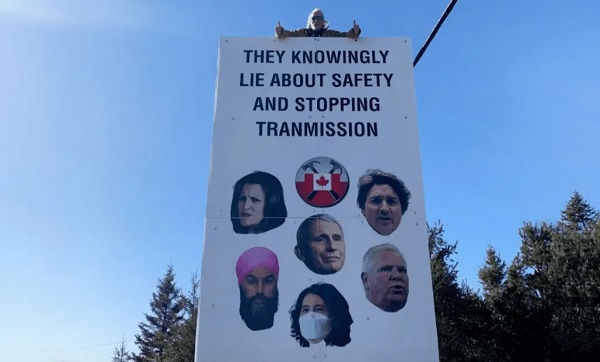
Ontario man launches new challenge against province’s latest attempt to ban free expression on roadside billboards
Federal fiscal anchor gives appearance of prudence, fails to back it up
-
COVID-199 hours ago
Ontario man launches new challenge against province’s latest attempt to ban free expression on roadside billboards
-
 Energy17 hours ago
This Canada Day, Celebrate Energy Renewal
-
 Business1 day ago
While China Hacks Canada, B.C. Sends Them a Billion-Dollar Ship Building Contract
-
 Alberta1 day ago
So Alberta, what’s next?
-
 Alberta8 hours ago
Alberta Next Takes A Look At Alberta Provincial Police Force
-
 Bjorn Lomborg1 day ago
The Physics Behind The Spanish Blackout
-
 Alberta10 hours ago
Canadian Oil Sands Production Expected to Reach All-time Highs this Year Despite Lower Oil Prices
-
 Business12 hours ago
Potential For Abuse Embedded In Bill C-5