
Canadian Energy Centre
These three Indigenous women are leading the future of Canadian LNG



Crystal Smith, chief councillor of the Haisla Nation, Karen Ogen, CEO of the First Nations LNG Alliance, and Eva Clayton, president of the Nisga’a Nation.
From the Canadian Energy Centre
‘By being owners in these projects, we can meaningfully contribute to a cleaner and more just world’
Three female Indigenous leaders in British Columbia are leading the future of Canadian LNG.
Eva Clayton is president of the Nisga’a Nation, a joint venture partner in the proposed Ksi Lisims LNG project. Karen Ogen, former elected chief of the Wet’suwet’en First Nation, is CEO of the First Nations LNG Alliance. And Crystal Smith is elected chief of the Haisla Nation, majority owner of the proposed Cedar LNG project, which is in the final stages of preparing for the green light to proceed.
“By being owners in these projects, we can meaningfully contribute to a cleaner and more just world,” said Smith, who was first elected chief of the coastal nation in 2017, during the B.C. Natural Resources Forum earlier this year.
“From an Indigenous perspective, we’re continuously taught to take care of our environment, to take care of our land, and to take only what is required. To think in a global context, I truly believe that in supporting the LNG industry, we are in fact doing that.”

Eva Clayton, back left, President of the Nisga’a Lisims Government (joint venture owner of the proposed Ksi Lisims LNG project), Crystal Smith, back right, Haisla Nation Chief Councillor (joint venture owner of proposed Cedar LNG project), and Karen Ogen, front right, CEO of the First Nations LNG Alliance pose for a photograph on the HaiSea Wamis zero-emission tugboat outside the LNG2023 conference, in Vancouver, B.C., Monday, July 10, 2023. CP Images photo
The global liquefied natural gas industry is rising in importance as emerging economies in Asia look to move away from coal-fired power and European nations reduce reliance on Russia
In 2023, LNG demand reached a record 404 million tonnes, according to Shell’s latest industry outlook. Over the next two decades it is expected to rise by nearly 70 per cent, reaching 685 million tonnes by 2040.
Canada’s first LNG export terminal – located on Haisla territory – is nearing completion and preparing for startup next year.
Smith said the nation has seen great benefits from its support of the LNG Canada project, but owning Cedar LNG with partner Pembina Pipeline Corporation takes the opportunity to a new level.
“We have a bigger vision that provides better education, better health care, better justice, and a better future for our people,” she said.
“We can train our people with the skills needed to secure well-paying, family supporting jobs on Cedar LNG and other projects. We can build critical community infrastructure like our new health center and our youth center in Haisla territory.”
Smith said LNG is helping fund programs that reconnect Haisla people with their culture and language, “a language that virtually disappeared with my generation.”
“We are reigniting our potential through culture and language. And that is perhaps the most powerful thing of all. When I think of my daughter speaking Haisla with my grandchildren, that is what drives me each and every day.”
To the north in the Nass Valley, near B.C.’s border with Alaska, Clayton said the Nisga’a Nation is also using its partnerships in LNG to reconnect with language and culture.
The community owns Ksi Lisims along with Rockies LNG (a coalition of Canadian natural gas producers) and Texas-based developer Western LNG.


Construction of the LNG Canada export terminal is now more than 90 per cent complete. Photo courtesy LNG Canada
“The cultural benefits for the Nisga’a Nation will only be more enhanced as we move forward with the project,” said Clayton, who was first elected president of the community in 2016.
“There are ongoing programs that are in place so that our people and our young people will continue to speak the language. What I’ve noticed is that many of our elders that have been teaching this language are aging out. And so now we see a new generation of young people coming up to speak the language and teach language.”
In B.C.’s central interior, the Wet’suwet’en Nation is facing a loss of culture and language, Ogen said. It’s a situation that can be helped with the economic opportunities of LNG.
“We’re at a place in our community since the pandemic where we have maybe one or two fluent speakers left. That’s really not good news,” said Ogen, who served as chief from 2010 to 2016.
“We want to be able to promote our language in our community and continue promoting our culture in our community because we have very few people in my generation that have traditional names.”
Partnering in development projects like the recently completed Coastal GasLink pipeline (which will supply natural gas to the LNG Canada terminal as well as Cedar LNG) helps communities with access to clean drinking water, housing, health, wellness and education, Ogen said.
She helped found the First Nations LNG Alliance in 2015 with the goal to educate communities about the potential benefits of development.

As construction on Coastal GasLink winds down, crews are working to cleanup and reclaim the land. Clay and topsoil removed during construction has been stored on site and will now be used to contour the land to its previous shape to re-establish original drainage patterns. Photo courtesy Coastal GasLink
“I’ve learned a lot in this job. Being a girl from the rez, being a social worker, and then getting into this field, it’s something I didn’t aspire to. But for me, I’m passionate about it because of what it means to our people on the ground,” she said.
Ogen has shared that message internationally, including during a trade mission to China last fall. The smog from burning coal in Beijing heightened her conviction about the benefits of Canadian LNG in Asia, she said.
“We were given a presentation on how China still wants B.C.’s natural resources; they still want our LNG,” Ogen said.
“B.C. and Canada need to hear those loud messages because we’re at an economic opportunity that’ll help us address the greenhouse gas emissions globally.”
Clayton said she has heard the same thing.
“The messaging that I get from the international world is that they need our LNG. The Germans, Japanese, all of them are wondering why they’re not getting gas from their allies. We have a responsibility as Canadians to help the world get off of coal,” she said.
“We are working together for the benefit of our children. These major projects, every decision that we make is for the future of our children, the future of Canada, the world really when you think about the kind of industry we’re getting into, LNG.”

Rendering courtesy Cedar LNG
Smith’s Cedar LNG could be the first Indigenous-led project in the world. Pembina Pipeline plans to spend up to $300 million advancing it to a final investment decision by mid-year.
“Every time I hear about it, I literally start shaking and getting goosebumps. I’ll have many sleepless nights from now until that decision is made,” Smith said.
“Our nation has had the ability to benefit from LNG development in our territory, but let’s not let it be the last.
“There are so many other LNG projects with indigenous leadership in B.C. that have the potential to make a significant impact on the future of Indigenous people and also help fight climate change.”


Prince Rupert Port Authority CEO Shaun Stevenson. Photo courtesy Prince Rupert Port Authority
From the Canadian Energy Centre
A strategic gateway to the world
Tucked into the north coast of B.C. is the deepest natural harbour in North America and the port with the shortest travel times to Asia.
With growing capacity for exports including agricultural products, lumber, plastic pellets, propane and butane, it’s no wonder the Port of Prince Rupert often comes up as a potential new global gateway for oil from Alberta, said CEO Shaun Stevenson.
Thanks to its location and natural advantages, the port can efficiently move a wide range of commodities, he said.
That could include oil, if not for the federal tanker ban in northern B.C.’s coastal waters.

The Port of Prince Rupert on the north coast of British Columbia. Photo courtesy Prince Rupert Port Authority
“Notwithstanding the moratorium that was put in place, when you look at the attributes of the Port of Prince Rupert, there’s arguably no safer place in Canada to do it,” Stevenson said.
“I think that speaks to the need to build trust and confidence that it can be done safely, with protection of environmental risks. You can’t talk about the economic opportunity before you address safety and environmental protection.”
Safe Transit at Prince Rupert
About a 16-hour drive from Vancouver, the Port of Prince Rupert’s terminals are one to two sailing days closer to Asia than other West Coast ports.
The entrance to the inner harbour is wider than the length of three Canadian football fields.
The water is 35 metres deep — about the height of a 10-storey building — compared to 22 metres at Los Angeles and 16 metres at Seattle.
Shipmasters spend two hours navigating into the port with local pilot guides, compared to four hours at Vancouver and eight at Seattle.
“We’ve got wide open, very simple shipping lanes. It’s not moving through complex navigational channels into the site,” Stevenson said.
A Port on the Rise
The Prince Rupert Port Authority says it has entered a new era of expansion, strengthening Canada’s economic security.
The port estimates it anchors about $60 billion of Canada’s annual global trade today. Even without adding oil exports, Stevenson said that figure could grow to $100 billion.
“We need better access to the huge and growing Asian market,” said Heather Exner-Pirot, director of energy, natural resources and environment at the Macdonald-Laurier Institute.
“Prince Rupert seems purpose-built for that.”
Roughly $3 billion in new infrastructure is already taking shape, including the $750 million rail-to-container CANXPORT transloading complex for bulk commodities like specialty agricultural products, lumber and plastic pellets.

The Ridley Island Propane Export Terminal, Canada’s first marine propane export terminal, started shipping in May 2019. Photo courtesy AltaGas Ltd.
Canadian Propane Goes Global
A centrepiece of new development is the $1.35-billion Ridley Energy Export Facility — the port’s third propane terminal since 2019.
“Prince Rupert is already emerging as a globally significant gateway for propane exports to Asia,” Exner-Pirot said.
Thanks to shipments from Prince Rupert, Canadian propane – primarily from Alberta – has gone global, no longer confined to U.S. markets.
More than 45 per cent of Canada’s propane exports now reach destinations outside the United States, according to the Canada Energy Regulator.
“Twenty-five per cent of Japan’s propane imports come through Prince Rupert, and just shy of 15 per cent of Korea’s imports. It’s created a lift on every barrel produced in Western Canada,” Stevenson said.
“When we look at natural gas liquids, propane and butane, we think there’s an opportunity for Canada via Prince Rupert becoming the trading benchmark for the Asia-Pacific region.”
That would give Canadian production an enduring competitive advantage when serving key markets in Asia, he said.
Deep Connection to Alberta
The Port of Prince Rupert has been a key export hub for Alberta commodities for more than four decades.
Through the Alberta Heritage Savings Trust Fund, the province invested $134 million — roughly half the total cost — to build the Prince Rupert Grain Terminal, which opened in 1985.
The largest grain terminal on the West Coast, it primarily handles wheat, barley, and canola from the prairies.

The Prince Rupert Grain Terminal. Photo courtesy Prince Rupert Port Authority
Today, the connection to Alberta remains strong.
In 2022, $3.8 billion worth of Alberta exports — mainly propane, agricultural products and wood pulp — were shipped through the Port of Prince Rupert, according to the province’s Ministry of Transportation and Economic Corridors.
In 2024, Alberta awarded a $250,000 grant to the Prince Rupert Port Authority to lead discussions on expanding transportation links with the province’s Industrial Heartland region near Edmonton.
Handling Some of the World’s Biggest Vessels
The Port of Prince Rupert could safely handle oil tankers, including Very Large Crude Carriers (VLCCs), Stevenson said.
“We would have the capacity both in water depth and access and egress to the port that could handle Aframax, Suezmax and even VLCCs,” he said.
“We don’t have terminal capacity to handle oil at this point, but there’s certainly terminal capacities within the port complex that could be either expanded or diversified in their capability.”
Market Access Lessons From TMX
Like propane, Canada’s oil exports have gained traction in Asia, thanks to the expanded Trans Mountain pipeline and the Westridge Marine Terminal near Vancouver — about 1,600 kilometres south of Prince Rupert, where there is no oil tanker ban.
The Trans Mountain expansion project included the largest expansion of ocean oil spill response in Canadian history, doubling capacity of the West Coast Marine Response Corporation.

The K.J. Gardner is the largest-ever spill response vessel in Canada. Photo courtesy Western Canada Marine Response Corporation
The Canada Energy Regulator (CER) reports that Canadian oil exports to Asia more than tripled after the expanded pipeline and terminal went into service in May 2024.
As a result, the price for Canadian oil has gone up.
The gap between Western Canadian Select (WCS) and West Texas Intermediate (WTI) has narrowed to about $12 per barrel this year, compared to $19 per barrel in 2023, according to GLJ Petroleum Consultants.
Each additional dollar earned per barrel adds about $280 million in annual government royalties and tax revenues, according to economist Peter Tertzakian.
The Road Ahead
There are likely several potential sites for a new West Coast oil terminal, Stevenson said.
“A pipeline is going to find its way to tidewater based upon the safest and most efficient route,” he said.
“The terminal part is relatively straightforward, whether it’s in Prince Rupert or somewhere else.”
Under Canada’s Marine Act, the Port of Prince Rupert’s mandate is to enable trade, Stevenson said.
“If Canada’s trade objectives include moving oil off the West Coast, we’re here to enable it, presuming that the project has a mandate,” he said.
“If we see the basis of a project like this, we would ensure that it’s done to the best possible standard.”
Alberta
Emissions Reduction Alberta offering financial boost for the next transformative drilling idea
From the Canadian Energy Centre
$35-million Alberta challenge targets next-gen drilling opportunities
‘All transformative ideas are really eligible’
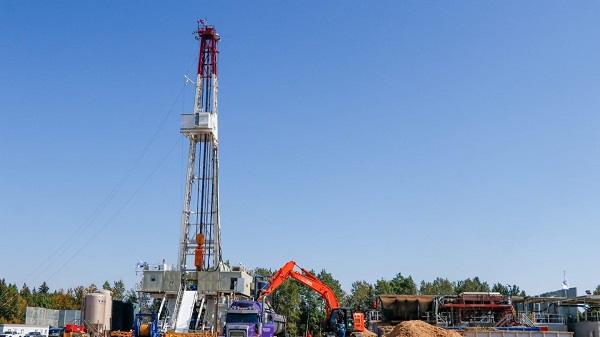
Forget the old image of a straight vertical oil and gas well.
In Western Canada, engineers now steer wells for kilometres underground with remarkable precision, tapping vast energy resources from a single spot on the surface.
The sector is continually evolving as operators pursue next-generation drilling technologies that lower costs while opening new opportunities and reducing environmental impacts.
But many promising innovations never reach the market because of high development costs and limited opportunities for real-world testing, according to Emissions Reduction Alberta (ERA).
That’s why ERA is launching the Drilling Technology Challenge, which will invest up to $35 million to advance new drilling and subsurface technologies.
“The focus isn’t just on drilling, it’s about building our future economy, helping reduce emissions, creating new industries and making sure we remain a responsible leader in energy development for decades to come,” said ERA CEO Justin Riemer.
And it’s not just about oil and gas. ERA says emerging technologies can unlock new resource opportunities such as geothermal energy, deep geological CO₂ storage and critical minerals extraction.
“Alberta’s wealth comes from our natural resources, most of which are extracted through drilling and other subsurface technologies,” said Gurpreet Lail, CEO of Enserva, which represents energy service companies.
ERA funding for the challenge will range from $250,000 to $8 million per project.
Eligible technologies include advanced drilling systems, downhole tools and sensors; AI-enabled automation and optimization; low-impact rigs and fluids; geothermal and critical mineral drilling applications; and supporting infrastructure like mobile labs and simulation platforms.
“All transformative ideas are really eligible for this call,” Riemer said, noting that AI-based technologies are likely to play a growing role.
“I think what we’re seeing is that the wells of the future are going to be guided by smart sensors and real-time data. You’re going to have a lot of AI-driven controls that help operators make instant decisions and avoid problems.”
Applications for the Drilling Technology Challenge close January 29, 2026.


From Underdog to Top Broodmare

Landmark 2025 Study Says Near-Death Experiences Can’t Be Explained Away

STUDY: TikTok, Instagram, and YouTube Shorts Induce Measurable “Brain Rot”
Red Deer’s Jason Stephan calls for citizen-led referendum on late-term abortion ban in Alberta
-
 Alberta2 days ago
Net Zero goal is a fundamental flaw in the Ottawa-Alberta MOU
-
 Addictions2 days ago
Manitoba Is Doubling Down On A Failed Drug Policy
-
 Food2 days ago
Canada Still Serves Up Food Dyes The FDA Has Banned
-
 COVID-192 days ago
The dangers of mRNA vaccines explained by Dr. John Campbell
-
 Alberta2 days ago
Keynote address of Premier Danielle Smith at 2025 UCP AGM
-
 Energy1 day ago
Canadians will soon be versed in massive West Coast LPG mega-project
-
 National23 hours ago
Media bound to pay the price for selling their freedom to (selectively) offend
-
 Artificial Intelligence1 day ago
‘Trouble in Toyland’ report sounds alarm on AI toys