
Community
Stories of Red Deer’s earliest Halloween celebrations


Editor’s Note: This article was written in 2018, long before Covid.
Stories of Red Deer’s earliest Halloween celebrations
By Michael Dawe
Another Halloween will soon be upon us. It is one of the most popular of the annual celebrations. While door-to-door trick or treating by young children has become somewhat less common over the last few years, more and more people seem to be decorating their homes and their yards for the evening. Dressing up in costume remains as popular as ever, as are social get-togethers with all kinds of food and drink to share.
Halloween is a very old celebration, with some of the traditions dating back to the ancient Celtic rituals and festivities, marking what was then considered the start of the Celtic New Year. Later, there were strong Christian influences, as the night became connected with commemorations of All Hallows Eve (the origin of the name “Halloween) and All Saints Day on November 1st. All Saints Day is still a public holiday in parts of Europe.
Celebration of Halloween was not common in North American until the arrival of large numbers of Celtic immigrants from Ireland and Scotland during the 19th century. However, the tradition of children going door-to-door for trick or treating did not begin until the early part of the last century. It did not become a practice in Red Deer until the latter part of the 1920s.
History of Halloween in Canada.

Alexandria Hotel
Some of the earliest celebrations of Halloween in Red Deer took place in the early 1900s. Usually, a local group would organize a party at a local hall with all sorts of fun and games. Apples were a staple of these early socials. The wearing of costumes was strongly encouraged.
One group that organized annual Halloween events was the Alexandra Club. This was a group of young women dedicated to raising funds for the Red Deer Memorial Hospital. Hence, the annual Halloween gathering was as much a fundraiser as a social occasion. Other popular fundraisers staged by the Alexandra Club were women’s hockey games at the rink on Morrison (52) Street.


St. Luke’s Parish Hall
In 1913, the main Halloween event was a dance at the new Parish Hall on Gaetz Avenue, just north of St. Luke’s Anglican Church. This large new public hall had been officially opened on the eve of Red Deer being incorporated as a city on March 25, 1913. The Halloween music was provided by the Orpheus Orchestra. The evening was such a success that plans were made to have Halloween dances at the Parish Hall as annual events.

Red Deer Armouries
Tragically, the First World War broke out in August 1914. The community focused on the war effort and little was done to mark such “frivolous” occasions as Halloween. However, after the War, a new tradition started. The local 78th Battery of the Royal Canadian Artillery organized Halloween Balls at the Armouries on First Street South (now the location of the Children’s Library).
The annual militia balls were quite lavish events and extremely popular. People were not even bothered when, at the first ball in 1921, the outside of the main exit was blocked with a pile of piano boxes. A threat by the attending officers of a week’s short rations ensured that the young artillery men quickly cleared away the obstacles so that the guests could depart for home.
Halloween pranks have been one of the most enduring of the evening’s traditions. In 1921, in addition to the piling of the piano boxes at the 78th Battery’s ball, the local newspapers reported that Police Chief Anderson probably had as much fun the day after Halloween as anyone else. He rounded up all the likely suspects from the previous evening’s pranks. He made sure that these “young enthusiasts” spent the day putting things back in place and removing the soap that they had applied to various store-front windows.

Red Deer Public School, nicknamed “The Castle”
Unfortunately, a small group had gotten carried away with their pranks at the High School building on the Central School grounds. In order to drive home the point that there were limits to the number and type of activities that would be tolerated on Halloween Night, Principal C.D. Locke imposed a “two-day enforced holiday” on the perpetuators as a warning to rein in their “youthful exuberance” during next year’s Halloween activities.
Michael Dawe – October 31, 2018

A fifth generation Central Albertan with roots in Red Deer and Pine Lake, Michael Dawe serves on Red Deer City Council. In 1979, he became the city’s first full-time archivist with the Red Deer and District Archives. In May 2009, he was seconded to become the curator of history in preparation for the City of Red Deer Centennial in 2013.
Michael has won a number of awards including the Queen’s Golden Jubilee, Queen’s Diamond Jubilee and Alberta Centennial medals. He was named Alberta Citizen of the Year by the Council on School Administration of the Alberta Teachers Association for his work with local schools. He received the Minister of Veterans’ Affairs Commendation for his work with veterans. He was twice voted Red Deer’s Most Beloved Citizen by the readers of the Red Deer Express newspaper.


From the Fraser Institute
By Jake Fuss and Grady Munro
There would have been 1.5 million more Canadians who donated to charity in 2023—and $755.5 million more in donations—had Canadians given to the same extent they did 10 years prior
According to recent polling, approximately one in five Canadians have skipped paying a bill over the past year so they can buy groceries. As families are increasingly hard-pressed to make ends meet, this undoubtedly means more and more people must seek out food banks, shelters and other charitable organizations to meet their basic necessities.
And each year, Canadians across the country donate their time and money to charities to help those in need—particularly around the holiday season. Yet at a time when the relatively high cost of living means these organizations need more resources, new data published by the Fraser Institute shows that the level of charitable giving in Canada is actually falling.
Specifically, over the last 10 years (2013 to 2023, the latest year of available data) the share of tax-filers who reported donating to charity fell from 21.9 per cent to 16.8 per cent. And while fewer Canadians are donating to charity, they’re also donating a smaller share of their income—during the same 10-year period, the share of aggregate income donated to charity fell from 0.55 per cent to 0.52 per cent.
To put this decline into perspective, consider this: there would have been 1.5 million more Canadians who donated to charity in 2023—and $755.5 million more in donations—had Canadians given to the same extent they did 10 years prior. Simply put, this long-standing decline in charitable giving in Canada ultimately limits the resources available for charities to help those in need.
On the bright side, despite the worrying long-term trends, the share of aggregate income donated to charity recently increased from 0.50 per cent in 2022 to 0.52 per cent in 2023. While this may seem like a marginal improvement, 0.02 per cent of aggregate income for all Canadians in 2023 was $255.7 million.
The provinces also reflect the national trends. From 2013 to 2023, every province saw a decline in the share of tax-filers donating to charity. These declines ranged from 15.4 per cent in Quebec to 31.4 per cent in Prince Edward Island.
Similarly, almost every province recorded a drop in the share of aggregate income donated to charity, with the largest being the 24.7 per cent decline seen in P.E.I. The only province to buck this trend was Alberta, which saw a 3.9 per cent increase in the share of aggregate income donated over the decade.
Just as Canada as a whole saw a recent improvement in the share of aggregate income donated, so too did many of the provinces. Indeed, seven provinces (except Manitoba, Nova Scotia and Newfoundland and Labrador) saw an increase in the share of aggregate income donated to charity from 2022 to 2023, with the largest increases occurring in Saskatchewan (7.9 per cent) and Alberta (6.7 per cent).
Canadians also volunteer their time to help those in need, yet the latest data show that volunteerism is also on the wane. According to Statistics Canada, the share of Canadians who volunteered (both formally and informally) fell by 8 per cent from 2018 to 2023. And the total numbers of hours volunteered (again, both formal and informal) fell by 18 per cent over that same period.
With many Canadians struggling to make ends meet, food banks, shelters and other charitable organizations play a critical role in providing basic necessities to those in need. Yet charitable giving—which provides resources for these charities—has long been on the decline. Hopefully, we’ll see this trend turn around swiftly.


|

|
|

|
|
|



Death by a thousand clicks – government censorship of Canada’s internet

Chinese Billionaire Tried To Build US-Born Baby Empire As Overseas Elites Turn To American Surrogates
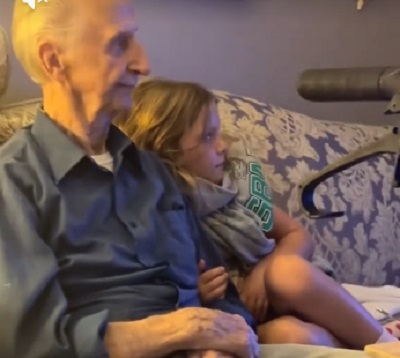
Viral TikTok video shows 7-year-old cuddling great-grandfather before he’s euthanized

Politicians should be honest about environmental pros and cons of electric vehicles
-
 Energy2 days ago
Canada’s sudden rediscovery of energy ambition has been greeted with a familiar charge: hypocrisy
-
 Business2 days ago
Ottawa Pretends To Pivot But Keeps Spending Like Trudeau
-
 Agriculture14 hours ago
Why is Canada paying for dairy ‘losses’ during a boom?
-
 Automotive1 day ago
Ford’s EV Fiasco Fallout Hits Hard
-
 Daily Caller2 days ago
Paris Climate Deal Now Decade-Old Disaster
-
 Censorship Industrial Complex2 days ago
How Wikipedia Got Captured: Leftist Editors & Foreign Influence On Internet’s Biggest Source of Info
-
 Crime2 days ago
The Uncomfortable Demographics of Islamist Bloodshed—and Why “Islamophobia” Deflection Increases the Threat
-
 Alberta16 hours ago
Alberta’s new diagnostic policy appears to meet standard for Canada Health Act compliance