Český Krumlov is the most picturesque medieval town in the Czech Republic, and one of the best small town destinations in Central Europe. Český Krumlov is located in the South Bohemia Region of the Czech Republic about a two hour drive directly south from Prague and only thirty minutes from the nearby city of Ceske Budejovice. It is only about thirty kilometers from the Austrian border, and Linz is only an hour away. It is a natural stop from Prague to Salzburg, and we frequently stay in Ceske Budejovice, where many of our hockey groups play games or train at former NHL and Czech hockey star, Jaroslav Pouzar’s arena.
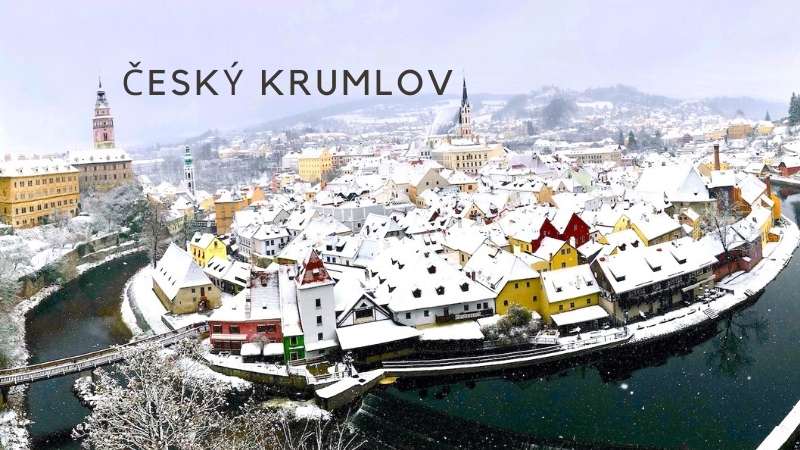
Český Krumlov’s old town, a UNESCO World Heritage Site, is nestled in between a meandering river and is surrounded by lush green hills and a towering castle above. With narrow cobblestone streets and a mixture of baroque and renaissance architecture, this could be the backdrop to any fairytale.
After we enter the town, we will park our bus across the street from a little park, called the Deer Garden, that is dwarfed by the back side of the Český Krumlov Castle. To get up to the castle, there is a path at an incline just on the right of the park or there are stairs up to the castle located at the back right of the park.
Once you reach the top, on the right you will find the eleven hectare castle garden. The garden includes a cascade fountain, an outdoor amphitheatre with a revolving auditorium, the Bellaria summer palace and the castle’s winter riding hall, which is now used to host special events.
If we go left instead of going into the park, a few steps away is a small gated entrance to a terrace that you should not miss. The terrace offers a spectacular panorama of the river, the town below, the castle on the left and the surrounding area. Your camera will be busy here and, at times, you will have numerous people jockeying for position to get that perfect shot. Please note that the terrace is not always open in the evening.
Cesky Krumlov Castle from the photo terrace and from the Lavka pod Zamkem wooden bridge.
Český Krumlov Castle
The Český Krumlov Castle dates back to 1240 when it was built by the Witigonen (Vitkovci) dynasty. In 1302, the Rosenberg dynasty became owners of the castle, and you will see their family’s five petalled rose logo at various locations throughout the city. In 1622, the castle was transferred to the Austrian Eggenberg family who expanded the castle, including adding the unique baroque theatre that bears their name. Today, the local brewery in Český Krumlov is named after the Eggenbergs. The Schwarzenberg family took over the castle from 1719 until 1947 when it was transferred to the Czechoslovak state. The castle complex, with five courtyards, is listed as a Czech National Monument and is listed on the UNESCO World Heritage List.
What would an old castle be without a good ghost story? In medieval times, the appearance of a White Lady during the day or night was an omen that someone in the family would soon die. At the Český Krumlov Castle, legend has it that the castle is haunted by their own White Lady, Perchta of Rosenberg. Her husband treated her poorly and on his death bed he asked her for forgiveness. She refused and her husband cursed her. Since her death, her ghost has haunted her former husband’s estates including the castle.
Cloak bridge, entrance into the 4th courtyard and frescoes on the courtyard walls.
When we leave the photo terrace, we cross the fifth castle courtyard surrounded by the baroque castle theatre and the renaissance house to the white and grey Cloak Bridge. The bridge, which offers more great views of the old town and river, has three stories above the arched walkway that connect the castle to the theatre.
Entering the area called the Upper Castle, we pass through two small courtyards, named the fourth and third castle courtyards. The courtyards’ facades were painted in the 16th and 17th centuries. The frescoes painted on flat walls use the “trompe–l’oeil” technique to create the optical illusion that the walls are three-dimensional brick with intricate stone decorations and inlayed statues. The “Upper Castle’s” renaissance interiors are palatial with an important collection of paintings, tapestries and furniture. The castle’s underground foundations, called the Wenceslas Cellars, are a labyrinth of pillars and arches. Exiting the third courtyard, we go down a steep and windy passage way, which may have been used for vehicles.
A sundial, the second courtyard fountain and tower. The first courtyard and the red gate.
Arriving at the second castle courtyard, we find the Burgrave’s house from 1578. The Burgrave, or “Count”, was the governor of the town, with judicial and military powers bestowed on him by the Holy Roman Emperor. From 1742-1948, the lower floor of the Burgrave’s house was used to house the Schwarzenberg grenadier guard.
The courtyard has a stone fountain from 1641 in the middle and the colorful castle tower in the corner. The tower and the adjoining “Hradek” building are the two oldest parts of the castle. If you climb the tower, you will get amazing views of the castle and the town.
The castle Bear Moat with bears enjoying bread, vegetables, apples and watermelon snacks.
To access the first courtyard, we cross a small bridge that has a Bear Moat below. There have been bears in the moat since 1707, and most times we can see them walking around or eating their vegetables and fruit. Unfortunately, we don’t always see them as they like the area under the bridge. This is the largest courtyard and was used as an agricultural area and animal enclosure. We leave the castle through the Red Gate and continue until we reach the Latrán street where we turn right. A few meters away on your left is the entrance to the Monastery.
Monastery of the Minorites
After the castle, the monastery is the second largest historic complex in Český Krumlov. The medieval monastery was founded for the brothers and sisters of the order of St. Francis of Assisi in 1350. St. Francis gave the name “Friar Minor” or “Minorites” to the Franciscans. The order of St. Clare, “Poor Claires” or the “Clarissas,” is the name of the female branch of the Franciscans. The monastery church located in the center of the complex separates the convents of the Minorites (here from 1357-1950) and Clarissas (here from 1361-1782).
The Latrán street, a Trdelník vendor and the crucifix on Lazebnicky bridge.
Latrán Street and Lazebnicky Most
The renaissance area just outside the castle and across the river from the old town center was once the home of castle servants. Today the cobble stone Latrán Street’s colorful houses are full of shops, cafes, restaurants and artist galleries. Just off the Latrán, you will find artist workshops featuring paintings, iron works, statues and furniture. Some of these artist workshops are decorated with interesting murals.
Undoubtably, you will be hit by the sweet aroma of the chimney cake or Trdelník. The Trdelník is a rolled dough which is wrapped around a thick spit, baked over hot coals and topped with sugar, walnuts and sometimes cinnamon. You can find variations of this treat throughout the Czech Republic, Slovakia and Hungary.
Connecting the Latrán street to the old town is the wooden Lazebnicky bridge with a large crucifix in the middle. Form the bridge, you have a magnificent view of the castle above, the Vltava river meandering its way around the town, and the riverfront houses and restaurant patios of the old town.
The Český Krumlov old town square with the Marian Plague column and city hall.
Historic Old Town
Once you cross the bridge, if you go forward on the Radniční street for about a hundred meters you will arrive at the Town Square. Instead, we will turn right and take the curved Dlouhá Street with interesting cafes, restaurants and hotels. At the end of the Dlouhá street, we arrive at the Široká street. Turning right we will come to the old mill where we can see the waterwheel still turning and we get another great view of the castle. We continue in the other direction leisurely making our way down the wide and vibrant Široká street until we reach a junction where three streets meet. This is a very picturesque little square with colorful buildings decorated with frescoes.
Only a few meters away from this junction, we find ourselves in the Český Krumlov town square or Náměstí Svornosti. The square has served not only as a market in medieval times, but also as a place of execution. The large white building with renaissance arcades is the 16th century Český Krumlov Town Hall. The four coats-of-arms painted on the façade of the building are those of the Eggenbergs, the Schwarzenbergs, the town and of the Czech state of Bohemia. Like many towns in the Czech Republic, the square has a Marian Plague Column with a fountain at the center. The plague columns give thanks to the Virgin Mary for the end of the plague that killed many throughout Europe in the 17th century. The beautiful buildings adorned with stucco decorations and frescoes around the square once belonged to the town’s upper class and have been restored to their original splendor.
The St. Vitus church from the river, the old town’s Široká street and the three street junction.
Church of St. Vitus
From the town square you will see the 19th century spire and tall roof of the Roman Catholic church of St. Vitus. A short climb up Horní Ulice street you will reach the church entrance. The gothic church has a white interior with an impressive vaulted ceiling supported by stone columns. The tall but clear gothic windows allow light to flood the nave and they push your eyes upwards to the magnificent ceiling. Dating back to the 13th century when the site became a place of worship, the church has undergone a few additions and changes over the years. The church is the burial place of notable Bohemian families including generations of the aforementioned Rosenbergs and Schwartzenbergs.
Not far from the church is a little garden called the Seminární Zahrada, or the Seminary Garden. The garden is part of the Regional Museum, which used to be a seminary for the Jesuits. Like the terrace by the castle, this garden is one of the best spots in town to get that spectacular panoramic photo. The castle and tower are prominent in the background, seemingly rising above a sea of the red tiled roofs below.
Panoramic view from the Seminary Garden and buskers on the Latrán Street.
Rafting on the Vltava
As you leave the old town back to the parking area, you will cross the Lavka pod Zamkem wooden bridge which leads to the Deer Garden. The bridge offers a few more photo opportunities of the river, the castle and the Cloak Bridge. One of the most interesting things to see from the bridge is the wier on the Vltava River that has a spot on the right for rafters to slide down from the higher water level to the lower level. Rafting is very popular, and in summer months you will see raft after raft leisurely floating down the river. The Malecek Rafting company offers canoe and raft rentals with trips of various durations from a thirty-minute trip in the city center all the way to half-day and full-day trips further down the river. They also offer a fifty-minute historical cruise on a twelve-person wooden raft. In the middle ages and beyond raftsmen used the Vltava to transport goods and raw materials like wood and salt. Today, people can enjoy this experience in amazing surroundings.
Rafters and canoers going down the Vltava Rivers’ weir and leisurely past the castle.
Český Krumlov has many small museums worth visiting. My favourite is the Museum of Commerce (Muzeum Obchodu) located in the old town just as you cross the Lazebnicky bridge. The museum has recreated shop interiors, shop machinery and advertising from the early 1900s. Individual packaging of products, like we are used to today, was non-existent. They have a great display of metal dispensary containers where customers would get their coffee beans, sugar, flour or other goods. They also have old style metallic advertising signs for sale. Across from that museum, there is an antique shop with very unique items and next door is the Fairytale House & Puppet Museum.
Other museums you may want to visit in Český Krumlov include the Museum Fotoatelier Seidel, the Egon Schiele Art Centrum, the Moldavite Museum (Muzeum Vltavinu), the Regional Museum and the Torture Museum. There are many other little museums around town worth visiting. Nearby, hikers enjoy climbing the 1,084 meter high Mount Klet’ and guided tours of the Graphite Mine.
Český Krumlov is the second most popular tourist destination in the Czech Republic. I have been to this medieval town numerous times with my tour groups and I am always excited to include it in my itineraries.
Explore Europe With Us
Azorcan Global Sport, School and Sightseeing Tours have taken thousands to Europe on their custom group tours since 1994. Visit azorcan.net to see all our custom tour possibilities for your group of 26 or more. Individuals can join our “open” signature sport, sightseeing and sport fan tours including our popular Canada hockey fan tours to the World Juniors. At azorcan.net/media you can read our newsletters and listen to our podcasts.
Images compliments of Paul Almeida and Azorcan Tours.
(This article was originally published on April 11, 2021).
Click below to read Paul’s sobering story about Canada’s role in WWI.
I have been in sports management and the sports tour business since 1994 when I created my company, Azorcan Global Sport, School and Sightseeing tours. Please visit our website at azorcan.net for more information on our company, our tours and our destinations. We are European group tour experts specializing in custom sightseeing tours, sport tours (hockey, soccer, ringette, school academies) and fan tours (World Juniors). Check out our newsletters, and listen to our podcasts at azorcan.net/media.
Tariffs may fade. The collision between reconciliation, property rights, and investment will not.
British Columbia will talk about Donald Trump’s tariffs in 2026, and it will keep grinding through affordability. But the issue that will decide whether the province can build, invest, and govern is land use.
The warning signs were there in 2024. Land based industries still generate 12 per cent of B.C.’s GDP, and the province controls more than 90 per cent of the land base, and land policy was already being remade through opaque processes, including government to government tables. When rules for access to land feel unsettled, money flows slow into a trickle.
The Cowichan ruling sends shockwaves
In August 2025, the Cowichan ruling turned that unease into a live wire. The court recognized the Cowichan’s Aboriginal title over roughly 800 acres within Richmond, including lands held by governments and unnamed third parties. It found that grants of fee simple and other interests unjustifiably infringed that title, and declared certain Canada and Richmond titles and interests “defective and invalid,” with those invalidity declarations suspended for 18 months to give governments time to make arrangements.
The reaction has been split. Supporters see a reminder that constitutional rights do not evaporate because land changed hands. Critics see a precedent that leaves private owners exposed, especially because unnamed owners in the claim area were not parties to the case and did not receive formal notice. Even the idea of “coexistence” has become contentious, because both Aboriginal title and fee simple convey exclusive rights to decide land use and capture benefits.
Market chill sets in
McLTAikins translated the risk into advice that landowners and lenders can act on: registered ownership is not immune from constitutional scrutiny, and the land title system cannot cure a constitutional defect where Aboriginal title is established. Their explanation of fee simple reads less like theory than a due diligence checklist that now reaches beyond the registry.
By December, the market was answering. National Post columnist Adam Pankratz reported that an industrial landowner within the Cowichan title area lost a lender and a prospective tenant after a $35 million construction loan was pulled. He also described a separate Richmond hotel deal where a buyer withdrew after citing precedent risk, even though the hotel was not within the declared title lands. His case that uncertainty is already changing behaviour is laid out in Montrose.
Caroline Elliott captured how quickly court language moved into daily life after a City Richmond letter warned some owners that their title might be compromised. Whatever one thinks of that wording, it pushed land law out of the courtroom and into the mortgage conversation.
Mining and exploration stall
The same fault line runs through the critical minerals push. A new mineral claims regime now requires consultation before claims are approved, and critics argue it slows early stage exploration and forces prospectors to reveal targets before they can secure rights. Pankratz made that critique earlier, in his argument about mineral staking.
Resource Works, summarising AME feedback on Mineral Tenure Act modernisation, reported that 69.5 per cent of respondents lacked confidence in proposed changes, and that more than three quarters reported increased uncertainty about doing business in B.C. The theme is not anti consultation. It is that process, capacity, and timelines decide whether consultation produces partnership or paralysis.
The legal layer
Layered on top is the widening fight over UNDRIP implementation and DRIPA. Geoffrey Moyse, KC, called for repeal in a Northern Beat essay on DRIPA, arguing that Section 35 already provides the constitutional framework and that trying to operationalise UNDRIP invites litigation and uncertainty.
Tariffs and housing will still dominate headlines. But they are downstream of land. Until B.C. offers a stable bargain over who can do what, where, and on what foundation, every other promise will be hostage to the same uncertainty. For a province still built on land based wealth, Resource Works argues in its institutional history that the resource economy cannot be separated from land rules. In 2026, that is the main stage.
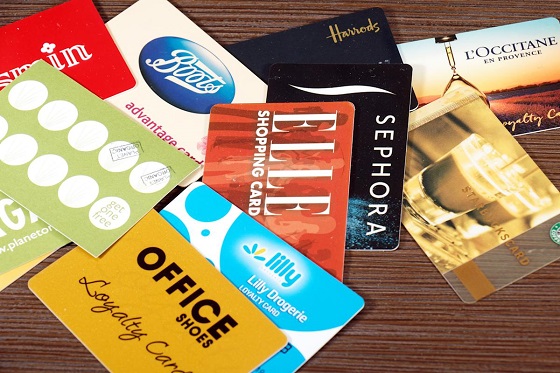
You’ve certainly been asked (begged!) to join up for at least one loyalty “points” program – like PC Optimum, Aeroplan, or Hilton Honors – over the years. And the odds are that you’re currently signed up for at least one of them. In fact, the average person apparently belongs to at no less than 14 programs. Although, ironically, you’ll need to sign up to an online equivalent of a loyalty program to read the source for that number.
Well all that warm, fuzzy “belonging” comes with some serious down sides. Let’s see how much they might cost us.
To be sure, there’s real money involved here. Canadians redeem at least two billion dollars in program rewards each year, and payouts will often represent between one and ten percent of the original purchase value.
At the same time, it’s estimated that there could be tens of billions of unredeemed dollars due to expirations, shifting program terms, and simple neglect. So getting your goodies isn’t automatic.
The Audit is a reader-supported publication.
To receive new posts and support my work, consider becoming a free or paid subscriber.
Just why do consumer-facing corporations agree to give away so much money in the fist place?
As you probably already know, it’s about your data. Businesses are willing to pay cold, hard cash in exchange for detailed descriptions of your age, sex, ethnicity, wealth, location, employment status, hobbies, preferences, medical conditions, political leanings, and, of course, shopping habits.
Don’t believe it works? So then why, after all these years, are points programs still giving away billions of dollars?
Every time you participate in such a program, the data associated with that activity will be collected and aggregated along with everything else known about you. It’s more than likely that points-based data is being combined with everything connected to your mobile phone account, email addresses, credit cards, provincial health card, and – possibly – your Social Insurance number. The depth and accuracy of your digital profile improves daily.
What happens to all that data? A lot of it is shared with – or sold to – partners or affiliates for marketing purposes. Some of it is accidentally (or intentionally) leaked to organized criminal gangs driving call center-related scams. But it’s all about getting to know you better in ways that maximize someone’s profits.
One truly scary way this data is used involves surveillance pricing (also known as price discrimination) – particularly as it’s described in a recent post by Professor Sylvain Charlebois.
The idea is that retailers will use your digital profile to adjust the prices you pay at the cash register or when you’re shopping online. The more loyal you are as a customer, the more you’ll pay. That’s because regular (“loyal”) customers are already reliable revenue sources. Companies don’t need to spend anything to build a relationship with you. But they’re more than willing to give up a few percentage points to gain new friends.
I’m not talking about the kind of price discrimination that might lead to higher prices for sales in, say, urban locations to account for higher real estate and transportation costs. Those are just normal business decisions.
What Professor Charlebois described is two customers paying different prices for the same items in the same stores. In fact, a recent Consumer Reports experiment in the U.S. involving 437 shoppers in four cities found the practice to be quite common.
But the nasty bit here is that there’s growing evidence that retailers are using surveillance pricing in grocery stores for basic food items. Extrapolating from the Consumer Reports study, such pricing could be adding $1,200 annually to a typical family’s spending on basic groceries.
I’m not sure what the solution is. It’s way too late to “unenroll” from our loyalty accounts. And government intervention would probably just end up making things worse.
But perhaps getting the word out about what’s happening could spark justified mistrust in the big retailers. No retailer enjoys dealing with grumpy customers.
Be grumpy.
The Audit is a reader-supported publication.
To receive new posts and support my work, consider becoming a free or paid subscriber.