
Opinion
Hypocritical Businesses Bow To China

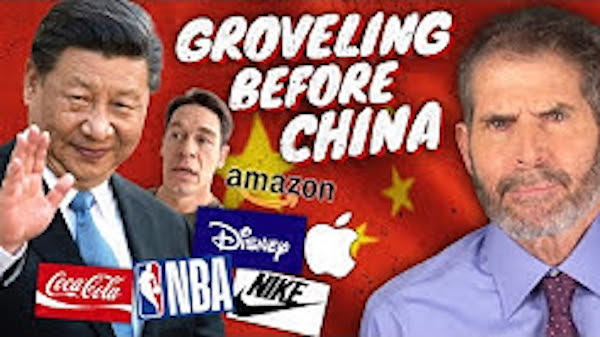

The NBA, Hollywood and many big companies make ads saying “speak up on injustice.” Yet they’re happy to ignore atrocities committed by China, because they want the money.
The NBA runs ads saying the league speaks for “the people who may not be able to be heard.”
It’s “PR hogwash” says journalist Melissa Chen, because the NBA discourages its players from criticizing injustice in China.
One general manager tweeted, “Fight for Freedom. Stand with Hong Kong.” That’s a good thing to say, since China is crushing freedom in Hong Kong. But the NBA apologized profusely, afraid that China might be offended. Hollywood grovels before China too.

Actor John Cena innocently called Taiwan a country. China insists Taiwan is not a country, but a territory the Chinese own. Fearing his movie would be banned in China, Cena released a video begging China for forgiveness.
Sadly, there are few examples of bravery. We highlight one important one.
To make sure you see the new weekly video from Stossel TV, sign up here: https://www.johnstossel.com/#subscribe

Business
COP30 finally admits what resource workers already knew: prosperity and lower emissions must go hand in hand
From Resource Works
What a difference a few weeks make
Finally, the Conference of the Parties to the UN climate convention (COP30) adopted a pragmatic tone that will appeal to the working class. Too bad it took thirty meetings. Pragmatism produces results, not missed targets.
We should not have been surprised. Influential figures like Bill Gates and Canadian-Venezuelan analyst Quico Toro, who have long argued that efforts to reduce CO₂ should focus more on technology and prosperity, and less on energy consumption and declining growth, have gained ground.
In the World Energy Outlook 2025, prepared by the International Energy Agency for COP30, you can see that many of the views held by the people above had already gone mainstream before the conference started.
The World Energy Outlook 2025 lays out three scenarios: Current Policies (CPS), Stated Policies (STEPS), and Net Zero Emissions by 2050 (NZE). In WEO 2025, all three scenarios reflect longer timelines for the decline of fossil fuels than in earlier editions, and the NZE pathway explicitly states that major technological breakthroughs will be required.
Unfortunately, many potential technologies are adamantly opposed by the loudest groups within the Climate Change Movement because they are not perfect. Even some continue to oppose nuclear power, one of the few proven sources of large-scale, zero-carbon, firm electricity.
Another noteworthy standout in WEO 2025 was the strong recognition that energy security, costs, and supply chains are now the primary considerations in determining each country’s energy mix.
What all this means is we are breaking away from emotionally charged, fear-based policies and rhetoric and moving toward a practical “let’s do things better” approach.
For 30 years, the radical leadership of the environmental movement has focused on what we should stop doing and on sacrificing prosperity. Essentially, what has been going on is an attack on working people in the industrialized and developing world.
Today, workers in the developed world are so anxious that many are losing faith in democratic institutions. Meanwhile, people in the emerging and developing world see light at the end of the tunnel and are determined to industrialize.
Clearly, it is time to merge the fight to lower CO₂ emissions with prosperity. “Let’s do things better” captures the history of human progress and resonates with working people today.
What does it take for longer, healthier, safer, and more sustainable lives? It takes the pragmatism of workers. They spend their lives striving to improve workplace safety, to develop tools that enable them to perform tasks more effectively with less physical effort, to earn higher pay, to produce more food with less land, and to preserve their opportunity to continue working.
Resource workers have felt under attack and are humiliated when celebrities fly in on a helicopter to denigrate their work and make references to the virtues of small-plot gardening, or politicians who tell them to go back to school for “jobs of the future”, only to find themselves in low-paying service jobs.
As the COP30 discussion indicates, we have reached a turning point. It is time to focus on doing what needs to be done, but doing it better. It is time to stop banning activities entirely as though circumstances and technology never change. Demanding perfection hides what is possible, slows progress and, in some cases, stops it altogether.
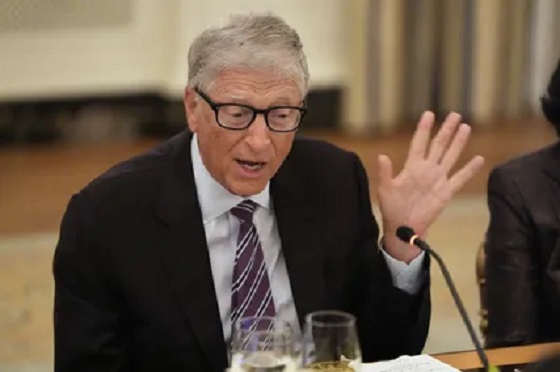
Bill Gates’ memo to COP30 points to the turn in the road:
“We should measure success by our impact on human welfare more than our impact on the global temperature, and our success relies on putting energy, health, and agriculture at the centre of our strategies.”
Gates also makes a point that will resonate with working people: “Using more energy is a good thing because it is closely correlated with economic growth.” Ironically, a statement made by a billionaire resonates with working people more than does the message of many climate activists.
The work at the Port of Prince Rupert comes to mind, given its growing role in supplying cleaner cooking and heating fuels, when we are reminded that 2 billion people worldwide cook and/or heat their homes with highly polluting open fires (wood, charcoal, dung, agricultural waste).
Persuasion published Quico Toro’s essay on November 13, 2025, which speaks another truth.
“COP imagines these emissions as something a country’s government can set, like the dial on a thermostat. But emissions are more like GDP: the outcome of a complex process that politicians would like to be able to control, but do not actually control.”
I am feeling more secure about the future here in Canada and BC, as governments, First Nations and the public are leaning into climate and economic pragmatism.
There will be hard discussions and uncomfortable trade-offs. Past decisions need to be re-examined in good faith. Do they meet today’s demands? Are we doing what needs to be done better? Is it the right move for today’s youth and future generations? Will we bring back the hope and opportunity of a growing middle class?
Nobody, not the Liberal government, the BC NDP government, First Nations, none of us would have predicted the world we are facing today, where our economy and sovereignty are challenged.
Today, oil, natural gas, and critical minerals, not one or two but all three, are the financial backstop Canada needs, as we rebuild the economy and secure our sovereignty.
Look West: Jobs and Prosperity for Stronger BC and Canada is as much of an admission that we are falling behind as it is a call to action. Success will take billions of dollars, the exact amount unknown.
But what we do know is that oil, gas, and critical minerals generate the most public revenue, the highest incomes, and are our most significant exports. They are Canada’s bank and comparative advantage. They will provide the cash flow needed to get it done.
Not maximizing oil production and exports is fighting with both hands tied behind our back. We all know it; now we need to focus on doing it better because circumstances have changed dramatically.
Jim Rushton is a 46-year veteran of BC’s resource and transportation sectors, with experience in union representation, economic development, and terminal management.
Resource Works News

From Resource Works
Nuclear power a key piece of Western Canadian energy transition
Just reading the headlines, Canadians can be forgiven for thinking last week’s historic agreement between Alberta and Ottawa was all about oil and pipelines, and all about Alberta.
It’s much bigger than that.
The memorandum of understanding signed between Canada and Alberta is an ambitious Western Canadian industrial, energy and decarbonization strategy all in one.
The strategy aims to decarbonize the oil and gas sectors through large-scale carbon capture and storage, industrial carbon pricing, methane abatement, industrial electrification, and nuclear power.
It would also provide Canadian “cloud sovereignty” through AI computing power, and would tie B.C. and Saskatchewan into the Alberta dynamo with beefed up power transmission interties.
A new nuclear keystone
Energy Alberta’s Peace River Nuclear Power Project could be a keystone to the strategy.
The MOU sets January 1, 2027 as the date for a new nuclear energy strategy to provide nuclear power “to an interconnected market” by 2050.
Scott Henuset, CEO for Energy Alberta, was pleased to see the nuclear energy strategy included in the MOU.
“We, two years ago, went out on a limb and said we’re going to do this, really believing that this was the path forward, and now we’re seeing everyone coming along that this is the path forward for power in Canada,” he said.
The company proposes to build a four-unit, 4,800-megawatt Candu Monark power plant in Peace River, Alberta. That’s equivalent to four Site C dams worth of power.
The project this year entered a joint review by the Impact Assessment Agency and Canadian Nuclear Safety Commission.
If approved, and all goes to schedule, the first 1,000-MW unit could begin producing power in 2035.
Indigenous consultation and experienced leadership
“I think that having this strategy broadly points to a cleaner energy future, while at the same time recognizing that oil still is going to be a fundamental driver of economies for decades to come,” said Ian Anderson, the former CEO of Trans Mountain Corporation who now serves as an advisor to Energy Alberta.
Energy Alberta is engaged with 37 First Nations and Metis groups in Alberta on the project. Anderson was brought on board to help with indigenous consultation.
While working on the Trans Mountain pipeline expansion, Anderson spent a decade working with more than 60 First Nations in B.C. and Alberta to negotiate impact benefit agreements.
In addition to indigenous consultations, Anderson is also helping out with government relations, and has met with B.C. Energy Minister Adrian Dix, BC Hydro chairman Glen Clark and the head of Powerex to discuss the potential for B.C. beef up interties between the two provinces.
“I’ve done a lot of political work in B.C. over the decade, so it’s a natural place for me to assist,” Anderson said. “Hopefully it doesn’t get distracted by the pipeline debate. They’re two separate agendas and objectives.”
Powering the grid and the neighbours
B.C. is facing a looming shortage of industrial power, to the point where it now plans to ration it.
“We see our project as a backbone to support renewables, support industrial growth, support data centres as well as support larger interties to B.C. which will also strengthen the Canadian grid as a whole,” Henuset said.
Despite all the new power generation B.C. has built and plans to build, industrial demand is expected to far exceed supply. One of the drivers of that future demand is requests for power for AI data centres.
The B.C. government recently announced Bill 31 — the Energy Statutes Amendment Act – which will prioritize mines and LNG plants for industrial power.
Other energy intensive industries, like bitcoin mining, AI data centres and green hydrogen will either be explicitly excluded or put on a power connection wait list.
Beefed up grid connections with Alberta – something that has been discussed for decades – could provide B.C. with a new source of zero-emission power from Alberta, though it might have to loosen its long-standing anti-nuclear power stance.
Energy Minister Adrian Dix was asked in the Legislature this week if B.C. is open to accessing a nuclear-powered grid, and his answer was deflective.
“The member will know that we have been working with Alberta on making improvements to the intertie,” Dix answered. “Alberta has made commitments since 2007 to improve those connections. It has not done so.
“We are fully engaged with the province of Alberta on that question. He’ll also know that we are, under the Clean Electricity Act, not pursuing nuclear opportunities in B.C. and will not be in the future.”
The B.C. NDP government seems to be telling Alberta, “not only do we not want Alberta’s dirty oil, we don’t want any of its clean electricity either.”
Interconnected markets
Meanwhile, BC Hydro’s second quarter report confirms it is still a net importer of electricity, said Barry Penner, chairman of the Energy Futures Initiative.
“We have been buying nuclear power from the United States,” he said. “California has one operating power plant and there’s other nuclear power plants around the western half of the United States.”
In a recent blog post, Penner notes: “BC Hydro had to import power even as 7,291 megawatts of requested electrical service was left waiting in our province.”
If the NDP government wants B.C. to participate in an ambitious Western Canadian energy transition project, it might have to drop its holier-than-thou attitude towards Alberta, oil and nuclear power.
“We’re looking at our project as an Alberta project that has potential to support Western Canada as a whole,” Henuset said.
“We see our project as a backbone to support renewables, support industrial growth, support data centres, as well as support larger interties to B.C., which will also strengthen the Canadian grid as a whole.”
The investment challenge
The strategy that Alberta and Ottawa have laid out is ambitious, and will require tens of billions in investment.
“The question in the market is how much improvement in the regulatory prospects do we need to see in order for capital to be committed to the projects,” Anderson said.
The federal government will need to play a role in derisking the project, as it has done with the new Darlington nuclear project, with financing from the Canada Growth Fund and Canadian Infrastructure Bank.
“There will be avenues of federal support that will help derisk the project for private equity investors, as well as for banks,” Henuset said.
One selling point for the environmental crowd is that a combination of carbon capture and nuclear power could facilitate a blue and green hydrogen industry.
But to really sell this plan to the climate concerned, what is needed is a full assessment of the potential GHG reductions that may accrue from things like nuclear power, CCS, industrial carbon pricing and all of the other measures for decarbonization.
Fortunately, the MOU also scraps greenwashing laws that prevent those sorts of calculations from being done.
Resource Works News


Wayne Gretzky’s Terrible, Awful Week.. And Soccer/ Football.

Western Campuses Help Build China’s Digital Dragnet With U.S. Tax Funds, Study Warns

Common Vaccines Linked to 38-50% Increased Risk of Dementia and Alzheimer’s

Trump DOJ seeks to quash Pfizer whistleblower’s lawsuit over COVID shots
-
COVID-192 days ago
Trump DOJ seeks to quash Pfizer whistleblower’s lawsuit over COVID shots
-
 Alberta2 days ago
The case for expanding Canada’s energy exports
-
 Censorship Industrial Complex2 days ago
Ottawa’s New Hate Law Goes Too Far
-
 Business2 days ago
Fuelled by federalism—America’s economically freest states come out on top
-
 Automotive2 days ago
Politicians should be honest about environmental pros and cons of electric vehicles
-
 Internet2 days ago
Dead Internet Confirmed: It’s agents, trolls and clankers all the way down
-
 Daily Caller1 day ago
Chinese Billionaire Tried To Build US-Born Baby Empire As Overseas Elites Turn To American Surrogates
-
 International1 day ago
At Least 15 Killed In Shooting Targeting Jewish Community At Australia’s Bondi Beach, Police Say