
Agriculture
How Industry and the Environment came together to make something beautiful for Central Alberta


As battle lines draw ever deeper between industry and environmentalists.. there’s a unique and world class example of how both can thrive side by side, right here in Central Alberta.
40 years ago, Union Carbide.. a huge multinational company was looking for a new home in Central Alberta. Union Carbide wanted to set up an ethylene glycol plant along the Red Deer River, right smack in the middle of some of the best agricultural land in the country. It wouldn’t be easy finding farmers willing to sell their beloved land to an industrial giant.
The last person many would expect to deal with the company was a slight and aging farmer, a bird lover named Charlie Ellis. Actually, bird lover was an understatement. In the years after their parents died, Charlie and his sister Winnie stayed on the Ellis farm and cultivated their passion for nature. Charlie started innocently enough with a few birdhouses, and a strong urge to protect native birds… tree swallows, chickadees, purple martins, flickers, and especially Mountain Bluebirds. The birds flocked in record numbers to Winnie’s orchards and flower gardens as well as Charlie’s growing number of birdhouses stretching acre after acre. The birds became permanent residents of the land just like the Ellis’. Now Charlie was growing older and his concern for the future of his birds was growing stronger. When an agent of Union Carbide came for a visit.. to everyone’s surprise, Charlie proposed a deal.

If the company was willing to take care of his birds, if they’d promise to keep up what Charlie had built up… well then Charlie would sell his land to the company. The company agreed.. and that’s when things truly got complicated.
The Red Deer River Naturalists caught wind of the deal and they rushed in to make sure the company was dealing honestly with Charlie Ellis and his sister Winnie. The Naturalists were highly skeptical of industrial giants like Union Carbide. This might have been a recipe for disastrous meetings which could have killed Charlie’s plan. But someone proposed they bring in a young man from Red Deer who everyone agreed would treat both sides fairly. Morris Flewwelling was approached to chair the meetings overseeing negotiations. Here’s what happened.
Sponsored by DOW Chemical Canada and Ellis Bird Farm, Todayville is proud to present a series of features on the history of Central Alberta’s incredible prairie oasis and nature preserve… The Ellis Bird Farm. In this first part we hear from Morris Flewwelling.


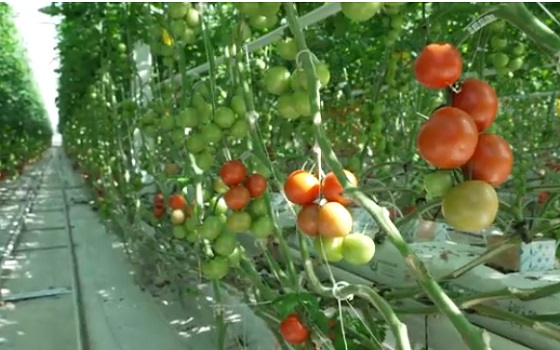
A new program funded by the Sustainable Canadian Agricultural Partnership will accelerate expansion in Alberta greenhouses and vertical farms.
Albertans want to keep their hard-earned money in the province and support producers by choosing locally grown, high-quality produce. The new three-year, $10-milllion Growing Greenhouses program aims to stimulate industry growth and provide fresh fruit and vegetables to Albertans throughout the year.
“Everything our ministry does is about ensuring Albertans have secure access to safe, high-quality food. We are continually working to build resilience and sustainability into our food production systems, increase opportunities for producers and processors, create jobs and feed Albertans. This new program will fund technologies that increase food production and improve energy efficiency.”
“Through this investment, we’re supporting Alberta’s growers and ensuring Canadians have access to fresh, locally-grown fruits and vegetables on grocery shelves year-round. This program strengthens local communities, drives innovation, and creates new opportunities for agricultural entrepreneurs, reinforcing Canada’s food system and economy.”
The Growing Greenhouses program supports the controlled environment agriculture sector with new construction or expansion improvements to existing greenhouses and vertical farms that produce food at a commercial scale. It also aligns with Alberta’s Buy Local initiative launched this year as consumers will be able to purchase more local produce all year-round.
The program was created in alignment with the needs identified by the greenhouse sector, with a goal to reduce seasonal import reliance entering fall, which increases fruit and vegetable prices.
“This program is a game-changer for Alberta’s greenhouse sector. By investing in expansion and innovation, we can grow more fresh produce year-round, reduce reliance on imports, and strengthen food security for Albertans. Our growers are ready to meet the demand with sustainable, locally grown vegetables and fruits, and this support ensures we can do so while creating new jobs and opportunities in communities across the province. We are very grateful to the Governments of Canada and Alberta for this investment in our sector and for working collaboratively with us.”
Sustainable Canadian Agricultural Partnership (Sustainable CAP)
Sustainable CAP is a five-year, $3.5-billion investment by federal, provincial and territorial governments to strengthen competitiveness, innovation and resiliency in Canada’s agriculture, agri-food and agri-based products sector. This includes $1 billion in federal programs and activities and $2.5 billion that is cost-shared 60 per cent federally and 40 per cent provincially/territorially for programs that are designed and delivered by provinces and territories.
Quick facts
- Alberta’s greenhouse sector ranks fourth in Canada:
- 195 greenhouses produce $145 million in produce and 60 per cent of them operate year-round.
- Greenhouse food production is growing by 6.2 per cent annually.
- Alberta imports $349 million in fresh produce annually.
- The program supports sector growth by investing in renewable and efficient energy systems, advanced lighting systems, energy-saving construction, and automation and robotics systems.
Related information


From the Fraser Institute
By Annika Segelhorst and Elmira Aliakbari
Canadians care about the environment and breathing clean air. In 2023, the share of Canadians concerned about the state of outdoor air quality was 7 in 10, according to survey results from Abacus Data. Yet Canada outperforms most comparable high-income countries on air quality, suggesting a gap between public perception and empirical reality. Overall, Canada ranks 8th for air quality among 31 high-income countries, according to our recent study published by the Fraser Institute.
A key determinant of air quality is the presence of tiny solid particles and liquid droplets floating in the air, known as particulates. The smallest of these particles, known as fine particulate matter, are especially hazardous, as they can penetrate deep into a person’s lungs, enter the blood stream and harm our health.
Exposure to fine particulate matter stems from both natural and human sources. Natural events such as wildfires, dust storms and volcanic eruptions can release particles into the air that can travel thousands of kilometres. Other sources of particulate pollution originate from human activities such as the combustion of fossil fuels in automobiles and during industrial processes.
The World Health Organization (WHO) and the Canadian Council of Ministers of the Environment (CCME) publish air quality guidelines related to health, which we used to measure and rank 31 high-income countries on air quality.
Using data from 2022 (the latest year of consistently available data), our study assessed air quality based on three measures related to particulate pollution: (1) average exposure, (2) share of the population at risk, and (3) estimated health impacts.
The first measure, average exposure, reflects the average level of outdoor particle pollution people are exposed to over a year. Among 31 high-income countries, Canadians had the 5th-lowest average exposure to particulate pollution.
Next, the study considered the proportion of each country’s population that experienced an annual average level of fine particle pollution greater than the WHO’s air quality guideline. Only 2 per cent of Canadians were exposed to fine particle pollution levels exceeding the WHO guideline for annual exposure, ranking 9th of 31 countries. In other words, 98 per cent of Canadians were not exposed to fine particulate pollution levels exceeding health guidelines.
Finally, the study reviewed estimates of illness and mortality associated with fine particle pollution in each country. Canada had the fifth-lowest estimated death and illness burden due to fine particle pollution.
Taken together, the results show that Canada stands out as a global leader on clean air, ranking 8th overall for air quality among high-income countries.

Canada’s record underscores both the progress made in achieving cleaner air and the quality of life our clean air supports.

Annika Segelhorst
Junior Economist

Elmira Aliakbari


Wayne Gretzky’s Terrible, Awful Week.. And Soccer/ Football.

Western Campuses Help Build China’s Digital Dragnet With U.S. Tax Funds, Study Warns

Common Vaccines Linked to 38-50% Increased Risk of Dementia and Alzheimer’s

The day the ‘King of rock ‘n’ roll saved the Arizona memorial
-
espionage2 days ago
Western Campuses Help Build China’s Digital Dragnet With U.S. Tax Funds, Study Warns
-
Focal Points2 days ago
Common Vaccines Linked to 38-50% Increased Risk of Dementia and Alzheimer’s
-
 Automotive1 day ago
The $50 Billion Question: EVs Never Delivered What Ottawa Promised
-
 Business2 days ago
Canada invests $34 million in Chinese drones now considered to be ‘high security risks’
-
 Alberta13 hours ago
Alberta introducing three “all-season resort areas” to provide more summer activities in Alberta’s mountain parks
-
 Economy2 days ago
Affordable housing out of reach everywhere in Canada
-
 Business22 hours ago
Storm clouds of uncertainty as BC courts deal another blow to industry and investment
-
 Health1 day ago
The Data That Doesn’t Exist