
Calgary
To wear, or not to wear a homemade mask? That is the question.


To do or not to do? That is the question. With my apologies for butchering William Shakespeare’s 1603, Hamlet script from Act 3, Scene 1.

Should I? Should we, wear a homemade mouth and nose masks every time we leave our residence? With so many mixed messages, what to do? It is a simple fact and without question; frontline medical workers and first responders need the store-bought medical masks right now.
Like most, I have had my days consumed by #Covid19 coverage and updates. A Google search of “coronavirus” gave me 6,220,000,000 results back in just 0.58 seconds. A life-time of reading and then some.
One world leader says this, other world leaders says something else. The World Health Organization (WHO) says this, the United Nations (UN) say that. Medical professionals can have conflicting messages from city to city and province to province. Add the stress of watching a virus spread, cratering economies around the world; our heads are spinning with over information.

Canada’s official position backed by Chief Public Health Officer Dr. Theresa Tam, has been strongly against everyone in the country wearing homemade face masks. In a recent press conference Tam said, “What we worry about is actually the potential negative aspects of wearing a mask, where people are not protecting their eyes or other aspects of where the virus could enter your body, and that gives you a false sense of confidence,” and added, “also, it increases the touching of your face. If you think about it, if you’ve got a mask around your face sometimes you can’t help it.”
Canada’s stance aside, in recent days, Western and European countries are starting to join Asian countries’ practises, where the rules for the population are either voluntarily or it’s mandated to wear a face mask in a public setting; some countries with strict penalties. This of course a major U-turn for many countries, considering how many “Anti-mask or anti-masking laws” are in place around the world.

The US Surgeon General, Dr. Jerome Adam in a scene from his “how-to” video on how to easily make a face mask, with-out a sewing machine.
On April 3rd, US President Donald Trump, announced his administration along with the Centers for Disease Control and Prevention (CDC) are recommending, on a voluntary basis, that Americans wear “non-medical cloth” face coverings. Trump also added that right now he would not partake in the mask wear practise saying, “Maybe I’ll change my mind.” The Surgeon General, Dr. Jerome Adam posted a “how-to” video on how to make a face mask, with-out a sewing machine in minutes.
In the Czech Republic the prime minister, Andrej Babiš has taken a much stronger stance, mandating the covering of the nose and mouth at all times outside the home. Along with closing the boarders, all non-essential businesses, restricting public gatherings, the leader sees the new move as, “vital in controlling the spread of Covid- 19”. The Czech leader has also urged all other governments to follow their lead.
The Czech government became the second country behind Slovakia, in Europe to impose mandatory mask-wearing rules. A bit surprising is NO, the Czech government is NOT supplying its 10-million citizens with masks, pharmacies are not selling surgical and medical grade masks to the public, they are for front-line workers.
Without missing a beat and backed by a #Masks4All movement many “how-to” online videos popped-up including one featuring the Czech Minister of Health, Adam Vojtěch.

Tens of thousands of Czech’s along with businesses nation-wide immediately began churning out homemade masks out of a variety of fabrics. It has been reported that within a short number of days, there is enough for everyone going outside.
Well it turns out, not “everyone” that went outside was wearing a mask. On April 3rd, Czech police were called to a favourite area for nudists. No shirt, no shoes, no pants, no issues, but no face masks? That is a problem! It is not known if any of the sun absorbing naturalists were issued a $800US fine for public disobedience that came along with the Czech government’s new rules.

Czech police were called to a favourite area for nudists. No mask? That is a problem. Photo/Police Czech Republic
As the debate to wear or not to circle’s the globe, there is no ignoring that mask wearing countries like, South Korea, Taiwan, Japan and Singapore have not had the horrifying mass outbreaks like those in Italy, Spain, New York, New Orleans now quickly spreading across the rest of the US states.

Indonesia’s Health Ministry’s disease control and prevention director general, Achmad Yurianto, speaks at a press conference. Photo courtesy/Antara
No more debate in Indonesia, on Sunday April 5th, the Health Ministry’s director-general for disease control and prevention, Dr Achmad Yurianto, announced that everyone would have to wear masks in public. Yurianto added, “Surgical masks and N95 masks are only for medical workers. Please use cloth masks.”

Canadian medical staff wearing proper personal protective equipment (PPE). Will there be enough PPE’s to last through this COVID-19 pandemic if it is made mandatory? THE CANADIAN PRESS/Justin Tang
There is one thought, “a lull could give” the population an idea that with a mask, that they may not have to follow all the other social distancing and sanitation rules. The biggest worry by far is for the front-line medicals workers plus all the first responders. There is already a mask shortage, forcing health workers to disregard basic coronavirus infection controls by washing disposable masks and reusing other necessary items. A mandatory face mask rule, could lead to the risking of tens of thousands of people.
No matter voluntary or mandatory rules; we all must know that medical and 1st responders come first; the general public should wear cloth masks so not to deplete the medical use stock.

Click of photo, learn how to make a homemade cloth face mask. NO sewing required!



From LifeSiteNews
It is not yet clear if the flag motion applies to other flags, such as LGBT ones.
Western Canada’s largest city has put in place what amounts to a ban on politically charged flags from flying at city-owned buildings.
“Calgary’s Flag Policy means any country recognized by Canada may have their flag flown at City Hall on their national day,” said Calgary’s new mayor Jeromy Farkas on X last month.
“But national flag-raisings are now creating division. Next week, we’ll move to end national flag-raisings at City Hall to keep this a safe, welcoming space for all.”
The motion to ban foreign flags from flying at government buildings was introduced on December 15 by Calgary councilor Dan McLean and passed by a vote of 8 to 7. He had said the previous policy to allow non-Canadian flags to fly, under former woke mayor Jyoti Gondek, was “source of division within our community.”
“In recent months, this practice has been in use in ways that I’ve seen have inflamed tensions, including instances where flag raisings have been associated with anti-Semitic behavior and messaging,” McLean said during a recent council meeting.
The ban on flag raising came after the Palestinian flag was allowed to be raised at City Hall for the first time.
Farkas, shortly after being elected mayor in the fall of 2025, had promised that he wanted a new flag policy introduced in the city.
It is not yet clear if the flag motion applies to other flags, such as LGBT ones.
Despite Farkas putting forth the motion, as reported by LifeSiteNews he is very much in the pro-LGBT camp. However, he has promised to focus only on non-ideological issues during his term.
McLean urged that City Hall must be a place of “neutrality, unity, and respect” for everyone.
“When City Hall becomes a venue for geopolitical expressions, it places the city in the middle of conflicts that are well beyond our municipal mandates,” he said.
As reported by LifeSiteNews, other jurisdictions in Canada are considering banning non-Canadian flags from flying over public buildings.
Recently a political party in British Columbia, OneBC, introduced legislation to ban non-domestic government flags at public buildings in British Columbia.
Across Canada there has also been an ongoing issue with so-called “Pride” flags being raised at schools and city buildings.
From the Fraser Institute
By Tegan Hill and Austin Thompson
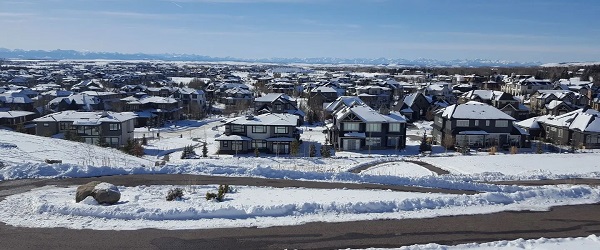
Calgary’s new mayor, Jeromy Farkas, has promised to scrap “blanket rezoning”—a policy enacted by the city in 2024 that allows homebuilders to construct duplexes, townhomes and fourplexes in most neighbourhoods without first seeking the blessing of city hall. In other words, amid an affordability crunch, Mayor Farkas plans to eliminate a policy that made homebuilding easier and cheaper—which risks reducing housing choices and increasing housing costs for Calgarian families.
Blanket rezoning was always contentious. Debate over the policy back in spring 2024 sparked the longest public hearing in Calgary’s history, with many Calgarians airing concerns about potential impacts on local infrastructure, parking availability and park space—all important issues.
Farkas argues that blanket rezoning amounts to “ignoring the community” and that Calgarians should not be forced to choose between a “City Hall that either stops building, or stops listening.” But in reality, it’s virtually impossible to promise more community input on housing decisions and build more homes faster.
If Farkas is serious about giving residents a “real say” in shaping their neighbourhood’s future, that means empowering them to alter—or even block—housing proposals that would otherwise be allowed under blanket rezoning. Greater public consultation tends to give an outsized voice to development opponents including individuals and groups that oppose higher density and social housing projects.
Alternatively, if the mayor and council reform the process to invite more public feedback, but still ultimately approve most higher-density projects (as was the case before blanket rezoning), the consultation process would be largely symbolic.
Either way, homebuilders would face longer costlier approval processes—and pass those costs on to Calgarian renters and homebuyers.
It’s not only the number of homes that matters, but also where they’re allowed to be built. Under blanket rezoning, builders can respond directly to the preferences of Calgarians. When buyers want duplexes in established neighbourhoods or renters want townhomes closer to work, homebuilders can respond without having to ask city hall for permission.
According to Mayor Farkas, higher-density housing should instead be concentrated near transit, schools and job centres, with the aim of “reducing pressure on established neighbourhoods.” At first glance, that may sound like a sensible compromise. But it rests on the flawed assumption that politicians and planners should decide where Calgarians are allowed to live, rather than letting Calgarians make those choices for themselves. With blanket rezoning, new homes are being built in areas in response to buyer and renter demand, rather than the dictates of city hall. The mayor also seems to suggest that city hall should thwart some redevelopment in established neighbourhoods, limiting housing options in places many Calgarians want to live.
The stakes are high. Calgary is not immune to Canada’s housing crisis, though it has so far weathered it better than most other major cities. That success partly reflects municipal policies—including blanket rezoning—that make homebuilding relatively quick and inexpensive.
A motion to repeal blanket rezoning is expected to be presented to Calgary’s municipal executive committee on Nov. 17. If it passes, which is likely, the policy will be put to a vote during a council meeting on Dec. 15. As the new mayor and council weigh changes to zoning rules, they should recognize the trade-offs. Empowering “the community” may sound appealing, but it may limit the housing choices available to families in those communities. Any reforms should preserve the best elements of blanket rezoning—its consistency, predictability and responsiveness to the housing preferences of Calgarians—and avoid erecting zoning barriers that have exacerbated the housing crisis in other cities.

Tegan Hill
Director, Alberta Policy, Fraser Institute

Austin Thompson

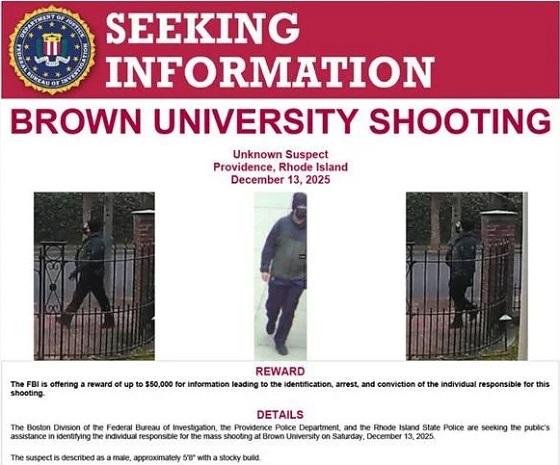
Brown University shooter dead of apparent self-inflicted gunshot wound
Alberta’s new diagnostic policy appears to meet standard for Canada Health Act compliance
Canada Hits the Brakes on Population

Why is Canada paying for dairy ‘losses’ during a boom?

Ford’s EV Fiasco Fallout Hits Hard

Bondi Beach Survivor Says Cops Prevented Her From Fighting Back Against Terrorists

Geopolitics no longer drives oil prices the way it used to
-
 Artificial Intelligence2 days ago
UK Police Pilot AI System to Track “Suspicious” Driver Journeys
-
 Business2 days ago
Judge Declares Mistrial in Landmark New York PRC Foreign-Agent Case
-
 Alberta21 hours ago
A Christmas wish list for health-care reform
-
 International2 days ago
World-leading biochemist debunks evolutionary theory
-
 Business14 hours ago
Some Of The Wackiest Things Featured In Rand Paul’s New Report Alleging $1,639,135,969,608 In Gov’t Waste
-
 Business2 days ago
The “Disruptor-in-Chief” places Canada in the crosshairs
-
 Energy14 hours ago
‘The electric story is over’
-
 International23 hours ago
Georgia county admits illegally certifying 315k ballots in 2020 presidential election