
Travel
I’m goin’ back to Boulder Hut


BOULDER HUT by Gerry Feehan
I asked the pilot where we were bound.
“Boulder Hut” he said. “Where’s that?” I queried. “Twelve minutes that way,” he said pointing west over Northstar Mountain.
There are no baths or showers at Boulder Hut. Clean-up after a day of strenuous backcountry skiing involves soaping up in a wood-fired sauna, then dumping a bucket of water over one’s head. To my surprise a fellow guest, fit naked – and female – offered to do the pouring. I reluctantly acquiesced. Thereafter, the absence of a proper shower seemed trivial and I decided to forego my complaint to management.


Rosie (indifferently) guards Boulder Hut.
Management at this remote backcountry lodge consists of owners Mark and Sarah Yancey, whose infectious love of Boulder Hut – and the remote lifestyle it entails – is evident from the moment they greet you on the snow-packed heli-pad.
Over the years I’ve acquired all the accoutrements for ski-touring – and on occasion I’ve skinned up from our condo on the Kimberley, BC ski hill – but I had never before toured in the backcountry.

unloading the helicopter
So I was curious when a helicopter touched down at the base of the ski hill on a sunny morning in January. A group of people, ski paraphernalia in tow, was preparing to board. I put down my coffee, stepped off the deck and wandered over. I asked the pilot where they were bound.
“Boulder Hut” he said.
“Where’s that?” I queried.
“Twelve minutes that way,” he said pointing west over Northstar Mountain.

a bluebird day
As I ain’t gettin’ no younger, I determined to be on that chopper before the season ended. And so in mid-March I was soaring over our place, watching my wife Florence waving goodbye from our deck. I hoped it was not a permanent farewell.
Moments later we were up and over the Black Forest on the ski hill’s back side.
Then we were into the rugged roadless world of the Purcell Range. We hugged a ridge of wintry peaks, summited Boulder Pass and descended into a broad forested valley. A tiny dot far below soon resolved into Boulder Hut.

lunch
After a welcoming lunch and safety briefing we strapped on skins and started our first ascent through the thick forest of old-growth spruce that provides Boulder’s gorgeous back-drop. The conditions were fabulous; a storm had just blown through. Fresh powder and sunny, bluebird conditions greeted us.
Drinking water is drawn directly from a small creek that flows year-round.

Climbing.
Every winter the media warns of avalanche danger in the backcountry. At Boulder Hut safety is paramount. With Mark and alpine guide Brent Peters constantly checking conditions – and leading the way through dicey areas – we felt safe and comfortable. When there was any hint of risk they dug a snow profile to check for stability and to ensure some rogue slab wouldn’t ruin our day.

… and climbing.
Boulder Hut is remote, quaint and rustic – guests share an open sleeping cabin. If you forget earplugs (and sleeping pills), your repose may be ruined; exhausted snoring skiers make a hell of a racket.

okay, so Sarah does most of the dishes
In the evening guests are responsible for stoking the wood-burning stove. Failure to maintain the fire means for a long cold shivering night. As the only rookie, I was utterly exhausted at the end of each day and slept like a baby – with an assist from earplugs (and a little blue friend).
Drinking water is drawn directly from a small creek that flows year-round. The same stream supplies power via a small hydroelectric plant.
Boulder has no laundry facilities. By the fourth night my ski socks, hanging over the bunk to dry, had taken on a crisp flavourful bouquet – or so my fellow guests noted (I was obliviously comatose).

Boulder’s bathrooms are al fresco
Boulder’s bathrooms are located al fresco; open A-frame jobbies where one can enjoy a panoramic view of the Purcell Mountains whilst engaging in one’s morning constitutional. A sign planted in the snow announces whether the privy is occupied or available.
At Boulder Hut there is no cellphone coverage or internet. And guests are (gasp) expected to help with the dishes after dinner.

a great crew
I’ve been to five-star ski lodges where a cat whisks you to the top of the mountain for each run. At Boulder Hut every turn is earned. Mark calculated that we climbed 14,000 feet (4300 meters) during our stay.

girls just wanna have fun
Sound like a miserable experience?
I had the time of my life. Mark, Sarah, their kids Grace and Alden, mascot Rosie the Great Pyrenees and my seven fascinating fellow guests made for a fabulous, unique experience.

a sliver of winter sun lights Boulder Pass
I’m going back to Boulder this winter – and taking along a few buddies – all rookies.

goodbye Boulder Hut
Now if only I can arrange for a reprise of that fit lady with the water bucket.
Gerry Feehan QC practised law in Red Deer for 27 years before starting his second life as a freelance travel writer and photographer. He says that, while being a lawyer is more remunerative than travel writing, it isn’t nearly as much fun. When not on the road, Gerry and his wife Florence live in Red Deer and Kimberley, BC. Todayville is proud to work with Gerry to re-publish some of his most compelling stories from his vast catalogue developed over more than a decade of travel.

Gerry Feehan
Click to read an excellent story about the Turks and Caicos.



From the Fraser Institute
By Alex Whalen and Jake Fuss
This holiday season, many Canadians will fly to spend time to with family and friends. But air travellers in Canada consistently report frustration with service, cost and choice. In its recent budget, the Carney government announced it will consider “options for the privatization of airports.” What does this mean for Canadians?
Up until the 1990s, the federal government served as both the owner and operator of Canada’s major airports. The Chrétien government partially privatized and transferred the operation of major airports to not-for-profit airport authorities, while the federal government remained the owner of the land. Since then, the federal government has effectively been the landlord for Canada’s airports, collecting rent each year from the not-for-profit operating authorities.
What would full privatization of airports look like?
If the government allows private for-profit businesses to own Canada’s major airports, their incentives would be to operate as efficiently as possible, serve customers and generate profits. Currently, there’s little incentive to compete as the operating authorities are largely unaccountable because they only report to government officials in a limited form, rather than reporting directly to shareholders as they would under privatization. Private for-profit airports exist in many other countries, and research has shown they are often less costly for passengers and more innovative.
Yet, privatization of airports should be only the first step in a broader package of reforms to improve air travel in Canada. The federal government should also open up competition by creating the conditions for new airports, new airlines and new investment. Currently, Canada restricts foreign ownership of Canadian airlines, while also restricting foreign airlines from flying within Canada. Consequently, Canadians are left with little choice when booking air travel. Opening up the industry by reversing these policies would force incumbent airlines to compete with a greater number of airlines, generating greater choice and likely lower costs for consumers.
Moreover, the federal government should reduce the taxes and fees on air travel that contribute to the cost of airline tickets. Indeed, according to our recent research, among peer countries, Canada has among the most expensive air travel taxes and fees. These costs get passed on to consumers, so it’s no surprise that Canada consistently ranks as a very expensive country for air travel.
If the Carney government actually privatizes Canada’s airports, this would be a good first step to introducing greater competition in an industry where it’s badly needed. But to truly deliver for Canadians, the government must go much further and overhaul the numerous policies, taxes and fees that limit competition and drive up costs.

Alex Whalen
Director, Atlantic Canada Prosperity, Fraser Institute

Jake Fuss
Director, Fiscal Studies, Fraser Institute
International
America first at the national parks: Trump hits Canadians and other foreign visitors with $100 fee


Foreign visitors heading to America’s crown-jewel national parks will soon face a steeper bill, as the Trump administration moves to prioritize U.S. taxpayers who already bankroll the system. The Department of the Interior announced Tuesday that starting in 2026, non-residents will be charged an additional $100 at 11 of the country’s busiest parks — a list that includes the Grand Canyon, Yellowstone, Yosemite, Acadia, Everglades, and other iconic destinations. The change accompanies a sharp increase in the cost of an annual all-parks pass for foreign tourists, which will jump to $250, more than triple the current rate. Americans and permanent residents will continue paying $80.
Interior Secretary Doug Burgum framed the policy as a straightforward matter of fairness. “President Trump’s leadership always puts American families first,” he said, arguing that U.S. households already subsidize the National Park System and deserve affordable access while international tourists contribute “their fair share” to the upkeep and expansion of the park network. It’s a pitch that aligns with Trump’s broader push to restore what he calls a sense of ownership and pride in the country’s natural treasures, and to make sure the burden of maintaining them doesn’t fall solely on American families.
We’re making it easier & more affordable for Americans to experience the beauty & freedom of our public lands!
In 2026, we’re launching:
– America-first pricing 💵
– Digital passes 📱
– Patriotic pass designs 🇺🇸
– Expanded motorcycle access 🏍️
– 5 additional fee-free days 🗓️ pic.twitter.com/a2SvHNBdSP— Secretary Doug Burgum (@SecretaryBurgum) November 25, 2025
The National Park Service recorded nearly 332 million visits in 2024 across its 63 designated national parks — a staggering figure that has placed heavy pressure on trails, facilities, and staff. While some parks charge per-vehicle fees and others by the individual, the $80 “America the Beautiful” pass covers the holder and all passengers or up to four adults. Under the new rules, foreign visitors who purchase the $250 annual pass will avoid the extra $100 at the 11 high-traffic parks, but all other overseas travelers will pay the surcharge at the gate.
The administration says the approach follows a July executive order from President Trump, aimed at preserving parkland “for American families” by ensuring those who don’t support the system through taxes help shoulder the cost of its growing maintenance needs. Burgum’s department also highlighted that U.S. visitors will continue to enjoy “patriotic fee-free days” tied to national observances — including President’s Day, Veterans Day, and Flag Day, which coincides with Trump’s birthday — while foreign visitors will pay full freight.
The move is expected to generate significant revenue from international tourism while reinforcing a message that has become central to Trump’s agenda: America’s natural wonders belong first to the taxpayers who fund them, and protecting access for those families comes before subsidizing the travel of visitors from abroad.


Remembering Afghanistan and the sacrifices of our military families

How to talk about housing at the holiday dinner table

“Magnitude cannot be overstated”: Minnesota aid scam may reach $9 billion

Largest fraud in US history? Independent Journalist visits numerous daycare centres with no children, revealing massive scam

US Under Secretary of State Slams UK and EU Over Online Speech Regulation, Announces Release of Files on Past Censorship Efforts

New Poll Shows Ontarians See Oil & Gas as Key to Jobs, Economy, and Trade
Socialism vs. Capitalism
-
 Bruce Dowbiggin2 days ago
In Contentious Canada Reality Is Still Six Degrees Of Hockey
-
 Alberta1 day ago
The Canadian Energy Centre’s biggest stories of 2025
-
 Business2 days ago
DOOR TO DOOR: Feds descend on Minneapolis day cares tied to massive fraud
-
 Business1 day ago
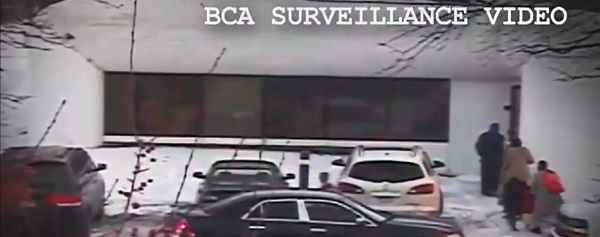
Resurfaced Video Shows How Somali Scammers Used Day Care Centers To Scam State
-
 Business14 hours ago
Dark clouds loom over Canada’s economy in 2026
-
 Addictions10 hours ago
Coffee, Nicotine, and the Politics of Acceptable Addiction
-
 Business2 days ago
Canada needs serious tax cuts in 2026
-
 Business1 day ago
Ottawa Is Still Dodging The China Interference Threat