
Environment
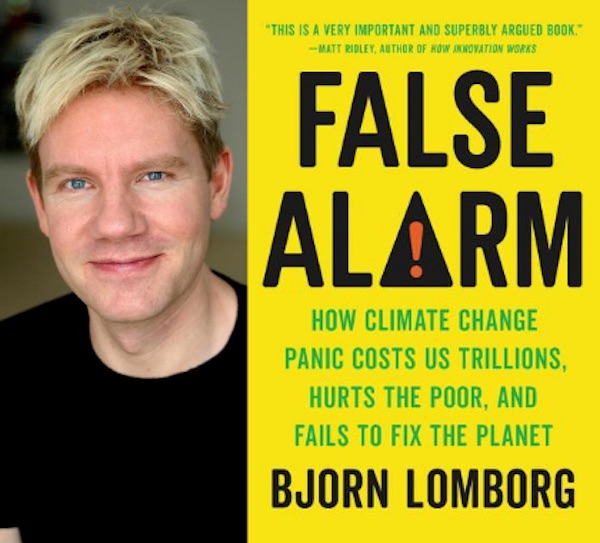
Bjorn Lomborg shows how social media censors forgot to include the facts in their fact check


From lomborg.com
Dr. Bjorn Lomborg is president of the Copenhagen Consensus Center, and visiting fellow at the Hoover Institution, Stanford University. The Copenhagen Consensus Center is a think-tank that researches the smartest ways to do good. For this work, Lomborg was named one of TIME magazine’s 100 most influential people in the world. His numerous books include “False Alarm: How Climate Change Panic Costs Us Trillions, Hurts the Poor, and Fails to Fix the Planet”, “The Skeptical Environmentalist”, “Cool It”, “How to Spend $75 Billion to Make the World a Better Place”, “The Nobel Laureates’ Guide to the Smartest Targets for the World 2016-2030” and “Prioritizing Development: A Cost Benefit Analysis of the UN’s SDGs”.
The heresy of heat and cold deaths
A group of campaign researchers try hilariously, ineptly — and depressingly —to suppress facts
TL;DR. A blog, claiming to check facts, does not like that I cite this fact: the rising temperatures in the past two decades have caused more heat deaths, but at the same time avoided even more cold deaths. Since this inconvenient fact is true, they ignore to check it. Instead, they fabricate an absurd quote, which is contradicted in the very article they claim to ‘fact-check’.
166,000 avoided deaths
Cold deaths vastly outweigh heat deaths. This is common knowledge in the academic literature and for instance the Lancet finds that each year, almost 600,000 people die globally from heat but 4.5 million from cold.
Moreover, when the researchers include increasing temperatures of 0.26°C/decade (0.47°F/decade), they find heat deaths increase, but cold deaths decrease more than twice as much:


Or here from the article:

The total impact of more than 116,000 more heat deaths each year and almost 283,000 fewer cold deaths year is that by now, the temperature rise since 2000 means that for temperature-related mortality we are seeing 166,000 fewer deaths each year.
Climate Feedback
However, this is obviously heretical information, so the self-appointed blog, Climate Feedback, wants it purged. Now, if they were just green campaigning academics writing on the internet, that might not matter much. But unfortunately, this group has gained the opportunity to censor information on Facebook, so I have to spend some time showing you their inept, often hilarious, and mostly nefarious arguments. The group regularly makes these sorts of bad-faith arguments, and apparently appealing their Facebook inditements simply goes back to the same group. It is rarely swayed by any argument.
They never test the claim
Climate Feedback seemingly wants to test my central claim from the Lancet article that global warming now saves 166,000 people each year, from my oped in New York Post:

But notice what is happening right after the quote “Global warming saves 166,000 lives each year”. They append it with something that is not in the New York Post. You have to read much further to realize that they are actually trying — and failing — to paste in an entirely separate Facebook post, which addressed a different scientific article.
It turns out, Climate Feedback never addresses the 166,000 people saved in their main text. “166” only occurs three times in the article: twice stating my claim and once after their main text in a diatribe by an ocean-physics professor, complete with personal insults. In it, the professor doesn’t contest the 166,000 avoided deaths. Instead, he falsely claims that I am presenting the 166,000 as the overall mortality impact of climate change, which is absurd: anyone reading my piece understand that I’m talking about the impact of temperature-related mortality.
Perhaps most tellingly, Climate Feedback has asked one of the co-authors of the 166,000 Lancet study (as they also very proudly declare in their text). And this professor, Antonio Gasparrini, does not only not challenge but doesn’t even discuss my analysis of the 166,000 avoided deaths.
Climate Feedback not only doesn’t present any reasonable argument against the 166,000 avoided deaths. It has actually asked one of the main authors of the study to comment and they have nothing.
In conclusion, Climate Feedback simply has no good arguments against the 166,000 people saved, and yet they pillory my work publicly in an attempt to censor data they deem inconvenient. . That academics play along in this charade of an inquisition dressed up ‘fact-check’ is despicable.
Rest of Climate Feedback’s claim is ludicrously wrong
So, beyond the claim of 166,000, Climate Feedback is alleging that I say the following: “those claiming that climate change is causing heat-related deaths are wrong because they ignore that the population is growing and becoming older.”

This is a fabricated quote. I never say this. Climate Feedback has simply made up a false statement, dressing it as a quote of mine, even though I never claimed anything like this. This is incredibly deceptive: it is ludicrous to insist that I should argue that it is wrong to claim “climate change is causing heat-related deaths.” I simply do not argue that “climate change is not causing heat-related deaths”
Up above I exactly argued that climate change causes more heat deaths. My graph shows that climate change causes more heat deaths.
And I even point out exactly that the temperature increases cause heat deaths in my New York Post piece:

“As temperatures have increased over the past two decades, that has caused an extra 116,000 heat deaths each year.” Sorry, Climate Feedback, but the rest of your claim is straight-out, full-on stupid.

Evaluation of Climate Feedback’s review
So Climate Feedback is simply wrong in asserting that I somehow say climate change is not causing heat-related deaths — because I do say that, even in my New York Post article:

Climate Feedback doesn’t show anywhere in their main text how the 166,000 avoided deaths are wrong. They even ask one of the main authors of the study, and that professor says nothing.

Conclusion
Climate Feedback’s deceptive hit job is long on innuendo and bad arguments (see a few, further examples below). But the proof really is in the pudding.
They make two central arguments. First, that my claim of “Global warming saves 166,000 lives each year” is incorrect. Yet, they never address this in their main text. And while they get information from one of the main authors of the Lancet study that is the basis for the 166,000 lives saved, they get no criticism of the argument.
Second, they assert that I somehow say that it is wrong to claim climate change is causing more heat-related deaths, which is just ludicrous because I make that very point, even in my New York Post article:
Verdict: Climate Feedback is fundamentally wrong in both their two main claims.
Additional point: It really shouldn’t be necessary to say, but you can’t make a ‘fact-check’ page, write page after page of diatribe, ignore the first main point and bungle the other main point, and then hope at the end nobody notices, and call my arguments wrong. Or, at least, you shouldn’t be able to get away with such nonsense.
Two examples of the inadequate arguments in the rest of Climatefeedback
Lomborg doesn’t have a time machine
Climate Feedback asks professor Gasparrini, co-author of the Lancet study above. He doesn’t cover anything on the 166,000 deaths avoided. Instead, his text entirely discusses a 2016 WSJ article where I used his 2015-article but he criticizes me for not citing his 2017 article:

The reason I didn’t cite his 2017-article is of course that I didn’t have access to a time machine when I wrote my article in 2016.
Indeed, I have corresponded with Professor Gasparrini several times later about his 2017-article. And yes, his 2017-study indeed shows that at very high emissions, additional heat deaths will likely outweigh avoided cold deaths towards the end of the century. But his study also shows that all regions see additional heat deaths vastly exceeded by extra avoided cold deaths from the 1990s to the 2010s — the exact point I’ve made here.
Serious academics take into account population growth and aging
In a refreshing comment, Climate Feedback asks Philip Staddon, Principal Lecturer in Environment and Sustainability from the University of Gloucestershire to chime in. He says, that I’m wrong to criticize the lack of standardization from population growth and aging, because clearly “all serious academic research already takes account of population growth, demographics and ageing”:

I, of course, entirely agree with Staddon, that all serious academic research should do that. But the research that I have criticized has exactly not done so, resulting in unsupported claims. So, for instance, in the Facebook post that Climate Feedback discusses, I show how CNN believes that a study shows a 74% increase caused by the climate crisis:

This is based on not adjusting for population and age, and is actually from the press release of the paper (and in table S6 in the paper).
Likewise, Staddon might have noticed that a very high-profile editorial in the world’s top medical journals made that very amateurish mistake. They argue that temperature increases over the past 20 years have increased deaths among people 65 and older:

But they cite numbers that are not adjusted for age or population — indeed the world’s population of people above age 65 has increased almost as much:

I absolutely agree with Principal Lecturer Philip Staddon on the necessity of making sure that good arguments in the public sphere are adjusted for population and aging before blaming climate. Unfortunately, they often aren’t


From the Frontier Centre for Public Policy
Livestock contribute far less to emissions than activists claim, and eliminating them would weaken nutrition, resilience and food security
The war on livestock pushed by Net Zero ideologues is not environmental science; it’s a dangerous, misguided campaign that threatens global food security.
The priests of Net Zero 2050 have declared war on the cow, the pig and the chicken. From glass towers in London, Brussels and Ottawa, they argue that cutting animal protein, shrinking herds and pushing people toward lentils and lab-grown alternatives will save the climate from a steer’s burp.
This is not science. It is an urban belief that billions of people can be pushed toward a diet promoted by some policymakers who have never worked a field or heard a rooster at dawn. Eliminating or sharply reducing livestock would destabilize food systems and increase global hunger. In Canada, livestock account for about three per cent of total greenhouse gas emissions, according to Environment and Climate Change Canada.
Activists speak as if livestock suddenly appeared in the last century, belching fossil carbon into the air. In reality, the relationship between humans and the animals we raise is older than agriculture. It is part of how our species developed.
Two million years ago, early humans ate meat and marrow, mastered fire and developed larger brains. The expensive-tissue hypothesis, a theory that explains how early humans traded gut size for brain growth, is not ideology; it is basic anthropology. Animal fat and protein helped build the human brain and the societies that followed.
Domestication deepened that relationship. When humans raised cattle, sheep, pigs and chickens, we created a long partnership that shaped both species. Wolves became dogs. Aurochs, the wild ancestors of modern cattle, became domesticated animals. Junglefowl became chickens that could lay eggs reliably. These animals lived with us because it increased their chances of survival.
In return, they received protection, veterinary care and steady food during drought and winter. More than 70,000 Canadian farms raise cattle, hogs, poultry or sheep, supporting hundreds of thousands of jobs across the supply chain.
Livestock also protected people from climate extremes. When crops failed, grasslands still produced forage, and herds converted that into food. During the Little Ice Age, millions in Europe starved because grain crops collapsed. Pastoral communities, which lived from herding livestock rather than crops, survived because their herds could still graze. Removing livestock would offer little climate benefit, yet it would eliminate one of humanity’s most reliable protections against environmental shocks.
Today, a Maasai child in Kenya or northern Tanzania drinking milk from a cow grazing on dry land has a steadier food source than a vegan in a Berlin apartment relying on global shipping. Modern genetics and nutrition have pushed this relationship further. For the first time, the poorest billion people have access to complete protein and key nutrients such as iron, zinc, B12 and retinol, a form of vitamin A, that plants cannot supply without industrial processing or fortification. Canada also imports significant volumes of soy-based and other plant-protein products, making many urban vegan diets more dependent on long-distance supply chains than people assume. The war on livestock is not a war on carbon; it is a war on the most successful anti-poverty tool ever created.
And what about the animals? Remove humans tomorrow and most commercial chickens would die of exposure, merino sheep would overheat under their own wool and dairy cattle would suffer from untreated mastitis (a bacterial infection of the udder). These species are fully domesticated. Without us, they would disappear.
Net Zero 2050 is a climate target adopted by federal and provincial governments, but debates continue over whether it requires reducing livestock herds or simply improving farm practices. Net Zero advocates look at a pasture and see methane. Farmers see land producing food from nothing more than sunlight, rain and grass.
So the question is not technical. It is about how we see ourselves. Does the Net Zero vision treat humans as part of the natural world, or as a threat that must be contained by forcing diets and erasing long-standing food systems? Eliminating livestock sends the message that human presence itself is an environmental problem, not a participant in a functioning ecosystem.
The cow is not the enemy of the planet. Pasture is not a problem to fix. It is a solution our ancestors discovered long before anyone used the word “sustainable.” We abandon it at our peril and at theirs.
Dr. Joseph Fournier is a senior fellow at the Frontier Centre for Public Policy. An accomplished scientist and former energy executive, he holds graduate training in chemical physics and has written more than 100 articles on energy, environment and climate science.

From the Fraser Institute
By Annika Segelhorst and Elmira Aliakbari
Canada’s rivers are vital to our environment and economy. Clean freshwater is essential to support recreation, agriculture and industry, an to sustain suitable habitat for wildlife. Conversely, degraded freshwater can make it harder to maintain safe drinking water and can harm aquatic life. So, how healthy are Canada’s rivers today?
To answer that question, Environment Canada uses an index of water quality to assess freshwater quality at monitoring stations across the country. In total, scores are available for 165 monitoring stations, jointly maintained by Environment Canada and provincial authorities, from 17 in Newfoundland and Labrador, to 8 in Saskatchewan and 20 in British Columbia.
This index works like a report card for rivers, converting water test results into scores from 0 to 100. Scientists sample river water three or more times per year at fixed locations, testing indicators such as oxygen levels, nutrients and chemical levels. These measurements are then compared against national and provincial guidelines that determine the ability of a waterway to support aquatic life.
Scores are calculated based on three factors: how many guidelines are exceeded, how often they are exceeded, and by how much they are exceeded. A score of 95-100 is “excellent,” 80-94 is “good,” 65-79 is “fair,” 45-64 is “marginal” and a score below 45 is “poor.” The most recent scores are based on data from 2021 to 2023.
Among 165 river monitoring sites across the country, the average score was 76.7. Sites along four major rivers earned a perfect score: the Northeast Magaree River (Nova Scotia), the Restigouche River (New Brunswick), the South Saskatchewan River (Saskatchewan) and the Bow River (Alberta). The Bayonne River, a tributary of the St. Lawrence River near Berthierville, Quebec, scored the lowest (33.0).
Overall, between 2021 and 2023, 83.0 per cent of monitoring sites across the country recorded fair to excellent water quality. This is a strong positive signal that most of Canada’s rivers are in generally healthy environmental condition.
A total of 13.3 per cent of stations were deemed to be marginal, that is, they received a score of 45-64 on the index. Only 3.6 per cent of monitoring sites fell into the poor category, meaning that severe degradation was limited to only a few sites (6 of 165).
Monitoring sites along waterways with relatively less development in the river’s headwaters and those with lower population density tended to earn higher scores than sites with developed land uses. However, among the 11 river monitoring sites that rated “excellent,” 8 were situated in areas facing a combination of pressures from nearby human activities that can influence water quality. This indicates the resilience of Canada’s river ecosystems, even in areas facing a combination of multiple stressors from urban runoff, agriculture, and industrial activities where waterways would otherwise be expected to be the most polluted.
Poor or marginal water quality was relatively more common in monitoring sites located along the St. Lawrence River and its major tributaries and near the Great Lakes compared to other regions. Among all sites in the marginal or poor category, 50 per cent were in this area. The Great Lakes-St. Lawrence region is one of the most population-dense and extensively developed parts of Canada, supporting a mix of urban, agricultural, and industrial land uses. These pressures can introduce harmful chemical contaminants and alter nutrient balances in waterways, impairing ecosystem health.
In general, monitoring sites categorized as marginal or poor tended to be located near intensive agriculture and industrial activities. However, it’s important to reiterate that only 28 stations representing 17.0 per cent of all monitoring stations were deemed to be marginal or poor.
Provincial results vary, as shown in the figure below. Water quality scores in Newfoundland and Labrador, Prince Edward Island, New Brunswick, Saskatchewan and Alberta were, on average, 80 points or higher during the period from 2021 to 2023, indicating that water quality rarely departed from natural or desirable levels.
Rivers sites in Nova Scotia, Ontario, Manitoba and B.C. each had average scores between 74 and 78 points, suggesting occasional departures from natural or desirable levels.
Finally, Quebec’s average river water quality score was 64.5 during the 2021 to 2023 period. This score indicates that water quality departed from ideal conditions more frequently in Quebec than in other provinces, especially compared to provinces like Alberta, Saskatchewan and P.E.I. where no sites rated below “fair.”

Overall, these results highlight Canada’s success in maintaining a generally high quality of water in our rivers. Most waterways are in good shape, though some regions—especially near the Great Lakes and along the St. Lawrence River Valley—continue to face pressures from the combined effects of population growth and intensive land use.


Alberta’s huge oil sands reserves dwarf U.S. shale

Canada’s sudden rediscovery of energy ambition has been greeted with a familiar charge: hypocrisy

COP30 finally admits what resource workers already knew: prosperity and lower emissions must go hand in hand

Ottawa’s Newly Released Defence Plan Crosses a Dangerous Line
-
armed forces7 hours ago
Ottawa’s Newly Released Defence Plan Crosses a Dangerous Line
-
 Censorship Industrial Complex2 days ago
Canadian university censors free speech advocate who spoke out against Indigenous ‘mass grave’ hoax
-
 espionage6 hours ago
Carney Floor Crossing Raises Counterintelligence Questions aimed at China, Former Senior Mountie Argues
-
 Health5 hours ago
All 12 Vaccinated vs. Unvaccinated Studies Found the Same Thing: Unvaccinated Children Are Far Healthier
-
 Energy8 hours ago
75 per cent of Canadians support the construction of new pipelines to the East Coast and British Columbia
-
 Energy2 days ago
‘The electric story is over’
-
 Business2 days ago
Some Of The Wackiest Things Featured In Rand Paul’s New Report Alleging $1,639,135,969,608 In Gov’t Waste
-
 International2 days ago
Georgia county admits illegally certifying 315k ballots in 2020 presidential election