
Opinion
April 18 2017 Red Deer’s financial statement, presented to council, showed huge population decline.


Just 10 weeks ago on April 18, 2017 the 2016 Annual Financial Statement was presented to city council. In this document our population was discussed, and the decline was quantified. Our city declined from 100,807 residents in 2015, to 99,832 residents in 2016. Our city is actually smaller by 975 residents.
According to our census, 777 residents out of 975, left the neighbourhoods north of the river. This area is home to 30% of the population down from 40% in 1985. 30% of the population accounted for almost 80% of the outward migration of our population. Coincidentally the population in Blackfalds increased by 700 residents, during this time.
It is one thing that Red Deer is one of the very few communities to show an actual decline in population in a province that grew by about 4%. Especially given that Communities around Red Deer grew more rapidly than normal. The fact the north side of the river declined so steeply should set off some alarm bells, but it did not.
Evidence proving differently, the decline is a result of the provincial economy. Even given that Edmonton, Calgary and Lethbridge are 3 of the 5 fastest growing cities in Canada along with Regina and Saskatoon.
This is proven, documented and accepted fact. The city is basing their estimates on these facts. The city will not do a census this year because they do not see any indication of the growth needed to validate the cost. The city will be deferring any annexation due to lack of growth.
Minutes adopted, reports presented, and news printed but will any politician or political wannabe discuss this, offer solutions, or even acknowledge these concerns? No, because it is a negative. They do not have any ideas beyond the rhetorical status-quo platitudes.
September 2015, CBC news reports that Alberta has the poorest air quality in Canada, Red Deer region has the poorest air in Alberta. Red Deer north, Riverside monitors have been registering levels requiring immediate attention. 21 months later and we are no further ahead beyond trying to discredit reports, replacing monitors, and ignoring the repercussions of our actions.
Perhaps we could think about our tendency to compartmentalize our city. Why do we have all high schools, current and future along with 10 of 11 recreational facilities on one side of the city necessitating long commutes for 30% of the population. Why are we concentrating all our industry on the other side of the city, which coincidentally also has poorest air quality?
Our crime rate has been noted for being notoriously high, even topping some national charts, and has been given some notice by these same politicians and political wannabes. But are they looking in isolation without giving thought to big picture repercussions of our actions elsewhere.
Does the lack of access to recreational facilities north of the river contribute to juvenile delinquencies? Do long commutes deter young people from participating in extra-curricular activities, encouraging juvenile delinquencies? Just simple questions being left unanswered.
I think it is great to advocate for others to do their jobs, like provincial and federal elected representatives but it does not mean relinquishing all responsibilities in areas you can control.
Red Deer is not, currently, growing and is in fact declining. The city based it’s finances, budgets and projections on this fact. The province acknowledges this in ways evident to any one paying attention to the news. Removing Red Deer from needs’ lists, concentrating money and attention beyond our borders. The province is finally addressing our high crime in a reactionary way by expanding the court system, while ignoring our equally important medical and housing needs.
These are difficult issues, and it is easier to ignore or point blame at others than to offer solutions or even suggestions. But I am ever hopeful that there are those who will not hide but address these very real issues. Anyone?


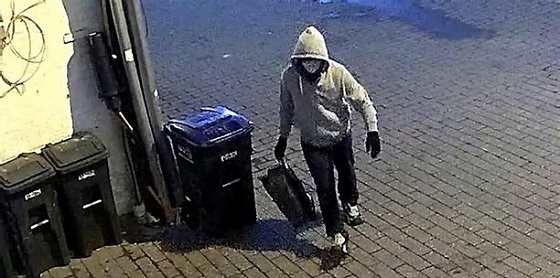

After years of dead ends, public frustration, and pointed questions from Congress, federal agents on Thursday finally took a suspect into custody for allegedly planting the pipe bombs outside the Democratic and Republican National Committee headquarters on the eve of Jan. 6. The arrest — confirmed by law enforcement officials and first reported by CNN and the Associated Press — lands just weeks before the five-year mark of the Capitol breach and brings long-awaited movement in a case that had become an embarrassment for the bureau.
A law-enforcement source told the AP the male suspect was arrested Thursday morning, though the charges remain under seal. For years, investigators had only grainy surveillance footage to work with: an individual in a gray hoodie, mask, gloves, and Nike Air Max Speed Turf sneakers, carrying a backpack as they placed what the FBI described as “viable explosive devices” outside both national party headquarters on the night of Jan. 5, 2021. Those bombs went unnoticed for roughly 17 hours, discovered only as Congress met the next day to certify the 2020 election results.
The timeline placed then–Vice President-elect Kamala Harris and former House Speaker Nancy Pelosi within mere feet of the devices that Wednesday as their motorcades traveled in and out of the DNC’s South Capitol Street headquarters. A House Administration Committee review earlier this year blasted federal authorities for allowing Pelosi’s motorcade to pass directly by one of the bombs after it had already been spotted, chalking up the lapse to a broader failure to secure the area.
That same review — authored by Reps. Barry Loudermilk of Georgia and Thomas Massie of Kentucky — accused federal investigators of letting the trail go cold far too early. Despite what they called “a promising array of data” and “numerous persons of interest,” the lawmakers said the FBI had, by late February 2021, already begun shifting resources away from the bombing probe and stonewalling congressional requests for updates. Their report lamented that “little meaningful progress” had been made and pressed the bureau to release more information. Hours later, investigators unveiled new details, including additional surveillance video and an estimate that the suspect is roughly 5-foot-7.
The years-long vacuum of answers fueled widespread speculation — particularly among conservatives — that the bomber may have been a politically inconvenient figure for the Biden-era Justice Department, which aggressively pursued hundreds of Trump supporters tied to the Capitol breach while offering no clarity on who planted the explosives. Now-FBI Deputy Director Dan Bongino, who took office in March after years of publicly criticizing the investigation, had repeatedly questioned whether the case was being slow-rolled. Before joining the bureau, he suggested on his podcast that the operation had the hallmarks of an “inside job” and accused prior leadership of a “massive cover-up.”
🚨BREAKING: The FBI has just made an arrest in the 2021 RNC and DNC pipe bomb investigation.
“We don’t have an ID of that person yet from the FBI or from the Justice Department but from everything we know it seems to indicate this is not someone who is an insider.” pic.twitter.com/Oh5OLl5E1e
— Andrew Kolvet (@AndrewKolvet) December 4, 2025
Once inside the FBI, Bongino moved the dormant investigation to the top of his priority list. In a post last month, he said the bureau brought in new investigators, flew in outside officers assigned as task-force partners, re-examined past work product, and dramatically increased both manpower and the reward for information. “We brought in new personnel to take a look at the case… we dramatically increased investigative resources,” he wrote on X.
Neither the FBI nor the Justice Department has commented on the arrest. For now, nearly five years after pipe bombs were quietly placed outside both major political parties’ headquarters, the country is finally one step closer to answers that should have come much sooner.
espionage
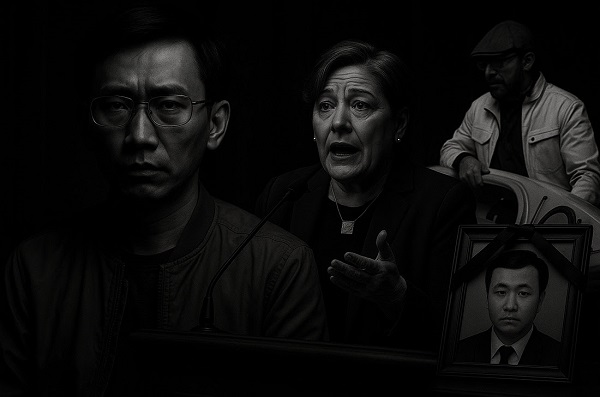
Digital messages reportedly allege Chinese police targeted dissident who died suspiciously near Vancouver


 Sam Cooper
‘Our superiors … want to get rid of him’
Radio-Canada, drawing on digital records first disclosed to Australian media in 2024 by an alleged Chinese spy, has reported new evidence suggesting that a Chinese dissident who died in a mysterious kayaking accident near Vancouver was being targeted for elimination by Chinese secret police and agents embedded in a Chinese conglomerate that the U.S. Treasury now accuses of running a multibillion-dollar organized-crime, money-laundering and modern-slavery empire out of Cambodia.
The new reporting focuses on a man identified only as “Eric,” a former undercover agent for Office No. 1 of China’s Ministry of Public Security — the police ministry at the core of so-called “CCP police stations” in global and Canadian cities, and reportedly tasked with hunting dissidents abroad.
Australia’s Four Corners revealed Eric’s story in May 2024, reporting that he had fled China in 2023 and walked into the headquarters of Australia’s domestic intelligence agency, ASIO, carrying a phone loaded with years of internal messages and records.
It also reported that Eric had been invited to testify in Canada’s Foreign Interference Commission, known as the Hogue Commission, about Beijing’s operations on Canadian soil.
“In an August 2024 report, ABC Investigations wrote: ‘Eric told ABC Investigations he had been invited to testify as a witness in the next round of hearings, scheduled to start in September.’”
But there is no public sign that his evidence was ever examined in open hearings or mentioned in the Commission’s final reports, suggesting that any material he supplied was handled entirely behind closed doors, if at all.
According to Radio-Canada’s Enquête program, reporters travelled to Australia to interview Eric and forensically review the contents of his phone: thousands of text and voice messages between 2016 and 2023, as well as financial records and internal documents that he says came from Office No. 1 and its corporate covers.
The archives reportedly include detailed exchanges with his superiors, evidence of clandestine money transfers and the names of individuals allegedly involved in overseas espionage and repression.
One sequence, labelled “The target,” captures the moment Eric is ordered to focus on a dissident painter named Hua Yong, who had already become notorious in China for blood-marked Tiananmen commemorations and for documenting mass evictions in Beijing.
Citing the exchange, which has not been independently reviewed by The Bureau, Radio-Canada quotes:
Office No. 1: Our future communications must be encrypted.
Eric: What are the orders?
Office No. 1: Listen carefully to my request. It concerns Hua Yong. Our superiors find him troublesome and want to get rid of him.
Those messages set the tone for what follows: a multi-year manhunt that begins in Thailand and ends with Hua dead off Canada’s Sunshine Coast. Eric says Hua was formally designated a high-value target, and the same phone records, as summarized by Enquête and earlier Four Corners reporting, show that a bounty was placed on Hua’s head — roughly the equivalent of US$20,000 if he were captured and repatriated.
To win Hua’s trust, Eric reportedly constructed an elaborate false persona. On social media and encrypted apps, he posed as a radical anti-Communist militant, proposing the creation of a jungle “armed camp” and a band of revolutionaries. He then invented “Brigade V,” a fake guerrilla group he promoted online while appearing in videos in camouflage and a balaclava. Hua, in exile and under pressure, was impressed. “This is brilliant,” he reportedly wrote privately, according to the message logs, and the two men soon met in person in Bangkok, drinking wine and plotting what Hua believed was resistance — all while Eric quietly fed reports back to the political-security police.
The Bureau is a reader-supported publication.
To receive new posts and support my work, consider becoming a free or paid subscriber.
It is this kind of mix of covert state targeting and deniable intermediaries that is now worrying Western security officials.
In November, ASIO director-general Mike Burgess used a major speech to warn that some authoritarian regimes are showing a “growing willingness” to mount “high-harm operations” abroad. Without naming specific countries, and not referring to Eric’s alleged evidence, he said his service believes “at least three nations” are willing and capable of carrying out lethal attacks in Australia, and may try to hide their involvement by contracting criminal “cut-outs.”
Canada’s own oversight bodies have been tracking a similar threat pattern.
In a 2024 report, the National Security and Intelligence Committee of Parliamentarians (NSICOP) described a fully redacted 12-paragraph case study of what it called the “most egregious” People’s Republic of China proxy identified by Canadian intelligence. The public summary says CSIS assessed that one aspect of the proxy’s behaviour posed a “high-risk, high-harm” threat to some Canadians and permanent residents, and that CSIS shared information on the proxy with the RCMP.
The same report notes that intelligence from CSIS and the Communications Security Establishment showed foreign states covertly attempting to buy influence with candidates and elected officials — a backdrop that makes the Hua Yong file, and the allegations of lethal targeting orders and corporate covers around Eric, especially sensitive.
Eric’s phone records, as described by Enquête, show that companies tied to his work gave him the freedom and cover to travel across Southeast Asia, build false identities and infiltrate exile networks, while maintaining his status as an MPS officer. One cover in particular stands out: a vast conglomerate in Cambodia that, on paper, dealt in real estate and finance and handled billions of dollars. Enquête identifies it as Prince Group and says Eric worked under its umbrella in 2016–2017 — a claim the company reportedly did not answer when approached by Radio-Canada.
That corporate name now has much wider resonance, and alleged connectivity to China’s United Front Work Department.
In October, the U.S. Justice Department unsealed an indictment charging Prince Group chairman Chen Zhi with orchestrating a forced-labour “pig-butchering” scam empire from compounds in Cambodia, while the U.S. Treasury and its U.K. counterpart simultaneously designated the “Prince Group Transnational Criminal Organization,” sanctioning Chen and 146 linked individuals and entities. Officials allege the network ran industrial-scale cyber-fraud centres staffed by trafficked workers, laundered billions in criminal proceeds and used shell companies and high-end real estate — including London properties — to wash illicit funds.
U.S. material also ties Prince Group into the orbit of Chinese state-aligned figures. Sanctions filings link Chen Zhi to Wan Kuok-koi, the Macau Triad boss known as “Broken Tooth,” whose modern Hongmen association has been described by U.S. officials as directly connected to the Chinese Communist Party’s United Front Work Department. They further allege that Prince Group worked with Palau-based businesswoman Rose Wang, a former vice-president of Palau’s Overseas Chinese Federation, who helped broker access and casino licences while acting as a facilitator for the scam network — a role analysts say dovetails with informal diplomacy and influence work on Beijing’s behalf.
Against that background, Eric’s description of Prince Group as one of his covers fits with The Bureau’s source material tying alleged Chinese police-station networks in Canada to underground casino and Chinese mafia structures entangled with United Front-aligned political figures.
In Eric’s interview with Radio-Canada, he portrays the Prince Group conglomerate as part of a broader ecosystem of ostensibly legitimate companies that quietly cooperate with Chinese security services — providing salaries, visas, office space and a glossy façade for officers like him to operate overseas. The digital trail Enquête reconstructed links that ecosystem to the micro-level surveillance of Hua Yong: reports on his movements, photographs of his residence in Canada, and continual updates to superiors who had bluntly said they wanted to “get rid of him.”
By April 2021, Hua had slipped out of Southeast Asia and arrived in Halifax on a humanitarian protection visa. From there, he moved west, eventually settling in the coastal community of Gibsons, British Columbia. Enquête reports that Eric continued to track him remotely, sending situation reports back to Office No. 1 even after Hua appeared to have found a measure of safety in Canada.
In November 2022, Hua reportedly set out alone in a bright yellow kayak and never returned. His body was later found on an island off the Sunshine Coast. The RCMP concluded that he had drowned and said they found no evidence of foul play; officers were not aware, at the time, that he was the subject of a Chinese police operation. According to Radio-Canada, three years later the case is still not fully closed: the British Columbia coroner has yet to issue a final report — an unusually long delay in a province where such inquests typically take around 16 months. In an email cited by Enquête, the Coroners Service said factors such as the complexity of a file and “investigations conducted by other agencies” can prolong a case.
According to Radio-Canada, Eric himself is ambivalent about what happened on the water that day. He told Enquête he had wondered whether Hua was murdered and recalled Hua’s own suspicion, during a severe illness in Canada, that he might have been poisoned. But he also pointed to later online information suggesting the death might have been an accident, and emphasized that he has no definitive proof either way. What he does insist on is that Hua was a live target of a Chinese operation at the time he died — and that, based on standard MPS tradecraft, there were “certainly other teams” beyond him monitoring the dissident in Canada.
Eric also reportedly says he has never been contacted by RCMP about Hua’s death. Instead, he told Enquête that he has provided documents from his phone archive to Canada’s Commission of Inquiry into Foreign Interference in confidential channels. From his vantage point — as the officer who received the “get rid of him” order, posed as Hua’s ally and then watched him restart his life in Canada — he argues there are “strange aspects” to the case that demand further scrutiny.
The Bureau is a reader-supported publication.
To receive new posts and support my work, consider becoming a free or paid subscriber.

Blacked-Out Democracy: The Stellantis Deal Ottawa Won’t Show Its Own MPs

Health Canada pauses plan to sell unlabeled cloned meat

Google denies scanning users’ email and attachments with its AI software

Is there a cure for Alzheimer’s Disease?
-
 Alberta2 days ago
Alberta will defend law-abiding gun owners who defend themselves
-
 Alberta1 day ago
This new Canada–Alberta pipeline agreement will cost you more than you think
-
 MAiD1 day ago
From Exception to Routine. Why Canada’s State-Assisted Suicide Regime Demands a Human-Rights Review
-
 National2 days ago
Canada Needs an Alternative to Carney’s One Man Show
-
 Business1 day ago
New Chevy ad celebrates marriage, raising children
-
 Great Reset2 days ago
Canada’s MAiD (State Sanctioned Murder) Report Just Dropped
-
 Automotive1 day ago
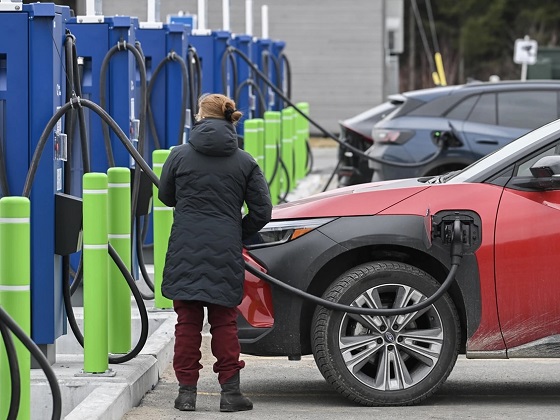
Power Struggle: Governments start quietly backing away from EV mandates
-
 Energy1 day ago
Unceded is uncertain