
Community
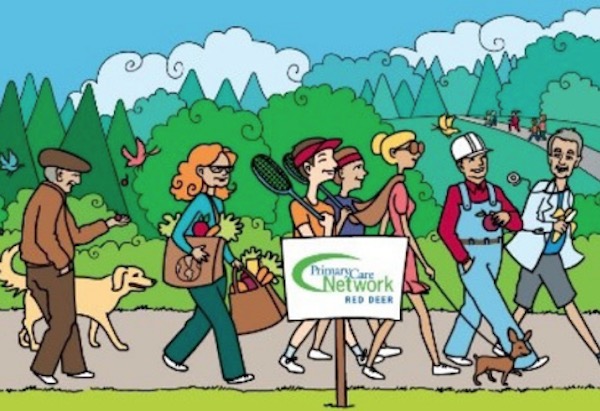
Anxiety? Pain? Sleep Issues? Red Deer Primary Care Network has a program to help you live your best life!


By Mark Weber
With the onset of the busy fall season comes the launch of Red Deer Primary Care Network’s extensive programming. Along with the regular workshops and programs, staff are excited to introduce new educational opportunities including ‘Menopause and Women’s Health’.
“Menopause and Women’s Health is for women who are ‘pre, during and post’ menopause, who are looking for information about what to expect and what
potential treatment options may benefit them,” said Julia Vallance, the PCN’s program manager.
“We are going to be running this via Zoom, and it will be on Wednesdays – our first session will be on Oct. 26 and it will run until Nov. 23.”
Those who would like to register can call the main PCN off ice at 403-343-9100. Dr. Esnielle Brooks will be leading the series.
“We will also have our pharmacist on staff, another nurse and one of our counsellors will also be offering information during those series of classes,” said Vallance. “There hasn’t been a lot of information out there about m enopause. Dr. Brooks has done a lot of extra education to become comfortable and competent with this topic. “She’s really happy to share her knowledge and to give women the opportunity to learn more about their bodies, and what is going to happen over time.”
The series will be offered throughout the upcoming year as well.

In the meantime, the PCN’s popular workshops are up and running as well. “These include Anxiety to Calm, Happiness Basics, Moving on With Persistent Pain, Relationships in Motion, Journey Through Grief and My Way to Health, to the Sleep Program and Strong and Steady. A lot of our workshops are now being offered in-person and not just over Zoom anymore.”
Although, as she pointed out, virtual participation is still an option which has broadened the reach of so many PCN programs.
“There are also opportunities where you can attend the first class in person, and then afterwards if something comes up – you are ill or away travelling or there is a reason you can’t attend – you can still take part via Zoom. We are calling it a hybrid model.”
Alongside the workshops are several helpful individual programs as well from Connecting to Community Resources, Diabetes, High Blood Pressure, Cholesterol, and Insulin Management to Memory Testing, the MINT Memory Clinic, Pregnancy and Babies, Tobacco Reduction, Recreation Therapy, and Talk to a Counsellor among others.
For the latest PCN news, check out www.reddeerpcn.com or follow them on Facebook to stay up to date as well.



From the Fraser Institute
By Jake Fuss and Grady Munro
There would have been 1.5 million more Canadians who donated to charity in 2023—and $755.5 million more in donations—had Canadians given to the same extent they did 10 years prior
According to recent polling, approximately one in five Canadians have skipped paying a bill over the past year so they can buy groceries. As families are increasingly hard-pressed to make ends meet, this undoubtedly means more and more people must seek out food banks, shelters and other charitable organizations to meet their basic necessities.
And each year, Canadians across the country donate their time and money to charities to help those in need—particularly around the holiday season. Yet at a time when the relatively high cost of living means these organizations need more resources, new data published by the Fraser Institute shows that the level of charitable giving in Canada is actually falling.
Specifically, over the last 10 years (2013 to 2023, the latest year of available data) the share of tax-filers who reported donating to charity fell from 21.9 per cent to 16.8 per cent. And while fewer Canadians are donating to charity, they’re also donating a smaller share of their income—during the same 10-year period, the share of aggregate income donated to charity fell from 0.55 per cent to 0.52 per cent.
To put this decline into perspective, consider this: there would have been 1.5 million more Canadians who donated to charity in 2023—and $755.5 million more in donations—had Canadians given to the same extent they did 10 years prior. Simply put, this long-standing decline in charitable giving in Canada ultimately limits the resources available for charities to help those in need.
On the bright side, despite the worrying long-term trends, the share of aggregate income donated to charity recently increased from 0.50 per cent in 2022 to 0.52 per cent in 2023. While this may seem like a marginal improvement, 0.02 per cent of aggregate income for all Canadians in 2023 was $255.7 million.
The provinces also reflect the national trends. From 2013 to 2023, every province saw a decline in the share of tax-filers donating to charity. These declines ranged from 15.4 per cent in Quebec to 31.4 per cent in Prince Edward Island.
Similarly, almost every province recorded a drop in the share of aggregate income donated to charity, with the largest being the 24.7 per cent decline seen in P.E.I. The only province to buck this trend was Alberta, which saw a 3.9 per cent increase in the share of aggregate income donated over the decade.
Just as Canada as a whole saw a recent improvement in the share of aggregate income donated, so too did many of the provinces. Indeed, seven provinces (except Manitoba, Nova Scotia and Newfoundland and Labrador) saw an increase in the share of aggregate income donated to charity from 2022 to 2023, with the largest increases occurring in Saskatchewan (7.9 per cent) and Alberta (6.7 per cent).
Canadians also volunteer their time to help those in need, yet the latest data show that volunteerism is also on the wane. According to Statistics Canada, the share of Canadians who volunteered (both formally and informally) fell by 8 per cent from 2018 to 2023. And the total numbers of hours volunteered (again, both formal and informal) fell by 18 per cent over that same period.
With many Canadians struggling to make ends meet, food banks, shelters and other charitable organizations play a critical role in providing basic necessities to those in need. Yet charitable giving—which provides resources for these charities—has long been on the decline. Hopefully, we’ll see this trend turn around swiftly.


|

|
|

|
|
|


Georgia county admits illegally certifying 315k ballots in 2020 presidential election

Alberta Next Panel calls to reform how Canada works

Canadian government launches trial version of digital ID for certain licenses, permits

End Supply Management—For the Sake of Canadian Consumers
-
International8 hours ago
Georgia county admits illegally certifying 315k ballots in 2020 presidential election
-
 Business1 day ago
ICYMI: Largest fraud in US history? Independent Journalist visits numerous daycare centres with no children, revealing massive scam
-
 Alberta1 day ago
Alberta project would be “the biggest carbon capture and storage project in the world”
-
 Energy22 hours ago
Canada’s debate on energy levelled up in 2025
-
 Haultain Research10 hours ago
Sweden Fixed What Canada Won’t Even Name
-
 Business9 hours ago
What Do Loyalty Rewards Programs Cost Us?
-
 Business23 hours ago
Socialism vs. Capitalism
-
 Energy1 day ago
New Poll Shows Ontarians See Oil & Gas as Key to Jobs, Economy, and Trade