
Alberta
Alberta’s 2022 Lt. Governor Emerging Artists Named



Alberta’s 2022 Lt. Governor Emerging Artists Named
The Lieutenant Governor of Alberta Arts Awards Foundation announces awards totaling $110,000 to the 11 recipients of its 2022 Emerging Artist Award.
“When economic times are tough, our artists are particularly vulnerable,” says Foundation Chair, Arlene Strom. “We are thrilled to invest $110,000 this year in advancing the careers of these outstanding artists at the early stages of their professional development.”
2022 Emerging Artist Recipients:
Perpetual Atife Saxophone, Calgary
Vicki Chau Filmmaker, Calgary
Arlan Vriens Violin, Edmonton; Toronto
Eden Tremayne Soprano, Calgary
Omar Mouallem Writer, Edmonton
Trina Moyles Writer, Peace River
Kiona Ligtvoet Visual Arts, Edmonton
Tenaj Williams Actor, Calgary
Ally McIntyre Visual Arts, Edmonton
Moni Brar Writer/Poet, Calgary
Nahanni McKay Visual Arts, Banff
The Award’s patron, Her Honour, the Honourable Salma Lakhani, Lieutenant Governor of Alberta AOE, B.Sc., LLD (hon) awarded the 2022 Emerging Artists at a celebration hosted by the County of Lac La Biche and Portage College on June 10, 2022. Each awardee receives a $10,000 cash award, a handcrafted medal and a certificate.

The 11 recipients were selected from 140 applications in an adjudication process overseen by The Banff Centre. The adjudication panel included: Darren Fung, renowned composer based out of Los Angeles, originally from Edmonton; Sean Caulfield, artist and Centennial Professor in the Department of Art & Design at the University of Alberta; Patricia Darbasie, Alberta actor, director and educator; Jenna Butler, 2014 LG Emerging Artist, award-winning author and educator; Derek Beaulieu, Jury Facilitator, Director of Literary Arts at the Banff Centre.
For more information on the awardees visit artsawards.ca
Who are the 2022 Emerging Artists?
 Perpetual Atife Saxophonist, Calgary: Perpetual Atife is retelling African stories and music through her practice as a jazz saxophonist and songwriter. Her entrepreneurial spirit and energy are as impressive as her skills as a band leader and performer. The aural tapestry she creates combines her Nigerian roots and the realities she exists in today. Her debut album, a collection of her journey through instrumental music, spoken word and vocal music, is due to be released in the Fall of 2022.
 Vicki Chau Filmmaker, Calgary: Vicki Chau is a filmmaker and media artist based in Calgary. Her two short films Pulled Strings and Hearth of the Lion capture a slice of her Chinese-Vietnamese heritage in a beautiful lyrical way. Her family and cultural identity have been a core inspiration in her artistic practice and help her to promote the appreciation of both Chinese and Vietnamese culture through a uniquely Canadian perspective. She was selected for the WarnerMedia Access Festivals Program at Toronto’s Reelworld Film Festival in 2021.
 Arlan Vriens, Violin, Edmonton/Toronto: Arlan Vriens is an Edmonton-born classical violinist noted for his ability to evoke strong, emotional performances with difficult, contemporary repertoire that pushes the boundaries of what the instrument was designed to do. Equally at home performing newly-written contemporary works or rediscovering long-lost violin techniques, Arlan is committed to nurturing and critiquing classical music as a living, evolving practice. His chamber music and solo violin projects have been supported by the Canada Council for the Arts and the arts councils of Alberta, Ontario, and Newfoundland.
 Eden Tremayne Soprano, Calgary: Eden Tremayne delivers an authenticity and emotional strength that is impressive to see in an emerging opera singer. A soprano with both a strong technical facility and range, she is noted for her stirring performances. For the past three seasons, Ms. Tremayne has been a McPhee Artist with Calgary Opera. She had her Calgary Opera mainstage debut In the 2019-2020 season as Clotilde in Bellini’s Norma and covered Musetta in Puccini’s La bohème. Tremayne was previously featured as an Apprentice Artist with the San Diego Opera and a Yulanda M. Faris Young Artist with Vancouver Opera.
 Omar Mouallem Writer, Edmonton: Omar Mouallem has established himself as a talented young journalist and filmmaker to watch. With the arrival of his important new book of non-fiction, Praying to the West: How Muslims Shaped the Americas, he’s an important voice in Canadian literature with a long career ahead. A second-generation Canadian born and raised in Northern Alberta’s Muslim Lebanese community, Mouallem has become known for his ability to intertwine human interest stories with world history and broad social issues. Omar co-authored the national bestseller Inside the Inferno: A Firefighter’s Story of the Brotherhood that Saved Fort McMurray and co-directed Digging in the Dirt (with Dylan Rhys Howard), a raw look at the psychological toll of oil and gas labour.
 Trina Moyles Writer, Peace River: Trina Moyles blends journalistic knowledge with literary expertise and a love for the land. She grew up in the northern community of Peace River, Alberta (Treaty 8), where she spent much of her childhood immersed in the boreal forest. Moyles’s first book, Women Who Dig: Farming, Feminism, and the Fight to Feed the World was published in 2018 by the University of Regina Press. Her second book, a memoir and frontline reportage on the increasing prevalence of wildfire in North America, Lookout: Love, Solitude, and Searching for Wildfire in the Boreal Forest, was published in 2021 by Penguin Random House Canada. Lookout won a National Outdoors Book Award in 2021 and has recently been nominated as a finalist for the 2022 Robert Kroetsch City of Edmonton Book Prize and a finalist for the Memoir Award at the 2022 Alberta Literary Awards.
 Kiona Ligtvoet Visual Arts, Edmonton: Kiona Ligtvoet looks to experiences with family and the land they live and work on to create paintings, prints and installations that function as both a personal archive, as well as non-linear storytelling. Kiona grew up west of Edmonton near the hamlet of Calahoo where she lived with her moshom and relatives on scrip land. Her family lines are Cree and Métis descending from Michel First Nation, as well as Dutch/ mixed European. Kiona works in painting, printmaking and drawing, recollecting personal stories of grief and tenderness. Most recent exhibitions have been sahkitok mistahi at Ociciwan Contemporary Art Centre (2021), and her solo show, These Are the Things at Latitude 53 (2021). She is currently writing her debut graphic novel We Were Younger Once (2022).
 Tenaj Williams Actor, Calgary: Tenaj Williams has built on his community theatre experiences to create a provincial and national footprint as an actor, professionally performing on stages in Alberta and across the country. He has recently branched out into film and television landing roles on various TV series, most prominently the hit CTV comedy show, JANN. Tenaj hopes to further advance his work in the arts and be instrumental in helping to create and foster safe, and brave spaces for diverse and emerging artists. He plans to develop his skills as a director and learn more about theatre production and management.
 Ally McIntyre Visual Arts, Edmonton: Ally McIntyre creates bold, powerful paintings that combine passages of abstraction with naturalistic imagery, and which contain moments of aggressive and expressive mark-making, alongside more introspective, sensitive passages of drawing. This blending of visual languages results in highly compelling imagery that fosters unexpected narratives and poetic associations for viewers. Bold and assertive, her works question the prevailing gendered association of large-scale art and expressionism. In 2015, McIntyre was awarded the HIX Award 2015 presented by Tracey Emin and the Jealous Prize 2015. Exhibits include various galleries in London, UK, The Original Print Fair at the Royal Academy, The London Art Fair, Start Art Fair and Art Toronto. She was a finalist in the RBC national painting competition (2018). Her solo exhibition ‘Dog Day Circus’ was featured at the Saatchi Gallery in London, UK (2022). Her work can be found in private collections in Australia, Asia, Europe, and North America.
 Moni Brar Writer/Poet, Calgary: Moni Brar has published in many of the most respected journals in Canada and received a number of the top writing awards. A Punjabi Canadian writer exploring diasporan guilt and intergenerational trauma, she is poised to make major contributions to the literary arts in Canada. She has been nominated for the Pushcart Prize and multiple Best of the Net awards and was the winner of the SAAG Arts Writing Prize, runner-up in PRISM international’s Grouse Grind Prize, honourable mention in Room magazine’s Poetry Prize, and a finalist in the Alberta Magazine Awards and the Subnivean Awards. Her work can be found in Best Canadian Poetry 2022, the Literary Review of Canada, Passages North, Prairie Fire, Hobart, and the League of Canadian Poets’ “Poem in Your Pocket” postcard series.
 Nahanni McKay Visual Arts, Banff: McKay’s creative practice utilizes photography, digital media, as well as performances in the landscape to explore pressing questions related to environmental change. The work often considers the ways landscape and animals have been depicted historically, particularly in the context of national parks, in order to investigate the complex interrelationship between colonial power structures, identity and ecological degradation and loss. Nahanni uses her photography to bring awareness of the need to coexist with wildlife to prevent further harm to the land we reside on. Exhibits include Personal Structures Exhibition, European Cultural Centre, Venice, Italy (2022), Loop 14, Alberta Foundation for the Arts Travelling Exhibition (2020), EXPOSURE Photography Festival Emerging Artists Showcase, Contemporary Calgary and more.
About The Awards
Founders Fil Fraser, Tommy Banks, John Poole and Jenny Belzberg established the Lieutenant Governor of Alberta Arts Awards Foundation in 2003 to celebrate and promote excellence in the arts. The endowments they established were created with philanthropic dollars and gifts from the Province of Alberta and the Government of Canada. Since its inception in 2003, the Foundation has awarded $1,430,000 to 23 Distinguished Artists and 74 Emerging Artists, all Alberta affiliated. The Foundation administers two awards programs: The Emerging Artist Awards program, established in 2008, gives up to 10 awards of $10,000 each to support and encourage promising artists early in their professional careers. Emerging Artist Awards are given out in even years. The Distinguished Artist Awards program, begun in 2005, gives up to three awards of $30,000 each in recognition of outstanding achievement in, or contribution to, the arts in Alberta. Distinguished Artist Awards are given in odd years.


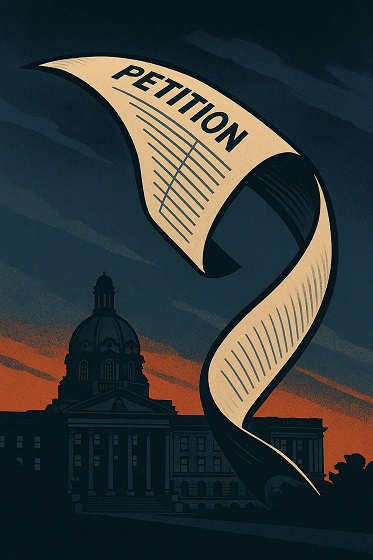


When Democratic Tools Become Weapons
A Canadian politician once kept his legislative seat while serving time in prison.
Gilles Grégoire, a founding figure in Quebec’s nationalist movement, was convicted in 1983 of multiple counts of sexual assault against minors, mostly girls between the ages of 10 and 14. He inhabited a cell yet remained a member of the National Assembly. A representative of free citizens could no longer walk among them.
Grégoire became the kind of figure who seems made for a recall law. His presence in office after conviction insulted the very notion of a democratic mandate. Yet Quebec lacked recall legislation, and the Assembly chose not to intervene. The episode lingers as a reminder that even robust democracies sometimes fail to protect themselves from rare, glaring contradictions.
Such cases hold powerful sway over the political imagination. They tempt reformers to believe that recall is the cure for democratic injustice, giving it exceptional weight it does not deserve. A constitution shaped by anomalies becomes a constitution shaped by distortion.
We are grateful that you’re enjoying Haultain Research.
For the full experience, and to help us bring you more quality research and commentary, please upgrade your subscription.
Alberta’s own history proves the point, though the lesson has been forgotten. William Aberhart’s rise in 1935 owed more to spiritual magnetism and Depression-era desperation than to prudent reform. He promised Social Credit prosperity through monthly dividends to all citizens. The electorate believed that a new economic order would arrive at a cheerful pace. It did not. Within eighteen months of taking office, Aberhart found himself the target of what he himself had created. His government had passed recall legislation in its first session, fulfilling a campaign promise to democratize Alberta’s government. When the promised dividends failed to materialize, his own constituents in Okotoks-High River began gathering signatures for his removal. The charge was not misconduct but failure to deliver miracles.
Faced with this threat, Aberhart’s government retroactively repealed the recall legislation rather than allow him to be forced from his seat. He thus became the first Canadian politician to institute recall and to be threatened with it. History recorded the episode as a cautionary tale rather than a triumph of democratic vigilance. It showed how easily recall could slip from a tool for integrity to a weapon for frustration, revealing a truth that democratic societies often forget: mechanisms designed for exceptional cases seldom remain limited to them.
Those two stories frame Alberta’s problem today. The province revived recall legislation under Premier Jason Kenney in 2021, with the law taking effect later that year. The measure returned with assurances that high thresholds would prevent misuse. Its defenders claimed recall would restrain arrogance and encourage accountability, offering ordinary Albertans a way to hold politicians accountable between elections. Then, facing discontent within his own party over COVID mandates, Kenney himself became the subject of a different form of recall, a leadership review that undermined his power. Premier Danielle Smith, who succeeded him, amended the recall legislation in July 2025 to make it easier to use. She lowered the signature threshold and extended the collection period, changes that would soon work against her own government.
The result has been quite different from what either leader intended. On October 23, 2025, Alberta approved its first recall petition of the modern era, targeting Education Minister Demetrios Nicolaides in Calgary-Bow. The applicant, Jennifer Yeremiy of a group called AB Resistance, told reporters that their goal was “to put forward enough recalls to trigger an early election.” This was not a response to corruption or criminality. It was an explicit strategy to overturn the results of the 2023 provincial election.
The floodgates opened from there. As of December 10, 2025, twenty-one MLAs face active recall petitions. The list now includes Premier Smith herself, as well as multiple cabinet ministers, backbenchers, and even one NDP opposition member. None confronts allegations of criminality. None confronts evidence of corruption. None resembles Gilles Grégoire. Their adversaries object to education funding decisions, the government’s use of the notwithstanding clause during a teachers’ strike, and various claims of insufficient constituent engagement. These are matters of policy disagreement, not grounds for judicial removal from office.
The principled case for recall legislation deserves some consideration. A democratic society must guard against officeholders whose conduct becomes so egregious that the public cannot wait for the next scheduled election. A mechanism for such removal, carefully designed and narrowly applied, reflects respect for citizenship and the dignity of democratic representation. The theory imagines a vigilant electorate using a sharp tool with care, meeting the rare case with a rare response.
Reality seldom matches this ideal. British Columbia has maintained recall legislation since 1995—thirty years during which not a single MLA has been successfully recalled, despite no shortage of controversial politicians and unpopular decisions. When recall petitions have been attempted there, they have almost exclusively targeted MLAs from close ridings over policy disputes rather than serious misconduct. The pattern is remarkably consistent. Recall becomes a tool for the sore losers of close elections, not a mechanism for removing the genuinely unfit.
This should not surprise us. Most political conflicts involve competing policy visions rather than breaches of trust. Legislators are elected precisely to judge the merits of those visions over a defined term. Elections confer authority because they settle disputes for a time, allowing governments to govern and oppositions to organize for the next contest. A recall mechanism that permits policy quarrels to trigger removal undermines the very purpose of elections. It invites factions to overturn results they dislike through extraordinary means, weakening the equilibrium that representative government tries to protect.
The Aberhart episode illustrates this tendency with clarity. His opponents did not claim he had abused office or engaged in corruption. They claimed he had failed to conjure prosperity, which was entirely true; his promise of monthly dividends proved impossible to deliver. Their frustration stemmed from disappointment rather than betrayal, from unmet expectations rather than broken trust. Yet they seized on the recall mechanism to express that disappointment, nearly removing him on that basis alone. The effort had nothing to do with the integrity of public office and everything to do with the volatility of public expectation during desperate times.
The contemporary Alberta law requires signatures from sixty percent of voters who participated in the last election, collected within 90 days. This appears to be a significant threshold designed to prevent frivolous attempts. The appearance misleads in several ways. First, the threshold is lower than it sounds because it requires sixty percent of actual voters rather than eligible voters—a crucial distinction that substantially reduces the number needed. Second, even petitions that fall short of this threshold can inflict severe political damage. The mere existence of an active recall petition marks an MLA with the taint of public disapproval, regardless of whether the petition succeeds.
The scale and coordination of current efforts reveal something more troubling than isolated expressions of constituent dissatisfaction. A website called Operation Total Recall provides organizational infrastructure for a systematic campaign targeting all 44 MLAs who voted to use the notwithstanding clause during the teachers’ strike. This is not spontaneous grassroots democracy. It is coordinated political warfare using recall as a weapon to overturn electoral outcomes. The effort aims not at removing individual members for cause, but at destabilizing an elected government through mass petitions. Analysis of the 2023 election results shows that five UCP MLAs won by fewer than 1,000 votes, with roughly a dozen more winning by fewer than 2,000. Multiple successful recalls could topple a government with only an 11-seat majority, precisely the outcome the organizers openly seek.
Each successful petition would trigger not just a referendum but also, if that referendum passes, a by-election costing taxpayers between $500,000 and $1 million. This is public money spent not to address disqualifying conduct but to re-litigate policy disagreements that voters already decided in 2023. The financial cost alone should give pause. But the deeper costs run to the foundations of representative government itself.
Prudence counsels caution here. Stable institutions exist precisely to restrain public passions rather than reflect them in every heated moment. Legislators must make decisions that sometimes contradict immediate popular sentiment, particularly when facing complex policy files or managing competing interests across diverse constituencies. A system that keeps them in constant survival mode, forever fighting off recall petitions over unpopular but necessary decisions, cannot foster the kind of judgment that good governance requires. Hayek warned that societies often overestimate their ability to redesign the political order according to the impulses of the moment, mistaking the intensity of feeling for the wisdom of action. Recall legislation embodies exactly this temptation, pretending to offer precise accountability while producing disorder and instability.
The concerns of those organizing these recall campaigns may well be sincere. Many genuinely believe that government policies on education funding or the use of constitutional override powers represent serious failures deserving extraordinary remedy. But sincerity of belief does not make the remedy appropriate. These matters played out during the 2023 election campaign. Voters heard the arguments on both sides. They weighed the competing visions. They made their choices. Those choices produced a government with a mandate to govern according to its platform, which included the education policies and approach to constitutional questions now under attack through recall petitions.
A representative who steals public funds or breaks criminal law betrays the trust voters placed in him. Recall aimed at such behaviour may have genuine merit, providing a necessary safeguard against serious malfeasance. But a representative who supports an unpopular policy does not betray his office—he exercises the judgment he was elected to exercise. That is the political job. Voters who disagree may vote him out at the end of his term. They ought not demand his eviction for legislative disagreement over education funding levels or the appropriate use of constitutional tools in labour disputes.
The shift that recall produces goes beyond individual cases. It fundamentally alters the character of political engagement, moving energy away from long-term relationship building and toward short-term confrontation. Petition campaigns demand signatures rather than solutions. They mobilize resentment rather than reflection. They organize anger rather than deliberation. The timing of the first modern recall petition makes this dynamic clear—it launched during a province-wide teachers’ strike, piggybacking on existing mobilization and emotion. But teachers’ strikes happen. Contract negotiations sometimes get contentious. Should every education minister facing difficult bargaining face recall? Should every healthcare minister dealing with doctors’ disputes become a petition target? This path leads to governance by perpetual crisis, where every unpopular but necessary decision triggers a removal campaign.
The effect on the dignity and effectiveness of public work deserves particular attention. Legislators must confront complex files that rarely offer clearly correct answers. They must choose among imperfect options while balancing competing demands from local constituents and provincial interests. Recall turns these unavoidable difficulties into personal liabilities. Taking a principled but unpopular stand risks triggering a petition. The pressure to remain popular at all times can overwhelm the responsibility to remain principled, inverting the proper relationship between representative and constituency.
If Albertans are genuinely dissatisfied with their government’s direction, a perfectly functional mechanism exists to express that dissatisfaction: the next general election, scheduled for October 2027. That is less than two years away—hardly an eternity in democratic terms. In the meantime, voters retain numerous other tools for making their voices heard. They may contact their MLAs directly, organize politically through parties and interest groups, attend town halls and constituency meetings, and build support for the opposition. These traditional channels require patience and persuasion. They require building actual majority support rather than mobilizing intense minorities. Recall petitions short-circuit this democratic process, allowing well-organized groups to force expensive special votes over disputes that were already litigated during the last election. The NDP opposition, which came close but ultimately fell short in 2023, appears in a hurry to open a back door to reverse its electoral fortune through extraordinary means.
The case of Gilles Grégoire illuminates a genuine weakness in democratic systems—the inability to remove someone whose continued presence in office becomes morally intolerable. This reveals a fundamental flaw. But the solution lies in targeted remedies: clear rules for automatic expulsion upon conviction for serious offences, for instance, rather than a broad recall system that allows every policy grievance to become a removal campaign. Such targeted measures would correct specific defects without inviting the broader turmoil that comprehensive recall legislation produces.
Alberta’s present situation echoes the Aberhart lesson with remarkable fidelity. Recall laws seldom remain tied to their original purpose. They drift toward unintended uses, shifting from instruments of moral accountability to weapons of political agitation. They reward passion rather than judgment at precisely the time when there is already far too much passion and not nearly enough good political judgment. They trade stability for drama and substitute the illusion of democratic empowerment for the reality of weakened institutions that guard freedom.
When Jason Kenney introduced recall legislation in 2021, Alberta had twenty-six years of British Columbia evidence showing how these laws function in practice. That evidence pointed clearly in one direction. Yet the UCP proceeded anyway, and in July 2025, the Smith government made recalls even easier, lowering thresholds and extending signature periods precisely when the government enjoyed a comfortable majority. Now, multiple petitions target UCP cabinet ministers and backbenchers while organizers openly seek to force an early election. The NDP leader’s response captured the irony perfectly: “Hoisted on your own petard.”
A healthy political community requires transparent elections that produce precise results, firm mandates that allow governments to govern, and representatives who can exercise judgment with appropriate stability between electoral contests. It requires citizens who understand that disagreement over policy, much less tit for tat, does not warrant removal. It requires carefully designed safeguards against genuine abuse of office rather than mechanisms that allow temporary frustration to masquerade as a permanent principle. Recall legislation promises a swift cure for democratic ailments while delivering turbulence and rewarding radical impatience.
Democracy depends on accepting election results even when we disagree with them. It depends on waiting for our turn to make our case to voters at the next scheduled opportunity. The recall weapon undermines these basic norms in the service of immediate partisan advantage, encouraging precisely the kind of political mischief that corrodes public trust. This is not democratic vitality expressing itself through new channels. It is democratic exhaustion, the permanent campaign that prevents anyone from governing.
Alberta stands at a point where history speaks with unusual clarity. The Grégoire case shows us the moral outlier who truly deserved immediate removal from office. The Aberhart episode shows us the grave danger of using recall for anything less serious. The voters of this province should draw the correct lesson from both stories. They should protect democracy by resisting the recall illusion—not by eliminating all accountability mechanisms, but by insisting that extraordinary remedies be reserved for truly remarkable circumstances rather than routine policy disputes. That distinction makes all the difference between a legitimate tool and a partisan weapon.
We are grateful that you’re enjoying Haultain Research.
For the full experience, and to help us bring you more quality research and commentary, please upgrade your subscription.

From the Fraser Institute
By Tegan Hill and Austin Thompson
According to Calgarians for Thoughtful Growth (CFTG)—an organization advocating against “blanket rezoning”— housing would be more affordable if the mayor and council restricted what homes can be built in Calgary and where. But that gets the economics backwards.
Blanket rezoning—a 2024 policy that allowed homebuilders to construct duplexes, townhomes and fourplexes in most neighbourhoods—allowed more homebuilding, giving Calgarians more choice, and put downward pressure on prices. Mayor Farkas and several councillors campaigned on repealing blanket rezoning and on December 15 council will debate a motion that could start that process. As Calgarians debate the city’s housing rules, residents should understand the trade-offs involved.
When CFTG claims that blanket rezoning does “nothing” for affordability, it ignores a large body of economic research showing the opposite.
New homes are only built when they can be sold to willing homebuyers for a profit. Restrictions that limit the range of styles and locations for new homes, or that lock denser housing behind a long, costly and uncertain municipal approval process, inevitably eliminate many of these opportunities. That means fewer new homes are built, which worsens housing scarcity and pushes up prices. This intuitive story is backed up by study after study. An analysis by Canada’s federal housing agency put it simply: “higher residential land use regulation seems to be associated with lower housing affordability.”
CFTG also claims that blanket rezoning merely encourages “speculation” (i.e. buying to sell in the short-term for profit) by investors. Any profitable housing market may invite some speculative activity. But homebuilders and investors can only survive financially if they make homes that families are willing to buy or rent. The many Calgary families who bought or rented a new home enabled by blanket rezoning did so because they felt it was their best available option given its price, amenities and location—not because they were pawns in some speculative game. Calgarians benefit when they are free to choose the type of home and neighbourhood that best suits their family, rather than being constrained by the political whims of city hall.
And CFTG’s claim that blanket rezoning harms municipal finances also warrants scrutiny. More specifically, CFTG suggests that developers do not pay for infrastructure upgrades in established neighbourhoods, but this is simply incorrect. The City of Calgary charges an “Established Area Levy” to cover the cost of water and wastewater upgrades spurred by redevelopment projects—raising $16.5 million in 2024 alone. Builders in the downtown area must pay the “Centre City Levy,” which funds several local services (and generated $2.5 million in 2024).
It’s true that municipal fees on homes in new communities are generally higher, but that reflects the reality that new communities require far more new pipes, roads and facilities than established neighbourhoods.
Redeveloping established areas of the city means more residents can make use of streets, transit and other city services already in place, which is often the most cost-effective way for a city to grow. The City of Calgary’s own analysis finds that redevelopment in established neighbourhoods saves billions of taxpayer dollars on capital and operating costs for city services compared to an alternative scenario where homebuilding is concentrated in new suburban communities.
An honest debate about blanket rezoning ought to acknowledge the advantages this system has in promoting housing choice, housing affordability and the sustainability of municipal finances.
Clearly, many Calgarians felt blanket rezoning was undesirable when they voted for mayoral and council candidates who promised to change Calgary’s zoning rules. However, Calgarians also voted for a mayor who promised that more homes would be built faster, and at affordable prices—something that will be harder to achieve if city hall imposes tighter restrictions on where and what types of homes can be built. This unavoidable tension should be at the heart of the debate.
CFTG is promoting a comforting fairy tale where Calgary can tighten restrictions on homebuilding without limiting supply or driving up prices. In reality, no zoning regime delivers everything at once—greater neighbourhood control inevitably comes at the expense of housing choice and affordability. Calgarians—including the mayor and council—need a clear understanding of the trade-offs.

Tegan Hill
Director, Alberta Policy, Fraser Institute

Austin Thompson
Senior Policy Analyst, Fraser Institute


Wayne Gretzky’s Terrible, Awful Week.. And Soccer/ Football.

Western Campuses Help Build China’s Digital Dragnet With U.S. Tax Funds, Study Warns

Common Vaccines Linked to 38-50% Increased Risk of Dementia and Alzheimer’s
US podcaster Glenn Beck extends a lifeline to a Saskatchewan woman waiting for MAiD
-
Bruce Dowbiggin1 day ago
Wayne Gretzky’s Terrible, Awful Week.. And Soccer/ Football.
-
espionage23 hours ago
Western Campuses Help Build China’s Digital Dragnet With U.S. Tax Funds, Study Warns
-
Focal Points14 hours ago
Common Vaccines Linked to 38-50% Increased Risk of Dementia and Alzheimer’s
-
 Opinion1 day ago
The day the ‘King of rock ‘n’ roll saved the Arizona memorial
-
 Automotive4 hours ago
The $50 Billion Question: EVs Never Delivered What Ottawa Promised
-
 Agriculture1 day ago
Canada’s air quality among the best in the world
-
 Business21 hours ago
Canada invests $34 million in Chinese drones now considered to be ‘high security risks’
-
 Health12 hours ago
The Data That Doesn’t Exist