
Alberta
ALBERTA Government honours 16 “Great Kids” for inspiring and changing the lives of others

From Government of Alberta
The Alberta government has awarded 16 young people the 2019 Great Kids Award for inspiring and changing the lives of others.
Click to see a photo gallery.

The 2019 Great Kids Award recipients.
The province gives out the Great Kids Award annually to recognize and celebrate kids who accomplish great things while overcoming challenges in their life.
“I am honoured to award these inspiring young people with the 2019 Great Kids Award. Their accomplishments and positivity in the face of adversity will only serve to bring people together, build stronger communities and improve the lives of everyone around them.”
The 2019 recipients have achieved great things, including 10-year-old Mylon McArthur from the Pheasant Rump First Nation, who took a stand against bullying and spoke out about how he was being treated by kids at his school. In a YouTube video that has been viewed over one million times, his message of understanding and anti-bullying was spread around the world.
“IBM is proud to support the Great Kids Award, which celebrates outstanding children who achieve great things. We look forward to participating in this event every year, celebrating with the winners and their loved ones, and are honoured to help recognize the 2019 Great Kids Award recipients.”
Here are this year’s recipients:
Blaire Decker, age 8 – Fort McMurray
Blaire is a courageous and compassionate young lady achieving great things in life while facing the daily obstacles that come with being diagnosed with Ehlers-Danlos Syndrome – a genetic connective tissue disorder. Even though she is often away from school at medical appointments in Edmonton and has to cope with integrating a wheelchair into her daily routine, she continues to be one of the top academic students in her class and a beacon of hope to others. Not only does Blaire face daily medical challenges, she and her family also suffered the trauma of losing their home to the 2016 Fort McMurray wildfires. Despite everything, Blaire’s optimism, wisdom and maturity provide support and strength to others in her school. Simply put, Blaire is a friend and helpful to everyone, living life with grace and beauty.
Colby Hanson, Age 8 – St. Albert
At just 8 years of age, Colby is already described by those around him as determined, joyful, inspiring, and selfless. Throughout his life, Colby has already endured many hardships due to the multiple surgeries he has experienced from hip dysplasia. He has remained strong and encourages others through his hard work and positive attitude. Instead of focusing on what limits him, Colby goes beyond and dedicates his time and efforts to helping others at home, at school, and outside of school. At age 5, Colby took it upon himself to support the Stollery Children’s Hospital Foundation by gathering donations. In the past three years, he has raised over $2,000 and is determined to raise another $1,000 this year alone! Those who know Colby admire his resilience, virtue, and enjoyment of life. He truly inspires others to accept themselves and find joy in each moment.
Adian Al-Shammari, age 12 – Calgary
Adian’s journey to where she is today covers many kilometres, experiences and challenges. Originally from Iraq, Adian’s family spent time in Turkey before being granted permission to come to Canada. Since then, Adian has enthusiastically immersed herself into her new school and community. She is always challenging herself and is always open to helping others. Adian put great effort into learning English so she could communicate with her peers and staff at school. By the end of her first year, she was translating for other students and some newer families who had yet to learn English. She made an even bigger impact by starting a kindness club in her school. Through this club, Adian and her classmates wrote notes and left them on other students’ desks as random acts of kindness. Adian’s hard work and thoughtfulness have earned her the distinction of Great Kid.
So-So Chen, age 12 – Calgary
Some of the greatest leaders emerge out of a natural desire to make a difference in the world. They do this by advocating for change and in doing so become an inspiration to others. So-So is one of those leaders. As a Grade 5 student, through their journey of self-discovery, So-So created a thriving safe space by founding the first Gender-Sexuality Alliance (GSA) Club for students at Captain Nichola Goddard School. So So’s courageous activism continued when they took the GSA Club to the Werklund School of Education’s Youth Leadership Forum at the University of Calgary. This evolved into a partnership with the graduate students’ GSA at the University of Calgary. Through this partnership, they are planning a GSA Youth Conference that is projected to be one of the biggest in southern Alberta. So-So is a passionate, humble, wise and humorous advocate who is truly making a difference.
Mylon McArthur, Age 10 – Cold Lake
If you Google “Mylon McArthur”, you’ll get pages of results, including a YouTube video that has been viewed over 1 million times. At age 8, young Mylon, from Pheasant Rump First Nation, decided to take a stand against bullying and speak out about how he was being treated by kids at his school. In his healing journey, Mylon began to teach the meaning of First Nations culture and hair to others in his school. He learned to use his voice to talk with youth and adults about social injustices towards First Nations and First American people. His message of understanding and anti-bullying was spread on various networks, including American media outlets. Mylon went from being a kid who didn’t want to go to school to an active advocate with a strong message of embracing your culture and understanding its importance. Mylon’s story is used around the world to inspire kids in many communities. Today, he exemplifies courage, resilience, leadership, and determination as he continues to speak out and take action against bullying.
Maja Petrovic, Age 11 – Edmonton
Maja is an exceptional human being with a pretty simple goal: “brighten someone’s day”. As a member of her school’s leadership team, Maja is always willing to lend a hand and volunteer for worthy causes. She has helped organize and promote various kindness initiatives and activities in her school, including a cancer graffiti wall and prayers for cancer. Maja’s enthusiasm and zest for every project is contagious. Outside of school, Maja’s family has dealt with serious family illness. Through it all, she has become a source of strength and empowerment for her sister, exhibiting love and kindness at every opportunity. This strength has been an inspiration to the grown-ups in her life who are supporting their own aging parents through illness. Maja is the epitome of girl power, representing strength, kindness, perseverance and optimism – true super hero qualities.
Ava Roe, Age 12 – Paddle Prairie
Ava is described as resilient, compassionate, a leader, and an old soul. Ava is constantly challenging herself to learn new things. She spends time with community Elders and family, gaining knowledge and practicing new skills like baking, cooking, sewing, hunting and trapping. Her passion for taking on new challenges extends from her home life into her school life. Ava was elected class president and takes that role very seriously. She meets the expectations of that role with an upbeat positive attitude. Ava initiated a snack program for her school, planning bake sales to raise money to fill the snack cupboard for other students. The small and remote Métis community that Ava calls home is not without challenges. Despite that, she continues to excel and inspire others with her work ethic and enthusiasm.
Charles Ancheta, age 14 – Fort McMurray
Charles is a positive young man who brings happiness to everyone around him. But Charles’ life is not without struggles. Having immigrated to Canada from the Philippines with his family, he has experienced challenges adjusting to life in Canada. His family works very hard to make ends meet and provide opportunities. Charles uses public transportation every day to get to school where he leaves a positive mark on everyone he interacts with. Last year, after his mother gave birth to another baby boy, they both experienced serious health issues and were admitted to the hospital. Charles took a leave from school to be there for his family in Edmonton while his brother was in the hospital. Charles missed weeks of school but managed to maintain his marks, returning after a few weeks with a smile on his face. He shines a bright light on everyone he meets and that makes him pretty great.
Kyara Garnett, age 14 – Grimshaw
Resilience is defined as having “the capacity to recover quickly from difficulties”. There could not be a better way to describe Kyara. Even though life has not been easy for her, she has become a responsible, trustworthy and dependable “natural” leader at her school. She is frequently called upon to help around the school and is always willing and eager to assist, as evidenced in her active involvement in running the school’s theatre sound system and helping with morning announcements. Even though she has experienced trauma and persistent family struggles, Kyara is that wonderful friend who is empathetic, actively listens, gives advice, and always sees the positive. As a result, she is admired by her peers as someone who treats people with dignity and respect and will stand up for what is right. Simply put, Kyara has not let her difficult life circumstances change who she was destined to be – a great kid.
Drayden Laviolette, Age 13 – Lac La Biche
Two years ago, Drayden tragically lost his mother. Losing a parent is devastating, but Drayden demonstrated remarkable resilience. Drayden took up a leadership role at home, at school, and in his community. He holds himself tall every day and serves as a positive role model for his younger brother and other students at his school. As a full time ski leader at his school and gifted fiddle player, Drayden is always eager to help and bring joy to others. He values every opportunity and lesson to learn, whether from a teacher, friend, improvising assigned work, or through personal reflection. Drayden is making a difference in the world because he starts with himself, impacts his family, and goes on to share his gifts with everyone around him. The strand that Drayden weaves into the Kikino Metis Settlement sash will live long and strengthen the community as he grows older.
Danie Poole, Age 14 – Brooks
Danie is a shining example of perseverance, courage, and kindness. Danie has spent a number of years making the transition from female to male. He is open and honest about his journey, educating his classmates and bringing them alongside him in this transition. Danie has connected himself to organizations that have helped him learn more about what he is undergoing and how to deal with his emotions, as well as the emotions of others. He has overcome shyness and works tirelessly to experience success in his education. Danie is a tenacious young man whose work ethic is serving him well personally and educationally. He is truly a Great Kid.
Natalie Toltesi, Age 15 – Calgary
Natalie is a natural leader and she flexes her leadership muscles in a way that makes her unique. She volunteers at school and after school, and in doing so, Natalie’s passion for people shines through. She has led initiatives for students to get support or stay active, regardless of their physical challenges or struggles with success. Through her own struggles with mental wellness, Natalie has been able to relate to others, working with classmates to recognize and overcome their struggles together. She also earned the “Most Outstanding Volunteer” award from a local program where she spends time doing activities with seniors. Natalie keeps herself very busy, managing her own challenges and helping others with theirs. Her genuine interest in other people, their stories, and gifts is at the core of Natalie’s greatness.
Deyana Altahsh, age 19 – Calgary
In October 2017, at the age of 15, Deyana led her mother and two younger sisters to Canada. While she waited to flee her warn-torn country of Syria, and in preparation for her family’s new life, she began to teach herself English through movies and songs. Arriving first in Trochu and finally settling in Calgary, Deyana has made herself a vital member of her school community. She is an active member of several clubs and activities at her school including the Italian Club, Rotary Club, Mental Health Project, Social Justice Club, and choir. She is also a peer member for newcomers and provides academic tutoring for others. Even with all of this, Deyana made her own education a priority. She is an honour roll student and dreams of going to Oxford or Harvard. She consistently displays enthusiasm for every learning opportunity that comes her way. She is described as “an amazing asset to our province and country” and “an awesome example for her fellow classmates, family members and friends”. That is why Deyana was selected to be a Great Kid.
Korcin Brown, age 17 – Edmonton
In 2014, Korcin was involved in a motor vehicle collision, losing his father and suffering life-threatening injuries that left him paralyzed. Korcin was confined to a hospital bed after the incident and was believed to be bedridden indefinitely. But Korcin defied the odds. He slowly improved to the point where he no longer needs help eating or with other daily tasks. Despite being confined to a wheelchair, Korcin’s outgoing personality, delightful sense of humour and dedication to improvement overshadow any doubt about his abilities. Korcin is not only dedicated to his personal development, but also to his community. As a member of the Louis Bull First Nation, Korcin often attends ceremonies and events, including sweat lodges and pow wows. He enjoys participating in these events, especially as a member of one of the drumming groups. Korcin continues to beat the odds and is an inspiration to those around him.
Luis Fonseca, age 18 – Brooks
Exceptional athlete, valiant leader and family provider are just some of the words used to describe Luis. At 12 years of age, Luis and his father came to Canada from Colombia to reunite with his mother in pursuit of a better life. If being a newcomer and not knowing English wasn’t daunting enough, Luis found himself thrust into an adult role when his father moved back to Colombia. His determination and persistence to succeed never wavered. By age 15, he had learned English, was excelling academically and athletically while providing ongoing translation support for his mother, and working 35-40 hours per week to support his family. The responsibilities Luis has undertaken since coming to Canada have been nothing short of extraordinary. Luis graduated high school this year and will be attending Lethbridge College in a Criminal Justice program. His goal is to become a police officer in hopes of giving back to Canada.
Caleb Lea, Age 17 – Brooks
At the young age of 17, Caleb has demonstrated remarkable resilience and strength of character in the face of life’s challenges. When his father was diagnosed with terminal cancer, Caleb was already struggling in school and his teachers were concerned about him. Caleb surprised them all when he decided to turn things around and “make his father proud.” Caleb now advocates and encourages his peers in uplifting and non-judgmental ways. His tenacity lifted him out of a dark period in his life and he uses his experiences to motivate himself and those around him. Caleb can often be found mentoring other students with attendance issues and will call or pick them up to make sure they get to school. His quiet strength and grace allow him to connect with others and his determination is helping him to excel in his schoolwork as he seeks greater heights.
The Alberta government’s partnership with organizations, including IBM and Fantasyland Hotel, helps recognize and celebrate Alberta’s young people for doing great things in their communities.
Since its inception, the Great Kids Award has been presented to 304 children aged five to 18. Winners are chosen by an awards selection committee of community representatives and event partners.

Alberta
COWBOY UP! Pierre Poilievre Promises to Fight for Oil and Gas, a Stronger Military and the Interests of Western Canada

Fr0m Energy Now
As Calgarians take a break from the incessant news of tariff threat deadlines and global economic challenges to celebrate the annual Stampede, Conservative party leader Pierre Poilievre gave them even more to celebrate.
Poilievre returned to Calgary, his hometown, to outline his plan to amplify the legitimate demands of Western Canada and not only fight for oil and gas, but also fight for the interests of farmers, for low taxes, for decentralization, a stronger military and a smaller federal government.
Speaking at the annual Conservative party BBQ at Heritage Park in Calgary (a place Poilievre often visited on school trips growing up), he was reminded of the challenges his family experienced during the years when Trudeau senior was Prime Minister and the disastrous effect of his economic policies.
“I was born in ’79,” Poilievre said. “and only a few years later, Pierre Elliott Trudeau would attack our province with the National Energy Program. There are still a few that remember it. At the same time, he hammered the entire country with money printing deficits that gave us the worst inflation and interest rates in our history. Our family actually lost our home, and we had to scrimp and save and get help from extended family in order to get our little place in Shaughnessy, which my mother still lives in.”
This very personal story resonated with many in the crowd who are now experiencing an affordability crisis that leaves families struggling and young adults unable to afford their first house or condo. Poilievre said that the experience was a powerful motivator for his entry into politics. He wasted no time in proposing a solution – build alliances with other provinces with mutual interests, and he emphasized the importance of advocating for provincial needs.
“Let’s build an alliance with British Columbians who want to ship liquefied natural gas out of the Pacific Coast to Asia, and with Saskatchewanians, Newfoundlanders and Labradorians who want to develop their oil and gas and aren’t interested in having anyone in Ottawa cap how much they can produce. Let’s build alliances with Manitobans who want to ship oil in the port of Churchill… with Quebec and other provinces that want to decentralize our country and get Ottawa out of our business so that provinces and people can make their own decisions.”
Poilievre heavily criticized the federal government’s spending and policies of the last decade, including the increase in government costs, and he highlighted the negative impact of those policies on economic stability and warned of the dangers of high inflation and debt. He advocated strongly for a free-market economy, advocating for less government intervention, where businesses compete to impress customers rather than impress politicians. He also addressed the decade-long practice of blocking and then subsidizing certain industries. Poilievre referred to a famous quote from Ronald Reagan as the modus operandi of the current federal regime.
“The Government’s view of the economy could be summed up in a few short phrases. If anything moves, tax it. If it keeps moving, regulate it. And if it stops moving, subsidize it.”
The practice of blocking and then subsidizing is merely a ploy to grab power, according to Poilievre, making industry far too reliant on government control.
“By blocking you from doing something and then making you ask the government to help you do it, it makes you reliant. It puts them at the center of all power, and that is their mission…a full government takeover of our economy. There’s a core difference between an economy controlled by the government and one controlled by the free market. Businesses have to clamour to please politicians and bureaucrats. In a free market (which we favour), businesses clamour to impress customers. The idea is to put people in charge of their economic lives by letting them have free exchange of work for wages, product for payment and investment for interest.”
Poilievre also said he plans to oppose any ban on gas-powered vehicles, saying, “You should be in the driver’s seat and have the freedom to decide.” This is in reference to the Trudeau-era plan to ban the sale of gas-powered cars by 2035, which the Carney government has said they have no intention to change, even though automakers are indicating that the targets cannot be met. He also intends to oppose the Industrial Carbon tax, Bill C-69 the Impact Assessment Act, Bill C-48 the Oil tanker ban, the proposed emissions cap which will cap energy production, as well as the single-use plastics ban and Bill C-11, also known as the Online Streaming Act and the proposed “Online Harms Act,” also known as Bill C-63. Poilievre closed with rallying thoughts that had a distinctive Western flavour.
“Fighting for these values is never easy. Change, as we’ve seen, is not easy. Nothing worth doing is easy… Making Alberta was hard. Making Canada, the country we love, was even harder. But we don’t back down, and we don’t run away. When things get hard, we dust ourselves off, we get back in the saddle, and we gallop forward to the fight.”
Cowboy up, Mr. Poilievre.
Maureen McCall is an energy professional who writes on issues affecting the energy industry.
Alberta
Alberta and Ontario sign agreements to drive oil and gas pipelines, energy corridors, and repeal investment blocking federal policies

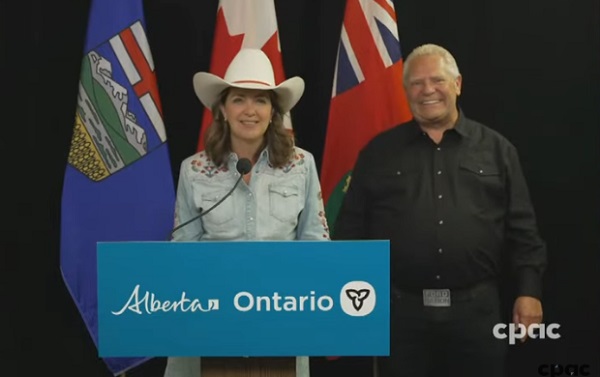
Alberta-Ontario MOUs fuel more pipelines and trade
Alberta Premier Danielle Smith and Ontario Premier Doug Ford have signed two memorandums of understanding (MOUs) during Premier Ford’s visit to the Calgary Stampede, outlining their commitment to strengthen interprovincial trade, drive major infrastructure development, and grow Canada’s global competitiveness by building new pipelines, rail lines and other energy and trade infrastructure.
The two provinces agree on the need for the federal government to address the underlying conditions that have harmed the energy industry in Canada. This includes significantly amending or repealing the Impact Assessment Act, as well as repealing the Oil Tanker Moratorium Act, Clean Electricity Regulations, the Oil and Gas Sector Greenhouse Gas Emissions Cap, and all other federal initiatives that discriminately impact the energy sector, as well as sectors such as mining and manufacturing. Taking action will ensure Alberta and Ontario can attract the investment and project partners needed to get shovels in the ground, grow industries and create jobs.
The first MOU focuses on developing strategic trade corridors and energy infrastructure to connect Alberta and Ontario’s oil, gas and critical minerals to global markets. This includes support for new oil and gas pipeline projects, enhanced rail and port infrastructure at sites in James Bay and southern Ontario, as well as end-to-end supply chain development for refining and processing of Alberta’s energy exports. The two provinces will also collaborate on nuclear energy development to help meet growing electricity demands while ensuring reliable and affordable power.
The second MOU outlines Alberta’s commitment to explore prioritizing made-in-Canada vehicle purchases for its government fleet. It also includes a joint commitment to reduce barriers and improve the interprovincial trade of liquor products.
“Alberta and Ontario are joining forces to get shovels in the ground and resources to market. These MOUs are about building pipelines and boosting trade that connects Canadian energy and products to the world, while advocating for the right conditions to get it done. Government must get out of the way, partner with industry and support the projects this country needs to grow. I look forward to working with Premier Doug Ford to unleash the full potential of our economy and build the future that people across Alberta and across the country have been waiting far too long for.”
“In the face of President Trump’s tariffs and ongoing economic uncertainty, Canadians need to work together to build the infrastructure that will diversify our trading partners and end our dependence on the United States. By building pipelines, rail lines and the energy and trade infrastructure that connects our country, we will build a more competitive, more resilient and more self-reliant economy and country. Together, we are building the infrastructure we need to protect Canada, our workers, businesses and communities. Let’s build Canada.”
These agreements build on Alberta and Ontario’s shared commitment to free enterprise, economic growth and nation-building. The provinces will continue engaging with Indigenous partners, industry and other governments to move key projects forward.
“Never before has it been more important for Canada to unite on developing energy infrastructure. Alberta’s oil, natural gas, and know-how will allow Canada to be an energy superpower and that will make all Canadians more prosperous. To do so, we need to continue these important energy infrastructure discussions and have more agreements like this one with Ontario.”
“These MOUs with Ontario build on the work Alberta has already done with Saskatchewan, Manitoba, Northwest Territories and the Port of Prince Rupert. We’re proving that by working together, we can get pipelines built, open new rail and port routes, and break down the barriers that hold back opportunities in Canada.”
“Canada’s economy has an opportunity to become stronger thanks to leadership and steps taken by provincial governments like Alberta and Ontario. Removing interprovincial trade barriers, increasing labour mobility and attracting investment are absolutely crucial to Canada’s future economic prosperity.”
Together, Alberta and Ontario are demonstrating the shared benefits and opportunities that result from collaborative partnerships, and what it takes to keep Canada competitive in a changing world.
Quick facts
- Steering committees with Alberta and Ontario government officials will be struck to facilitate work and cooperation under the agreements.
- Alberta and Ontario will work collaboratively to launch a preliminary joint feasibility study in 2025 to help move private sector led investments in rail, pipeline(s) and port(s) projects forward.
- These latest agreements follow an earlier MOU Premiers Danielle Smith and Doug Ford signed on June 1, 2025, to open up trade between the provinces and advance shared priorities within the Canadian federation.
Related information


RFK Jr. says Hep B vaccine is linked to 1,135% higher autism rate
Alberta Independence Seekers Take First Step: Citizen Initiative Application Approved, Notice of Initiative Petition Issued

RFK Jr. Unloads Disturbing Vaccine Secrets on Tucker—And Surprises Everyone on Trump

National Health Care Fraud Takedown Results in 324 Defendants Charged in Connection with Over $14.6 Billion in Alleged Fraud

-
 Alberta2 days ago
Alberta Provincial Police – New chief of Independent Agency Police Service
-
 Business2 days ago
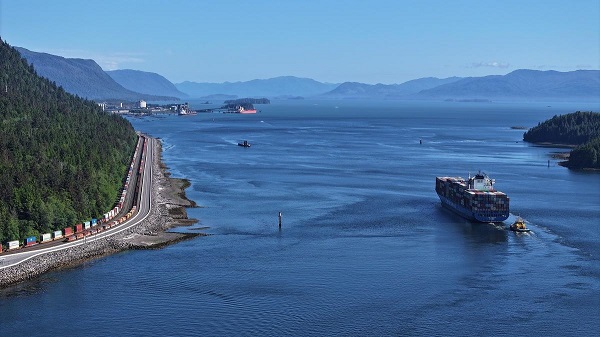
Why it’s time to repeal the oil tanker ban on B.C.’s north coast
-
 Energy2 days ago
If Canada Wants to be the World’s Energy Partner, We Need to Act Like It
-
 International2 days ago
CBS settles with Trump over doctored 60 Minutes Harris interview
-
 Alberta2 days ago
Pierre Poilievre – Per Capita, Hardisty, Alberta Is the Most Important Little Town In Canada
-
 Aristotle Foundation2 days ago
How Vimy Ridge Shaped Canada
-
 Alberta1 day ago
Alberta uncorks new rules for liquor and cannabis
-
 Canadian Energy Centre1 day ago
Alberta oil sands legacy tailings down 40 per cent since 2015