
Opinion
In 2021 Collicutt Centre, Red Deer’s 4th and last recreational centre will be 20 years old.


2021 will be a pivotal year in Red Deer.
Collicutt Centre will be celebrating it’s 20 anniversary just as the shovels hit the dirt on a new Multi-plex Aquatic Centre.
2001 the Collicutt opened it’s doors for the first time. Red Deer’s population was a hefty 68,308 residents.
1991 Mayor McGhee and council decided it was prudent for Red Deer to have a fourth recreational complex. The population was 58,252 residents and a recreational centre for every 15,000 was the established goal.
2001 Red Deer’s fourth recreational centre opened to a population ratio of a recreational centre for every 17,077 residents. Already behind the target.
There was as recently as last year that the ratio of 1 indoor ice rink per 15,000 was established as determined for recreational complexes. With that in mind we should have built one in 2004 when the population was at 75,923. Giving us 5 recreation centres or 1 for every 15,000 residents as was deemed appropriate. Then again in 2010 when our population was 90,084 we should have built the 6th recreational complex.
If we followed this reasoning we should be planning on opening our 7th recreational complex because our population is 99,832 according to our last municipal census and if we were to grow at 1,2% annually we should hit 105,000 in 2021.
That did not and will not happen. The best we can hope for is a new Aquatic Centre to open in 2022.
The ideal goal is one for every 15,000 residents but if we build a 5th recreational complex with an indoor pool then we would have to settle for 1 for every 21,000 residents.
A fifth recreational complex north of hwy 11a would service the residents, expand tourism and kick start development north of 11a.
The current thinking is the city will tear down the downtown recreation centre and build the aquatic centre there. Leaving us with only 4 or 1 recreational complex for every 26,125 residents.
Instead of 7 we would be left with 4 for another 20 years.
What do we do? Councillor Tanya Handley has declared that she cannot support building the aquatic centre downtown with poor parking but would support building it as Councillor Frank Wong has been advocating, north of 11a near Hazlett Lake to kick start development. Newcomer Councillor Michael Dawe would consider moving the aquatic centre as would another.
That gives us 4 councillors but with 8 councillors and the mayor voting on the issue in a year, we need the commitment of 5 to ensure a new pool and not just a replacement.
I am asking all councillors and the mayor to commit to building a new aquatic centre north of 11a. Why now?
The city is a bureaucracy that tends to move slowly and in precise steps. It is always too early then it’s too late. We need commitment now so the city can make the necessary adjustments when necessary. Please commit.



From the Daily Caller News Foundation
All eyes will be on the Supreme Court later this week when the justices conference on Friday to decide whether to grant a petition for writ of certiorari on a high-stakes climate lawsuit out of Colorado. The case is a part of the long-running lawfare campaign seeking to extract billions of dollars in jury awards from oil companies on claims of nebulous damages caused by carbon emissions.
In Suncor Energy (U.S.A.) Inc., et al. v. County Commissioners of Boulder County, major American energy companies are asking the Supreme Court to decide whether federal law precludes state law nuisance claims targeting interstate and global emissions. This comes as the City and County of Boulder, Colo. sued a long list of energy companies under Colorado state nuisance law for alleged impacts from global climate change.
The Colorado Supreme Court allowed a lower state trial court decision to go through, improbably finding that federal law did not preempt state law claims. The central question hangs on whether the federal Clean Air Act (CAA) preempts state common law public nuisance claims related to the regulation of carbon emissions. In this case, as in at least 10 other cases that have been decided in favor of the defendant companies, the CAA clearly does preempt Colorado law. It seems inevitable that the Supreme Court, if it grants the cert petition, would make the same ruling.
Dear Readers:
As a nonprofit, we are dependent on the generosity of our readers.
Please consider making a small donation of any amount here.
Thank you!
Such a finding by the Supreme Court would reinforce a 2021 ruling by the Second Circuit Appeals Court that also upheld this longstanding principle of federal law. In City of New York v. Chevron Corp. (2021), the Second Circuit ruled that municipalities may not use state tort law to hold multinational companies liable for climate damages, since global warming is a uniquely international concern that touches upon issues of federalism and foreign policy. Consequently, the court called for the explicit application of federal common law, with the CAA granting the Environmental Protection Agency – not federal courts – the authority to regulate domestic greenhouse gas emissions. This Supreme Court, with its 6-3 conservative majority, should weigh in here and find in the same way.
Boulder-associated attorneys have become increasingly open to acknowledging the judicial lawfare inherent in their case, as they try to supplant federal regulatory jurisdiction with litigation meant to force higher energy prices rise for consumers. David Bookbinder, an environmental lawyer associated with the Boulder legal team, said the quiet part out loud in a recent Federalist Society webinar titled “Can State Courts Set Global Climate Policy. “Tort liability is an indirect carbon tax,” Bookbinder stated plainly. “You sue an oil company, an oil company is liable. The oil company then passes that liability on to the people who are buying its products … The people who buy those products are now going to be paying for the cost imposed by those products.”
Oh.
While Bookbinder recently distanced himself from the case, no notice of withdrawal had appeared in the court’s records as of this writing. Bookbinder also writes that “Gas prices and climate change policy have become political footballs because neither party in Congress has had the courage to stand up to the oil and gas lobby. Both sides fear the spin machine, so consumers get stuck paying the bill.”
Let’s be honest: The “spin machine” works in all directions. Make no mistake about it, consumers are already getting stuck paying the bill related to this long running lawfare campaign even though the defendants have repeatedly been found not to be liable in case after case. The many millions of dollars in needless legal costs sustained by the dozens of defendants named in these cases ultimately get passed to consumers via higher energy costs. This isn’t some evil conspiracy by the oil companies: It is Business Management 101.
Because the climate alarm lobby hasn’t been able to force its long-sought national carbon tax through the legislative process, sympathetic activists and plaintiff firms now pursue this backdoor effort in the nation’s courts. But their problem is that the law on this is crystal clear, and it is long past time for the Supreme Court to step in and put a stop to this serial abuse of the system.
David Blackmon is an energy writer and consultant based in Texas. He spent 40 years in the oil and gas business, where he specialized in public policy and communications.


President Trump revealed Wednesday afternoon that U.S. authorities intercepted a Cuba-bound oil tanker off the Venezuelan coast, a dramatic move aimed at tightening the squeeze on illicit oil networks operating throughout the region. Speaking to reporters at the White House, Trump described the vessel as “a very large tanker — the largest one ever seized in action,” hinting that more developments are coming. He declined to get into specifics, saying only that the operation happened “for a very good reason.” When asked about the tanker’s crude, Trump didn’t overcomplicate it. “Well, we keep it, I guess,” he said.
According to a U.S. official familiar with the operation, the seizure was executed by the Coast Guard with support from the U.S. Navy after a federal judge green-lit the warrant roughly two weeks ago. Another official told the New York Times the ship — identified as the Skipper — had been sailing under a falsified flag and has a documented history of trafficking illicit Iranian oil. The vessel, although carrying Venezuelan crude at the time, was seized because of those Iranian smuggling ties, not because of any direct connection to Nicolás Maduro’s regime.
Today, the Federal Bureau of Investigation, Homeland Security Investigations, and the United States Coast Guard, with support from the Department of War, executed a seizure warrant for a crude oil tanker used to transport sanctioned oil from Venezuela and Iran. For multiple… pic.twitter.com/dNr0oAGl5x
— Attorney General Pamela Bondi (@AGPamBondi) December 10, 2025
Vanguard, a UK-based maritime risk firm, confirmed Wednesday that the Skipper fits the profile of a tanker previously sanctioned by the United States for operating under the alias Adisa while moving banned Iranian oil. A source speaking to Politico said the ship was on its way to Cuba, where state-run Cubametales intended to flip the cargo to Asian brokers — an increasingly common workaround as U.S. sanctions isolate both Havana and Caracas from traditional buyers. With most Venezuelan product now flowing to China under the sanctions regime, oil traders began recalibrating almost immediately after the news broke. Prices ticked upward modestly as markets waited to learn whether any Venezuelan crude was on board and how much would be effectively taken off the table.
Maduro, for his part, avoided directly mentioning the seizure during a speech later Wednesday, instead railing against the United States and claiming Venezuela’s military stands ready “to break the teeth of the North American empire, if necessary.” His bluster did little to obscure the reality: the Trump administration just disrupted yet another shadowy oil operation linking Caracas, Havana, and Tehran — and sent a clear signal that these networks will be confronted, tanker by tanker.


Recent price declines don’t solve Toronto’s housing affordability crisis

From Exception to Routine. Why Canada’s State-Assisted Suicide Regime Demands a Human-Rights Review

Health Canada report finds euthanasia now accounts for over 5% of deaths nationwide
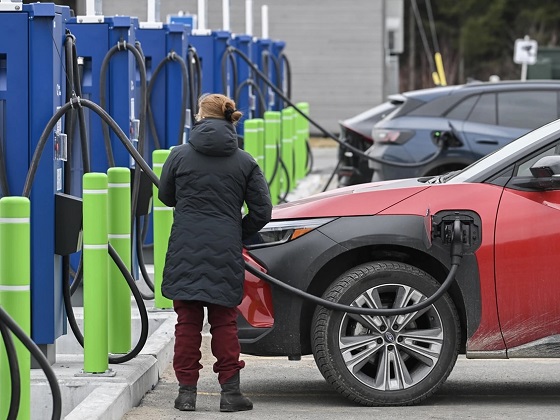
Power Struggle: Governments start quietly backing away from EV mandates
-
 Business2 days ago
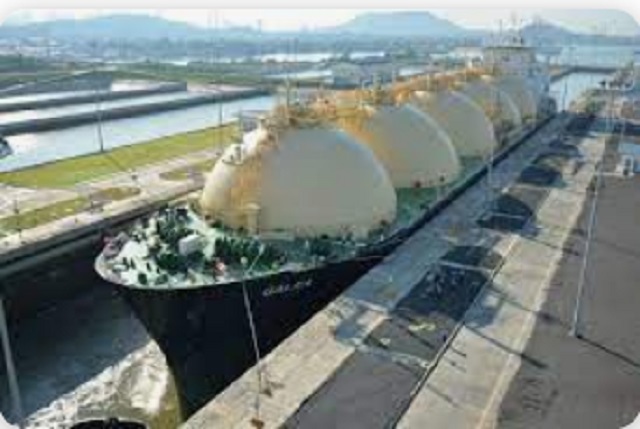
Canada Can Finally Profit From LNG If Ottawa Stops Dragging Its Feet
-
 Crime2 days ago
Inside the Fortified Sinaloa-Linked Compound Canada Still Can’t Seize After 12 Years of Legal War
-
 Automotive20 hours ago
The $50 Billion Question: EVs Never Delivered What Ottawa Promised
-
 National2 days ago
Liberal bill “targets Christians” by removing religious exemption in hate-speech law
-
 Local Business16 hours ago
Red Deer Downtown Business Association to Wind Down Operations
-
 Energy2 days ago
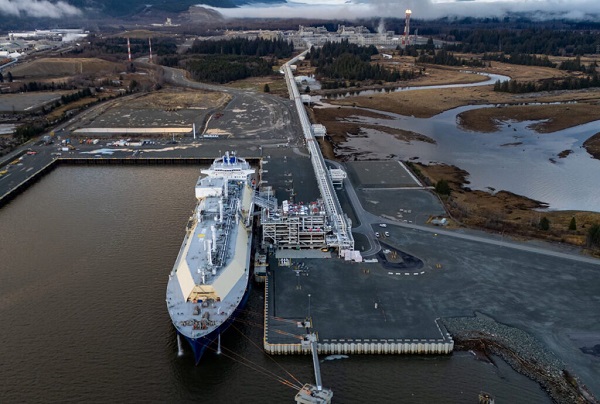
LNG NOW! Canada must act fast to prosper in changing times
-
 Health1 day ago
US podcaster Glenn Beck extends a lifeline to a Saskatchewan woman waiting for MAiD
-
 C2C Journal19 hours ago
Wisdom of Our Elders: The Contempt for Memory in Canadian Indigenous Policy