
Alberta
Trudeau is punishing Albertans this Autumn


From the Canadian Taxpayers Federation
Author: Kris Sims
The colder weather is here. Albertans are making dinners and heating our homes against the chill this Autumn.
Nourishing and normal things, such as preparing a holiday meal and staying warm, are now financially punishable offenses.
Prime Minister Justin Trudeau’s two carbon taxes make driving to work, buying food and heating our homes cost much more.
As one of the Trudeau government consultants that drafted the legislation stated, the carbon tax is meant to “punish the poor behaviour of using fossil fuels.”
The first carbon tax adds 14 cents per litre of gasoline and 17 cents per litre of diesel. This costs about $10 extra to fill up a minivan and about $16 extra to fill up a pickup truck.
The carbon tax on diesel costs truckers about $160 extra to fill up the tanks on big-rig trucks.
The second carbon tax is a government fuel regulation that fines companies for the carbon in fuels. Those costs are passed down to drivers at the pump.
Trudeau fashioned his second carbon after British Columbia’s. B.C. drivers have been paying two carbon taxes for years, and it’s a key reason why they pay the highest fuel prices in North America, usually hovering at about $2 per litre. Trudeau wants to make Vancouver gas prices as commonly Canadian as maple syrup.
Trudeau imposed his second carbon tax this Canada Day. It’s not clear yet how much the second carbon tax costs for a litre of gasoline and diesel in Alberta. In Atlantic Canada, the second carbon tax tacks an extra four to eight cents per litre of fuel.
That big tax bill is only getting bigger because Trudeau is cranking up his carbon tax every year for the next seven years.
By 2030, Trudeau’s two carbon taxes will cost an extra 55 cents per litre of gasoline and 77 cents per litre of diesel, plus GST. Filling up a big rig truck with diesel will cost about $760 extra.
In seven years, average Albertans will pay more than $3,300 per year because of Trudeau’s two carbon taxes even after rebates.

Ordinary people pay Trudeau’s carbon taxes every day. So do truckers. So do farmers.
Remember the Thanksgiving turkey? Turkeys eat grain which is hit by the carbon tax when it goes through the grain dryer. Turkeys are raised in heated barns, which is carbon taxed, and the trucks hauling them from the slaughterhouse to the grocery store get carbon taxed, too. That’s how the carbon tax makes food cost more.
The Parliamentary Budget Officer reports the carbon tax will cost Canadians farmers close to $1 billion by 2030.
But it’s not just transportation and food that gets hit with the Trudeau’s carbon tax.
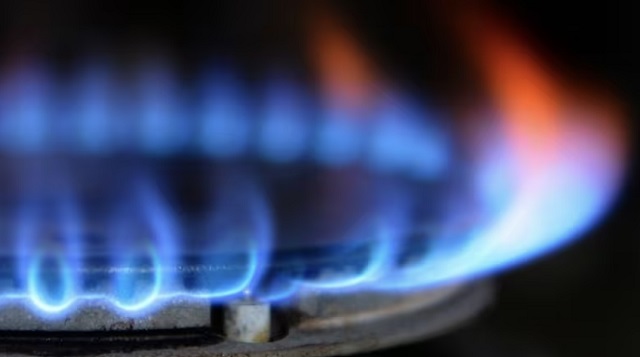
Home heating is punished too. The current carbon tax costs 12 cents extra per cubic metre of natural gas, 10 cents extra per litre of propane and 17 cents extra per litre of furnace oil.
An average Alberta home uses about 2,800 cubic metres of natural gas per year, so the carbon tax will cost them about $337 extra to heat their home. Costs are similar for propane and furnace oil.
Home heating is essential for a place like Alberta.
Punishing Canadians with a carbon tax is pointless and unfair.
It’s pointless because the carbon tax won’t fix climate change. As the PBO has noted, “Canada’s own emissions are not large enough to materially impact climate change.”
It’s unfair because ordinary people who are driving to work, buying food for their families and heating their homes are backed into a corner. Carbon tax cheerleaders tell them to “switch.”
Switch to what?
What abundant, reliable, affordable alternative energy source is available to Albertans? This isn’t like choosing between paper or plastic bags, this is about surviving the winter and affording food, or not.
Albertans should not be punished for staying warm and feeding our families.

Alberta
Premier Smith: Canadians support agreement between Alberta and Ottawa and the major economic opportunities it could unlock for the benefit of all

From Energy Now
By Premier Danielle Smith
Get the Latest Canadian Focused Energy News Delivered to You! It’s FREE: Quick Sign-Up Here
If Canada wants to lead global energy security efforts, build out sovereign AI infrastructure, increase funding to social programs and national defence and expand trade to new markets, we must unleash the full potential of our vast natural resources and embrace our role as a global energy superpower.
The Alberta-Ottawa Energy agreement is the first step in accomplishing all of these critical objectives.
Recent polling shows that a majority of Canadians are supportive of this agreement and the major economic opportunities it could unlock for the benefit of all Canadians.
As a nation we must embrace two important realities: First, global demand for oil is increasing and second, Canada needs to generate more revenue to address its fiscal challenges.
Nations around the world — including Korea, Japan, India, Taiwan and China in Asia as well as various European nations — continue to ask for Canadian energy. We are perfectly positioned to meet those needs and lead global energy security efforts.
Our heavy oil is not only abundant, it’s responsibly developed, geopolitically stable and backed by decades of proven supply.
If we want to pay down our debt, increase funding to social programs and meet our NATO defence spending commitments, then we need to generate more revenue. And the best way to do so is to leverage our vast natural resources.
At today’s prices, Alberta’s proven oil and gas reserves represent trillions in value.
It’s not just a number; it’s a generational opportunity for Alberta and Canada to secure prosperity and invest in the future of our communities. But to unlock the full potential of this resource, we need the infrastructure to match our ambition.
There is one nation-building project that stands above all others in its ability to deliver economic benefits to Canada — a new bitumen pipeline to Asian markets.
The energy agreement signed on Nov. 27 includes a clear path to the construction of a one-million-plus barrel-per-day bitumen pipeline, with Indigenous co-ownership, that can ensure our province and country are no longer dependent on just one customer to buy our most valuable resource.
Indigenous co-ownership also provide millions in revenue to communities along the route of the project to the northwest coast, contributing toward long-lasting prosperity for their people.
The agreement also recognizes that we can increase oil and gas production while reducing our emissions.
The removal of the oil and gas emissions cap will allow our energy producers to grow and thrive again and the suspension of the federal net-zero power regulations in Alberta will open to doors to major AI data-centre investment.
It also means that Alberta will be a world leader in the development and implementation of emissions-reduction infrastructure — particularly in carbon capture utilization and storage.
The agreement will see Alberta work together with our federal partners and the Pathways companies to commence and complete the world’s largest carbon capture, utilization and storage infrastructure project.
This would make Alberta heavy oil the lowest intensity barrel on the market and displace millions of barrels of heavier-emitting fuels around the globe.
We’re sending a clear message to investors across the world: Alberta and Canada are leaders, not just in oil and gas, but in the innovation and technologies that are cutting per barrel emissions even as we ramp up production.
Where we are going — and where we intend to go with more frequency — is east, west, north and south, across oceans and around the globe. We have the energy other countries need, and will continue to need, for decades to come.
However, this agreement is just the first step in this journey. There is much hard work ahead of us. Trust must be built and earned in this partnership as we move through the next steps of this process.
But it’s very encouraging that Prime Minister Mark Carney has made it clear he is willing to work with Alberta’s government to accomplish our shared goal of making Canada an energy superpower.
That is something we have not seen from a Canadian prime minister in more than a decade.
Together, in good faith, Alberta and Ottawa have taken the first step towards making Canada a global energy superpower for benefit of all Canadians.
Danielle Smith is the Premier of Alberta

From the Fraser Institute
The federal and Alberta governments recently released their much-anticipated Memorandum of Understanding (MOU) outlining what it will take to build a pipeline from Alberta, through British Columbia, to tidewater to get more of our oil to markets beyond the United States.
This was great news, according to most in the media: “Ottawa-Alberta deal clears hurdles for West Coast pipeline,” was the top headline on the Globe and Mail’s website, “Carney inks new energy deal with Alberta, paving way to new pipeline” according to the National Post.
And the reaction from the political class? Well, former federal environment minister Steven Guilbeault resigned from Prime Minister Carney’s cabinet, perhaps positively indicating that this agreement might actually produce a new pipeline. Jason Kenney, a former Alberta premier and Harper government cabinet minister, congratulated Prime Minister Carney and Premier Smith on an “historic agreement.” Even Alberta NDP Leader Naheed Nenshi called the MOU “a positive step for our energy future.”
Finally, as Prime Minister Carney promised, Canada might build critical infrastructure “at a speed and scale not seen in generations.”
Given this seemingly great news, I eagerly read the six-page Memorandum of Understanding. Then I read it again and again. Each time, my enthusiasm and understanding diminished rapidly. By the fourth reading, the only objective conclusion I could reach was not that a pipeline would finally be built, but rather that only governments could write an MOU that no Canadian could understand.
The MOU is utterly incoherent. Go ahead, read it for yourself online. It’s only six pages. Here are a few examples.
The agreement states that, “Canada and Alberta agree that the approval, commencement and continued construction of the bitumen pipeline is a prerequisite to the Pathways project.” Then on the next line, “Canada and Alberta agree that the Pathways Project is also a prerequisite to the approval, commencement and continued construction of the bitumen pipeline.”
Two things, of course, cannot logically be prerequisites for each other.
But worry not, under the MOU, Alberta and Ottawa will appoint an “Implementation Committee” to deliver “outcomes” (this is from a federal government that just created the “Major Project Office” to get major projects approved and constructed) including “Determining the means by which Alberta can submit its pipeline application to the Major Projects Office on or before July 1, 2026.”
What does “Determining the means” even mean?
What’s worse is that under the MOU, the application for this pipeline project must be “ready to submit to the Major Projects Office on or before July 1, 2026.” Then it could be another two years (or until 2028) before Ottawa approves the pipeline project. But the MOU states the Pathways Project is to be built in stages, starting in 2027. And that takes us back to the circular reasoning of the prerequisites noted above.
Other conditions needed to move forward include:
The private sector must construct and finance the pipeline. Serious question: which private-sector firm would take this risk? And does the Alberta government plan to indemnify the company against these risks?
Indigenous Peoples must co-own the pipeline project.
Alberta must collaborate with B.C. to ensure British Columbians get a cut or “share substantial economic and financial benefits of the proposed pipeline” in MOU speak.
None of this, of course, addresses the major issue in our country—that is, investors lack clarity on timelines and certainty about project approvals. The Carney government established the Major Project Office to fast-track project approvals and provide greater certainty. Of the 11 project “winners” the federal government has already picked, most either already had approvals or are already at an advanced stage in the process. And one of the most important nation-building projects—a pipeline to get our oil to tidewater—hasn’t even been referred to the Major Project Office.
What message does all this send to the investment community? Have we made it easier to get projects approved? No. Have we made things clearer? No. Business investment in Canada has fallen off a cliff and is down 25 per cent per worker since 2014. We’ve seen a massive outflow of capital from the country, more than $388 billion since 2014.
To change this, Canada needs clear rules and certain timelines for project approvals. Not an opaque Memorandum of Understanding.

Niels Veldhuis
President, Fraser Institute


Media bound to pay the price for selling their freedom to (selectively) offend

Sometimes An Ingrate Nation Pt. 2: The Great One Makes His Choice

Recent price declines don’t solve Toronto’s housing affordability crisis

From Exception to Routine. Why Canada’s State-Assisted Suicide Regime Demands a Human-Rights Review
-
MAiD1 day ago
From Exception to Routine. Why Canada’s State-Assisted Suicide Regime Demands a Human-Rights Review
-
 Business1 day ago
Carney government should privatize airports—then open airline industry to competition
-
 Business1 day ago
What’s Going On With Global Affairs Canada and Their $392 Million Spending Trip to Brazil?
-
 Energy1 day ago
Canada following Europe’s stumble by ignoring energy reality
-
 Automotive2 days ago
Canada’s EV Mandate Is Running On Empty
-
 Business1 day ago
Why Does Canada “Lead” the World in Funding Racist Indoctrination?
-
 Automotive2 days ago
Trump Deals Biden’s EV Dreams A Death Blow
-
 Business1 day ago
Loblaws Owes Canadians Up to $500 Million in “Secret” Bread Cash