
Crime
Red Deer RCMP make numerous arrests in crime hot spots


Red Deer, Alberta – Red Deer RCMP made a number of arrests while conducting proactive patrols in areas known for criminal activity, and located numerous suspects who were wanted on outstanding warrants. RCMP made more arrests while conducting compliance checks on individuals known to have court imposed conditions such as curfews; these strategies are key to Red Deer’s Pinpoint crime reduction focus on repeat offenders and emerging issues. Red Deer RCMP made more arrests thanks to reports from the public regarding suspicious activity, and thank Red Deerians for their continued support and vigilance.
May 5 – 2018
At 9 pm on May 5, RCMP responded to a report of a personal robbery after a man allegedly robbed a woman of her sunglasses at knifepoint in the area of 50 Street and 51 Avenue. RCMP responded immediately and located the suspect nearby on foot; he was arrested after a brief foot chase.
21 year old Zachary John Wahobin faces the following charges:
· Criminal Code 344(1)(b) – Robbery with weapon
· Criminal Code 129(a) – Resist/ obstruct peace officer X 2
· Criminal Code 88(1) – Possession of weapon for dangerous purpose
· Criminal Code 733.1(1) – Fail to comply with probation
Wahobin was remanded to appear in court in Red Deer on May 7 and is scheduled to appear next on May 23 at 9:30 am.
May 4 – 2018
Shortly before 3 pm on May 4, Red Deer RCMP located a truck that had been stolen out of Blackfalds and used On Star to track it as the truck moved through Red Deer. When it was safe to do so, RCMP had On Star shut down the truck in the Normandeau neighbourhood and arrested the male driver after a brief foot chase. RCMP located two stolen bicycles in the back of the truck and seized what is believed to be heroin, crystal meth and marijuana, as well as pepper spray, a knife and break-in tools
29 year old Bryan Anthony Penso faces
· Criminal Code 249(1) – Dangerous operation of motor vehicle
· Criminal Code 351(1) – Possess break-in instruments
· Criminal Code 355(a) – Possession of stolen property over $5,000
· Criminal Code 355(b) – Possession of stolen property under $5,000
· Criminal Code 88(1) – Possession of weapon for the purpose of committing an offense X 2
· CDSA 4(1) – Possession of Schedule I/ Schedule II substances X 3
· TSA 51(a) – Operate vehicle without holding operator’s license
· TSA 52(1)(a) – Operate vehicle without registration
· TSA 54(1)(a) – Operate vehicle without insurance
Penso was remanded to appear in court in Red Deer on May 7 and is scheduled to appear again on May 14 at 9:30 am.
May 2 – 2018
At 5:45 am on May 2, Red Deer RCMP responded to a report of a break and enter in progress at a business in north Red Deer after a witness reported observing a male suspect climbing over a fence to access the business. RCMP responded immediately and arrested the suspect without incident.
A 30 year old man faces a charge of Criminal Code 348(1)(a) – break and enter; he is scheduled to appear in court in Red Deer on June 26. His name cannot be released at this time as that charge has not yet been sworn before the courts.
May 1 – 2018

At 6:30 pm, RCMP attended a store in response to a report of a shoplifter, and arrested a woman who was found to be in possession of a number of stolen items and was wanted on numerous outstanding warrants.
23 year old Taylor Watkins-Paul was wanted on 21 warrants out of Innisfail, Red Deer and Canmore for multiple counts of possession of stolen property, failing to comply with conditions and failing to appear in court, as well as three traffic charges of driving without insurance. She now faces an additional charge of theft under $5,000 and two counts of failing to comply with conditions. Watkins-Paul was remanded to appear in court on May 4 and is scheduled to appear again on May 11 at 9:30 am.
April 30 – 2018
At 9:30 pm on April 30, RCMP responded to a report of suspicious activity in a north-end industrial parking lot and located a suspect who was found to be breaching court-imposed conditions, including a curfew.
19 year old Austin Joseph Pollock faces two counts of Criminal Code 145(3) – fail to comply with conditions. He is scheduled to appear in court on May 29 at 8:30 am.
April 30 – 2018
Shortly before 9 am on April 30, RCMP responded to a report of suspicious activity in a vehicle parked in Oriole Park. On arrival, RCMP located a suspect in the car who was wanted on outstanding warrants and was in possession of what is believed to be methamphetamine.
25 year old Tyler James Nugent was wanted on four warrants out of Red Deer for impaired driving, driving over 0.08, failing to attend court and a traffic charge; he was wanted on five warrants out of Sundre for impaired driving, driving while unauthorized, and several other traffic charges, and another warrant out of Didsbury for failing to attend court. Nugent now faces an additional charge of CDSA 4(1) – Possession of Schedule I substance (methamphetamine). He is scheduled to appear in court in Red Deer on May 18 at 8:30 am.
April 29 – 2018
Shortly before 2:30 am on May 29, RCMP on patrol in downtown Red Deer located a suspect who was wanted on two outstanding warrants for breaching his probation. At the time of his arrest, RCMP determined that he was further breaching his probation. In addition to his warrants, 39 year old Devlin Brighar faced a new charge of breach of probation. He appeared in court in Red Deer on May 4 and those charges have now been dealt with by the court.
April 26 – 2018
The evening of April 26, members of the Red Deer RCMP crime reduction team were on proactive foot patrol in downtown Red Deer when they located a suspect in possession of fentanyl and what is believed to be methamphetamine. The suspect gave a false name but was soon identified by police.
54 year old Dereck Kirkpatrick faces two charges of CDSA 4(1) – possession of Schedule 1 substances and one charge of resisting/ obstructing a peace officer. Kirkpatrick is scheduled to appear in court in Red Deer on May 9 at 1:30 pm.
April 25 – 2018
Red Deer RCMP conducted a curfew check on April 25 and determined that the man in questions wasn’t at the residence, in violation of his court-imposed conditions. Red Deer RCMP conduct conditions checks regularly on numerous individuals as part of the Pinpoint crime reduction strategy.
29 year old Tyler Kellington faces a charge of failing to comply with probation; he made his first court appearance in Red Deer on May 4 and is scheduled to appear again on June 18 at 9:30 am.
April 24 – 2018
Shortly after 2 am on April 24, Red Deer RCMP on bicycle patrol in Riverside Meadows noted suspicious activity and, on investigation, located a suspect who was in possession of what is believed to be cocaine. The suspect was further found to be wanted on outstanding warrants out of Red Deer.
In addition to the warrants, 22 year old Alli Kevin Halkett faces one charge of CDSA 4(1) – possession of Schedule I substance. He is scheduled to appear in court in Red Deer on May 8 at 8:30 am.
April 19 – 2018
A man who was arrested on April 3 for theft of mail is now wanted on warrants after failing to appear in court on April 13 to face those charges. The charges stem from a report received by Red Deer RCMP on April 3 that a suspect was seen breaking into apartment mailboxes. RCMP attended and located the suspect nearby in possession of a number of pieces of stolen mail. RCMP took him into custody and returned the mail to its owners.
28 year old Dallas Albert Rain is wanted on warrants for the following charges:
· Criminal Code 356(1)(a) – Theft from mail under $5,000 X 5
· Criminal Code 430(4) – Mischief under $5,000 X 2
· Criminal Code 145(2)(a) – Fail to attend court
If you have information about Rain’s whereabouts please call the Red Deer RCMP complaint line at 403-343-5575.

Crime
The Uncomfortable Demographics of Islamist Bloodshed—and Why “Islamophobia” Deflection Increases the Threat

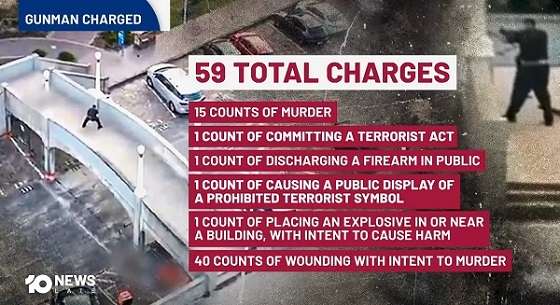

Addressing realities directly is the only path toward protecting communities, confronting extremism, and preventing further loss of life, Canadian national security expert argues.
After attacks by Islamic extremists, a familiar pattern follows. Debate erupts. Commentary and interviews flood the media. Op-eds, narratives, talking points, and competing interpretations proliferate in the immediate aftermath of bloodshed. The brief interval since the Bondi beach attack is no exception.
Many of these responses condemn the violence and call for solidarity between Muslims and non-Muslims, as well as for broader societal unity. Their core message is commendable, and I support it: extremist violence is horrific, societies must stand united, and communities most commonly targeted by Islamic extremists—Jews, Christians, non-Muslim minorities, and moderate Muslims—deserve to live in safety and be protected.
Yet many of these info-space engagements miss the mark or cater to a narrow audience of wonks. A recurring concern is that, at some point, many of these engagements suggest, infer, or outright insinuate that non-Muslims, or predominantly non-Muslim societies, are somehow expected or obligated to interpret these attacks through an Islamic or Muslim-impact lens. This framing is frequently reinforced by a familiar “not a true Muslim” narrative regarding the perpetrators, alongside warnings about the risks of Islamophobia.
These misaligned expectations collide with a number of uncomfortable but unavoidable truths. Extremist groups such as ISIS, Al-Qaeda, Hamas, Hezbollah, and decentralized attackers with no formal affiliations have repeatedly and explicitly justified their violence through interpretations of Islamic texts and Islamic history. While most Muslims reject these interpretations, it remains equally true that large, dynamic groups of Muslims worldwide do not—and that these groups are well prepared to, and regularly do, use violence to advance their version of Islam.
Islamic extremist movements do not, and did not, emerge in a vacuum. They draw from the broader Islamic context. This fact is observable, persistent, and cannot be wished or washed away, no matter how hard some may try or many may wish otherwise.
Given this reality, it follows that for most non-Muslims—many of whom do not have detailed knowledge of Islam, its internal theological debates, historical divisions, or political evolution—and for a considerable number of Muslims as well, Islamic extremist violence is perceived as connected to Islam as it manifests globally. This perception persists regardless of nuance, disclaimers, or internal distinctions within the faith and among its followers.
THE COST OF DENIAL AND DEFLECTION
Denying or deflecting from these observable connections prevents society from addressing the central issues following an Islamic extremist attack in a Western country: the fatalities and injuries, how the violence is perceived and experienced by surviving victims, how it is experienced and understood by the majority non-Muslim population, how it is interpreted by non-Muslim governments responsible for public safety, and how it is received by allied nations. Worse, refusing to confront these difficult truths—or branding legitimate concerns as Islamophobia—creates a vacuum, one readily filled by extremist voices and adversarial actors eager to poison and pollute the discussion.
Following such attacks, in addition to thinking first of the direct victims, I sympathize with my Muslim family, friends, colleagues, moderate Muslims worldwide, and Muslim victims of Islamic extremism, particularly given that anti-Muslim bigotry is a real problem they face. For Muslim victims of Islamic extremism, that bigotry constitutes a second blow they must endure. Personal sympathy, however, does not translate into an obligation to center Muslim communal concerns when they were not the targets of the attack. Nor does it impose a public obligation or override how societies can, do, or should process and respond to violence directed at them by Islamic extremists.
As it applies to the general public in Western nations, the principle is simple: there should be no expectation that non-Muslims consider Islam, inter-Islamic identity conflicts, internal theological disputes, or the broader impact on the global Muslim community, when responding to attacks carried out by Islamic extremists. That is, unless Muslims were the victims, in which case some consideration is appropriate.
Quite bluntly, non-Muslims are not required to do so and are entitled to reject and push back against any suggestion that they must or should. Pointedly, they are not Muslims, a fact far too many now seem to overlook.
The arguments presented here will be uncomfortable for many and will likely provoke polarizing discussion. Nonetheless, they articulate an important, human-centered position regarding how Islamic extremist attacks in Western nations are commonly interpreted and understood by non-Muslim majority populations.
Non-Muslims are free to give no consideration to Muslim interests at any time, particularly following an Islamic extremist attack against non-Muslims in a non-Muslim country. The sole exception is that governments retain an obligation to ensure the safety and protection of their Muslim citizens, who face real and heightened threats during these periods. This does not suggest that non-Muslims cannot consider Muslim community members; it simply affirms that they are under no obligation to do so.
The impulse for Muslims to distance moderate Muslims and Islam from extremist attacks—such as the targeting of Jews in Australia or foiled Christmas market plots in Poland and Germany—is understandable.
Muslims do so to protect their own interests, the interests of fellow Muslims, and the reputation of Islam itself. Yet this impulse frequently collapses into the “No True Scotsman” fallacy, pointing to peaceful Muslims as the baseline while asserting that the attackers were not “true Muslims.”
Such claims oversimplify the reality of Islam as it manifests globally and fail to address the legitimate political and social consequences that follow Islamic extremist attacks in predominantly non-Muslim Western societies. These deflections frequently produce unintended effects, such as strengthening anti-Muslim extremist sentiments and movements and undermining efforts to diminish them.
The central issue for public discourse after an Islamic extremist attack is not debating whether the perpetrators were “true” or “false” Muslims, nor assessing downstream impacts on Muslim communities—unless they were the targets.
It is a societal effort to understand why radical ideologies continue to emerge from varying—yet often overlapping—interpretations of Islam, how political struggles within the Muslim world contribute to these ideologies, and how non-Muslim-majority Western countries can realistically and effectively confront and mitigate threats related to Islamic extremism before the next attack occurs and more non-Muslim and Muslim lives are lost.
Addressing these realities directly is the only path toward protecting communities, confronting extremism, and preventing further loss of life.
Ian Bradbury, a global security specialist with over 25 years experience, transitioned from Defence and NatSec roles to found Terra Nova Strategic Management (2009) and 1NAEF (2014). A TEDx, UN, NATO, and Parliament speaker, he focuses on terrorism, hybrid warfare, conflict aid, stability operations, and geo-strategy.
The Bureau is a reader-supported publication.
To receive new posts and support my work, consider becoming a free or paid subscriber.
From The Center Square
By
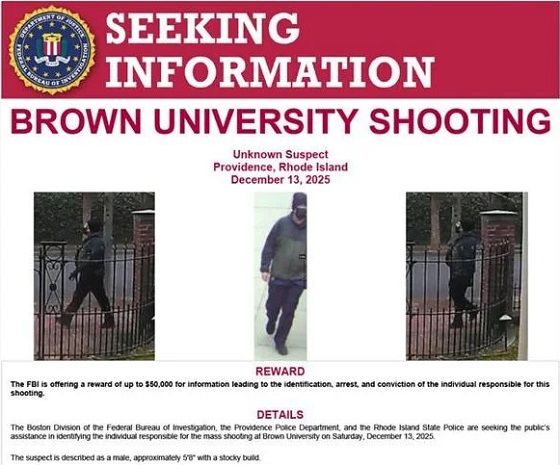
Rhode Island officials said the suspected gunman in the Brown University mass shooting has been found dead of an apparent self-inflicted gunshot wound, more than 50 miles away in a storage facility in southern New Hampshire.
The shooter was identified as Claudio Manuel Neves-Valente, a 48-year-old Brown student and Portuguese national. Neves-Valente was found dead with a satchel containing two firearms inside in the storage facility, authorities said.
“He took his own life tonight,” Providence police chief Oscar Perez said at a press conference, noting that local, state and federal law officials spent days poring over video evidence, license plate data and hundreds of investigative tips in pursuit of the suspect.
Perez credited cooperation between federal state and local law enforcement officials, as well as the Providence community, which he said provided the video evidence needed to help authorities crack the case.
“The community stepped up,” he said. “It was all about groundwork, public assistance, interviews with individuals, and good old fashioned policing.”
Rhode Island Attorney General Peter Neronha said the “person of interest” identified by private videos contacted authorities on Wednesday and provided information that led to his whereabouts.
“He blew the case right open, blew it open,” Neronha said. “That person led us to the car, which led us to the name, which led us to the photograph of that individual.”
“And that’s how these cases sometimes go,” he said. “You can feel like you’re not making a lot of progress. You can feel like you’re chasing leaves and they don’t work out. But the team keeps going.”
The discovery of the suspect’s body caps an intense six-day manhunt spanning several New England states, which put communities from Providence to southern New Hampshire on edge.
“We got him,” FBI special agent in charge for Boston Ted Docks said at Thursday night’s briefing. “Even though the suspect was found dead tonight our work is not done. There are many questions that need to be answered.”
He said the FBI deployed around 500 agents to assist local authorities in the investigation, in addition to offering a $50,000 reward. He says that officials are still looking into the suspect’s motive.
Two students were killed and nine others were injured in the Brown University shooting Saturday, which happened when an undetected gunman entered the Barus and Holley building on campus, where students were taking exams before the holiday break. Providence authorities briefly detained a person in the shooting earlier in the week, but then released them.
Investigators said they are also examining the possibility that the Brown case is connected to the killing of a Massachusetts Institute of Technology professor in his hometown.
An unidentified gunman shot MIT professor Nuno Loureiro multiple times inside his home in Brookline, about 50 miles north of Providence, according to authorities. He died at a local hospital on Tuesday.
Leah Foley, U.S. attorney for Massachusetts, was expected to hold a news briefing late Thursday night to discuss the connection with the MIT shooting.
Georgia county admits illegally certifying 315k ballots in 2020 presidential election
Alberta Next Panel calls to reform how Canada works

Canadian government launches trial version of digital ID for certain licenses, permits

End Supply Management—For the Sake of Canadian Consumers
-
International2 days ago
Georgia county admits illegally certifying 315k ballots in 2020 presidential election
-
 Haultain Research2 days ago
Sweden Fixed What Canada Won’t Even Name
-
 Business2 days ago
What Do Loyalty Rewards Programs Cost Us?
-
 Energy2 days ago
Why Japan wants Western Canadian LNG
-
 Business2 days ago
Land use will be British Columbia’s biggest issue in 2026
-
 Business2 days ago
The Real Reason Canada’s Health Care System Is Failing
-
 Business2 days ago
Dark clouds loom over Canada’s economy in 2026
-
 Business2 days ago
Federal funds FROZEN after massive fraud uncovered: Trump cuts off Minnesota child care money