
Agriculture
Why the News Block on the Plight of Dutch Farmers?

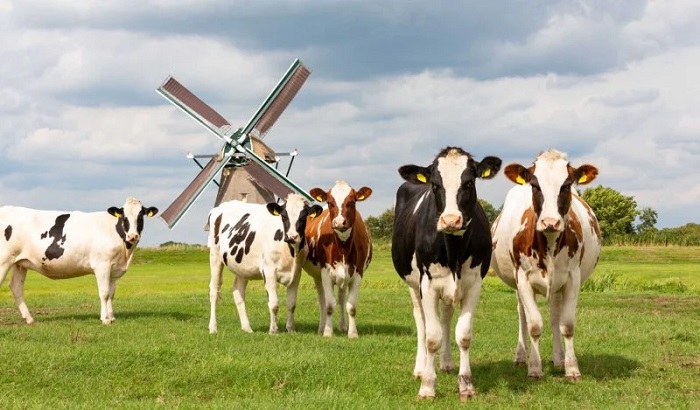

From the Brownstone Institute

God made the world, but the Dutch made Holland. This truism has guided Dutch identity and its republican virtue. When the ingenious Dutch reclaimed land from the sea it was for farms and these farms and farmers have fed the Dutch people, Europe and the world for centuries.
The picture displayed here is Paulus Potter’s famous work The Bull.

Created in 1647, Potter was 22 when he painted it and not quite 30 when he died. Renowned for its massive size, detailed realism including dung and flies and as a novel monumental picture of an animal, The Bull is understood as a symbol of the Dutch nation and its prosperity.
The Dutch Golden Age resulted in part from the creation of the Dutch Republic carved out by overcoming Spanish rule in the Netherlands. The little Dutch Republic became a global naval power and cultural force. The Dutch were classical liberals and believed in individual liberties like freedom of religion, speech and association.
The Dutch Republic was noted for economic vibrancy and innovation including the emergence of commodity and stock markets. The newly minted bourgeoisie spurred the first modern marketplace for artists to sell their work and freed them from the necessity of commissions from the Church and aristocracy. This is reflected in the subject matter of much Dutch Golden Age art with its depiction of everyday life. Potter’s painting is from this era.
But his work reveals another truth. The Dutch Golden age was impossible without its farms. Food is the foundation of any successful civilization, which is why the news that the Dutch government plans to shut as many as 3,000 farms for the sake of a ‘’nitrogen crisis’’ is so puzzling.
As Natasja Oerlemans of the World Wildlife Fund-Netherlands recently stated, ‘’We should use this crisis to transform agriculture.” She went on to state that the process will require several decades and billions of euros to reduce the number of animals.
So, what in fact is the issue with nitrogen and Dutch farming?
The nitrogen crisis is a bureaucratic and muddled affair which is now and will increasingly impact all of Dutch society. In 2017 a small NGO, Mobilisation for the Environment, led by long-time environmentalist Johan Vollenbroek, went to the European Court of Justice (ECJ) to challenge the then current Dutch practices that protected natural areas from nitrogen pollution.
In 2018, the ECJ decided in a court ruling that the Dutch legislation, which allowed business to compensate for increases in nitrogen emissions with technical measures and restoration, was too lenient. The Dutch high court agreed with the ruling. In so doing almost 20,000 building projects have been put on hold, stalling the expansion of farms and dairies, new homes, roads, and airport runways. These projects are valued at €14 billion of economic activity.
Farming is intensive in the Netherlands because it is a small country with high population density. According to Science magazine ‘’Dutch farms contain four times more animal biomass per hectare than the EU average.’’ But they also point out that ‘’Practices such as injecting liquid manure in the soil and installing air scrubbers on pig and poultry facilities have reduced ammonia emissions 60% since the 1980s.’’
These mitigating systems are seen as insufficient in light of the court rulings. Ammonia is part of the nitrogen cycle and is a byproduct of waste from farm animals.

The great concern of environmental bureaucrats is the so-called ‘’manure fumes’’ from livestock waste. Like methane from farting cows, manure fumes are the big thing and katzenjammer of the movement on meat and dairy.
Dutch farmer Klass Meekma, who produces milk from the goats he raises said recently, ‘’The nitrogen rules are eagerly being used by the anti-livestock movement to get rid of as many livestock farms as they can, with absolutely no respect for what Dutch livestock farms have achieved in terms of food quality, use of leftovers of the food industry, animal-care, efficiency, exports, know-how, economics and more.’’ Meekma’s goats produced more than 265,000 gallons of milk in 2019.
In many ways, Dutch farmers are the victims of their own success. Because Holland is small, farmers have needed to be innovative in the use of space which accounts for the higher levels of ‘’animal biomass’’ compared with other European countries. Success in agricultural practices and food production has produced profits and a strong economic sector for the Dutch economy. Remarkably, the Netherlands is the second largest food exporter in the world.
The biggest push against Dutch agriculture comes from the climate change community and minister for nature and nitrogen Christianne van der Wal. She said in a letter to politicians in 2021, “There is no future (for agriculture) if production leads to depletion of the soil, groundwater and surface water, or degradation of ecosystems.” She has announced new restrictions to cut nitrogen emissions in half by 2030, to meet international climate action goals.
Nobody wants runoff from farms harming streams and wildlife. But the focus on manure fumes; that is, nitrogen and ammonia seeping into the atmosphere and impacting the climate seems far more tenuous. Primeval Europe was like Africa’s Serengeti, teeming with huge herds of ungulates like aurochs. Did their farting and waste ruin the climate?
The climate is changing. The climate has always changed. Bronze Age Europe, a particularly fecund cultural period, was markedly warmer than today.
It is curious that the farming sector is the focus of rollbacks while other polluters are being treated differently. Farmer Meekma states,
“Since then (the court rulings) our country has a so-called nitrogen crisis. It’s ludicrous that the national airport Schiphol Amsterdam and lots of industrial companies have no nature permits, and farmers are now being sacrificed to facilitate these other activities.”
“It’s a real shame how farmers are being treated in the Netherlands. They are being pushed out to make room for industry, aviation, transportation, solar fields and housing of the growing numbers of immigrants.’’
Most of the “saved” nitrogen emissions from government plans will be used to offset the increased emissions from building 75,000 houses. Only 30 percent will lead to real emission reductions.
Dutch Prime Minister and WEF luminary Mark Rutte acknowledged that the move on farming would have “enormous consequences. I understand that, and it is simply terrible.”
There are many historical examples of political pressures on farming as harbingers of disaster, from Ukraine in the Soviet Union to Zimbabwe. Both were breadbaskets and exporters reduced to famine. Controlling food production is something that political ruffians always want to achieve. The nitrogen crisis is a struggle of urban ideologues versus traditional lifeways and rural self-sufficiency. Due to the war in Ukraine and supply-chain disruption from the covid pandemic, many people around the world are facing starvation. This is not the time for Europe to harm its best agricultural producer.
Dutch farmers are hip to when a nudge becomes a shove. The anti-meat ideologues want humans to subsist on grass cuttings and Bill Gates’ lab-made gunk. Dutch farmers feed the world. Their plight is ours as well.
The nitrogen crisis has the waft of so much bullshit.
Author


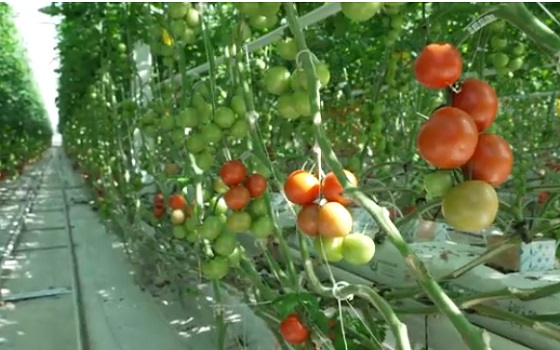
A new program funded by the Sustainable Canadian Agricultural Partnership will accelerate expansion in Alberta greenhouses and vertical farms.
Albertans want to keep their hard-earned money in the province and support producers by choosing locally grown, high-quality produce. The new three-year, $10-milllion Growing Greenhouses program aims to stimulate industry growth and provide fresh fruit and vegetables to Albertans throughout the year.
“Everything our ministry does is about ensuring Albertans have secure access to safe, high-quality food. We are continually working to build resilience and sustainability into our food production systems, increase opportunities for producers and processors, create jobs and feed Albertans. This new program will fund technologies that increase food production and improve energy efficiency.”
“Through this investment, we’re supporting Alberta’s growers and ensuring Canadians have access to fresh, locally-grown fruits and vegetables on grocery shelves year-round. This program strengthens local communities, drives innovation, and creates new opportunities for agricultural entrepreneurs, reinforcing Canada’s food system and economy.”
The Growing Greenhouses program supports the controlled environment agriculture sector with new construction or expansion improvements to existing greenhouses and vertical farms that produce food at a commercial scale. It also aligns with Alberta’s Buy Local initiative launched this year as consumers will be able to purchase more local produce all year-round.
The program was created in alignment with the needs identified by the greenhouse sector, with a goal to reduce seasonal import reliance entering fall, which increases fruit and vegetable prices.
“This program is a game-changer for Alberta’s greenhouse sector. By investing in expansion and innovation, we can grow more fresh produce year-round, reduce reliance on imports, and strengthen food security for Albertans. Our growers are ready to meet the demand with sustainable, locally grown vegetables and fruits, and this support ensures we can do so while creating new jobs and opportunities in communities across the province. We are very grateful to the Governments of Canada and Alberta for this investment in our sector and for working collaboratively with us.”
Sustainable Canadian Agricultural Partnership (Sustainable CAP)
Sustainable CAP is a five-year, $3.5-billion investment by federal, provincial and territorial governments to strengthen competitiveness, innovation and resiliency in Canada’s agriculture, agri-food and agri-based products sector. This includes $1 billion in federal programs and activities and $2.5 billion that is cost-shared 60 per cent federally and 40 per cent provincially/territorially for programs that are designed and delivered by provinces and territories.
Quick facts
- Alberta’s greenhouse sector ranks fourth in Canada:
- 195 greenhouses produce $145 million in produce and 60 per cent of them operate year-round.
- Greenhouse food production is growing by 6.2 per cent annually.
- Alberta imports $349 million in fresh produce annually.
- The program supports sector growth by investing in renewable and efficient energy systems, advanced lighting systems, energy-saving construction, and automation and robotics systems.
Related information

From the Fraser Institute
By Annika Segelhorst and Elmira Aliakbari
Canadians care about the environment and breathing clean air. In 2023, the share of Canadians concerned about the state of outdoor air quality was 7 in 10, according to survey results from Abacus Data. Yet Canada outperforms most comparable high-income countries on air quality, suggesting a gap between public perception and empirical reality. Overall, Canada ranks 8th for air quality among 31 high-income countries, according to our recent study published by the Fraser Institute.
A key determinant of air quality is the presence of tiny solid particles and liquid droplets floating in the air, known as particulates. The smallest of these particles, known as fine particulate matter, are especially hazardous, as they can penetrate deep into a person’s lungs, enter the blood stream and harm our health.
Exposure to fine particulate matter stems from both natural and human sources. Natural events such as wildfires, dust storms and volcanic eruptions can release particles into the air that can travel thousands of kilometres. Other sources of particulate pollution originate from human activities such as the combustion of fossil fuels in automobiles and during industrial processes.
The World Health Organization (WHO) and the Canadian Council of Ministers of the Environment (CCME) publish air quality guidelines related to health, which we used to measure and rank 31 high-income countries on air quality.
Using data from 2022 (the latest year of consistently available data), our study assessed air quality based on three measures related to particulate pollution: (1) average exposure, (2) share of the population at risk, and (3) estimated health impacts.
The first measure, average exposure, reflects the average level of outdoor particle pollution people are exposed to over a year. Among 31 high-income countries, Canadians had the 5th-lowest average exposure to particulate pollution.
Next, the study considered the proportion of each country’s population that experienced an annual average level of fine particle pollution greater than the WHO’s air quality guideline. Only 2 per cent of Canadians were exposed to fine particle pollution levels exceeding the WHO guideline for annual exposure, ranking 9th of 31 countries. In other words, 98 per cent of Canadians were not exposed to fine particulate pollution levels exceeding health guidelines.
Finally, the study reviewed estimates of illness and mortality associated with fine particle pollution in each country. Canada had the fifth-lowest estimated death and illness burden due to fine particle pollution.
Taken together, the results show that Canada stands out as a global leader on clean air, ranking 8th overall for air quality among high-income countries.

Canada’s record underscores both the progress made in achieving cleaner air and the quality of life our clean air supports.

Annika Segelhorst
Junior Economist

Elmira Aliakbari


Wayne Gretzky’s Terrible, Awful Week.. And Soccer/ Football.

Western Campuses Help Build China’s Digital Dragnet With U.S. Tax Funds, Study Warns

Common Vaccines Linked to 38-50% Increased Risk of Dementia and Alzheimer’s
Trump DOJ seeks to quash Pfizer whistleblower’s lawsuit over COVID shots
-
COVID-191 day ago
Trump DOJ seeks to quash Pfizer whistleblower’s lawsuit over COVID shots
-
 Alberta2 days ago
Alberta introducing three “all-season resort areas” to provide more summer activities in Alberta’s mountain parks
-
Agriculture2 days ago
Growing Alberta’s fresh food future
-
 International2 days ago
Trump admin wants to help Canadian woman rethink euthanasia, Glenn Beck says
-
 Alberta1 day ago
The case for expanding Canada’s energy exports
-
 Business2 days ago
Storm clouds of uncertainty as BC courts deal another blow to industry and investment
-
 Censorship Industrial Complex1 day ago
Ottawa’s New Hate Law Goes Too Far
-
 Business1 day ago
Fuelled by federalism—America’s economically freest states come out on top