
Daily Caller
Victor Davis Hanson Condemns California’s DEI Hiring In Fire Departments, ‘Not Muscularity, Not Experience,’ Just DEI


From the Daily Caller News Foundation
By Mariane Angela
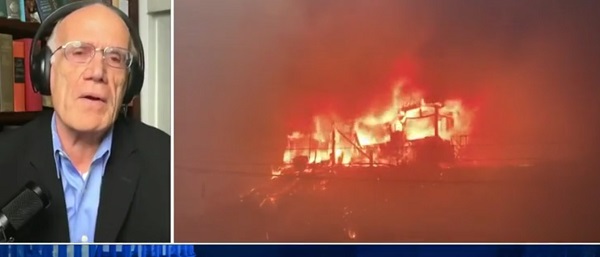
Victor Davis Hanson, Wednesday on Newsmax, slammed the implementation of Diversity, Equity, and Inclusion (DEI) criteria in fire department hiring practices in California.
During an appearance on “Finnerty,” Hanson said these policies prioritize DEI above essential firefighting qualifications like experience and physical readiness. Hanson said that hiring workers based on DEI led to an ill-equipped workforce in the state.
“The DEI fire chief, 70% of her hires have been based on DEI. Not muscularity, not experience, not size, not competence. The primary criterion was DEI. And so the only… thing that is different about this is that this was not the inner city. This was, as Donald Trump mentioned, and I’ve taught at Pepperdine, I just got back from there. This is the most elite area of California,” Hanson told Rob Finnerty.
Hanson also said that there’s a broader failure in California’s management of natural resources and emergency preparedness.
WATCH:
“This could have been prevented long-term. We’re letting out all of the water that comes out. 90% of the water from the northern rivers goes out to the sea,” Hanson said. “The aqueduct transfers that water down to LA. They should have had more water. They don’t. The insurance system is completely broken because of overregulation, fraud, and mismanagement by the state. So you cannot buy fire insurance in most cases.”
Hanson said that the systemic failures not only threaten the physical landscape but also risk the financial stability of California’s wealthiest communities, potentially resulting in billions of dollars in losses.
“These are the wealthiest zip codes. And if these people, and many of them didn’t have insurance, even they couldn’t, some of them get insurance. And if this is not going to be rebuilt, they’re going to lose billions of dollars of taxpayers, productive citizens,” Hanson said.
Hanson said there is a need to return to merit-based hiring and sensible state management policies to prevent such disasters in the future.
“And it all could have been prevented had we had meritocratic hiring, had we had plenty water, plenty full of water, if we had a different forest policy, a different firefighting policy, a different insurance policy,” Hanson said.
Actor James Woods also criticized how he said the government handled the crisis as wildfires ravaged Los Angeles. He specifically targeted Democratic California Gov. Gavin Newsom and called him a “blithering idiot.” Woods said the state’s inadequate fire preparedness and response was the result of Newsom’s repeated mismanagement.

From the Daily Caller News Foundation
By Emily Kopp
The U.S. Agency for International Development (USAID) shipped thousands of viral samples to a lab in Wuhan over the course of a 10-year program even though it had no formal agreement with the lab in place, according to previously unreported documents.
The documents show that USAID funded the exportation of 11,000 samples from Yunnan Province, where some of the closest relatives of the COVID-19 virus circulate, to Wuhan, the epicenter of the pandemic, with no apparent plan for ensuring the samples were not misdirected to bioweapons and remained accessible to the U.S. government.
A $210 million USAID public health program called PREDICT, steered by the University of California-Davis, collected viral samples in countries throughout the globe but lacked long-term storage when funding dried up, according to rudimentary plans in 2019.
Dear Readers:
As a nonprofit, we are dependent on the generosity of our readers.
Please consider making a small donation of any amount here.
Thank you!
USAID’s sample dispensation plan for China is sparse: “No need [sic] information from Yunnan. They were never an official lab partner for PREDICT. All samples they helped collected [sic] are sent to, tested, and stored in Wuhan.”
The “lab” refers to the Wuhan Institute of Virology (WIV). WIV was a close partner of USAID contractor EcoHealth Alliance and a slated partner for a PREDICT-like program supported by the State Department. The lab has poor biosafety practices and ties to the People’s Liberation Army (PLA).
One of the closest known relatives of the COVID virus is among the viruses sampled with USAID funding.
“Investigations involving USAID’s former funding of global health awards remain active and ongoing,” a senior State Department official said in a statement to the Daily Caller News Foundation. “The American people can rest assured knowing that under the Trump Administration we will not be funding these controversial programs.”
The internal documents were obtained through a FOIA lawsuit brought by U.S. Right to Know, a nonprofit newsroom and public health research group.
The shuttering of USAID – which was officially completed Tuesday – has ignited a debate about its net impact on global health. A study in The Lancet projected an association between a dropoff in USAID funding and 14 million deaths based on an epidemiological model.
Secretary of State Marco Rubio said in a statement Tuesday that USAID spending has often undermined rather than strengthened American interests.
“Beyond creating a globe-spanning NGO industrial complex at taxpayer expense, USAID has little to show since the end of the Cold War,” Rubio said. “Development objectives have rarely been met, instability has often worsened, and anti-American sentiment has only grown.”
The now-defunct agency’s connection to the Wuhan lab complicates its global health legacy.
“The USAID $210 million contract for PREDICT should have included contractual terms that required all samples, or at least copies of all samples, be transferred to and stored by a US government facility,” said Rutgers University molecular biologist Richard Ebright told the DCNF. “The PREDICT grift did none of this.”
UC Davis did not respond to a request for comment. The State Department did not respond to a request for comment.
Today marks the first day of the State Department's America First foreign assistance rebranding initiative, led by @SecRubio.
Consistent branding will ensure contributions made by the the United States will be immediately recognized as American.
"The redesign is very simple,… pic.twitter.com/HZnbOxU0Sq
— Department of State (@StateDept) July 2, 2025
Did USAID Fund COVID’s Ancestor?
Many of the viruses stored at the lab in Wuhan may have been sampled with U.S. funding yet remain out of reach for U.S. government entities investigating the origins of COVID.
The samples were set to be preserved for testing – with human samples preserved for 10 years – the documents show. But the documents suggest that requirement was never incorporated into a formal contract with USAID.
The two scientists supervising the samples were: Ben Hu, a virologist at the WIV, who reportedly became sick with COVID-like symptoms in 2019; and Peter Daszak, a scientist who was debarred from federal funding after the U.S. government deemed him a threat to public safety for inadequate oversight of the research in Wuhan.
Hu and Daszak did not reply to requests for comment.
The documents show PREDICT contractors discussing viral samples taken from wildlife and stored in India, Liberia, Malaysia, the Republic of Congo and China. Some of the samples were stored in virus-transport media (VTM), which allows researchers to store live viruses for later use in the lab.
“It’s not rocket science to require a contract and supporting paperwork which establishes a relationship, testing protocol, and chain of custody, when one is sending out lab samples,” said Reuben Guttman, a partner at Guttman, Buschner & Brooks PLLC who specializes in ensuring the integrity of government programs, in an interview with the DCNF. “In any scientific endeavor, you need confidence in your results. That requires paperwork to prove your methodology is sound.”
From the Daily Caller News Foundation
By Audrey Streb
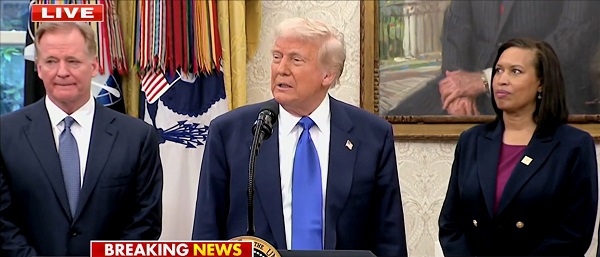
President Donald Trump issued an executive order calling for the end of green energy subsidies by strengthening provisions in the One Big Beautiful Bill Act on Monday night, citing national security concerns and unnecessary costs to taxpayers.
The order argues that a heavy reliance on green energy subsidies compromise the reliability of the power grid and undermines energy independence. Trump called for the U.S. to “rapidly eliminate” federal green energy subsidies and to “build upon and strengthen” the repeal of wind and solar tax credits remaining in the reconciliation law in the order, directing the Treasury Department to enforce the phase-out of tax credits.
“For too long, the Federal Government has forced American taxpayers to subsidize expensive and unreliable energy sources like wind and solar,” the order states. “Reliance on so-called ‘green’ subsidies threatens national security by making the United States dependent on supply chains controlled by foreign adversaries.”
Dear Readers:
As a nonprofit, we are dependent on the generosity of our readers.
Please consider making a small donation of any amount here.
Thank you!
Former President Joe Biden established massive green energy subsidies under his signature 2022 Inflation Reduction Act (IRA), which did not receive a single Republican vote.
The reconciliation package did not immediately terminate Biden-era federal subsidies for green energy technology, phasing them out over time instead, though some policy experts argued that drawn-out timelines could lead to an indefinite continuation of subsidies. Trump’s executive order alludes to potential loopholes in the bill, calling for a review by Secretary of the Treasury Scott Bessent to ensure that green energy projects that have a “beginning of construction” tax credit deadline are not “circumvented.”
Additionally, the executive order directs the U.S. to end taxpayer support for green energy supply chains that are controlled by foreign adversaries, alluding to China’s supply chain dominance for solar and wind. Trump also specifically highlighted costs to taxpayers, market distortions and environmental impacts of subsidized green energy development in explaining the policy.
Ahead of the reconciliation bill becoming law, Trump told Republicans that “we’ve got all the cards, and we are going to use them.” Several House Republicans noted that the president said he would use executive authority to enhance the bill and strictly enforce phase-outs, which helped persuade some conservatives to back the bill.

RFK Jr. says Hep B vaccine is linked to 1,135% higher autism rate
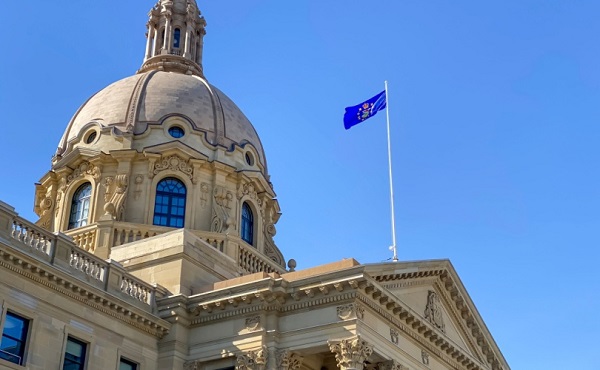
Alberta Independence Seekers Take First Step: Citizen Initiative Application Approved, Notice of Initiative Petition Issued
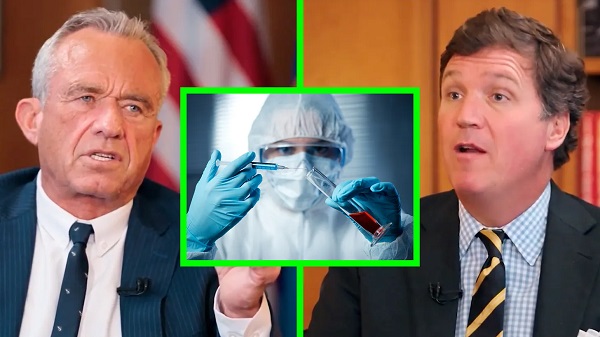
RFK Jr. Unloads Disturbing Vaccine Secrets on Tucker—And Surprises Everyone on Trump
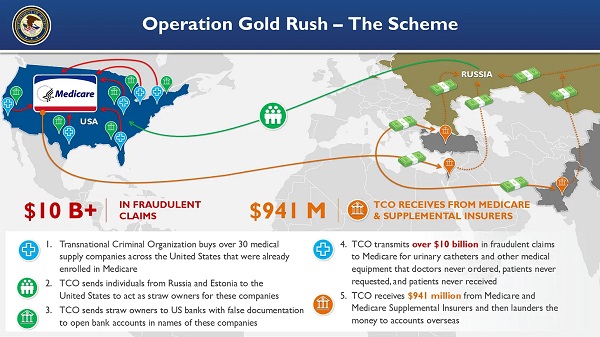
National Health Care Fraud Takedown Results in 324 Defendants Charged in Connection with Over $14.6 Billion in Alleged Fraud

-
 Indigenous2 days ago
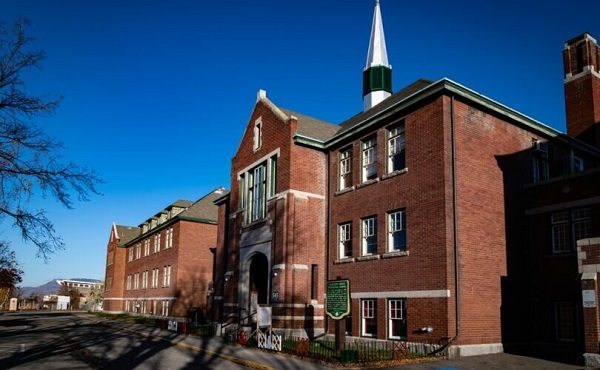
Internal emails show Canadian gov’t doubted ‘mass graves’ narrative but went along with it
-
 Bruce Dowbiggin2 days ago
Eau Canada! Join Us In An Inclusive New National Anthem
-
 Crime2 days ago
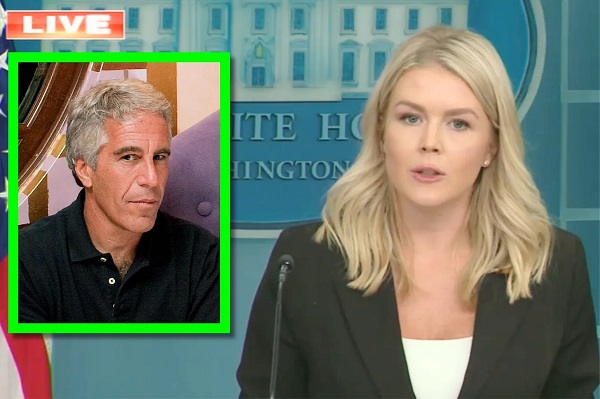
Eyebrows Raise as Karoline Leavitt Answers Tough Questions About Epstein
-
 Business2 days ago
Carney’s new agenda faces old Canadian problems
-
 Alberta2 days ago
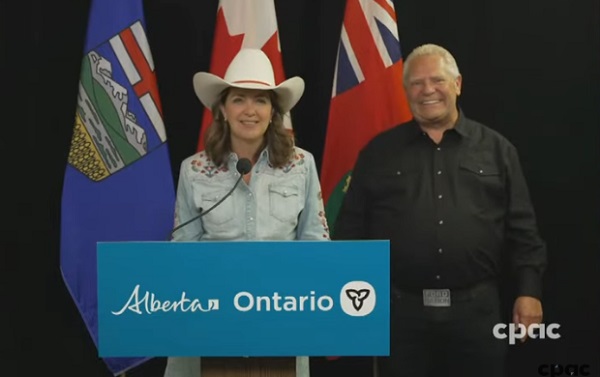
Alberta and Ontario sign agreements to drive oil and gas pipelines, energy corridors, and repeal investment blocking federal policies
-
 Alberta2 days ago
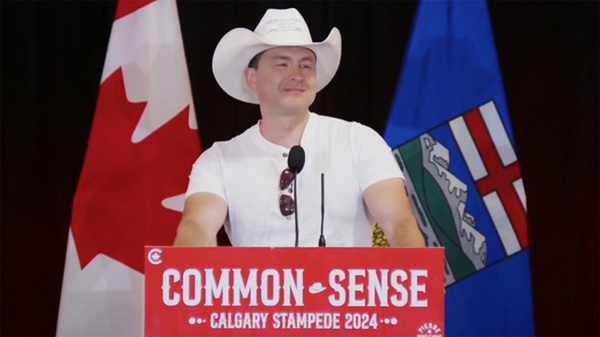
COWBOY UP! Pierre Poilievre Promises to Fight for Oil and Gas, a Stronger Military and the Interests of Western Canada
-
 Crime1 day ago
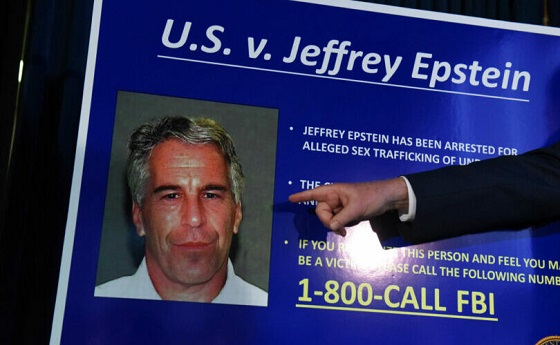
“This is a total fucking disaster”
-
 International1 day ago
Chicago suburb purchases childhood home of Pope Leo XIV