
Opinion
Trudeau’s Winnipeg Whitewash – A Masterclass in Diversion and Disconnection



From The Opposition with Dan Knight
As Canada grapples with soaring housing costs and a quality of life crisis, the Prime Minister’s narrative on immigration & multicultural success stories clashes with the lived realities of Canadians
As some of you enjoyed the comfort of Family Day, perhaps some of you noticed Justin Trudeau making the rounds in Winnipeg – (Justin Trudeau Fireside Chat at Winnipeg Chamber of Commerce – February 16, 2024), where he found quite the fan in Loren Remillard of the Winnipeg Chamber of Commerce. It seems Remillard was all too eager to extend a metaphorical hand, fishing for tax dollars to prop up their projects.
Oh, let’s dissect the masterful art of political deflection and diversion, shall we? Justin Trudeau, spun a narrative so disconnected from the reality Canadians live in, it’s almost an art form. He lauds Toronto and Vancouver as paragons of multicultural success, cities thriving under the weight of their diversity. But here’s the catch folks—the reality on the ground, as reported by Stats Canada, tells a story that’s anything but rosy for the residents of these supposed utopias.
When we turn our gaze to the real impact of his government’s immigration policies on the ground, the picture is starkly different. Toronto and Vancouver, the benchmarks of Trudeau’s immigration success story, are in fact cities where residents report a lower quality of life than their provincial counterparts. Why? Because amidst the fanfare of diversity and inclusion, the basic needs of the citizens—like feeling a sense of belonging, life satisfaction, and mental health—are being sidelined.
Let’s not forget the elephant in the room Trudeau casually mentioned—2 million temporary residents flooding into Canada. This isn’t just a number; it’s a tsunami of demand in addition to the Liberal 500k target per year of permanent resident hitting a housing market already gasping for air, driving rents and shelter costs to astronomical heights. And Trudeau’s response? A shrug of the shoulders and a diversion to talk about measures with Mexico or the plight of international students. While these issues merit attention, they dance around the core issue: a government more obsessed with its global image than the welfare of its citizens.
The audacity to claim that Toronto and Vancouver are thriving under his policies, while Stats Canada directly contradicts this with evidence of declining quality of life, is nothing short of political theater. It’s a sleight of hand designed to distract from the harsh reality—that his government’s approach to immigration and temporary residents is contributing to a crisis of affordability and well-being in our major cities.
But amidst the spectacle, Trudeau touched on a subject that should raise eyebrows across the nation: On how his government is using immigration as a tool to “grow the economy.” Now, let’s pause for a moment to digest that, shall we?
Diving deeper, a fascinating exchange caught my ear during a Finance Committee meeting FINA-124 -February 1, 2024, where Tiff Macklem of the Bank of Canada offered some candid insights. When prodded by Mr. Jasraj Singh Hallan, Macklem conceded that the government’s spending spree and the Bank’s efforts to stabilize our economy were essentially at loggerheads. Here we have the Trudeau administration, pushing fiscal policies that seem to sprint in the opposite direction of monetary sanity.
Macklem went on, outlining that yes, government spending is contributing to growth, but let’s be clear about the kind of growth we’re talking about here. It’s one that barely keeps pace with population increases, teetering on the edge of potential. And with government spending poised to climb even higher, we’re flirting dangerously close to exacerbating inflation, rather than reining it in.
Senior Deputy Governor Carolyn Rogers chimed in with a stark reminder of the housing market’s woes. Despite interest rate hikes, which traditionally cool down housing prices, Canada’s chronic housing shortage keeps prices stubbornly high. The result? A housing affordability crisis that’s squeezing Canadians tighter than ever, exacerbated by an immigration policy that is throwing fuel on the fire of demand without addressing the urgent need for supply.
This is the picture Trudeau’s policies paint for Canada: a nation where the cost of living climbs ever higher, where the dream of homeownership slips further away for the average citizen, and where economic growth strategies seem disconnected from the realities on the ground. It’s high time for a reality check, a moment to ask ourselves whether these policies truly serve the best interest of Canadians or merely the political agenda of those in power.
Indeed, the root of the issue is staring us right in the face—supply problems are driving costs through the roof. Yet, it seems as though there’s a conspiracy of silence in the House of Commons; no one dares to utter the truth that unchecked immigration is exacerbating these supply woes, sending shelter costs soaring. Let’s dive into the latest from Stats Canada to unravel the narrative everyone is thriving under Justin Trudeau.

First off, let’s talk about renters. According to this report, if you’re renting, your quality of life isn’t just on the lower rung; it’s plummeting. Renters are staggering under the weight of financial pressures unheard of for homeowners, feeling the pinch of record-low vacancy rates and rent hikes that would make your head spin. Over 15 percentage points more likely to struggle financially and over 11 points less likely to experience life satisfaction.
But the plot thickens when we look at the younger Canadians, those aged 15 to 54. They’re caught in a vise, with life satisfaction and mental health scores that trail behind their older counterparts. The dream of home ownership? A mirage for many, as they navigate a landscape where the very idea of paying off a mortgage seems like a relic of a bygone era. And let’s not even get started on the economic tightrope walked by residents of Toronto and Vancouver, cities where the cost of living soars as high as the skyscrapers dotting their skylines.
Now, Trudeau’s government might have you believe that policies are in place to bridge these divides, to bolster the quality of life for all Canadians. But let’s be real—the evidence suggests otherwise. With renters and younger generations buckling under financial strains and cities like Toronto and Vancouver becoming enclaves of the unaffordable, the narrative being spun by the current administration seems more fiction than fact.
Consider the financial strain laid bare by these statistics: a significant portion of Canadians are finding it increasingly difficult to meet their financial needs, with shelter costs consuming a lion’s share of their income.
In a landscape marked by disparities in quality of life we’re left with a pressing question: where does the path forward lie?
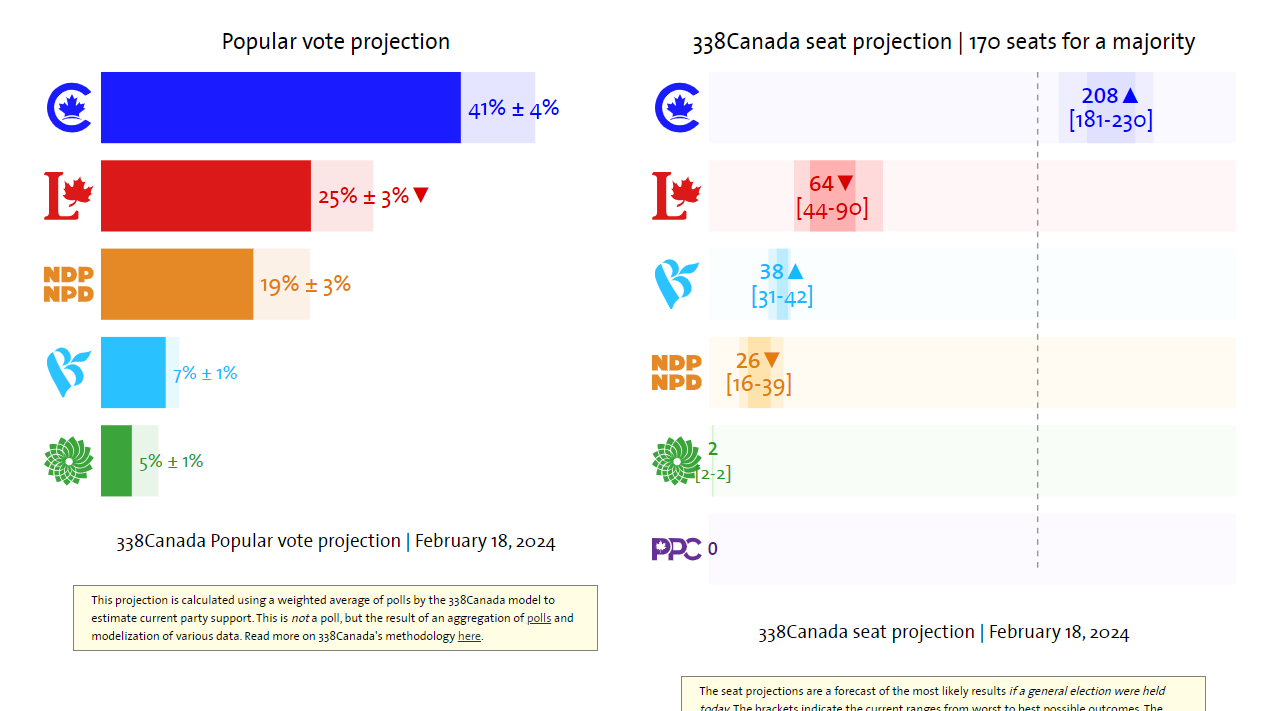 |
Let’s cut to the chase, folks. The latest 338 polling data isn’t just a blip on the political radar; it’s a resounding bell tolling for the end of the Liberals’ reign, inching closer to losing their official party status. Why, you might ask? It’s simple: Justin Trudeau’s legacy is one of profound ineptitude, a legacy that has systematically failed Canadians at every turn. When Trudeau touts his housing policies, claiming to increase rentals, remember the cold, hard facts from Stats Canada—he’s not building homes; he’s crafting a nation with a diminished quality of life. That’s the Trudeau vision for Canada.
And let’s not overlook the audacity of his actions—jetting off to Jamaica with a hefty $162,000 bill footed by you, the taxpayer. It seems Trudeau’s concern for your quality of life evaporates faster than a Liberal MP can devour lobster in Malaysia. Meanwhile, ordinary Canadians are left to scrounge at food banks. But hey, as long as the political elite get their fill, right?
SNC-Lavalin was just the beginning, the canary in the coal mine signaling the avalanche of corruption set to spill out from Trudeau’s government. WE Charity, the Trudeau Foundation, Chinese interference, ArriveScam… the list of scandals under Trudeau’s watch is as long as it is disgraceful. These aren’t mere footnotes in history; they’re the defining features of his tenure.
Remember the uproar over a $16 orange juice under Harper? That was considered the height of scandal, a benchmark of accountability. Fast forward to today, and this government can’t even spell ‘ethics,’ let alone practice it.
So, my fellow Canadians, as we look ahead to the next election, we’re presented with a golden opportunity—a chance to reset the narrative and send a clear message to the liberal elites that we’ve had enough of their disdain for the average citizen. I, for one, will be cheering on the red wedding of Canadian politics because the liberal standard is not just detrimental to your well-being; it’s an affront to all of Canada. It’s time to say enough is enough and reclaim the Canada we know and love—a Canada of integrity, accountability, and true north strong and free.


Tsawwassen Speaker Squiqel Tony Jacobs arrives for a legislative sitting. THE CANADIAN PRESS/Darryl Dyck
From Resource Works
Cowichan case underscores case for fast-tracking treaties
If there are any doubts over the question of which route is best for settling aboriginal title and reconciliation – the courts or treaty negotiations – a new economic snapshot on the Tsawwassen First Nation should put the question to rest.
Thanks to a modern day treaty, implemented in 2009, the Tsawwassen have leveraged land, cash and self-governance to parlay millions into hundreds of millions a year, according to a new report by Deloitte on behalf of the BC Treaty Commission.
With just 532 citizens, the Tsawwassen First Nation now provides $485 million in annual employment and 11,000 permanent retail and warehouse jobs, the report states.
Deloitte estimates modern treaties will provide $1 billion to $2 billion in economic benefits over the next decade.
“What happens, when you transfer millions to First Nations, it turns into billions, and it turns into billions for everyone,” Sashia Leung, director of international relations and communication for the BC Treaty Commission, said at the Indigenous Partnership Success Showcase on November 13.
“Tsawwassen alone, after 16 years of implementing their modern treaty, are one of the biggest employers in the region.”

BC Treaty Commission’s Sashia Leung speaks at the Indigenous Partnerships Success Showcase 2025.
Nisga’a success highlights economic potential
The Nisga’a is another good case study. The Nisga’a were the first indigenous group in B.C. to sign a modern treaty.
Having land and self-governance powers gave the Nisga’a the base for economic development, which now includes a $22 billion LNG and natural gas pipeline project – Ksi Lisims LNG and the Prince Rupert Gas Transmission line.
“This is what reconciliation looks like: a modern Treaty Nation once on the sidelines of our economy, now leading a project that will help write the next chapter of a stronger, more resilient Canada,” Nisga’a Nation president Eva Clayton noted last year, when the project received regulatory approval.
While the modern treaty making process has moved at what seems a glacial pace since it was established in the mid-1990s, there are some signs of gathering momentum.
This year alone, three First Nations signed final treaty settlement agreements: Kitselas, Kitsumkalum and K’omoks.
“That’s the first time that we’ve ever seen, in the treaty negotiation process, that three treaties have been initialed in one year and then ratified by their communities,” Treaty Commissioner Celeste Haldane told me.
Courts versus negotiation
When it comes to settling the question of who owns the land in B.C. — the Crown or First Nations — there is no one-size-fits-all pathway.
Some First Nations have chosen the courts. To date, only one has succeeded in gaining legal recognition of aboriginal title through the courts — the Tsilhqot’in.
The recent Cowichan decision, in which a lower court recognized aboriginal title to a parcel of land in Richmond, is by no means a final one.
That decision opened a can of worms that now has private land owners worried that their properties could fall under aboriginal title. The court ruling is being appealed and will almost certainly end up having to go to the Supreme Court.
This issue could, and should, be resolved through treaty negotiations, not the courts.
The Cowichan, after all, are in the Hul’qumi’num treaty group, which is at stage 5 of a six-stage process in the BC Treaty process. So why are they still resorting to the courts to settle title issues?
The Cowichan title case is the very sort of legal dispute that the B.C. and federal governments were trying to avoid when it set up the BC Treaty process in the mid-1990s.
Accelerating the process
Unfortunately, modern treaty making has been agonizingly slow.
To date, there are only seven modern implemented treaties to show for three decades of works — eight if you count the Nisga’a treaty, which predated the BC Treaty process.
Modern treaty nations include the Nisga’a, Tsawwassen, Tla’amin and five tribal groups in the Maa-nulth confederation on Vancouver Island.
It takes an average of 10 years to negotiate a final treaty settlement. Getting a court ruling on aboriginal title can take just as long and really only settles one question: Who owns the land?
The B.C. government has been trying to address rights and title through other avenues, including incremental agreements and a tripartite reconciliation process within the BC Treaty process.
It was this latter tripartite process that led to the Haida agreement, which recognized Haida title over Haida Gwaii earlier this year.
These shortcuts chip away at issues of aboriginal rights and title, self-governance, resource ownership and taxation and revenue generation.
Modern treaties are more comprehensive, settling everything from who owns the land and who gets the tax revenue from it, to how much salmon a nation is entitled to annually.
Once modern treaties are in place, it gives First Nations a base from which to build their own economies.
The Tsawwassen First Nation is one of the more notable case studies for the economic and social benefits that accrue, not just to the nation, but to the local economy in general.
The Tsawwassen have used the cash, land and taxation powers granted to them under treaty to create thousands of new jobs. This has been done through the development of industrial, commercial and residential lands.
This includes the development of Tsawwassen Mills and Tsawwassen Commons, an Amazon warehouse, a container inspection centre, and a new sewer treatment plant in support of a major residential development.
“They have provided over 5,000 lease homes for Delta, for Vancouver,” Leung noted. “They have a vision to continue to build that out to 10,000 to 12,000.”
Removing barriers to agreement
For First Nations, some of the reticence in negotiating a treaty in the past was the cost and the loss of tax exemptions. But those sticking points have been removed in recent years.
First Nations in treaty negotiations were originally required to borrow money from the federal government to participate, and then that loan amount was deducted from whatever final cash settlement was agreed to.
That requirement was eliminated in 2019, and there has been loan forgiveness to those nations that concluded treaties.
Another sticking point was the loss of tax exemptions. Under Section 87 of Indian Act, sales and property taxes do not apply on reserve lands.
But under modern treaties, the Indian Act ceases to apply, and reserve lands are transferred to title lands. This meant giving up tax exemptions to get treaty settlements.
That too has been amended, and carve-outs are now allowed in which the tax exemptions can continue on those reserve lands that get transferred to title lands.
“Now, it’s up to the First Nation to determine when and if they want to phase out Section 87 protections,” Haldane said.
Haldane said she believes these recent changes may account for the recent progress it has seen at the negotiation table.
“That’s why you’re seeing K’omoks, Kitselas, Kitsumkalum – three treaties being ratified in one year,” she said. “It’s unprecedented.”
The Mark Carney government has been on a fast-tracking kick lately. But we want to avoid the kind of uncertainty that the Cowichan case raises, and if the Carney government is looking for more things to fast-track that would benefit First Nations and the Canadian economy, perhaps treaty making should be one of them.
Resource Works News
From Resource Works
Barry Penner doesn’t posture – he brings evidence. And lately, the evidence has been catching up fast to what he’s been saying for months.
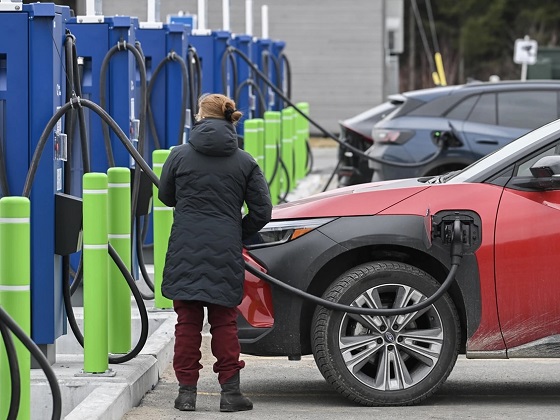
Penner, chair of the Energy Futures Institute and a former B.C. environment minister and attorney-general, walked me through polling that showed a decisive pattern: declining support for electric-vehicle mandates, rising opposition, and growing intensity among those pushing back.
That was before the political landscape started shifting beneath our feet.
In the weeks since our conversation, the B.C. government has begun retreating from its hardline EV stance, softening requirements and signalling more flexibility. At the same time, Ottawa has opened the door to revising its own rules, acknowledging what the market and motorists have been signalling for some time.
Penner didn’t need insider whispers to see this coming. He had the data.

Barry Penner, Chair of the Energy Futures Institute
B.C.’s mandate remains the most aggressive in North America: 26 per cent ZEV sales by 2026, 90 per cent by 2030, and 100 per cent by 2035. Yet recent sales paint a different picture. Only 13 per cent of new vehicles sold in June were electric. “Which means 87 per cent weren’t,” Penner notes. “People had the option. And 87 per cent chose a non-electric.”
Meanwhile, Quebec has already adjusted its mandate to give partial credit for hybrids. Polling shows 76 per cent of British Columbians want the same. The trouble? “There’s a long waiting list to get one,” Penner says.
Cost, charging access and range remain the top barriers for consumers. And with rebates shrinking or disappearing altogether, the gap between policy ambition and practical reality is now impossible for governments to ignore.
Penner’s advice is simple, and increasingly unavoidable: “Recognition of reality is in order.”
- Now watch Barry Penner’s full video interview with Stewart Muir on Power Struggle here:


From Underdog to Top Broodmare

Landmark 2025 Study Says Near-Death Experiences Can’t Be Explained Away

STUDY: TikTok, Instagram, and YouTube Shorts Induce Measurable “Brain Rot”
Blacked-Out Democracy: The Stellantis Deal Ottawa Won’t Show Its Own MPs
-
 National2 days ago
Media bound to pay the price for selling their freedom to (selectively) offend
-
 Business2 days ago
Is there a cure for Alzheimer’s Disease?
-
 C2C Journal2 days ago
Learning the Truth about “Children’s Graves” and Residential Schools is More Important than Ever
-
 Bruce Dowbiggin2 days ago
Sometimes An Ingrate Nation Pt. 2: The Great One Makes His Choice
-
 Alberta2 days ago
New era of police accountability
-
 Brownstone Institute2 days ago
The Unmasking of Vaccine Science
-
 Alberta2 days ago
Emissions Reduction Alberta offering financial boost for the next transformative drilling idea
-
 Business19 hours ago
Recent price declines don’t solve Toronto’s housing affordability crisis