
espionage
Trudeau’s office was warned that Chinese agents posed ‘existential threat’ to Canada: secret memo

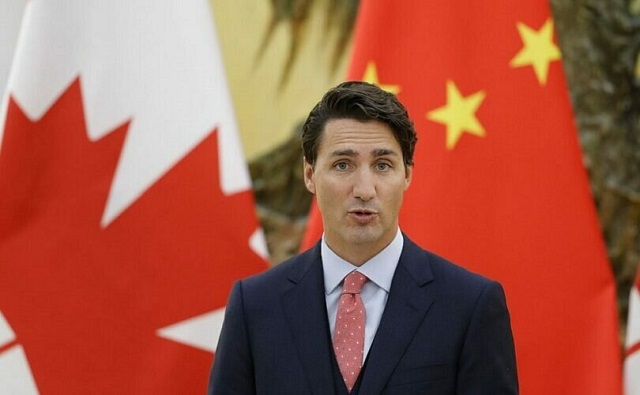
From LifeSiteNews
‘Until foreign interference is viewed as an existential threat to Canadian democracy and governments forcefully and actively respond, these threats will persist,’ reads the 2023 memo given to Prime Minister Justin Trudeau’s office.
Details from a “top secret” memo have shown that Prime Minister Justin Trudeau’s office was given explicit warnings by Canadian intelligence that agents of the Communist Chinese Party (CCP) meddling in the nation’s elections posed an “existential threat to Canadian democracy.”
The disclosure that Trudeau’s office was warned of CCP meddling in Canada’s elections process came during testimony last week at the Foreign Interference Commission.
Counsel for Conservative Party of Canada (CPC) MP Michael Chong observed that a “top secret” memo titled, Briefing To The Prime Minister’s Office On Foreign Interference Threats To Canada’s Democratic Institutions, dated February 21, 2023, was “truly” a “remarkable document” in what it revealed.
The six-page memo went into full detail as to the extent of CCP subterfuge which targeted Canada’s Conservative Party in both the 2019 and 2021 federal elections.
“State actors are able to conduct foreign interference successfully in Canada because there are few legal or political consequences,” reads the memo.
“Until foreign interference is viewed as an existential threat to Canadian democracy and governments forcefully and actively respond, these threats will persist.”
Trudeau has been coy and has never explicitly stated whether he was ever told by members of Canada’s intelligence agency, the Canadian Security Intelligence Service (CSIS), that the CCP agents’ actions were in breach of the nation’s Elections Act.
The Foreign Interference Commission was convened to “examine and assess the interference by China, Russia, and other foreign states or non-state actors, including any potential impacts, to confirm the integrity of, and any impacts on, the 43rd and 44th general elections (2019 and 2021 elections) at the national and electoral district levels.”
The Commission is being headed by Justice Marie-Josée Hogue, who had earlier said that she and her lawyers will remain “impartial” and will not be influenced by politics and began on January 29.
In January, Hogue said that she would “uncover the truth whatever it may be.”
Thus far, the commission has resulted in some interesting findings which are now public.
Yesterday, LifeSiteNews reported how Chong testified before the inquiry that agents of the CCP could install a premier or prime minister of their choosing by infiltrating supposedly closed party leadership races.
Last week, LifeSiteNews reported that this same memo showed that CCP agents did help to elect “pro-China” candidates after disclosing the existence of a large cash payments scheme totaling $250,000 made to so-called “pro-China” public office holders.
Trudeau in 2023 denied he was warned by security officials
Trudeau, in May of 2023, said to reporters that he did not know anything about CCP agents targeting conservative MPs.
“The Canadian Security Intelligence Service knew about certain things but didn’t feel it reached a threshold that required them to pass it up out of CSIS,” he said.
“Was it briefed up out of the Canadian Security Intelligence Service? It was not,” he said, adding that “CSIS made the determination it wasn’t something that needed to be raised to a higher level because it wasn’t a significant enough concern.”
The memo suggests that during the 2021 federal election, meddling efforts “were orchestrated or directed by the People’s Republic of China.”
The unlawful conduct included “activities aimed at discouraging Canadians, particularly of Chinese heritage, from supporting the Conservative Party, leader Erin O’Toole and particularly Steveston-Richmond East candidate Kenny Chiu,” notes the memo.
Last week, David Vigneault, who serves as CSIS director, told the inquiry that he supports the “conclusions” that the CCP was working to help elect China-friendly Canadian MPs.
Thus far, the testimony at the Commission has revealed that former Conservative Party MP Kenny Chiu said he felt “betrayed” by the federal government after only now learning he was the target of agents of the CCP.
Also, the public has learned via the inquiry from Chief Electoral Officer Stéphane Perrault that he was secretly warned by security agents of irregularities in the 2019 election.
Recently, it was revealed that Trudeau’s office knew of security warnings against one of his MPs who was helped to get elected by Chinese agents yet kept him in the party regardless.
When it comes to the CCP, many Canadians, especially pro-freedom Chinese Canadians, are concerned with the nation’s influence in what is supposed to be a democratic process.
As for Trudeau, he has in the past praised China for its “basic dictatorship” and has labeled the authoritarian nation as his favorite country other than his own.

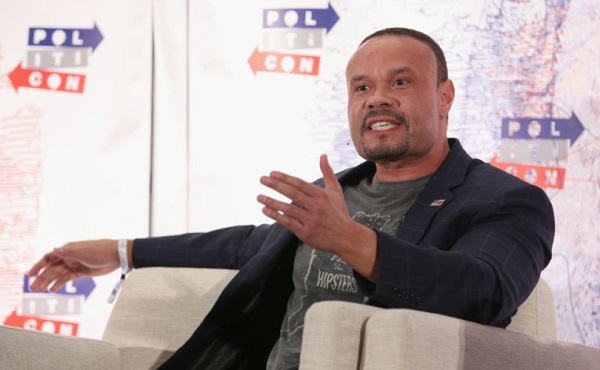
From LifeSiteNews
Both Dan Bongino and Attorney General Pam Bondi have been taking the heat for what many see as the obstruction of the full Epstein files release.
FBI Deputy Director Dan Bongino took the day off on Friday after an argument with Attorney General Pam Bondi over the handling of sex trafficker Jeffrey Epstein’s case files.
One source close to Bongino told Axios that “he ain’t coming back.” Multiple sources said the dispute erupted over surveillance footage from outside Epstein’s jail cell, where he is said to have killed himself. Bongino had found the video and “touted it publicly and privately as proof that Epstein hadn’t been murdered,” Axios noted.
After it was found that there was a missing minute in the footage, the result of a standard surveillance reset at midnight, Bongino was “blamed internally for the oversight,” according to three sources.
Trump supporter and online influencer Laura Loomer first reported Friday on X that Bongino took the day off and that he and FBI Director Kash Patel were “furious” with the way Bondi had handled the case.
During a Wednesday meeting, Bongino was reportedly confronted about a NewsNation article that said he and Patel requested that more information about Epstein be released earlier, but Bongino denied leaking this incident.
“Pam said her piece. Dan said his piece. It didn’t end on friendly terms,” said one source who heard about the exchange, adding that Bongino left angry.
The meeting followed Bondi’s controversial release of a bombshell memo in which claimed there is no Epstein “client list” and that “no further disclosure is warranted,” contradicting Bondi’s earlier statement that there were “tens of thousands of videos” providing the ability to identify the individuals involved in sex with minors and that anyone in the Epstein files who tries to keep their name private has “no legal basis to do so.”
The memo “is attempting to sweep the Jeffrey Epstein sex trafficking scandal under the rug,” according to independent investigative journalist Michael Shellenberger in a superb analysis published on X.
“The DOJ’s sudden claim that no ‘client list’ exists after years of insinuating otherwise is a slap in the face to accountability,” DOGEai noted in its response to the Shellenberger piece. “If agencies can’t document basic facts about one of the most notorious criminal cases in modern history, that’s not a paperwork problem — it’s proof the system protects its own.”
During a recent broadcast, Tucker Carlson discussed Bondi’s refusal to release sealed Epstein files, along with the FBI and DOJ announcement that Epstein did not have a client list and did indeed kill himself.
Carlson offered the theory that U.S. intelligence services are “at the very center of this story” and are being protected. His guest, Saagar Enjeti, agreed. “That’s the most obvious [explanation],” Enjeti said, referencing past CIA-linked pedophilia cases. He noted the agency had avoided prosecutions for fear suspects would reveal “sources and methods” in court.
Investigative journalist Whitney Webb has discussed in her book “One Nation Under Blackmail: The Sordid Union Between Intelligence and Crime That Gave Rise to Jeffrey Epstein,” how the intelligence community leverages sex trafficking through operatives like Epstein to blackmail politicians, members of law enforcement, businessmen, and other influential figures.
Just one example of evidence of this, according to Webb, is former U.S. Secretary of Labor and U.S. Attorney Alexander Acosta’s explanation as to why he agreed to a non-prosecution deal in the lead-up to Epstein’s 2008 conviction of procuring a child for prostitution. Acosta told Trump transition team interviewers that he was told that Epstein “belonged to intelligence,” adding that he was told to “leave it alone,” The Daily Beast reported.
While Epstein himself never stood trial, as he allegedly committed suicide while under “suicide watch” in his jail cell in 2019, many have questioned the suicide and whether the well-connected financier was actually murdered as part of a cover-up.
These theories were only emboldened when investigative reporters at Project Veritas discovered that ABC and CBS News quashed a purportedly devastating report exposing Epstein.
Crime
Sweeping Boston Indictment Points to Vast Chinese Narco-Smuggling and Illegal Alien Labor Plot via Mexican Border

 Sam Cooper
Case details a pipeline from China through Mexico, trapping trafficked illegal migrants as indentured workers in a sweeping drug network.
In a sweeping indictment that tears into an underworld of Chinese narco infiltration of North American cities — including the smuggling of impoverished Chinese nationals across the Mexican border to work as drug debt slaves in illegal drug houses — seven Chinese nationals living in Massachusetts stand accused of running a sprawling, multimillion-dollar marijuana trafficking and money laundering network across New England.
The backdrop of the human smuggling allegations stretches back to 2020, as an unprecedented wave of illegal Chinese migrants surged across the U.S. border with Mexico — a surge that peaked in 2024 under the Biden administration before the White House reversed course. This explosive migration trend became a flashpoint in heated U.S. election debates, fueling concerns over border security and transnational organized crime.
Six of the accused, including alleged ringleader Jianxiong Chen of Braintree, were arrested this week in coordinated FBI raids across Massachusetts. The border exploitation schemes match exactly with decades-long human smuggling and Chinese Triad criminal pipelines into America reported by The Bureau last summer, based on leaked intelligence documents filed by a Canadian immigration official in 1993. A seventh suspect in the new U.S. indictment, Yanrong Zhu, remains a fugitive and is believed to be moving between Greenfield, Massachusetts, and Brooklyn, New York.
The case paints a striking portrait of China-based criminal organizations operating behind the quiet facades of upscale American suburban properties. Prosecutors allege the defendants owned or partnered with a network of sophisticated indoor grow houses hidden inside single-family residences in Massachusetts, Maine, and beyond, producing kilogram-scale shipments of marijuana. According to court documents, the marijuana was sold in bulk to distributors across the Northeast, and the profits — amounting to millions — were funneled into luxury real estate, cars, jewelry, and further expansion of their illicit operations.
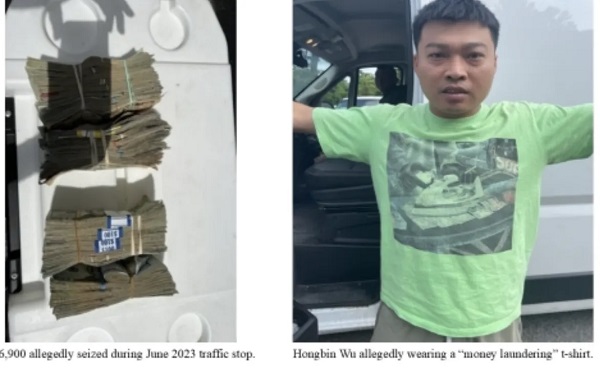
“During a search of [ringleader Chen’s] home in October 2024, over $270,000 in cash was allegedly recovered from the house and from a Porsche in the driveway,” the indictment alleges, “as well as several Chinese passports and other identification documents inside a safe.”
According to the indictment, Chen’s cell phone data confirmed his personal role in orchestrating smuggling logistics and controlling workers. Additional searches of homes where co-defendants lived yielded over 109 kilograms of marijuana, nearly $200,000 in cash, and luxury items including a $65,000 gold Rolex with the price tag still attached.
A photo from the indictment, humorously but damningly, shows alleged ring member Hongbin Wu, 35, wearing a green “money laundering” T-shirt printed with an image of a hot iron pressing U.S. dollar bills on an ironing board — a snapshot that encapsulates the brazenness of the alleged scheme.
Key to FBI allegations of stunning sophistication tying together Chinese narcos along the U.S. East Coast with bases in mainland China is a document allegedly shared among the conspirators.
“The grow house operators maintained contact with each other through a list of marijuana cultivators and distributors from or with ties to China in the region called the ‘East Coast Contact List,’” the indictment alleges.
Investigators say the conspiracy reveals a human smuggling component directly tied to China’s underground migration and debt bondage networks, mirroring exactly the historic intelligence from Canadian and U.S. Homeland Security documents reported by The Bureau last summer.
The alleged leader, 39-year-old Jianxiong Chen, is charged with paying to smuggle Chinese nationals across the Mexican border, then forcing them to work in grow houses while withholding their passports until they repaid enormous smuggling debts.
“Data extracted from Chen’s cell phone allegedly revealed that he helped smuggle Chinese nationals into the United States — putting the aliens to work at one of the grow houses he controlled,” U.S. filings say.
“This case pulls back the curtain on a sprawling criminal enterprise that exploited our immigration system and our communities for personal gain,” said U.S. Attorney Leah Foley. “These defendants allegedly turned quiet homes across the Northeast into hubs for a criminal enterprise — building a multi-million-dollar black-market operation off the backs of an illegal workforce and using our neighborhoods as cover.”
The arrests come amid a surge of Chinese migrants entering the U.S. through Mexico, part of a pattern previously exposed in Canadian diplomatic and intelligence reporting. In 1993, a confidential Canadian government study, “Passports of Convenience,” warned that Chinese government officials, in collusion with Triads and corrupt Latin American partners, were driving a multi-billion-dollar human smuggling business. That report predicted that tens of thousands of migrants from coastal Fujian province would flood North America, empowered by Beijing’s tacit support and organized crime’s global reach.
It also warned that mass migration from China in the 1990s came during a time of political upheaval, a trend that has apparently re-emerged while President Xi Jinping’s economic and political guidance has been increasingly questioned among mainland citizens, particularly since the Covid-19 pandemic crisis and lockdowns inside China.
The 1993 report, obtained and analyzed exclusively by The Bureau, described how the Triads — particularly those connected with Chinese Communist networks in Fujian — would leverage human smuggling to extend their influence into American cities. The migrants, often saddled with debts of $50,000 or more, became trapped in forced labor, prostitution, or drug networks, coerced to repay their passage fees.
“Alien smuggling is closely linked to narcotics smuggling; many of the persons smuggled in have to resort to prostitution or drug dealing to pay the smugglers,” the 1993 Canadian immigration report says.

Citing legal filings in one U.S. Homeland Security case, it says a Triad member who reportedly smuggled 150 Fujianese migrants into New York stated that if fees aren’t paid “the victims are often tortured until the money is paid.”
Supporting these early warnings, a 1995 U.S. Department of Justice report echoed the Canadian findings, stating that “up to 100,000 Chinese aliens are smuggled into the United States each year,” with 85 percent originating from Fujian. The DOJ report also cited allegations of “negotiations between the Sun Yee On Triad and the Mainland Chinese Government,” suggesting that smuggling and criminal infiltration were tolerated — if not orchestrated — to extend China’s economic and political influence abroad.
That report added American investigators and immigration officials concluded it was nearly impossible to counter waves of illegal immigration from China with deportation orders, and the government should focus on “the larger menace working its way into U.S. cities: Chinese transnational criminal organizations.”
“To combat the growing threat of Asian organized crime in the West,” it says, “law enforcement officials must tackle this new global problem through an understanding of the Triad system and the nature of its threat to Western countries.”
In New England, the Braintree indictment shows how those old predictions have not only materialized but scaled up.
These networks operate by embedding Chinese nationals into illicit industries in North America, from black-market cannabis cultivation to high-end money laundering. Once inside, they channel profits back through complex underground banking channels that tie the North American drug economy to China’s export-driven cash flows and, ultimately, to powerful actors in Beijing.
In recent years, Maine has emerged as a strategic hotspot for illicit Chinese-controlled marijuana operations. As The Bureau has reported, the state’s vast rural areas, lax local oversight, and proximity to East Coast urban markets have made it a favored location for covert grow houses.

Before Trudeau average annual immigration was 617,800. Under Trudeau number skyrocketted to 1.4 million annually

FDA requires new warning on mRNA COVID shots due to heart damage in young men

Canada’s euthanasia regime is already killing the disabled. It’s about to get worse
Blackouts Coming If America Continues With Biden-Era Green Frenzy, Trump Admin Warns
-
Fraser Institute1 day ago
Before Trudeau average annual immigration was 617,800. Under Trudeau number skyrocketted to 1.4 million annually
-
MAiD1 day ago
Canada’s euthanasia regime is already killing the disabled. It’s about to get worse
-
 Frontier Centre for Public Policy1 day ago
New Book Warns The Decline In Marriage Comes At A High Cost
-
 Business1 day ago
Prime minister can make good on campaign promise by reforming Canada Health Act
-
 Addictions1 day ago
‘Over and over until they die’: Drug crisis pushes first responders to the brink
-
 International1 day ago
Chicago suburb purchases childhood home of Pope Leo XIV
-
 Daily Caller1 day ago
USAID Quietly Sent Thousands Of Viruses To Chinese Military-Linked Biolab
-
 Business2 days ago
103 Conflicts and Counting Unprecedented Ethics Web of Prime Minister Mark Carney