
COVID-19
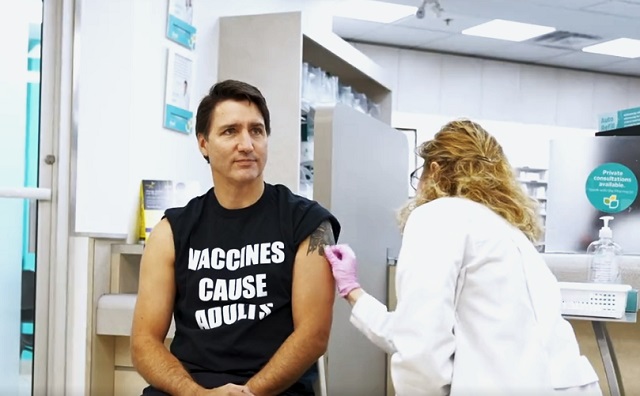
Trudeau gov’t still receiving COVID shots while throwing away $1.5 billion worth of expired jabs


From LifeSiteNews
Canada has contracted for delivery up to 90.8 million COVID vaccines by this December despite decreased demand from Canadians for the experimental shots.
Canada is still under contract to purchase shipments of the experimental COVID vaccines while at the same time throwing away $1.5 billion dollars worth of expired shots.
According to information obtained April 8 by Blacklock’s Reporter, Liberal Health Minister Mark Holland revealed that Canada is still being forced under contract to purchase new vaccines even as the Department of Health has thrown away $1.59 billion worth of expired shots.
“As additional vaccines were authorized for use in Canada, manufacturers increased production capacity and demand from Canadians decreased,” Holland explained in a December 6 briefing note.
“Overall wastage increased,” he wrote. “Additionally, as new formulations have been authorized for use to address variants of concern, wastage of older formulations has increased.”
According to the briefing note, contracts with vaccine companies have compelled Canada’s Public Health Agency to continue to purchase the unwanted vaccines. The suppliers included Pfizer Canada, Novovax Incorporated and Moderna Inc.
“The Public Health Agency does not intend to procure additional COVID-19 vaccines once firm contractual deliveries under existing Advance Purchase Agreements are completed at the end of the calendar year 2024 for messenger RiboNucleic Acid vaccines and in 2024 for non-mRNA vaccines,” said the note.
While the note did not disclose how many more vaccines Canada is still on the hook for, a 2023 report from the Department of Public Works revealed it had contracted for delivery of up to 90.8 million doses by December 31, 2024.
Since November 24, 2023, a total 52.9 million doses have been thrown away. The wastage cost Canadians $1.59 billion according to the Auditor General’s estimate that the shots cost about $30 per dose.
The Liberal government, under the leadership of Prime Minister Justin Trudeau, previously explained that they ordered vaccine deliveries for years into the future because they expected Canadians to continue to take booster shots of the experimental vaccine.

“‘Up to date’ is the right way to think about vaccination now,” then-Health Minister Jean-Yves Duclos told reporters June 30, 2022. “‘Fully vaccinated’ makes no sense now. It is ‘up to date.’”
“We will never be fully vaccinated against COVID-19,” he claimed. “Like the virus, our immunity also evolves.”
However, government research has revealed that the majority of Canadians are flat-out refusing a COVID booster injection. Data from the federal government’s COVID-19 vaccination: Vaccination coverage dashboard, shows that only 14.6 percent of Canadians, about 5.7 million, have had an “XBB.1.5 vaccine” COVID booster.
Canadians’ decision to refuse the vaccine comes as a Statistic Canada report revealed that deaths from both COVID-19 and “unspecified causes” surged following the release of the so-called “safe and effective” vaccines.
LifeSiteNews has published comprehensive research on the dangers of receiving the experimental vaccine, including heart damage and blood clots.
The Trudeau government, with the help of the Department of Health, heavily promoted the COVID jabs, which were rushed to market.
In 2021, Trudeau said Canadians “vehemently opposed to vaccination” do “not believe in science,” are “often misogynists, often racists,” and questioned whether Canada should continue to “tolerate these people.”
A recent study done by researchers at the Canada-based Correlation Research in the Public Interest found that 17 countries have a “definite causal link” between peaks in all-cause mortality and the fast rollouts of the COVID shots and boosters.
In October, LifeSiteNews reported how the Polyomavirus Simian Virus 40 (SV40), which is a monkey-linked DNA sequence known to cause cancer when it was used in old polio vaccines, has been confirmed by Health Canada to be in the Pfizer COVID shot, a fact that was not disclosed by the vaccine maker to officials.
In November, officials with Canada’s Department of Health refused to release data concerning internal audits related to the COVID crisis that show “critical weaknesses and gaps” according to their own department memo.

From LifeSiteNews
A judge ruled that the Ontario Court of Justice is already ‘satisfied’ with Chris Barber’s sentence and taking away his very livelihood would be ‘disproportionate.’
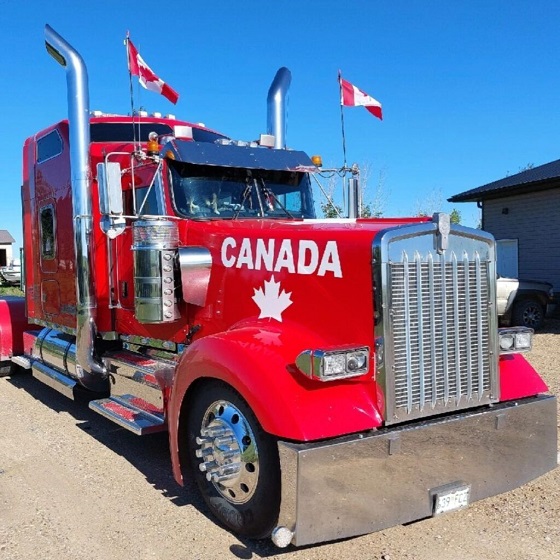
A Canadian judge has dismissed a demand from Canadian government lawyers to seize Freedom Convoy leader Chris Barber’s “Big Red” semi-truck.
On Friday, Ontario Court of Justice Judge Heather Perkins-McVey denied the Crown’s application seeking to forfeit Barber’s truck.
She ruled that the court is already “satisfied” with Barber’s sentence and taking away his very livelihood would be “disproportionate.”
“This truck is my livelihood,” said Barber in a press release sent to LifeSiteNews.
“Trying to permanently seize it for peacefully protesting was wrong, and I’m relieved the court refused to allow that to happen,” he added.
Criminal defense lawyer Marwa Racha Younes was welcoming of the ruling as well, stating, “We find it was the right decision in the circumstances and are happy with the outcome.”
John Carpay, president of the Justice Centre for Constitutional Freedoms (JCCF), said the decision is “good news for all Canadians who cherish their Charter freedom to assemble peacefully.”
READ: Freedom Convoy protester appeals after judge dismissed challenge to frozen bank accounts
“Asset forfeiture is an extraordinary power, and it must not be used to punish Canadians for participating in peaceful protest,” he added in the press release.
As reported recently by LifeSiteNews, the Canadian government claimed that Barber’s truck is an “offence-related property” relating to his involvement in the 2022 protests against Canada’s COVID mandates.
At this time, the court ruling ends any forfeiture proceedings for the time being, however Barber will continue to try and appeal his criminal conviction and house arrest sentence.
Barber’s truck, a 2004 Kenworth long-haul he uses for business, was a focal point in the 2022 protests. He drove it to Ottawa, where it was parked for an extended period of time, but he complied when officials asked him to move it.
On October 7, 2025, after a long trial, Ontario Court Justice Perkins-McVey sentenced Barber and Tamara Lich, the other Freedom Convoy leader, to 18 months’ house arrest. They had been declared guilty of mischief for their roles as leaders of the 2022 protest against COVID mandates, and as social media influencers.
Lich and Barber have filed appeals of their own against their house arrest sentences, arguing that the trial judge did not correctly apply the law on their mischief charges.
Government lawyers for the Crown have filed an appeal of the acquittals of Lich and Barber on intimidation charges.
The pair’s convictions came after a nearly two-year trial despite the nonviolent nature of the popular movement.
From LifeSiteNews
Protestor Evan Blackman’s legal team argues Trudeau’s Emergencies Act-based bank account freezes were punitive state action tied directly to protest participation.
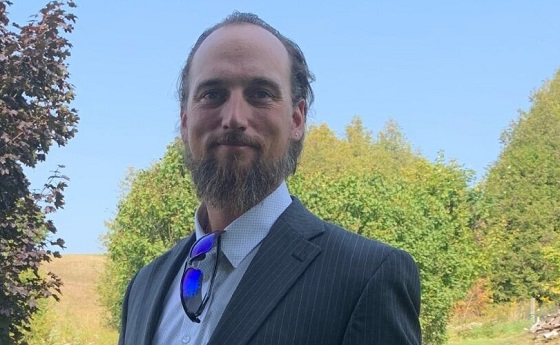
A Freedom Convoy protester whose bank accounts were frozen by the Canadian government says a judge erred after his ruling did not consider the fact that the funds were frozen under the Emergencies Act, as grounds for a stay of proceedings.
In a press release sent out earlier this week, the Justice Centre for Constitutional Freedoms (JCCF) said that Freedom Convoy protestor Evan Blackman will challenge a court ruling in his criminal case via an appeal with the Ontario Superior Court of Justice.
“This case raises serious questions about how peaceful protest is treated in Canada and about the lasting consequences of the federal government’s unlawful use of the Emergencies Act,” noted constitutional lawyer Chris Fleury. “The freezing of protestors’ bank accounts was part of a coordinated effort to suppress dissent, and courts ought to be willing to scrutinize that conduct.”
Blackman was arrested on February 18, 2022, during the police crackdown on Freedom Convoy protests against COVID restrictions, which was authorized by the Emergencies Act (EA). The EA was put in place by former Prime Minister Justin Trudeau’s Liberal government, which claimed the protests were violent, despite no evidence that this was the case.
Blackman’s three bank accounts with TD Bank were frozen due to his participation in the Freedom Convoy, following a directive ordered by Trudeau.
As reported by LifeSiteNews, in November of this year, Blackman was convicted at his retrial even though he had been acquitted at his original trial. In 2023, Blackman’s “mischief” and “obstructing police” charges were dismissed by a judge due to lack of evidence and the “poor memory of a cop regarding key details of the alleged criminal offences.”
His retrial resulted in Blackman getting a conditional discharge along with 12 months’ probation and 122 hours of community service, along with a $200 victim fine surcharge.
After this, Blackman’s application for a stay of proceedings was dismissed by the court. He had hoped to have his stay of proceedings, under section 24(1) of the Charter of Rights and Freedoms, allowed. However, the judge ruled that the freezing of his bank accounts was legally not related to his arrest, and because of this, the stay of proceedings lacked standing.
The JCCF disagreed with this ruling, noting, it “stands in contrast to a Federal Court decision finding that the government’s invocation of the Emergencies Act was unreasonable and violated Canadians’ Charter rights, including those targeted by the financial measures used against Freedom Convoy protestors.”
As of press time, a hearing date has not been scheduled.
In 2024, Federal Court Justice Richard Mosley ruled that Trudeau was “not justified” in invoking the Emergencies Act.
In early 2022, the Freedom Convoy saw thousands of Canadians from coast to coast come to Ottawa to demand an end to COVID mandates in all forms. Despite the peaceful nature of the protest, Trudeau’s federal government enacted the EA in mid-February.
After the protesters were cleared out, which was achieved through the freezing of bank accounts of those involved without a court order as well as the physical removal and arrest of demonstrators, Trudeau revoked the EA on February 23, 2022.


Death by a thousand clicks – government censorship of Canada’s internet

Chinese Billionaire Tried To Build US-Born Baby Empire As Overseas Elites Turn To American Surrogates
Viral TikTok video shows 7-year-old cuddling great-grandfather before he’s euthanized
Politicians should be honest about environmental pros and cons of electric vehicles
-
 Alberta2 days ago
Alberta’s huge oil sands reserves dwarf U.S. shale
-
 Energy2 days ago
Canada’s sudden rediscovery of energy ambition has been greeted with a familiar charge: hypocrisy
-
 Alberta2 days ago
Canada’s New Green Deal
-
 Business2 days ago
COP30 finally admits what resource workers already knew: prosperity and lower emissions must go hand in hand
-
 Business2 days ago
Ottawa Pretends To Pivot But Keeps Spending Like Trudeau
-
 Agriculture9 hours ago
Why is Canada paying for dairy ‘losses’ during a boom?
-
 Indigenous2 days ago
Residential school burials controversy continues to fuel wave of church arsons, new data suggests
-
 Daily Caller2 days ago
Paris Climate Deal Now Decade-Old Disaster