
Agriculture
The Role of Satellite Imagery in Developing VRA Prescription Maps

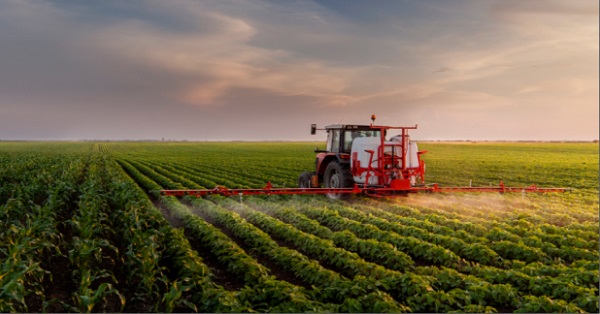

Since its appearance in the 1980s, precision agriculture has revolutionized farming, offering innovative solutions to age-old challenges. One of those is Variable rate technology (VRT), which plays a key role in improving efficiency and sustainability in today’s farming methods.
By applying inputs like fertilizers and water in different quantities across the field, VRT helps optimize crop yields and reduce costs. This technology relies on data collection and analysis to create detailed VRA prescription maps, allowing for customized input applications.
With the right equipment and technology, VRT can significantly improve agricultural productivity. Today’s advanced tractors, equipped with built-in terminals and specialized software integrated with a precision agriculture platform, use prescription maps to accurately apply variable rates of water or chemicals based on GPS location and management zones.
Variable Rate Technology In Precision Agriculture
Precision agriculture is a game-changer, moving far beyond traditional farming methods. Often called satellite farming, this approach focuses on crop condition monitoring, measuring, and responding to variability within fields. One of its standout innovations is variable rate application (VRA), which has caught the attention of farmers worldwide for its immense potential.
Why is VRA so important? It goes beyond simply fertilizing, seeding, and applying pesticides. It’s about utilizing technology to apply various expendable materials on and beneath the field automatically.
Farm management software simplifies contemporary farming by combining data and technology to improve farming efficiency, sustainability, and profitability. Precision agriculture platforms consolidate operations, crop health monitoring through satellite imagery, and offer real-time suggestions, enabling farmers to make informed decisions for the best use of resources (through VRA) and increased productivity.
Variable rate application offers numerous advantages for modern agriculture:
- VR fertilizer enhances farming efficiency.
Adjusting rates based on soil health and plant needs helps save resources and increase yields. Research shows this method can lead to higher net income and healthier soil compared to using uniform rates: “The net incomes of VR management zone were 15.5–449.61 USD ha−1 higher than that of traditional spatially uniform rate fertilization.”
- VR irrigation saves water, time, and fuel while reducing machinery wear.
Applying the correct amount of water to different parts of the field based on soil moisture levels and crop requirements reduces wear and tear on irrigation equipment compared to uniform irrigation.
Studies claim: “Variable rate irrigation (VRI) can increase water use efficiency and productivity by applying water based on site‐specific needs.”
- VR seeding increases crop yield by adjusting seeding rates based on soil fertility.
VR seeding adjusts seeding rates based on soil fertility and other factors to optimize plant populations and yields. It is commonly used alongside variable rate fertilization as part of a comprehensive precision agriculture strategy.
Findings show that: “The application of VRS to the seeding of various crops shows positive agro-economic trends, additional yields, and higher economic returns.”
- VR pesticide reduces environmental pollution and improves pesticide efficiency.
VRT helps farmers target pests more accurately and use less pesticide.
Studies have found that “VR management zone reduced the use of nitrogen (N), phosphorus (P), and potassium (K) fertilizers by 22.90–43.95%, 59.11–100%, and 8.21–100%, respectively, and it also increased the use efficiency of N, P, and K by 12.27–28.71, 89.64–176.85, and 5.48–266.89 kg/kg, respectively, without yield loss.”
This demonstrates the ability of variable rate technologies to improve pesticide effectiveness and reduce environmental pollution in agriculture.
Using Various Technological Means For Informed Decisions
Applying different technological tools is essential for implementing variable rate technology in agriculture. This includes smart machinery, fertilizers, seeders, soil sensors, geographic information system (also called GIS), and the Global Navigation Satellite System (GNSS) applications for field mapping. Additionally, having supporting infrastructure, which helps manage and analyze info from different sources, is crucial for successful implementation.
Understanding the location, timing, and methods for seeding, fertilizing, and harvesting is key in remote crop monitoring and precision agriculture, where data plays a vital role in managing resources effectively.
This information is taken from a wide variety of data sources.
- Sensors. Moisture, soil nutrients, compaction, weather stations (humidity, temperature, wind speed)
- Drones and satellite photography. Field hyperspectral imaging.
- GNSS. Event coordinates, also points and times for obtaining time-series data
- Spatio-temporal data sources. Spatio-temporal specific data (trajectories of agricultural machinery, spatiotemporal points, event points, time-series information)
- Maps. Field boundaries, soil type, surface levels)
- AI solutions. Prediction of weather conditions, detection of plant diseases.
However, simply collecting raw data is not sufficient. It is necessary to process this information to extract valuable insights, make informed decisions, and enable automatic alerts and control signals for agricultural equipment. Thus, you must have the capability to:

- Gather data;
- Transform the data to extract valuable insights for precision farming gear;
- Upload the data into agricultural equipment;
- Retrieve real-time data from tractors, seeders, fertilizers, and other machinery.
By following these steps, farmers can make the most of modern technology, optimizing their farming practices and boosting efficiency.
Use Of Satellite Images In Building VRT Maps
Satellite crop monitoring imagery can be used to generate different kinds of VRA maps for various purposes. As nitrogen is one of the most critical elements plants need, building map for its proper application is a major task.
Nitrogen fertilization maps play a crucial role in optimizing the application of water, nitrogen, and crop protection products.
When creating a VRA map for nitrogen fertilizer, you can choose from various indices that provide valuable insights:
- MSAVI is sensitive to uncovered soil and, therefore, is ideal for planning VR fertilizer application in the early stages of growth.
Example: Early in the growing season, a corn farmer uses MSAVI to detect patches of uncovered soil in their field. This helps them apply fertilizer more accurately, ensuring that nutrient-rich areas receive the right amount of input and promoting uniform growth.
- ReCI measures chlorophyll content in leaves, helping to identify field areas with faded and yellowed vegetation that may need additional fertilizer.
Example: A soybean grower notices using ReCI that certain sections of their field have yellowed leaves, indicating possible nutrient deficiencies. They apply additional fertilizer to these areas, restoring plant health and boosting overall yield.
- NDVI indicates biomass accumulation zones and areas with low vegetation that might demand larger amounts of fertilizer.
Example: A cotton producer uses NDVI to map out zones with varying levels of biomass across their field. They adjust their fertilizer application rates, applying more in areas with lower vegetation to support growth and maximize their harvest.
- NDMI is well-suited for VR irrigation by identifying areas that are under water stress.
Example: During a hot summer, a vineyard uses NDMI to pinpoint areas suffering from water stress. They adjust their irrigation system to provide extra water where it’s needed, ensuring the vines remain healthy and productive.
-
- NDRE helps identify stressed or dying vegetation in the middle to late stages of a season, aiding in effective fertilization strategies.
- Example: During the season, a wheat farmer uses NDRE to identify patches of the field where the wheat plants are showing signs of nutrient stress or poor growth. By applying a mid-season nutrient boost specifically to these stressed areas, the farmer improves the overall health and yield potential of the wheat crop.
Field Productivity Maps
Field productivity maps can be created by analyzing satellite images to pinpoint areas with high or low crop yields. By using the NDVI index and advanced machine learning algorithms, different productivity zones can be identified.
Key applications of productivity maps include:
- Potassium and phosphorus fertilization
Historical productivity zones data can help avoid excessive application in areas where these nutrients may have accumulated with time.
- Variable rate planting
Farmers can apply different seed amounts in various productivity zones to either maximize yield or achieve uniform distribution across the field.
- Land evaluation
Field productivity can be assessed before purchasing or renting land; it helps reduce risk and enhance profitability.
- Targeted soil sampling
Soil sampling efforts can be focused on key areas indicated by productivity data, rather than relying on generic grid sampling.
As you see, variable rate application (VRA) is a cost-effective method that can save you 10% on planting and cultivation costs based on the characteristics of the soil. To fully benefit from VRA, it’s important to understand the technologies involved, such as sensors, GNSS, earth observation pictures from drones and satellites, and digital maps, which provide crucial data for analysis and implementation. We sincerely hope that you succeed in your farming endeavors with modern technology!
______________
Author Vasyl Cherlinka
Vasyl Cherlinka is a Doctor of Biosciences specializing in pedology (soil science), with 30 years of experience in the field. With a degree in agrochemistry, agronomy and soil science, Dr. Cherlinka has been advising on these issues private sector for many years.


From the Fraser Institute
By Annika Segelhorst and Elmira Aliakbari
Canadians care about the environment and breathing clean air. In 2023, the share of Canadians concerned about the state of outdoor air quality was 7 in 10, according to survey results from Abacus Data. Yet Canada outperforms most comparable high-income countries on air quality, suggesting a gap between public perception and empirical reality. Overall, Canada ranks 8th for air quality among 31 high-income countries, according to our recent study published by the Fraser Institute.
A key determinant of air quality is the presence of tiny solid particles and liquid droplets floating in the air, known as particulates. The smallest of these particles, known as fine particulate matter, are especially hazardous, as they can penetrate deep into a person’s lungs, enter the blood stream and harm our health.
Exposure to fine particulate matter stems from both natural and human sources. Natural events such as wildfires, dust storms and volcanic eruptions can release particles into the air that can travel thousands of kilometres. Other sources of particulate pollution originate from human activities such as the combustion of fossil fuels in automobiles and during industrial processes.
The World Health Organization (WHO) and the Canadian Council of Ministers of the Environment (CCME) publish air quality guidelines related to health, which we used to measure and rank 31 high-income countries on air quality.
Using data from 2022 (the latest year of consistently available data), our study assessed air quality based on three measures related to particulate pollution: (1) average exposure, (2) share of the population at risk, and (3) estimated health impacts.
The first measure, average exposure, reflects the average level of outdoor particle pollution people are exposed to over a year. Among 31 high-income countries, Canadians had the 5th-lowest average exposure to particulate pollution.
Next, the study considered the proportion of each country’s population that experienced an annual average level of fine particle pollution greater than the WHO’s air quality guideline. Only 2 per cent of Canadians were exposed to fine particle pollution levels exceeding the WHO guideline for annual exposure, ranking 9th of 31 countries. In other words, 98 per cent of Canadians were not exposed to fine particulate pollution levels exceeding health guidelines.
Finally, the study reviewed estimates of illness and mortality associated with fine particle pollution in each country. Canada had the fifth-lowest estimated death and illness burden due to fine particle pollution.
Taken together, the results show that Canada stands out as a global leader on clean air, ranking 8th overall for air quality among high-income countries.

Canada’s record underscores both the progress made in achieving cleaner air and the quality of life our clean air supports.

Annika Segelhorst
Junior Economist

Elmira Aliakbari

From LifeSiteNews
Health Canada has indefinitely paused its plan to allow unlabeled cloned meat in grocery stores after thousands of Canadians, prominent figures, and industry leaders condemned the move.
Health Canada is pausing its plan to put unlabeled cloned meat in Canadian grocery stores, following public outcry.
In a November 19 update on its website, Health Canada announced an indefinite suspension of the decision to remove labels from cloned meat products after thousands of Canadians condemned the plan online.
“The Government of Canada has received significant input from both consumers and industry about the implications of this potential policy update,” the publication read. “The Department has therefore indefinitely paused the policy update to provide time for further discussions and consideration,” it continued, adding, “Until the policy is updated, foods made from cloned cattle and swine will remain subject to the novel food assessment.”
In late October, Health Canada quietly approved removing labels from foods derived from somatic cell nuclear transfer (SCNT) clones and their offspring. As a result, Canadians buying meat from the grocery store would have had no way of knowing if the product was cloned meat.
Many researchers have documented high rates of cloning failure, large offspring syndrome (LOS), placental abnormalities, early death, and organ defects in cloned animals. The animals are also administered heavy doses of antibiotics due to infections and immune issues.
Typically, the offspring of cloned animals, rather than the cloned animals themselves, are processed for human consumption. As a result, researchers allege that the health defects and high drug use does not affect the final product.
However, there are no comprehensive human studies on the effects of eating cloned meat, meaning that the side-effects for humans are unknown.
News of the plan spread quickly on social media, with thousands of Canadians condemning the plan and promising to switch to local meat providers.
“By authorizing the sale of meat from cloned animals without mandatory labeling or a formal public announcement, Health Canada risks repeating a familiar and costly failure in risk communication. Deeply disappointing,” food policy expert and professor at Dalhousie University Sylvain Charlebois wrote on X.
"By authorizing the sale of meat from cloned animals without mandatory labeling or a formal public announcement, Health Canada risks repeating a familiar and costly failure in risk communication. Deeply disappointing."
More on this week's Food Professor Podcast! https://t.co/UZTIcQzUN3
— The Food Professor (@FoodProfessor) October 30, 2025
Likewise, Conservative MP Leslyn Lewis warned, “Health Canada recently decided that meat from cloned animals and their offspring no longer needs a special review or any form of disclosure.”
“That means, soon you could buy beef or pork and have no idea how it was bred,” she continued. “Other countries debate this openly: the EU has considered strict labelling, and even the U.S. has admitted that cloned-offspring meat is circulating.”
“But here in Canada, the public wasn’t even told. This is about informed choice,” Lewis declared. “If government and industry don’t have to tell us when meat comes from cloned animals, then Canadians need to ask a simple, honest question: What else are we not being told?”
Health Canada recently decided that meat from cloned animals and their offspring no longer needs a special review or any form of disclosure. That means, soon you could buy beef or pork and have no idea how it was bred.
Other countries debate this openly: the EU has considered… pic.twitter.com/zCnqJOpvf3
— Dr. Leslyn Lewis (@LeslynLewis) November 14, 2025
Likewise, duBreton, a leading North American supplier of organic pork based out of Quebec, denounced the move, saying, “Canadians expect clarity, transparency, and meaningful consultation on issues that directly touch their food supply. As producers, we consider it our responsibility and believe our governing food authorities should too.”
According to a survey conducted by duBreton, 74 percent of Canadians believe that “cloned meat and genetic editing practices have no place in farm and food systems.”


Media bound to pay the price for selling their freedom to (selectively) offend

Sometimes An Ingrate Nation Pt. 2: The Great One Makes His Choice

Recent price declines don’t solve Toronto’s housing affordability crisis

From Exception to Routine. Why Canada’s State-Assisted Suicide Regime Demands a Human-Rights Review
-
 Bruce Dowbiggin1 day ago
Integration Or Indignation: Whose Strategy Worked Best Against Trump?
-
 COVID-191 day ago
University of Colorado will pay $10 million to staff, students for trying to force them to take COVID shots
-
 Energy2 days ago
Canada following Europe’s stumble by ignoring energy reality
-
 Banks2 days ago
To increase competition in Canadian banking, mandate and mindset of bank regulators must change
-
 Focal Points2 days ago
Common Vaccines Linked to 38-50% Increased Risk of Dementia and Alzheimer’s
-
 Business2 days ago
Loblaws Owes Canadians Up to $500 Million in “Secret” Bread Cash
-
 espionage1 day ago
Western Campuses Help Build China’s Digital Dragnet With U.S. Tax Funds, Study Warns
-
 Bruce Dowbiggin1 day ago
Wayne Gretzky’s Terrible, Awful Week.. And Soccer/ Football.