
espionage
The foreign interference inquiry could backfire on our national security


From the MacDonald Laurier Institute
By Katherine Leung and Ivy Li
Two politicians alleged by security experts to have close connections with the Chinese Consulates have been granted full standing in the inquiry by Commissioner Marie-Josée Hogue.
Canada’s public inquiry into foreign interference finally began on Monday, but unfortunately there has already been significant controversy in the months leading up to its launch. Chief among these concerns is the inquiry’s questionable ability to safeguard sensitive national security information from being used by individuals with ties to the People’s Republic of China (PRC).
Two politicians alleged by security experts to have close connections with the Chinese Consulates have been granted full standing in the inquiry by Commissioner Marie-Josée Hogue. This decision shocked many, especially communities who have been subjected to the Chinese Communist Party’s transnational repression.
Given the inclusion of these two suspect individuals, human rights activists have expressed concern for their safety if they are called to testify before the inquiry. A human rights coalition, which was also granted full standing, appealed the inclusion of the two individuals – they merely asked Hogue to downgrade the politicians’ standing status in order to protect vulnerable witnesses – but the appeal was denied.
A person who has full standing in the inquiry has the right to cross-examine witnesses and to access documentary evidence not admitted as exhibits, meaning they read and see exactly what the judge reads and sees. Knowing anything and everything the Commission has learned gives unimpeded access to sensitive and confidential information related to Canadian national security, information that is not available to parties with lesser standing.
Information gathered by the Commission will almost certainly reveal how Canadian activists and security experts monitor foreign infiltration and influence. It could expose the methodology used, contacts and information sources, and the strategic approach and rationale of each expert or analyst. Together, these bits and pieces of information will provide a detailed strategic map, exposing how Canadian authorities, non-governmental organizations, grassroots groups, and individuals have attempted to defend Canada’s sovereignty and democratic institutions. This is powerful knowledge; it is not the type of information that should be available to the perpetrators of foreign interference.
By granting standing to individuals with alleged ties to the Chinese embassy, we are potentially offering incredible insight to our adversaries, enabling them to design and execute more effective interference operations and targeted counter actions against the Canadians standing up for our national sovereignty.

Among those granted full standing are Han Dong (the Member of Parliament for Don Valley North) and Michael Chan. Dong was reported by Global News to be at the centre of China’s interference network in Canada as a “willing affiliate”. He subsequently left the Liberal caucus as he works to clear his name, and he continues to sit as an independent MP. Michael Chan, now deputy mayor of Markham, was a minister in the Ontario Liberal government from 2007 to 2018. The Globe and Mail reported that he was identified by CSIS as “too close to the Chinese consulate.” Both Dong and Chan deny these allegations.
Hogue cites the two men’s reputational interest in the Public Inquiry as a direct and substantial interest in the Commission’s work. While that is true, the question remains whether it is in Canada’s interests and appropriate to allow individuals alleged to have close ties with the PRC full access to the Commission’s evidence and records.
The Commission is not mandated to determine if individual suspects are guilty or not. The two politicians could tell their side of the story without full access to non-exhibits and without the power of cross-examination.
Canadians have demanded a public inquiry to protect Canadian sovereignty and democratic integrity. Sensitive information pertaining to Canada’s national security should be handled with the utmost caution. Han Dong and Michael Chan should not be treated as though allegations against them have been proven beyond a doubt – they have not – but the clear potential of inappropriate links to the PRC should disqualify them from accessing information that would be detrimental to our national security if it were to fall into the wrong hands.
The public inquiry meant to protect Canada’s institutions from foreign interference may end up undermining both the safety of individual Canadians and the efficacy of our broader national security apparatus.
Katherine Leung is the policy advisor for Hong Kong Watch Canada. She previously worked as a parliamentary assistant to a sitting MP.
Ivy Li is a spokesperson for Canadian Friends of Hong Kong, and a contributor to The Mosaic Effect – How the Chinese Communist Party started a hybrid war in America’s backyard.

espionage
Carney Floor Crossing Raises Counterintelligence Questions aimed at China, Former Senior Mountie Argues
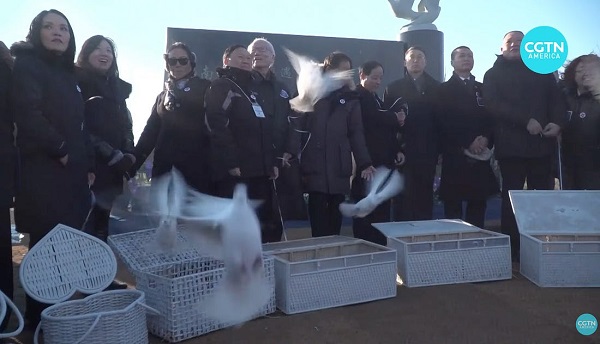
Michael Ma has recently attended events with Chinese consulate officials, leaders of a group called CTCCO, and the Toronto “Hongmen,” where diaspora community leaders and Chinese diplomats advocated Beijing’s push to subordinate Taiwan. These same entities have also appeared alongside Canadian politicians at a “Nanjing” memorial in Toronto.

By Garry Clement
Michael Ma’s meeting with consulate-linked officials proves no wrongdoing—but, Garry Clement writes, the timing and optics highlight vulnerabilities Canada still refuses to treat as a security issue.
I spent years in the Royal Canadian Mounted Police learning a simple rule. You assess risk based on capability, intent, and opportunity — not on hope or assumptions. When those three factors align, ignoring them is negligence.
That framework applies directly to Canada’s relationship with the People’s Republic of China — and to recent political events that deserve far more scrutiny than they have received.
Michael Ma’s crossover to the Liberal Party may be completely legitimate, although numerous observers have noted oddities in the timing, messaging, and execution surrounding Ma’s move, which brings Mark Carney within one seat of majority rule.
There is no evidence of wrongdoing.
But from a law enforcement and national security perspective, that is beside the point. Counterintelligence is not about proving guilt after the fact; it is about identifying vulnerabilities before damage is done — and about recognizing when a situation creates avoidable exposure in a known threat environment.
A constellation of ties and public appearances — reported by The Bureau and the National Post — has fueled questions about Ma’s China-facing judgment and vetting. Those reports describe his engagement with a Chinese-Canadian Conservative network that intervened in party leadership politics by urging Erin O’Toole to resign for his “anti-China” stance after 2021 and later calling for Pierre Poilievre’s ouster — while advancing Beijing-aligned framing on key Canada–China disputes.
The National Post has also reported that critics point to Ma’s pro-Beijing community endorsement during his campaign, and his appearance at a Toronto dinner for the Chinese Freemasons — where consular officials used the forum to promote Beijing’s “reunification” agenda for Taiwan. Ma reportedly offered greetings and praised the organization, but did not indicate support for annexation.
Open-source records also show that the same Toronto Chinese Freemasons and leaders Ma has met from a group called CTCCO sponsored and supported Ontario’s “Nanjing Massacre Commemorative Day” initiative (Bill 79) — a campaign celebrated in Chinese state and Party-aligned media, alongside public praise from PRC consular officials in Canada.
China Daily reported in 2018 that the Nanjing memorial was jointly sponsored by CTCCO and the Chinese Freemasons of Canada (Toronto), supported by more than $180,000 in community donations.
Photos show that PRC consular officials and Toronto politicians appeared at related Nanjing memorial ceremonies, including Zhao Wei, the alleged undercover Chinese intelligence agent later expelled from Canada after The Globe and Mail exposed Zhao’s alleged targeting of Conservative MP Michael Chong and his family in Hong Kong.
The fact that Michael Ma recently met with some of the controversial pro-Beijing community figures and organizations described above — including leaders from the Hongmen ecosystem and the CTCCO — does not prove any nefarious intent in either his Conservative candidacy or his decision to cross the floor to Mark Carney.
But it does demonstrate something Ottawa keeps avoiding: the PRC’s influence work is often conducted in plain sight, through community-facing institutions, elite access, and “normal” relationship networks — the very channels that create leverage, deniability, and political pressure over time.
Canada’s intelligence community has been clear.
The Canadian Security Intelligence Service has repeatedly identified the People’s Republic of China as the most active and persistent foreign interference threat facing Canada. These warnings are not abstract. They are rooted in investigations, human intelligence, and allied reporting shared across the Five Eyes intelligence alliance.
At the center of Beijing’s approach is the United Front Work Department — a Chinese Communist Party entity tasked with influencing foreign political systems, cultivating elites, and shaping narratives abroad. In policing terms, it functions as an influence and access network: operating legally where possible, covertly where necessary, and always in service of the Party’s strategic objectives.
What differentiates the People’s Republic of China from most foreign actors is legal compulsion.
Under China’s National Intelligence Law, Chinese citizens and organizations can be compelled to support state intelligence work and to keep that cooperation secret. In practical terms, that creates an inherent vulnerability for democratic societies: coercive leverage — applied through family, travel, business interests, community pressure, and fear.
This does not mean Chinese-Canadians are suspect.
Quite the opposite — many are targets of intimidation themselves. But it does mean the Chinese Communist Party has a mechanism to exert pressure in ways democratic states do not. Ignoring that fact is not tolerance; it is a failure to understand the threat environment.
In the RCMP, we were trained to recognize that foreign interference rarely announces itself. It operates through relationships, access, favors, timing, and silence. It does not require ideological agreement — only opportunity and leverage.
That is why transparency matters. When political figures engage with representatives of an authoritarian state known for interference operations, the burden is not on the public to “prove” concern is justified. The burden is on officials to explain why there is none — and to demonstrate that basic safeguards are in place.
Canada’s allies have already internalized this reality. Australia, the United States, and the United Kingdom have all publicly acknowledged and legislated against People’s Republic of China political interference. Their assessments mirror ours. Their conclusions are the same.
In the United States, the Linda Sun case — covered by The Bureau — illustrates, in the U.S. government’s telling, how United Front–style influence can be both deniable and effective: built through diaspora-facing proxies, insider access, and relationship networks that rarely look like classic espionage until the damage is done.
And this is not a niche concern.
Think tanks in both the United States and Canada — as well as allied research communities in the United Kingdom and Europe — have documented the scale and persistence of these political-influence ecosystems. Nicholas Eftimiades, an associate professor at Penn State and a former senior National Security Agency analyst, has estimated multiple hundreds of such entities are active in the United States. How many operate in Canada is the question Ottawa still refuses to treat with urgency — and, if an upcoming U.S. report is any indication, the answer may be staggering.
Canada’s hesitation to address United Front networks is not due to lack of information. It is due to lack of resolve.
From a law enforcement perspective, this is troubling. You do not wait for a successful compromise before tightening security. You act when the indicators are present — especially when your own intelligence agencies are sounding the alarm.
National security is not ideological. It is practical.
The Bureau is a reader-supported publication.
To receive new posts and support my work, consider becoming a free or paid subscriber.

From LifeSiteNews
Of the Royal Canadian Mounted Police’s fleet of 1,200 drones, 79% pose national security risks due to them being made in China
Canada’s top police force spent millions on now near-useless and compromised security drones, all because they were made in China, a nation firmly controlled by the Communist Chinese Party (CCP) government.
An internal report by the Royal Canadian Mounted Police (RCMP) to Canada’s Senate national security committee revealed that $34 million in taxpayer money was spent on a fleet of 973 Chinese-made drones.
Replacement drones are more than twice the cost of the Chinese-made ones between $31,000 and $35,000 per unit. In total, the RCMP has about 1,228 drones, meaning that 79 percent of its drone fleet poses national security risks due to them being made in China.
The RCMP said that Chinese suppliers are “currently identified as high security risks primarily due to their country of origin, data handling practices, supply chain integrity and potential vulnerability.”
In 2023, the RCMP put out a directive that restricted the use of the made-in-China drones, putting them on duty for “non-sensitive operations” only, however, with added extra steps for “offline data storage and processing.”
The report noted that the “Drones identified as having a high security risk are prohibited from use in emergency response team activities involving sensitive tactics or protected locations, VIP protective policing operations, or border integrity operations or investigations conducted in collaboration with U.S. federal agencies.”
The RCMP earlier this year said it was increasing its use of drones for border security.
Senator Claude Carignan had questioned the RCMP about what kind of precautions it uses in contract procurement.
“Can you reassure us about how national security considerations are taken into account in procurement, especially since tens of billions of dollars have been announced for procurement?” he asked.
“I want to make sure national security considerations are taken into account.”
The use of the drones by Canada’s top police force is puzzling, considering it has previously raised awareness of Communist Chinese interference in Canada.
Indeed, as reported by LifeSiteNews, earlier in the year, an RCMP internal briefing note warned that agents of the CCP are targeting Canadian universities to intimidate them and, in some instances, challenge them on their “political positions.”
The final report from the Foreign Interference Commission concluded that operatives from China may have helped elect a handful of MPs in both the 2019 and 2021 Canadian federal elections. It also concluded that China was the primary foreign interference threat to Canada.
Chinese influence in Canadian politics is unsurprising for many, especially given former Prime Minister Justin Trudeau’s past admiration for China’s “basic dictatorship.”
As reported by LifeSiteNews, a Canadian senator appointed by Trudeau told Chinese officials directly that their nation is a “partner, not a rival.”
China has been accused of direct election meddling in Canada, as reported by LifeSiteNews.
As reported by LifeSiteNews, an exposé by investigative journalist Sam Cooper claims there is compelling evidence that Carney and Trudeau are strongly influenced by an “elite network” of foreign actors, including those with ties to China and the World Economic Forum. Despite Carney’s later claims that China poses a threat to Canada, he said in 2016 the Communist Chinese regime’s “perspective” on things is “one of its many strengths.”


Death by a thousand clicks – government censorship of Canada’s internet

Chinese Billionaire Tried To Build US-Born Baby Empire As Overseas Elites Turn To American Surrogates

Viral TikTok video shows 7-year-old cuddling great-grandfather before he’s euthanized

Politicians should be honest about environmental pros and cons of electric vehicles
-
Censorship Industrial Complex1 day ago
Death by a thousand clicks – government censorship of Canada’s internet
-
Daily Caller1 day ago
Chinese Billionaire Tried To Build US-Born Baby Empire As Overseas Elites Turn To American Surrogates
-
Automotive1 day ago
Politicians should be honest about environmental pros and cons of electric vehicles
-
Great Reset1 day ago
Viral TikTok video shows 7-year-old cuddling great-grandfather before he’s euthanized
-
 Digital ID1 day ago
Canada releases new digital ID app for personal documents despite privacy concerns
-
 Community21 hours ago
Charitable giving on the decline in Canada
-
 Alberta1 day ago
Schools should go back to basics to mitigate effects of AI
-
 Bruce Dowbiggin23 hours ago
NFL Ice Bowls Turn Down The Thermostat on Climate Change Hysteria