
Alberta
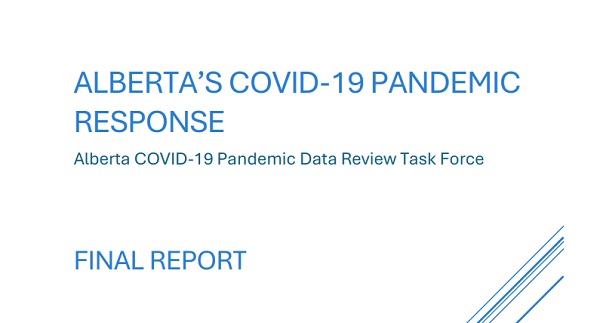
The Davidson Report critiquing the Government of Alberta’s COVID-19 pandemic response finally released: Dr David Speicher



Courageous Truth
Scientific facts, personal views and life’s journey
The Dr. Gary Davidson report has finally been released by the Government of Alberta and confirms big problems with public health and provides a roadmap for managing future pandemics.
Nearly six months after Dr. Gary Davidson’s report was submitted to Premier Danielle Smith, it was publicly released quietly by the Government of Alberta on their website.

The only public statement about the report was on Eric Bouchard’s X account: “Dr. Gary Davidson’s report brings Alberta one step closer to the truth. https://open.alberta.ca/publications/albertas-covid-19-pandemic-response”. Eric followed up by saying “Alberta now has a tremendous opportunity to right many of the wrongs that took place over the last few years. We must work together to heal humanity and to earn back the trust of all Albertans.” and “I am committed to working with Albertans to ensure that the historical pain caused by the response to COVID-19 does not repeat. Thank you, Dr. Davidson, for your incredible work to get this report out. I look forward to hearing Dr. Davidson live on March 3, 2025.”

Purpose:
On November 14, 2022, the Premier of Alberta established a Task Force under the Health Quality Council of Alberta to examine the quality, use, interpretation, and flow of information and data that informed Alberta’s pandemic response to COVID-19 and provide recommendations on how to better manage a future pandemic.
This report critiques the Government of Alberta’s response to the COVID-19 pandemic between 2020 and 2022. The report addresses 9 areas: governance and flow of information, regulatory bodies (e.g. the role of the College of Physicians and Surgeons of Alberta), modelling, non-pharmaceutical interventions, masking, testing, infection-acquired immunity, vaccines, and therapeutics. The task force attempted to remain neutral and examine information on both sides of the narrative. However, there was a “fundamental lack of transparency and willingness to reveal information and discuss decisions and actions taken by AHS during the pandemic.” and the task force found that there was “a lack of willingness on the part of AHS officials to cooperate with the Task Force in our requests for data and information.” [Pg 40-41]
Chapter 6: Testing
As a molecular virologist with expertise in the detection and surveillance of infectious diseases, the task force asked me to provide information and guidance on PCR, rapid antigen testing (RAT), and serological testing for SARS-CoV-2/COVID-19 during the pandemic. The report provides excellent background and the methods used to test people for SARS-CoV-2.
Unfortunately, I continue to see misinformation spread about the reliability of the PCR test, including the number of cycles and “97% false-positives”. Therefore, I will be providing a deep dive into the PCR test over the coming weeks, including presenting insight on one legal case where I served as an expert witness that asked whether or not a PCR test for COVID is a “genetic test” according to the Ontario labour code. I would be happy to answer any questions that people may have.

From The Davidson Report, I would like to highlight two key issues. The first is the classification of a COVID case being determined by a PCR-positive test result driving a “casedemic” rather than a “pandemic” and the second is regarding the millions of dollars wasted on unused PCR reagents and RATs.


It is important to note the following recommendations made regarding testing (P174):
- RT-PCR represents an excellent high-sensitivity test to aid in accurate diagnoses of symptomatic people – if they are used for the intended purpose and at optimal Ct values (vs. Ct values at “high positive” cut-offs).
- Rapid tests with reasonable accuracy should not be used for screening the general population but could be used as an additional diagnostic tool, where clinically indicated.
- We recommend that future pandemic responses prioritize minimizing severe disease and mortality over extensive case detection. Specifically, Alberta should focus on developing a screening tool to help estimate individual risk. This approach will optimize resource use by directing testing capacity, which can be appropriately directed by evidence-based practices, such as testing symptomatic individuals, those whose management may be influenced by test results, and for specific surveillance scenarios.
- We recommend that levels of immunity be gauged using a multi-antibody serological and/or mucosal assay that accounts for both pre-existing immunity as well as the presence of immune cells with the potential for cross-protection.
- All tests should also be professionally administered and sufficiently sensitive to detect low antibody levels while sufficiently specific to distinguish between target and non-target antibodies. This also applies to laboratory tests used to identify specific respiratory viruses. Individual risk estimates can then be used to inform individual needs for protection either through the use of personal protective measures and/or vaccination.
- Without being linked to a set of standardized clinical criteria, we recommend against the use of PCR tests as the sole criteria for a case definition. A confirmed case should include a pre-determined profile of signs and/or symptoms AND a positive test for the infection of concern PLUS any relevant patient history and confirmed epidemiological information.
- Ensure that local surveillance data are used and interpreted when determining strategy and policy.
Final Thoughts
Regarding the report, I think that it is a very well-written critique of the Government of Alberta’s response to the COVID-19 pandemic, but it is not a final conclusive report. This is a good start to opening the door for some important deep governmental discussions that need to happen, including diving deeper into the harms caused by the COVID-19 modRNA vaccines, like the DNA contamination and the presence of the SV40 promoter-enhancer nuclear localization sequences, the vast number of vaccine-injured people, and the increased risk of turbo cancer. While I am disappointed that the Government of Alberta, namely Premier Smith, tried to bury this report by sitting on it for six months and quietly releasing the report without a proper press conference on the week of the USA inauguration I am relieved to see that the report was finally made public. The government’s attempt to bury the report shows that this is indeed a damning report and the government’s response could have been much better. However, I hope that this report will bring about government transparency and begin that well-needed conversation so that our society can indeed heal.
Healing Humanity is the theme of the next An Injection of Truth happening on March 3, 2025 in Calgary, Alberta. During the event I will be sharing on the numerous ways the COVID-19 vaccines can potentially cause harm and what can be done to heal from those harms. I will share the stage with several other prominent scientists.
- Dr. Byram Bridle who has also shared his insights on The Davidson Report and will be “exposing lies from public health agencies that contributed to a myriad of problems within the pandemic response.”
- Dr. Gary Davidson will be presenting on the contents the report by the Alberta COVID-19 Pandemic Data Review Task Force.
- Dr. Denis Rancourt will provide a deep dive into the all-cause mortality.
- Dr. David Martin will definitely be a presenter that no one will want to miss.
In closing, I encourage everyone to read through The Davidson Report and post your thoughts on the report in the comments section. What did you like or disagree with? What would you like to see different next time? I would be happy to take your comments to Calgary in March 2025. I also hope that this will be one of many governmental task forces that take a deep dive into the governmental response to the pandemic. We desperately need one for each province and at the federal level.



From the Fraser Institute
By Nadeem Esmail, Mackenzie Moir and Lauren Asaad
In October, Alberta’s provincial government announced forthcoming legislative changes that will allow patients to pay out-of-pocket for any diagnostic test they want, and without a physician referral. The policy, according to the Smith government, is designed to help improve the availability of preventative care and increase testing capacity by attracting additional private sector investment in diagnostic technology and facilities.
Unsurprisingly, the policy has attracted Ottawa’s attention, with discussions now taking place around the details of the proposed changes and whether this proposal is deemed to be in line with the Canada Health Act (CHA) and the federal government’s interpretations. A determination that it is not, will have both political consequences by being labeled “non-compliant” and financial consequences for the province through reductions to its Canada Health Transfer (CHT) in coming years.
This raises an interesting question: While the ultimate decision rests with Ottawa, does the Smith government’s new policy comply with the literal text of the CHA and the revised rules released in written federal interpretations?
According to the CHA, when a patient pays out of pocket for a medically necessary and insured physician or hospital (including diagnostic procedures) service, the federal health minister shall reduce the CHT on a dollar-for-dollar basis matching the amount charged to patients. In 2018, Ottawa introduced the Diagnostic Services Policy (DSP), which clarified that the insured status of a diagnostic service does not change when it’s offered inside a private clinic as opposed to a hospital. As a result, any levying of patient charges for medically necessary diagnostic tests are considered a violation of the CHA.
Ottawa has been no slouch in wielding this new policy, deducting some $76.5 million from transfers to seven provinces in 2023 and another $72.4 million in 2024. Deductions for Alberta, based on Health Canada’s estimates of patient charges, totaled some $34 million over those two years.
Alberta has been paid back some of those dollars under the new Reimbursement Program introduced in 2018, which created a pathway for provinces to be paid back some or all of the transfers previously withheld on a dollar-for-dollar basis by Ottawa for CHA infractions. The Reimbursement Program requires provinces to resolve the circumstances which led to patient charges for medically necessary services, including filing a Reimbursement Action Plan for doing so developed in concert with Health Canada. In total, Alberta was reimbursed $20.5 million after Health Canada determined the provincial government had “successfully” implemented elements of its approved plan.
Perhaps in response to the risk of further deductions, or taking a lesson from the Reimbursement Action Plan accepted by Health Canada, the province has gone out of its way to make clear that these new privately funded scans will be self-referred, that any patient paying for tests privately will be reimbursed if that test reveals a serious or life-threatening condition, and that physician referred tests will continue to be provided within the public system and be given priority in both public and private facilities.
Indeed, the provincial government has stated they do not expect to lose additional federal health care transfers under this new policy, based on their success in arguing back previous deductions.
This is where language matters: Health Canada in their latest CHA annual report specifically states the “medical necessity” of any diagnostic test is “determined when a patient receives a referral or requisition from a medical practitioner.” According to the logic of Ottawa’s own stated policy, an unreferred test should, in theory, be no longer considered one that is medically necessary or needs to be insured and thus could be paid for privately.
It would appear then that allowing private purchase of services not referred by physicians does pass the written standard for CHA compliance, including compliance with the latest federal interpretation for diagnostic services.
But of course, there is no actual certainty here. The federal government of the day maintains sole and final authority for interpretation of the CHA and is free to revise and adjust interpretations at any time it sees fit in response to provincial health policy innovations. So while the letter of the CHA appears to have been met, there is still a very real possibility that Alberta will be found to have violated the Act and its interpretations regardless.
In the end, no one really knows with any certainty if a policy change will be deemed by Ottawa to run afoul of the CHA. On the one hand, the provincial government seems to have set the rules around private purchase deliberately and narrowly to avoid a clear violation of federal requirements as they are currently written. On the other hand, Health Canada’s attention has been aroused and they are now “engaging” with officials from Alberta to “better understand” the new policy, leaving open the possibility that the rules of the game may change once again. And even then, a decision that the policy is permissible today is not permanent and can be reversed by the federal government tomorrow if its interpretive whims shift again.
The sad reality of the provincial-federal health-care relationship in Canada is that it has no fixed rules. Indeed, it may be pointless to ask whether a policy will be CHA compliant before Ottawa decides whether or not it is. But it can be said, at least for now, that the Smith government’s new privately paid diagnostic testing policy appears to have met the currently written standard for CHA compliance.

Nadeem Esmail

Mackenzie Moir

Lauren Asaad
Policy Analyst, Fraser Institute

From the Fraser Institute
By Tegan Hill and Austin Thompson
In cities across the country, modest homes have become unaffordable for typical families. Calgary and Edmonton have not been immune to this trend, but they’ve weathered it better than most—largely by making it easier to build homes.
Specifically, faster permit approvals, lower municipal fees and fewer restrictions on homebuilders have helped both cities maintain an affordability edge in an era of runaway prices. To preserve that edge, they must stick with—and strengthen—their pro-growth approach.
First, the bad news. Buying a home remains a formidable challenge for many families in Calgary and Edmonton.
For example, in 2023 (the latest year of available data), a typical family earning the local median after-tax income—$73,420 in Calgary and $70,650 in Edmonton—had to save the equivalent of 17.5 months of income in Calgary ($107,300) or 12.5 months in Edmonton ($73,820) for a 20 per cent down payment on a typical home (single-detached house, semi-detached unit or condominium).
Even after managing such a substantial down payment, the financial strain would continue. Mortgage payments on the remaining 80 per cent of the home’s price would have required a large—and financially risky—share of the family’s after-tax income: 45.1 per cent in Calgary (about $2,757 per month) and 32.2 per cent in Edmonton (about $1,897 per month).
Clearly, unless the typical family already owns property or receives help from family, buying a typical home is extremely challenging. And yet, housing in Calgary and Edmonton remains far more affordable than in most other Canadian cities.
In 2023, out of 36 major Canadian cities, Edmonton and Calgary ranked 8th and 14th, respectively, for housing affordability (relative to the median after-tax family income). That’s a marked improvement from a decade earlier in 2014 when Edmonton ranked 20th and Calgary ranked 30th. And from 2014 to 2023, Edmonton was one of only four Canadian cities where median after-tax family income grew faster than the price of a typical home (in Calgary, home prices rose faster than incomes but by much less than in most Canadian cities). As a result, in 2023 typical homes in Edmonton cost about half as much (again, relative to the local median after-tax family income) as in mid-sized cities such as Windsor and Kelowna—and roughly one-third as much as in Toronto and Vancouver.
To be clear, much of Calgary and Edmonton’s improved rank in affordability is due to other cities becoming less and less affordable. Indeed, mortgage payments (as a share of local after-tax median income) also increased since 2014 in both Calgary and Edmonton.
But the relative success of Alberta’s two largest cities shows what’s possible when you prioritize homebuilding. Their approach—lower municipal fees, faster permit approvals and fewer building restrictions—has made it easier to build homes and helped contain costs for homebuyers. In fact, homebuilding has been accelerating in Calgary and Edmonton, in contrast to a sharp contraction in Vancouver and Toronto. That’s a boon to Albertans who’ve been spared the worst excesses of the national housing crisis. It’s also a demographic and economic boost for the province as residents from across Canada move to Alberta to take advantage of the housing market—in stark contrast to the experience of British Columbia and Ontario, which are hemorrhaging residents.
Alberta’s big cities have shown that when governments let homebuilders build, families benefit. To keep that advantage, policymakers in Calgary and Edmonton must stay the course.

Tegan Hill
Director, Alberta Policy, Fraser Institute

Austin Thompson
Senior Policy Analyst, Fraser Institute


Trump DOJ seeks to quash Pfizer whistleblower’s lawsuit over COVID shots

Alberta introducing three “all-season resort areas” to provide more summer activities in Alberta’s mountain parks

Trump admin wants to help Canadian woman rethink euthanasia, Glenn Beck says

The case for expanding Canada’s energy exports
-
 International2 days ago
Bondi Beach Shows Why Self-Defense Is a Vital Right
-
 Energy2 days ago
Liberals Twisted Themselves Into Pretzels Over Their Own Pipeline MOU
-
 Censorship Industrial Complex2 days ago
How Wikipedia Got Captured: Leftist Editors & Foreign Influence On Internet’s Biggest Source of Info
-
 Automotive1 day ago
Ford’s EV Fiasco Fallout Hits Hard
-
 Crime1 day ago
Bondi Beach Survivor Says Cops Prevented Her From Fighting Back Against Terrorists
-
 Frontier Centre for Public Policy1 day ago
Canada Lets Child-Porn Offenders Off Easy While Targeting Bible Believers
-
 Crime2 days ago
The Uncomfortable Demographics of Islamist Bloodshed—and Why “Islamophobia” Deflection Increases the Threat
-
 Alberta2 days ago
Danielle Smith slams Skate Canada for stopping events in Alberta over ban on men in women’s sports