
Alberta
The Deadline for the Central Alberta Child Advocacy Centre Dream Home lottery is Sunday


The Central Alberta Child Advocacy Centre Dream Home Lottery ticket deadline is Sunday, April 7. Please take a moment to see and share these reasons for supporting our most vulnerable kids. Most importantly.. click on this link to visit the lottery website.

10 Children Supported in one week. In this week alone, we have seen & supported 10 kids here at the Centre.
These children have been impacted by child abuse in some capacity: sexual abuse, physical, neglect, witness to domestic violence, sexual exploitation and emotional abuse.

9 Quilting Groups who make it possible to give our littles the comfort of their very own quilt.
When a child first visits our Centre they are often afraid, confused, and sad. After the interview, or other support they receive, it is incredible to witness the change in them. They stand a little taller, and leave knowing that today is the start of their healthy future.
Thanks to some amazing groups of ladies we are also fortunate enough to give a child a quilt afterwards, wrapping themselves with the comfort knowing it is going to be ok. These ladies stop by every couple months to bring us these hand-made pieces which takes many many hours, days and weeks to make.

8 New Communities Supported this Month.
In the month of March, we have supported children and their families impacted by child abuse from 8 new communities throughout Central Alberta.
Since opening, we have served 61 communities.
Although we are located in Red Deer, we support more than half of our cases from surrounding communities: Sylvan Lake, Alix, Lacombe, Bashaw – your community.
 7 Core Staff at the CACAC

The CACAC is comprised of a group driven by courage to end the cycle of abuse. What many do not know is that we are a small team, only made up of 7 core staff just as of this month!
We wouldn’t be able to do this alone though, it is through our collaboration with our 7 partners that makes it possible: RCMP, Central Region Children’s Services, AHS, Alberta Education, Alberta Justice, Central Alberta Sexual Assault Support Centre, and RDC.
It is also through YOU that we are able to support the children of Central Alberta. We rely on the support and advocacy of the community and we need your help.
To support the CACAC and the vulnerable children of Central Alberta, please buy your Dream Home Lottery ticket before it’s too late. All proceeds go directly to supporting children and their families impacted by child abuse.

6 Years since Bill 25: The Children First Act – Alberta Children’s Charter was enacted.
#DidYouKnow: The Children First Act was passed 6 years ago here in Alberta, allowing pertinent information to be shared among service providers – if deemed beneficial to the child or for the provision of services.
This is what allows all of our partners to work together at ‘triage’. They are able to share important case information which expedites the process – and in-turn propels healing & recovery for the child.
Although this act allows for government agencies to collaborate and work together here at the CACAC, we still rely on the community for the majority of funding.

5 Operating Child Advocacy Centres in Alberta
We are proud to be apart of the 5 open & operating CACs in Alberta – operating for a full 16 months! Other CACs in Alberta include: Zebra Child Protection Centre Calgary & Area Child Advocacy Centre Lloydminster Sexual Assault Services Caribou Child & Youth Centre .
All of these Centres collaborate on best practices & support one another in order to best support the children of Alberta affected by Child Abuse.

4 X more likely for child abuse survivors to report self-harm or suicidal ideations.
This staggering statistic is another reason why support throughout and after the initial process is so crucial. For the survivor, it doesn’t just end at the potential court hearing, or even at the forensic interview – healing is a life-long journey.
Through our partnership with Alberta Health Services, we now have our Mental Health Therapist here onsite at the CACAC – providing the much needed support and therapy for both the child and their family to end the cycle of abuse.

3 | 1 in 3 Canadians report to have experienced some form of child abuse in their youth.
We have shared this stat with you before, but let it sink in. In Canada, 33% of our population has been affected by child abuse.
This is someone you most likely know and would never expect. This is someone that is homeless struggling with addiction because they have no other way to cope and didn’t receive the crucial support. This may be your neighbor, your cousin, your best friend, your niece.
Many times, the story is not shared or reported until a much older age where the survivor has been struggling internally for years.
Help support the 1 in 3 Canadians that are survivors of abuse.

2 or more partners have collaborated on 87% of cases
Out of the 483 (as of March 27) children we have supported, 87% of the cases were through collaborative efforts between 2 or more of our service partners. We work with Alberta Health Services, Central Region Children’s Services, Central Alberta Sexual Assault Support Centre, and the RCMP.
Through this collaboration, more information is shared – reducing the time for a child to receive proper support.
Your Dream Home Ticket helps support these collaborative measures in-turn, supports the 483 seen at the Centre and the many more we will support.
For $35 you can influence positive outcomes in the lives of abused children living in Central Alberta communities.

1 Ticket can change the life of a child
Your $35 ticket doesn’t just give you the chance to win an amazing house, cars or other prizes – it changes the life of the children that we support at the Centre.
All of the proceeds from the Dream Home Lottery support the most vulnerable children of Central Alberta – those impacted by child abuse. This abuse ranges from physical, to sexual, to being a witness of domestic violence, peer-to-peer abuse and unfortunately much more.
Your $35 is a donation and helps give back the promise and possibility of a healthy future to those that need it most.
Please buy your ticket before its too late, and support the Central Alberta Child Advocacy Centre and our mission to end the cycle of child abuse.
Tickets:
www.cacaclottery.ca
1-833-475-4402
57 Larratt Close – open Sunday until 5pm.


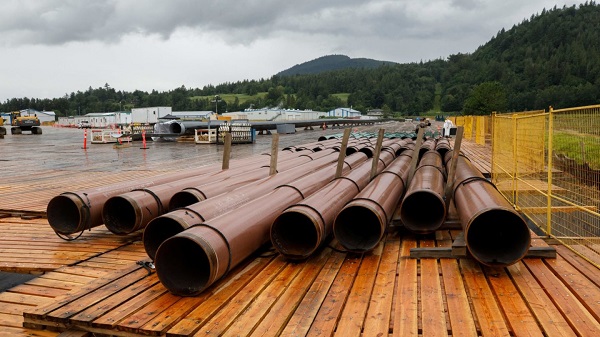
From the Canadian Energy Centre
For Canada, the path to a stronger economy — and stronger global influence — runs through energy.
That’s the view of David Detomasi, a professor at the Smith School of Business at Queen’s University.
Detomasi, author of Profits and Power: Navigating the Politics and Geopolitics of Oil, argues that there is a moral case for developing Canada’s energy, both for Canadians and the world.

David Detomasi. Photo courtesy Smith School of Business, Queen’s University
CEC: What does being an energy superpower mean to you?
DD: It means Canada is strong enough to affect the system as a whole by its choices.
There is something really valuable about Canada’s — and Alberta’s — way of producing carbon energy that goes beyond just the monetary rewards.
CEC: You talk about the moral case for developing Canada’s energy. What do you mean?
DD: I think the default assumption in public rhetoric is that the environmental movement is the only voice speaking for the moral betterment of the world. That needs to be challenged.
That public rhetoric is that the act of cultivating a powerful, effective economic engine is somehow wrong or bad, and that efforts to create wealth are somehow morally tainted.
I think that’s dead wrong. Economic growth is morally good, and we should foster it.
Economic growth generates money, and you can’t do anything you want to do in social expenditures without that engine.
Economic growth is critical to doing all the other things we want to do as Canadians, like having a publicly funded health care system or providing transfer payments to less well-off provinces.
Over the last 10 years, many people in Canada came to equate moral leadership with getting off of oil and gas as quickly as possible. I think that is a mistake, and far too narrow.
Instead, I think moral leadership means you play that game, you play it well, and you do it in our interest, in the Canadian way.
We need a solid base of economic prosperity in this country first, and then we can help others.
CEC: Why is it important to expand Canada’s energy trade?
DD: Canada is, and has always been, a trading nation, because we’ve got a lot of geography and not that many people.
If we don’t trade what we have with the outside world, we aren’t going to be able to develop economically, because we don’t have the internal size and capacity.
Historically, most of that trade has been with the United States. Geography and history mean it will always be our primary trade partner.
But the United States clearly can be an unreliable partner. Free and open trade matters more to Canada than it does to the U.S. Indeed, a big chunk of the American people is skeptical of participating in a global trading system.
As the United States perhaps withdraws from the international trading and investment system, there’s room for Canada to reinforce it in places where we can use our resource advantages to build new, stronger relationships.
One of these is Europe, which still imports a lot of gas. We can also build positive relationships with the enormous emerging markets of China and India, both of whom want and will need enormous supplies of energy for many decades.
I would like to be able to offer partners the alternative option of buying Canadian energy so that they are less reliant on, say, Iranian or Russian energy.
Canada can also maybe eventually help the two billion people in the world currently without energy access.
CEC: What benefits could Canadians gain by becoming an energy superpower?
DD: The first and primary responsibility of our federal government is to look after Canada. At the end of the day, the goal is to improve Canada’s welfare and enhance its sovereignty.
More carbon energy development helps Canada. We have massive debt, an investment crisis and productivity problems that we’ve been talking about forever. Economic and job growth are weak.
Solving these will require profitable and productive industries. We don’t have so many economic strengths in this country that we can voluntarily ignore or constrain one of our biggest industries.
The economic benefits pay for things that make you stronger as a country.
They make you more resilient on the social welfare front and make increasing defence expenditures, which we sorely need, more affordable. It allows us to manage the debt that we’re running up, and supports deals for Canada’s Indigenous peoples.
CEC: Are there specific projects that you advocate for to make Canada an energy superpower?
DD: Canada’s energy needs egress, and getting it out to places other than the United States. That means more transport and port facilities to Canada’s coasts.
We also need domestic energy transport networks. People don’t know this, but a big chunk of Ontario’s oil supply runs through Michigan, posing a latent security risk to Ontario’s energy security.
We need to change the perception that pipelines are evil. There’s a spiderweb of them across the globe, and more are being built.
Building pipelines here, with Canadian technology and know-how, builds our competitiveness and enhances our sovereignty.
Economic growth enhances sovereignty and provides the resources to do other things. We should applaud and encourage it, and the carbon energy sector can lead the way.

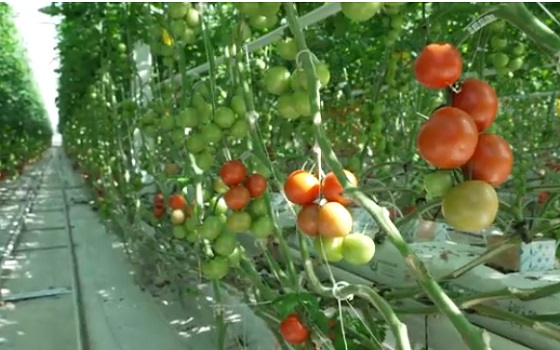
A new program funded by the Sustainable Canadian Agricultural Partnership will accelerate expansion in Alberta greenhouses and vertical farms.
Albertans want to keep their hard-earned money in the province and support producers by choosing locally grown, high-quality produce. The new three-year, $10-milllion Growing Greenhouses program aims to stimulate industry growth and provide fresh fruit and vegetables to Albertans throughout the year.
“Everything our ministry does is about ensuring Albertans have secure access to safe, high-quality food. We are continually working to build resilience and sustainability into our food production systems, increase opportunities for producers and processors, create jobs and feed Albertans. This new program will fund technologies that increase food production and improve energy efficiency.”
“Through this investment, we’re supporting Alberta’s growers and ensuring Canadians have access to fresh, locally-grown fruits and vegetables on grocery shelves year-round. This program strengthens local communities, drives innovation, and creates new opportunities for agricultural entrepreneurs, reinforcing Canada’s food system and economy.”
The Growing Greenhouses program supports the controlled environment agriculture sector with new construction or expansion improvements to existing greenhouses and vertical farms that produce food at a commercial scale. It also aligns with Alberta’s Buy Local initiative launched this year as consumers will be able to purchase more local produce all year-round.
The program was created in alignment with the needs identified by the greenhouse sector, with a goal to reduce seasonal import reliance entering fall, which increases fruit and vegetable prices.
“This program is a game-changer for Alberta’s greenhouse sector. By investing in expansion and innovation, we can grow more fresh produce year-round, reduce reliance on imports, and strengthen food security for Albertans. Our growers are ready to meet the demand with sustainable, locally grown vegetables and fruits, and this support ensures we can do so while creating new jobs and opportunities in communities across the province. We are very grateful to the Governments of Canada and Alberta for this investment in our sector and for working collaboratively with us.”
Sustainable Canadian Agricultural Partnership (Sustainable CAP)
Sustainable CAP is a five-year, $3.5-billion investment by federal, provincial and territorial governments to strengthen competitiveness, innovation and resiliency in Canada’s agriculture, agri-food and agri-based products sector. This includes $1 billion in federal programs and activities and $2.5 billion that is cost-shared 60 per cent federally and 40 per cent provincially/territorially for programs that are designed and delivered by provinces and territories.
Quick facts
- Alberta’s greenhouse sector ranks fourth in Canada:
- 195 greenhouses produce $145 million in produce and 60 per cent of them operate year-round.
- Greenhouse food production is growing by 6.2 per cent annually.
- Alberta imports $349 million in fresh produce annually.
- The program supports sector growth by investing in renewable and efficient energy systems, advanced lighting systems, energy-saving construction, and automation and robotics systems.
Related information


Wayne Gretzky’s Terrible, Awful Week.. And Soccer/ Football.

Western Campuses Help Build China’s Digital Dragnet With U.S. Tax Funds, Study Warns

Common Vaccines Linked to 38-50% Increased Risk of Dementia and Alzheimer’s

The day the ‘King of rock ‘n’ roll saved the Arizona memorial
-
Focal Points2 days ago
Common Vaccines Linked to 38-50% Increased Risk of Dementia and Alzheimer’s
-
 Automotive1 day ago
The $50 Billion Question: EVs Never Delivered What Ottawa Promised
-
 Alberta19 hours ago
Alberta introducing three “all-season resort areas” to provide more summer activities in Alberta’s mountain parks
-
 Health2 days ago
The Data That Doesn’t Exist
-
Agriculture18 hours ago
Growing Alberta’s fresh food future
-
 Business1 day ago
Storm clouds of uncertainty as BC courts deal another blow to industry and investment
-
 Business2 days ago
The Climate-Risk Industrial Complex and the Manufactured Insurance Crisis
-
 International17 hours ago
Trump admin wants to help Canadian woman rethink euthanasia, Glenn Beck says