
Agriculture
Significant majority of Canadians want carbon tax scrapped on farms

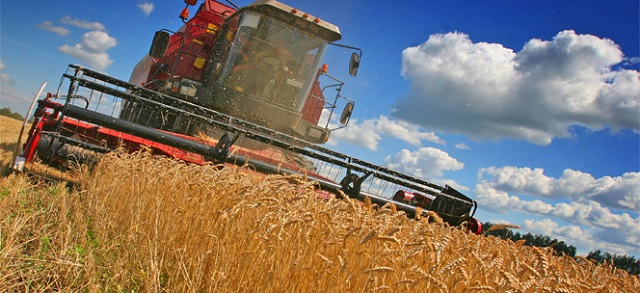


From the Canadian Taxpayers Association
Author: Gage Haubrich
Canada is a big country filled with lots of opinions. It’s tough to talk about which hockey team you should cheer for without voices being raised, let alone getting into politics.
When a vast majority of Canadians think the same way on something, it’s a good idea for the government to stop and listen.
A new poll conducted by Leger shows that seven-in-10 Canadians want farmers to get an exemption on the carbon tax for natural gas and propane.
That means members of Parliament need to listen to Canadians and pass Bill C-234, a proposed piece of legislation that gives farmers this exact exemption.
Currently, the federal government already exempts the carbon tax from gasoline and diesel used on farms. And this bill simply extends that same carbon tax exemption to natural gas and propane.
The new national poll shows there is support for farmers across the country – Canadians want the carbon tax scrapped on farms.
Albertans leads the way with 76 per cent of them supporting giving a break to farmers, but other parts of the country aren’t far behind. British Columbians are 72 per cent in favour of the relief and even 68 per cent of people in Quebec and the Atlantic provinces support the exemption.
Canadians understand that just like the carbon tax costs them big money to fuel up their cars and heat their homes, it also costs farmers, but on a much larger scale. Without any relief, the carbon tax on natural gas and propane will cost farmers almost $1 billion by 2030, according to the Parliamentary Budget Officer.
That’s a lot of money that farmers are paying on their bills every month and it also hurts their competitiveness because farmers in the United States aren’t paying a carbon tax. Plus, if farmers aren’t paying millions of dollars every year in the carbon tax, it’s likely to help the rest of out with prices at the grocery store.
And passing bill C-234 is something farm groups have already been calling for. The Agriculture Carbon Alliance is a coalition of 15 farm associations is pushing the federal government to pass the bill and provide relief to farmers.
That’s because individual farmers are paying up to thousands of dollars every month in the carbon tax. The average livestock farmer can expect a $726 carbon tax bill every month, while crop farmers can look forward to a $2,024 bill according to the ACA.
Greenhouses are the worst off, with an average $17,173 carbon tax bill. In some cases, up to 40 per cent of a farmers energy cost is just carbon tax.
This new poll and the huge carbon tax bills for Canadian farmers should be a wake-up call for politicians in Ottawa to stop sitting on their hands and get farmers some relief, because this legislation has been through the wringer at this point.
Bill C-234 was originally introduced more than two years ago and it finally passed the House in March 2023, where it got unanimous support from the Conservatives, Bloc, NDP and Greens. Three Liberal MPs even voted for it.
But then it got to the Senate.
Unelected Senators amended the bill and got rid of much of the relief for farmers. They removed the exemptions for heating barns and decided that the relief should end after three years. The bill in its current form would still see farmers paying $910 million in the carbon tax by 2030, according to the PBO.
Now Bill C-234 is back in the House and MPs need to reject the amendments from the Senate and pass the bill in its original form.
It’s what Canadians want.
It’s time for Ottawa to start listening to Canadians and stop charging farmers carbon taxes that make all of our lives more expensive.

Agriculture
Lacombe meat processor scores $1.2 million dollar provincial tax credit to help expansion

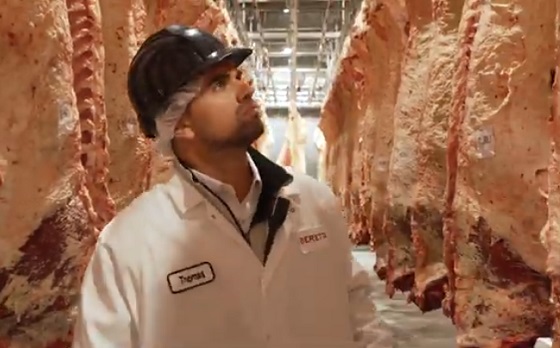
Alberta’s government continues to attract investment and grow the provincial economy.
The province’s inviting and tax-friendly business environment, and abundant agricultural resources, make it one of North America’s best places to do business. In addition, the Agri-Processing Investment Tax Credit helps attract investment that will further diversify Alberta’s agriculture industry.
Beretta Farms is the most recent company to qualify for the tax credit by expanding its existing facility with the potential to significantly increase production capacity. It invested more than $10.9 million in the project that is expected to increase the plant’s processing capacity from 29,583 to 44,688 head of cattle per year. Eleven new employees were hired after the expansion and the company plans to hire ten more. Through the Agri-Processing Investment Tax Credit, Alberta’s government has issued Beretta Farms a tax credit of $1,228,735.
“The Agri-Processing Investment Tax Credit is building on Alberta’s existing competitive advantages for agri-food companies and the primary producers that supply them. This facility expansion will allow Beretta Farms to increase production capacity, which means more Alberta beef across the country, and around the world.”
“This expansion by Beretta Farms is great news for Lacombe and central Alberta. It not only supports local job creation and economic growth but also strengthens Alberta’s global reputation for producing high-quality meat products. I’m proud to see our government supporting agricultural innovation and investment right here in our community.”
The tax credit provides a 12 per cent non-refundable, non-transferable tax credit when businesses invest $10 million or more in a project to build or expand a value-added agri-processing facility in Alberta. The program is open to any food manufacturers and bio processors that add value to commodities like grains or meat or turn agricultural byproducts into new consumer or industrial goods.
Beretta Farms’ facility in Lacombe is a federally registered, European Union-approved harvesting and meat processing facility specializing in the slaughter, processing, packaging and distribution of Canadian and United States cattle and bison meat products to 87 countries worldwide.
“Our recent plant expansion project at our facility in Lacombe has allowed us to increase our processing capacities and add more job opportunities in the central Alberta area. With the support and recognition from the Government of Alberta’s tax credit program, we feel we are in a better position to continue our success and have the confidence to grow our meat brands into the future.”
Alberta’s agri-processing sector is the second-largest manufacturing industry in the province and meat processing plays an important role in the sector, generating millions in annual economic impact and creating thousands of jobs. Alberta continues to be an attractive place for agricultural investment due to its agricultural resources, one of the lowest tax rates in North America, a business-friendly environment and a robust transportation network to connect with international markets.
Quick facts
- Since 2023, there are 16 applicants to the Agri-Processing Investment Tax Credit for projects worth about $1.6 billion total in new investment in Alberta’s agri-processing sector.
- To date, 13 projects have received conditional approval under the program.
- Each applicant must submit progress reports, then apply for a tax credit certificate when the project is complete.
- Beretta Farms has expanded the Lacombe facility by 10,000 square feet to include new warehousing, cooler space and an office building.
- This project has the potential to increase production capacity by 50 per cent, thereby facilitating entry into more European markets.
Related information

This article supplied by Troy Media.

The supply management system is cracking. With imports climbing, strict quotas in place and Bill C202 on the table, we’re struggling to feed ourselves
Canada’s supply management system, once seen as a pillar of food security and agricultural self-sufficiency, is failing at its most basic function:
ensuring a reliable domestic supply.
According to the Canadian Association of Regulated Importers, Canada imported more than 66.9 million kilograms of chicken as of June 14, a 54.6 per cent increase from the same period last year. That’s enough to feed 3.4 million Canadians for a full year based on average poultry consumption—roughly 446 million meals. Under a tightly managed quota system, those meals were supposed to be produced domestically. Instead imports now account for more than 12 per cent of this year’s domestic chicken production, revealing a growing dependence on foreign supply.
Supply management is Canada’s system for regulating dairy, poultry and egg production. It uses quotas and fixed prices to match domestic supply with demand while limiting imports, intended to protect farmers from global price swings and ensure stable supply.
To be fair, the avian influenza outbreak has disrupted poultry production and partially explains the shortfall. But even with that disruption, the numbers are staggering. Imports under trade quotas set by the World Trade Organization, the Canada-United States Mexico Agreement and the Comprehensive and Progressive Agreement for Trans-Pacific Partnership are running at or near their allowable monthly share—known as pro-rata
levels—signalling not just opportunity, but urgency. Supplementary import permits, meant to be used only in emergencies, have already surpassed 48 million kilograms, exceeding total annual import volumes in some previous years. This isn’t a seasonal hiccup. It’s a systemic failure.
The system, designed to buffer domestic markets from global volatility, is cracking under internal strain. When emergency imports become routine, we have to ask: what exactly is being managed?
Canada’s most recent regulated chicken production cycle, which ended May 31, saw one of the worst shortfalls in over 50 years. Strict quota limits stopped farmers from producing more to meet demand, leaving consumers with higher grocery bills and more imported food, shaking public confidence in the system.
Some defenders insist this is an isolated event. It’s not. For the second straight week, Canada has hit pro-rata import levels across all chicken categories. Bone-in and processed poultry, once minor players in emergency import programs, are now essential just to keep shelves stocked.
And the dysfunction doesn’t stop at chicken. Egg imports under the shortage allocation program have already topped 14 million dozen, a 104 per cent jump from last year. Not long ago, Canadians were mocking high U.S. egg prices. Now theirs have fallen. Ours haven’t.
All this in a country with $30 billion in quota value, supposedly designed to protect domestic production and reduce reliance on imports. Instead, we’re importing more and paying more.
Rather than addressing these failures, Ottawa is looking to entrench them. Bill C202, now before the Senate, seeks to shield supply management from future trade talks, making reform even harder. So we must ask: is this really what we’re protecting?
Meanwhile, our trading partners are taking full advantage. Chile, for instance, has increased chicken exports to Canada by more than 63 per cent, now accounting for nearly 96 per cent of CPTPP-origin imports. While Canada doubles down on protectionism, others are gaining long-term footholds in our market.
It’s time to face the facts. Supply management no longer guarantees supply. When a system meant to ensure resilience becomes a source of fragility, it’s no longer an asset—it’s an economic liability.
Dr. Sylvain Charlebois is a Canadian professor and researcher in food distribution and policy. He is senior director of the Agri-Food Analytics Lab at Dalhousie University and co-host of The Food Professor Podcast. He is frequently cited in the media for his insights on food prices, agricultural trends, and the global food supply chain.
Troy Media empowers Canadian community news outlets by providing independent, insightful analysis and commentary. Our mission is to support local media in helping Canadians stay informed and engaged by delivering reliable content that strengthens community connections and deepens understanding across the country.


New Peer-Reviewed Study Affirms COVID Vaccines Reduce Fertility

Ottawa Funded the China Ferry Deal—Then Pretended to Oppose It
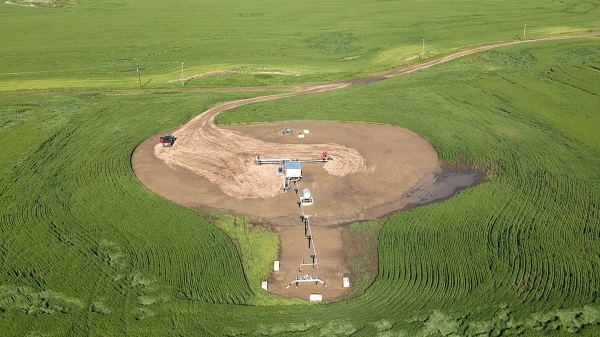
The permanent CO2 storage site at the end of the Alberta Carbon Trunk Line is just getting started

Canada’s euthanasia regime is not health care, but a death machine for the unwanted
-
 Alberta12 hours ago
Alberta Independence Seekers Take First Step: Citizen Initiative Application Approved, Notice of Initiative Petition Issued
-
 Crime11 hours ago
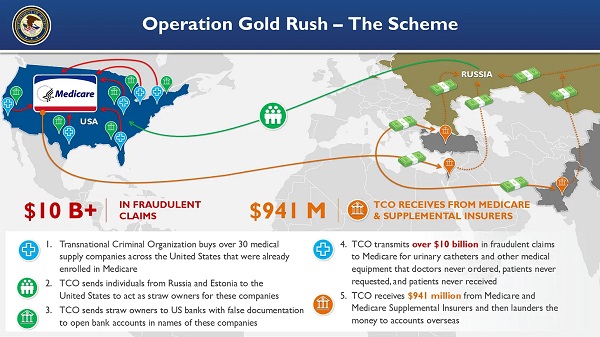
National Health Care Fraud Takedown Results in 324 Defendants Charged in Connection with Over $14.6 Billion in Alleged Fraud
-
 Health10 hours ago
RFK Jr. Unloads Disturbing Vaccine Secrets on Tucker—And Surprises Everyone on Trump
-
 Bruce Dowbiggin13 hours ago
The Game That Let Canadians Forgive The Liberals — Again
-
 Alberta1 day ago
COVID mandates protester in Canada released on bail after over 2 years in jail
-
 Crime2 days ago
Project Sleeping Giant: Inside the Chinese Mercantile Machine Linking Beijing’s Underground Banks and the Sinaloa Cartel
-
 Business1 day ago
Canada’s loyalty to globalism is bleeding our economy dry
-
 Alberta2 days ago
Alberta uncorks new rules for liquor and cannabis