
Community
Rotary Club of Red Deer Will Celebrate 100 Years by Awarding $1,000,000.00!!!


Leaving a Legacy for Red Deer
Apply today for an opportunity to receive
$1 Million dollars for your organization.
ROTARY CLUB OF RED DEER SEEKS A LEGACY 100 PROJECT FOR 2023
The Rotary Club of Red Deer, Red Deer’s longest active community service club, will be celebrating its 100th anniversary in 2023.
To celebrate this anniversary, the Rotary Club of Red Deer is prepared to invest a minimum of $1,000,000 in a Legacy capital project and is seeking a Red Deer area community capital project to fund ideally, the project should be substantially completed on or before our Club’s 100th anniversary in 2023.
Rotary International is a worldwide service organization with over 34,000 clubs and 1.2 million members who serve communities around the world. Rotary’s six areas of focus are:
1. Peace and con ict prevention/resolution 2. Disease prevention and treatment
3. Water and sanitation
4. Maternal and child health
5. Basic education and literacy
6. Economic and community development
Rotary is a non-political and non-secretarian organization open to all people regardless of race, colour, creed, religion, gender or political preference.
The Rotary Club of Red Deer invites submissions from not for pro t community organizations for this exciting opportunity marking Rotary’s 100th anniversary. Our goal is for the successful project to serve Red Deer and to embrace one or more of Rotary’s area of focus. Click for more detailed information on Rotary’s areas of focus.

In the past, the Rotary Club of Red Deer has been involved in many local area projects such as Rotary Park, Camp Alexo, Central Alberta Women’s Emergency Shelter, Red Deer Hospice, community playgrounds, scholarships and other smaller community initiatives. This signature project for the Rotary Club of Red Deer will be its premier project and appropriately re ect its commitment to the City and the surrounding area of Red Deer.
It is the intention of the Rotary Club of Red Deer to review submissions for potential legacy projects and assess them to determine suitability as our 100th anniversary project. The Rotary Club of Red Deer envisions a multi-phase evaluation process. The first phase should, at a minimum, provide conceptual detail of the project including:
1. Description of the project and its sustainability;
2. Timing of the project;
3. Estimated total capital cost of the project;
4. How the project will align itself with Rotary’s areas of focus and provide long term service to the community;
5. How the project will lend itself to other community partnerships; 6. How Rotary would be recognized.
From the initial project submissions, the Rotary Club of Red Deer will determine a short list and conduct a second phase detailed assessment in the rst quarter of 2018 with the intent of selecting a project as its Legacy 100 Project.
Project submissions should be submitted to later than Friday, January 26, 2018 and sent to:
Rotary Club of Red Deer
Box 372 Red Deer, Alberta T4N 5E9
Attention: Rotary Club of Red Deer Legacy Committee
Should there be any questions, please contact Ron Moisey, Rotary Club of Red Deer Legacy Committee, at 403-309-3973 or 403-392-1000 (cell) or e-mail [email protected].
Raymond Rogers
President, Rotary Club of Red Deer



From the Fraser Institute
By Jake Fuss and Grady Munro
There would have been 1.5 million more Canadians who donated to charity in 2023—and $755.5 million more in donations—had Canadians given to the same extent they did 10 years prior
According to recent polling, approximately one in five Canadians have skipped paying a bill over the past year so they can buy groceries. As families are increasingly hard-pressed to make ends meet, this undoubtedly means more and more people must seek out food banks, shelters and other charitable organizations to meet their basic necessities.
And each year, Canadians across the country donate their time and money to charities to help those in need—particularly around the holiday season. Yet at a time when the relatively high cost of living means these organizations need more resources, new data published by the Fraser Institute shows that the level of charitable giving in Canada is actually falling.
Specifically, over the last 10 years (2013 to 2023, the latest year of available data) the share of tax-filers who reported donating to charity fell from 21.9 per cent to 16.8 per cent. And while fewer Canadians are donating to charity, they’re also donating a smaller share of their income—during the same 10-year period, the share of aggregate income donated to charity fell from 0.55 per cent to 0.52 per cent.
To put this decline into perspective, consider this: there would have been 1.5 million more Canadians who donated to charity in 2023—and $755.5 million more in donations—had Canadians given to the same extent they did 10 years prior. Simply put, this long-standing decline in charitable giving in Canada ultimately limits the resources available for charities to help those in need.
On the bright side, despite the worrying long-term trends, the share of aggregate income donated to charity recently increased from 0.50 per cent in 2022 to 0.52 per cent in 2023. While this may seem like a marginal improvement, 0.02 per cent of aggregate income for all Canadians in 2023 was $255.7 million.
The provinces also reflect the national trends. From 2013 to 2023, every province saw a decline in the share of tax-filers donating to charity. These declines ranged from 15.4 per cent in Quebec to 31.4 per cent in Prince Edward Island.
Similarly, almost every province recorded a drop in the share of aggregate income donated to charity, with the largest being the 24.7 per cent decline seen in P.E.I. The only province to buck this trend was Alberta, which saw a 3.9 per cent increase in the share of aggregate income donated over the decade.
Just as Canada as a whole saw a recent improvement in the share of aggregate income donated, so too did many of the provinces. Indeed, seven provinces (except Manitoba, Nova Scotia and Newfoundland and Labrador) saw an increase in the share of aggregate income donated to charity from 2022 to 2023, with the largest increases occurring in Saskatchewan (7.9 per cent) and Alberta (6.7 per cent).
Canadians also volunteer their time to help those in need, yet the latest data show that volunteerism is also on the wane. According to Statistics Canada, the share of Canadians who volunteered (both formally and informally) fell by 8 per cent from 2018 to 2023. And the total numbers of hours volunteered (again, both formal and informal) fell by 18 per cent over that same period.
With many Canadians struggling to make ends meet, food banks, shelters and other charitable organizations play a critical role in providing basic necessities to those in need. Yet charitable giving—which provides resources for these charities—has long been on the decline. Hopefully, we’ll see this trend turn around swiftly.


|

|
|

|
|
|



Chinese Billionaire Tried To Build US-Born Baby Empire As Overseas Elites Turn To American Surrogates

Death by a thousand clicks – government censorship of Canada’s internet
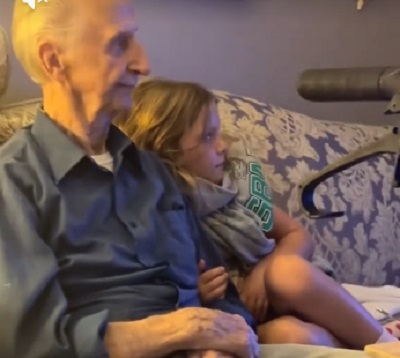
Viral TikTok video shows 7-year-old cuddling great-grandfather before he’s euthanized

Politicians should be honest about environmental pros and cons of electric vehicles
-
 Agriculture22 hours ago
Why is Canada paying for dairy ‘losses’ during a boom?
-
 Automotive1 day ago
Ford’s EV Fiasco Fallout Hits Hard
-
 Alberta23 hours ago
Alberta’s new diagnostic policy appears to meet standard for Canada Health Act compliance
-
 Censorship Industrial Complex24 hours ago
Top constitutional lawyer warns against Liberal bills that could turn Canada into ‘police state’
-
 Business2 days ago
There’s No Bias at CBC News, You Say? Well, OK…
-
 Energy2 days ago
Mortgaging Canada’s energy future — the hidden costs of the Carney-Smith pipeline deal
-
 International2 days ago
2025: The Year The Narrative Changed
-
 International2 days ago
Australian PM booed at Bondi vigil as crowd screams “shame!”