
Community
Red Deer’s strong connection to Lord Strathcona’s Horse


In my role as Honorary Lieutenant Colonel 41 Signal Regiment, I’ve been brushing up on my local military history. In a recent visit with Michael Dawe, former Archivist for the City and newly-minted City Councillor, he told me about our city’s connection to the the Lord Strathcona’s Horse and the story of Angus Jenkins, the first member of the Regiment killed in action. Here’s the first of 3 stories we’ll feature leading up to Remembrance Day this Saturday.
(by Michael Dawe – Photos courtesy Red Deer Archives unless noted)
Red Deer has a strong historical link with the Lord Strathcona’s, going back to the original creation of the regiment. In 1900, Lord Strathcona (Donald Smith), one of the founders of the Canadian Pacific Railway, offered to fund the raising of the regiment for service in the South African (Boer) War. Men across Western Canada and from Red Deer enthusiastically applied for enlistment in the new unit.
It was not hard to figure out the popularity of the Ld.S.H. It was a Western Canadian regiment, not one based elsewhere. It was a unit of cavalry/mounted rifles. The free-wheeling mobility of such a military unit was attractive to the cowboys who made up a sizeable portion of Central and Southern Alberta’s population at the time.
According to the Calgary Herald, 17 men from Red Deer and district applied for enlistment and 9 were accepted in the Ld.S.H. The regiment arrived in Cape Town in April 1900. They went into action in June as part of General Buller’s Natal Field Force.
Bad news started to reach Red Deer shortly thereafter. Archibald McNichol, of the Balmoral district on the east side of Red Deer became ill with enteric (typhoid fever). He passed away at Newcastle, South Africa on June 19, 1900.
On July 1, 1900 (Dominion Day), Angus Jenkins, also from Balmoral, was killed in an ambush near Waterval. He was the first member of the Lord Strathcona’s to be killed in action. His funeral was attended by the Earl of Dundonald and Sir Sam Steele, the commanding officer of the Ld.S.H.

On September 4, 1900, Charles Cruickshank, another young man from Balmoral, was killed in an enemy attack near Badfontein. He, and five others of the Ld.S.H. who were killed that day, were buried on the banks of the Crocodile River.
In the fall of 1900, a decision was made to build a hospital in Red Deer as a memorial to the three young men of the Ld.S.H. who had lost their lives in service overseas. Lord Strathcona made a large donation to the project. When the Red Deer Memorial Hospital officially opened in April 1904, a large marble plaque was erected in the hospital so that the three young men would never be forgotten.
The veterans of the Ld.S.H. had a significant influence on Red Deer after the end of the Boer War. A.T. Stephenson became the first Town/City Commissioner in 1908,. He was the most important person in the running of municipality for the next 27 years, despite on-going ill-health due to the malaria which he had contracted while in South Africa.
When the First World War broke out in the summer of 1914, many local young men flocked to enlist in the cavalry/mounted rifles, but they mainly joined the 35 Central Alberta Horse/ 5 Battalion. Nevertheless, some, such as H.B. (Ted) George joined the Ld.S.H. Ted George not only survived his service in the trenches of the Western Front. He narrowly escaped being killed in the terrible Halifax Explosion of 1917.
The strong connections between Red Deer and the Lord Strathconas continued for many more years. Lionel Page, who had been a student in Red Deer and then farmed what is now the Rosedale subdivision, became a highly decorated veteran of the First World War. After the return of peace, he enlisted with the Ld.S.H. He was promoted to Lieutenant Colonel and became the Ld.S.H.’s commanding officer in 1929. During the Second World War, he became the Commander in Chief of the Canadian Army’s Atlantic Command.
The distinguished service of the Lord Strathcona’s to Canada has continued through the Korean Conflict, peace-keeping in Bosnia and, most recently, the war in Afghanistan.



From the Fraser Institute
By Jake Fuss and Grady Munro
There would have been 1.5 million more Canadians who donated to charity in 2023—and $755.5 million more in donations—had Canadians given to the same extent they did 10 years prior
According to recent polling, approximately one in five Canadians have skipped paying a bill over the past year so they can buy groceries. As families are increasingly hard-pressed to make ends meet, this undoubtedly means more and more people must seek out food banks, shelters and other charitable organizations to meet their basic necessities.
And each year, Canadians across the country donate their time and money to charities to help those in need—particularly around the holiday season. Yet at a time when the relatively high cost of living means these organizations need more resources, new data published by the Fraser Institute shows that the level of charitable giving in Canada is actually falling.
Specifically, over the last 10 years (2013 to 2023, the latest year of available data) the share of tax-filers who reported donating to charity fell from 21.9 per cent to 16.8 per cent. And while fewer Canadians are donating to charity, they’re also donating a smaller share of their income—during the same 10-year period, the share of aggregate income donated to charity fell from 0.55 per cent to 0.52 per cent.
To put this decline into perspective, consider this: there would have been 1.5 million more Canadians who donated to charity in 2023—and $755.5 million more in donations—had Canadians given to the same extent they did 10 years prior. Simply put, this long-standing decline in charitable giving in Canada ultimately limits the resources available for charities to help those in need.
On the bright side, despite the worrying long-term trends, the share of aggregate income donated to charity recently increased from 0.50 per cent in 2022 to 0.52 per cent in 2023. While this may seem like a marginal improvement, 0.02 per cent of aggregate income for all Canadians in 2023 was $255.7 million.
The provinces also reflect the national trends. From 2013 to 2023, every province saw a decline in the share of tax-filers donating to charity. These declines ranged from 15.4 per cent in Quebec to 31.4 per cent in Prince Edward Island.
Similarly, almost every province recorded a drop in the share of aggregate income donated to charity, with the largest being the 24.7 per cent decline seen in P.E.I. The only province to buck this trend was Alberta, which saw a 3.9 per cent increase in the share of aggregate income donated over the decade.
Just as Canada as a whole saw a recent improvement in the share of aggregate income donated, so too did many of the provinces. Indeed, seven provinces (except Manitoba, Nova Scotia and Newfoundland and Labrador) saw an increase in the share of aggregate income donated to charity from 2022 to 2023, with the largest increases occurring in Saskatchewan (7.9 per cent) and Alberta (6.7 per cent).
Canadians also volunteer their time to help those in need, yet the latest data show that volunteerism is also on the wane. According to Statistics Canada, the share of Canadians who volunteered (both formally and informally) fell by 8 per cent from 2018 to 2023. And the total numbers of hours volunteered (again, both formal and informal) fell by 18 per cent over that same period.
With many Canadians struggling to make ends meet, food banks, shelters and other charitable organizations play a critical role in providing basic necessities to those in need. Yet charitable giving—which provides resources for these charities—has long been on the decline. Hopefully, we’ll see this trend turn around swiftly.


|

|
|

|
|
|


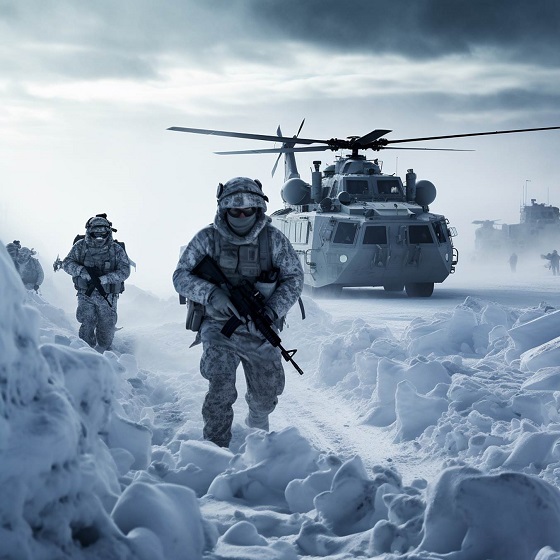
Ottawa’s Newly Released Defence Plan Crosses a Dangerous Line

Carney Floor Crossing Raises Counterintelligence Questions aimed at China, Former Senior Mountie Argues

All 12 Vaccinated vs. Unvaccinated Studies Found the Same Thing: Unvaccinated Children Are Far Healthier

Ottawa is still dodging the China interference threat
-
 Agriculture1 day ago
End Supply Management—For the Sake of Canadian Consumers
-
 Digital ID1 day ago
Canadian government launches trial version of digital ID for certain licenses, permits
-
 Alberta1 day ago
Alberta Next Panel calls to reform how Canada works
-
 Business23 hours ago
The “Disruptor-in-Chief” places Canada in the crosshairs
-
 International20 hours ago
Georgia county admits illegally certifying 315k ballots in 2020 presidential election
-
 Artificial Intelligence24 hours ago
UK Police Pilot AI System to Track “Suspicious” Driver Journeys
-
 Energy19 hours ago
‘The electric story is over’
-
 International1 day ago
World-leading biochemist debunks evolutionary theory