
Community
Red Deer RCMP want your help naming their new robot!


Red Deer RCMP launch contest to name robot
Jan. 7, 2018
Red Deer, Alta. – A new robot has made contact at the Red Deer RCMP detachment, but police need the public’s help in giving the robot a name. The robot, used by Victim Services to help children through police and court proceedings, can dance, sing and play games. But before the robot gets to work supporting children, it needs a name.
Starting today, children/youth ages 5-14 can submit their robot name suggestions for a chance to win prizes, including being named “Police Chief for the Day.”
“The robot’s job is to make children feel more comfortable when they are working with police,” said Constable Derek Turner. “This can be an overwhelming experience, but the robot provides support and walks children through every step, helping to make the process a little less stressful.”
The contest is open from January 7-14, and names can be submitted at www.reddeer.ca/robot. Voting on the top three submissions will take place from January 17-20, with the name being unveiled on January 24.
For more information and to meet the robot, visit www.reddeer.ca/robot.



From the Fraser Institute
By Jake Fuss and Grady Munro
There would have been 1.5 million more Canadians who donated to charity in 2023—and $755.5 million more in donations—had Canadians given to the same extent they did 10 years prior
According to recent polling, approximately one in five Canadians have skipped paying a bill over the past year so they can buy groceries. As families are increasingly hard-pressed to make ends meet, this undoubtedly means more and more people must seek out food banks, shelters and other charitable organizations to meet their basic necessities.
And each year, Canadians across the country donate their time and money to charities to help those in need—particularly around the holiday season. Yet at a time when the relatively high cost of living means these organizations need more resources, new data published by the Fraser Institute shows that the level of charitable giving in Canada is actually falling.
Specifically, over the last 10 years (2013 to 2023, the latest year of available data) the share of tax-filers who reported donating to charity fell from 21.9 per cent to 16.8 per cent. And while fewer Canadians are donating to charity, they’re also donating a smaller share of their income—during the same 10-year period, the share of aggregate income donated to charity fell from 0.55 per cent to 0.52 per cent.
To put this decline into perspective, consider this: there would have been 1.5 million more Canadians who donated to charity in 2023—and $755.5 million more in donations—had Canadians given to the same extent they did 10 years prior. Simply put, this long-standing decline in charitable giving in Canada ultimately limits the resources available for charities to help those in need.
On the bright side, despite the worrying long-term trends, the share of aggregate income donated to charity recently increased from 0.50 per cent in 2022 to 0.52 per cent in 2023. While this may seem like a marginal improvement, 0.02 per cent of aggregate income for all Canadians in 2023 was $255.7 million.
The provinces also reflect the national trends. From 2013 to 2023, every province saw a decline in the share of tax-filers donating to charity. These declines ranged from 15.4 per cent in Quebec to 31.4 per cent in Prince Edward Island.
Similarly, almost every province recorded a drop in the share of aggregate income donated to charity, with the largest being the 24.7 per cent decline seen in P.E.I. The only province to buck this trend was Alberta, which saw a 3.9 per cent increase in the share of aggregate income donated over the decade.
Just as Canada as a whole saw a recent improvement in the share of aggregate income donated, so too did many of the provinces. Indeed, seven provinces (except Manitoba, Nova Scotia and Newfoundland and Labrador) saw an increase in the share of aggregate income donated to charity from 2022 to 2023, with the largest increases occurring in Saskatchewan (7.9 per cent) and Alberta (6.7 per cent).
Canadians also volunteer their time to help those in need, yet the latest data show that volunteerism is also on the wane. According to Statistics Canada, the share of Canadians who volunteered (both formally and informally) fell by 8 per cent from 2018 to 2023. And the total numbers of hours volunteered (again, both formal and informal) fell by 18 per cent over that same period.
With many Canadians struggling to make ends meet, food banks, shelters and other charitable organizations play a critical role in providing basic necessities to those in need. Yet charitable giving—which provides resources for these charities—has long been on the decline. Hopefully, we’ll see this trend turn around swiftly.


|

|
|

|
|
|


Georgia county admits illegally certifying 315k ballots in 2020 presidential election

ICYMI: Largest fraud in US history? Independent Journalist visits numerous daycare centres with no children, revealing massive scam
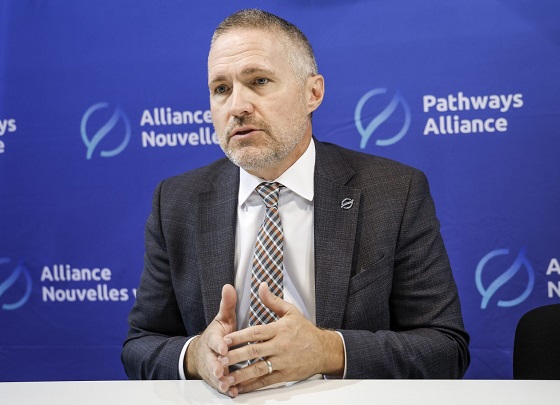
Alberta project would be “the biggest carbon capture and storage project in the world”

Canada’s debate on energy levelled up in 2025
-
 Energy23 hours ago
Rulings could affect energy prices everywhere: Climate activists v. the energy industry in 2026
-
 Digital ID1 day ago
The Global Push for Government Mandated Digital IDs And Why You Should Worry
-
 Bruce Dowbiggin23 hours ago
The Rise Of The System Engineer: Has Canada Got A Prayer in 2026?
-
 International2 days ago
Trump confirms first American land strike against Venezuelan narco networks
-
 International23 hours ago
Maduro says he’s “ready” to talk
-
 Business2 days ago
How convenient: Minnesota day care reports break-in, records gone
-
 Business2 days ago
The great policy challenge for governments in Canada in 2026
-
 International23 hours ago
LOCKED AND LOADED: Trump threatens U.S. response if Iran slaughters protesters