
Alberta
Red Deer Hospital preliminary designs unveiled



Alberta’s government shared preliminary designs of the Red Deer Regional Hospital Centre redevelopment with residents from central Alberta.
On March 14, Alberta’s government held its first public information session since January 2023 with Albertans in Red Deer and area about the Red Deer Regional Hospital Centre redevelopment. Albertans have long waited for the redevelopment and Alberta’s government made the first significant commitment and progress on the hospital by allocating $100 million in Budget 2020, followed by another $1.8-billion commitment in Budget 2022.
In addition to preliminary design drawings, residents were able to view a video simulating a flyover of the new patient tower and power plant. Project representatives were also on hand to speak about the project. The session was attended by about 150 residents, media and officials including Ken Johnston, mayor of Red Deer.

“We were excited to share preliminary designs for the Red Deer Hospital redevelopment yesterday. The number of people who attended the session validates the importance of this project to the central region. We are proud of the role Infrastructure is playing in delivering one of the most ambitious hospital redevelopment projects in Alberta’s history.”
“As the MLA for Red Deer-North and the Health Minister, I’m very proud of the progress we’ve achieved, and I remain dedicated to advocating for this project. Albertans should be able to access health care when and where they need it. This project will improve health outcomes for Albertans living in Red Deer and across central Alberta by increasing the facility’s capacity and providing much-needed services and resources, including new cardiac catheterization labs, close to home.”
Design work began in June 2023. With schematic design now complete, the hospital redevelopment is on schedule and on budget. The next stage of the project, design development, is now underway. Once complete, the new expansion will add up to 200 beds to the existing facility, bringing the total number of beds to up to 570.
“With an investment of $810 million over three years in the Budget 2024 Capital Plan, the expansion of the Red Deer Regional Hospital is Alberta’s biggest infrastructure project. Last night’s information session keeps Central Albertans informed about this exciting, transformative investment in our hospital, supporting principles of transparency and accountability in the use of taxpayer dollars.”
Quick facts
- There are two major components of this redevelopment:
- Project 1: construction of a new patient tower and expansion and renovation of the existing hospital’s main building
- Project 2: construction of an ambulatory building
- The project will upgrade several services throughout the hospital site including:
- an additional patient tower
- six new operating rooms
- new Medical Device Reprocessing department
- new cardiac catheterization labs
- renovations to various areas within the main building
- newly renovated and expanded emergency department, and
- a new ambulatory clinic building to be located adjacent to the surface parkade
Related information



From the Fraser Institute
By Tegan Hill
Last Friday, less than a week before Christmas, the Smith government quietly released the final report from its Alberta Next Panel, which assessed Alberta’s role in Canada. Among other things, the panel recommends that the federal government transfer some of its tax revenue to provincial governments so they can assume more control over the delivery of provincial services. Based on Canada’s experience in the 1990s, this plan could deliver real benefits for Albertans and all Canadians.
Federations such as Canada typically work best when governments stick to their constitutional lanes. Indeed, one of the benefits of being a federalist country is that different levels of government assume responsibility for programs they’re best suited to deliver. For example, it’s logical that the federal government handle national defence, while provincial governments are typically best positioned to understand and address the unique health-care and education needs of their citizens.
But there’s currently a mismatch between the share of taxes the provinces collect and the cost of delivering provincial responsibilities (e.g. health care, education, childcare, and social services). As such, Ottawa uses transfers—including the Canada Health Transfer (CHT)—to financially support the provinces in their areas of responsibility. But these funds come with conditions.
Consider health care. To receive CHT payments from Ottawa, provinces must abide by the Canada Health Act, which effectively prevents the provinces from experimenting with new ways of delivering and financing health care—including policies that are successful in other universal health-care countries. Given Canada’s health-care system is one of the developed world’s most expensive universal systems, yet Canadians face some of the longest wait times for physicians and worst access to medical technology (e.g. MRIs) and hospital beds, these restrictions limit badly needed innovation and hurt patients.
To give the provinces more flexibility, the Alberta Next Panel suggests the federal government shift tax points (and transfer GST) to the provinces to better align provincial revenues with provincial responsibilities while eliminating “strings” attached to such federal transfers. In other words, Ottawa would transfer a portion of its tax revenues from the federal income tax and federal sales tax to the provincial government so they have funds to experiment with what works best for their citizens, without conditions on how that money can be used.
According to the Alberta Next Panel poll, at least in Alberta, a majority of citizens support this type of provincial autonomy in delivering provincial programs—and again, it’s paid off before.
In the 1990s, amid a fiscal crisis (greater in scale, but not dissimilar to the one Ottawa faces today), the federal government reduced welfare and social assistance transfers to the provinces while simultaneously removing most of the “strings” attached to these dollars. These reforms allowed the provinces to introduce work incentives, for example, which would have previously triggered a reduction in federal transfers. The change to federal transfers sparked a wave of reforms as the provinces experimented with new ways to improve their welfare programs, and ultimately led to significant innovation that reduced welfare dependency from a high of 3.1 million in 1994 to a low of 1.6 million in 2008, while also reducing government spending on social assistance.
The Smith government’s Alberta Next Panel wants the federal government to transfer some of its tax revenues to the provinces and reduce restrictions on provincial program delivery. As Canada’s experience in the 1990s shows, this could spur real innovation that ultimately improves services for Albertans and all Canadians.

Tegan Hill
Director, Alberta Policy, Fraser Institute

From the Fraser Institute
By Jason Clemens and Elmira Aliakbari
The federal and Alberta governments recently jointly released the details of a memorandum of understanding (MOU), which lays the groundwork for potentially significant energy infrastructure including an oil pipeline from Alberta to the west coast that would provide access to Asia and other international markets. While an improvement on the status quo, the MOU’s ambiguity risks creating an oligopoly.
An oligopoly is basically a monopoly but with multiple firms instead of a single firm. It’s a market with limited competition where a few firms dominate the entire market, and it’s something economists and policymakers worry about because it results in higher prices, less innovation, lower investment and/or less quality. Indeed, the federal government has an entire agency charged with worrying about limits to competition.
There are a number of aspects of the MOU where it’s not sufficiently clear what Ottawa and Alberta are agreeing to, so it’s easy to envision a situation where a few large firms come to dominate the oilsands.
Consider the clear connection in the MOU between the development and progress of Pathways, which is a large-scale carbon capture project, and the development of a bitumen pipeline to the west coast. The MOU explicitly links increased production of both oil and gas (“while simultaneously reaching carbon neutrality”) with projects such as Pathways. Currently, Pathways involves five of Canada’s largest oilsands producers: Canadian Natural, Cenovus, ConocoPhillips Canada, Imperial and Suncor.
What’s not clear is whether only these firms, or perhaps companies linked with Pathways in the future, will have access to the new pipeline. Similarly, only the firms with access to the new west coast pipeline would have access to the new proposed deep-water port, allowing access to Asian markets and likely higher prices for exports. Ottawa went so far as to open the door to “appropriate adjustment(s)” to the oil tanker ban (C-48), which prevents oil tankers from docking at Canadian ports on the west coast.
One of the many challenges with an oligopoly is that it prevents new entrants and entrepreneurs from challenging the existing firms with new technologies, new approaches and new techniques. This entrepreneurial process, rooted in innovation, is at the core of our economic growth and progress over time. The MOU, though not designed to do this, could prevent such startups from challenging the existing big players because they could face a litany of restrictive anti-development regulations introduced during the Trudeau era that have not been reformed or changed since the new Carney government took office.
And this is not to criticize or blame the companies involved in Pathways. They’re acting in the interests of their customers, staff, investors and local communities by finding a way to expand their production and sales. The fault lies with governments that were not sufficiently clear in the MOU on issues such as access to the new pipeline.
And it’s also worth noting that all of this is predicated on an assumption that Alberta can achieve the many conditions included in the MOU, some of which are fairly difficult. Indeed, the nature of the MOU’s conditions has already led some to suggest that it’s window dressing for the federal government to avoid outright denying a west coast pipeline and instead shift the blame for failure to the Smith government.
Assuming Alberta can clear the MOU’s various hurdles and achieve the development of a west coast pipeline, it will certainly benefit the province and the country more broadly to diversify the export markets for one of our most important export products. However, the agreement is far from ideal and could impose much larger-than-needed costs on the economy if it leads to an oligopoly. At the very least we should be aware of these risks as we progress.

Jason Clemens
Executive Vice President, Fraser Institute

Elmira Aliakbari


Alberta’s huge oil sands reserves dwarf U.S. shale

COP30 finally admits what resource workers already knew: prosperity and lower emissions must go hand in hand

Canada’s sudden rediscovery of energy ambition has been greeted with a familiar charge: hypocrisy

Ottawa’s Newly Released Defence Plan Crosses a Dangerous Line
-
armed forces20 hours ago
Ottawa’s Newly Released Defence Plan Crosses a Dangerous Line
-
 espionage19 hours ago
Carney Floor Crossing Raises Counterintelligence Questions aimed at China, Former Senior Mountie Argues
-
 Health18 hours ago
All 12 Vaccinated vs. Unvaccinated Studies Found the Same Thing: Unvaccinated Children Are Far Healthier
-
 Energy21 hours ago
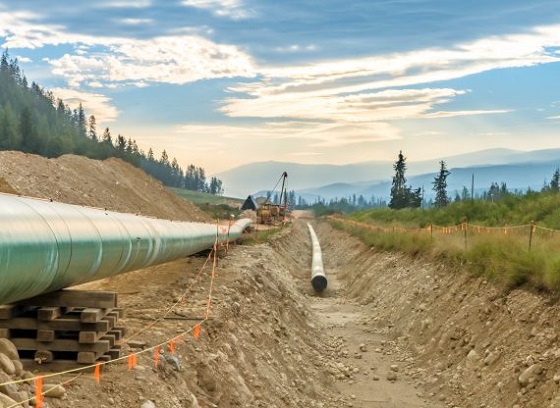
75 per cent of Canadians support the construction of new pipelines to the East Coast and British Columbia
-
 Opinion18 hours ago
Pope Leo XIV’s Christmas night homily
-
 Energy2 days ago
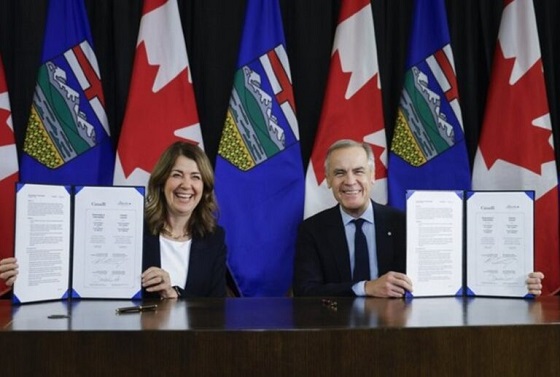
The Top News Stories That Shaped Canadian Energy in 2025 and Will Continue to Shape Canadian Energy in 2026
-
 armed forces18 hours ago
Remembering Afghanistan and the sacrifices of our military families
-
 Energy2 days ago
Western Canada’s supply chain for Santa Claus