
Education
Rebels earn Jim Donlevy Memorial Trophy as WHL Scholastic Team of the Year



News release from the Red Deer Rebels
It’s a great accomplishment for the Red Deer Rebels as the club is the Western Hockey League’s Scholastic Team of the Year.
The Rebels were announced Tuesday as the 2023-24 winner of the Jim Donlevy Memorial Trophy, presented annually to the WHL member Club that achieves the highest overall academic performance during the regular season.
“On behalf of the Red Deer Rebels, I’d like to thank the league for being selected for the Jim Donlevy Memorial Trophy. We take great pride in working with our players to be the best they can be,” says Teresa Jaeger, Rebels Education Advisor.
“I’d like to thank the players for all the hard work and commitment they put into getting their assignments done and getting the best grades. I’d also like to thank the teachers at Notre Dame and Athabasca University for helping the team.”
The Rebels had nine players attending École Secondaire Notre Dame High School in Red Deer during the season, while other players did online programming through Athabasca University.
The combined average for all Rebels high school players this season is 88%.
The Rebels have taken a collaborative approach to working with players to achieve academic success. Jaeger, Rebels Hockey Operations Manager Arie Postmus, and Notre Dame Vice Principal Curtis Lansing, work hand in hand to continually monitor how players are progressing. Daily liaisons with players provide the structure and support necessary to getting the most from the time available to learning.
Students not enrolled at Notre Dame are monitored in their progress by the Education Advisor having contact with their teachers and home school administrators.
“It is fantastic to see our players rewarded for the effort they put into their schoolwork. The dedication they showed to balance on ice performance and off ice performance in the classroom is very rewarding” said Postmus.
“I am very happy for them all. Teresa also deserves a ton of credit for the countless hours she gives to head our education program and support these players to ensure they graduate with stellar marks.”
The WHL Scholastic Team of the Year Award is named in honour of Jim Donlevy, long-time WHL Director, Education Services, who passed away in August 2019 following a courageous battle with cancer. This marks the fourth presentation of the Jim Donlevy Memorial Trophy to a WHL Club since its dedication.
Donlevy was instrumental in the creation and continued success of the WHL Scholarship program – the largest privately-funded amateur sports scholarship program in Canada, and one of the most comprehensive education programs for hockey in the world today. Since the establishment of the WHL Scholarship in 1993-94, nearly 8,000 scholarships have been accessed, totaling an investment of over $35 million by WHL Clubs.
“This award win is a great achievement that celebrates all the hard work by our players and staff. The Rebels place great importance in ensuring our players are focused on their academics during the season, and we take pride in their success.” says Rebels Owner, President, and General Manager Brent Sutter.
“Congratulations to the players, Teresa and Arie for this well-deserved honour, and thank you to our partner schools for all your help.”
The Rebels are just the third Alberta-based team, and first since the Calgary Hitmen in 2013-14, to win the Jim Donlevy Memorial Trophy/WHL Scholastic Team of the Year Award since 2000.
News release from the Western Hockey League
The Western Hockey League announced today the Red Deer Rebels have been awarded the Jim Donlevy Memorial Trophy as the WHL Scholastic Team of the Year for the 2023-24 season.
The WHL Scholastic Team of the Year Award was renamed in honour of Jim Donlevy, longtime WHL Director, Education Services, who passed away in August 2019 following a courageous battle with cancer. This marks the fourth occasion on which the Jim Donlevy Memorial Trophy will be presented to a WHL Club since its dedication.
“On behalf of the Red Deer Rebels, I’d like to thank the league in being selected for the Jim Donlevy Scholastic Team,” said Teresa Jaeger, Education Advisor for the Red Deer Rebels. “We take great pride in education here and working with our players to be the best that they can be.
“I’d like to thank the players for their hard work and all their commitment they put into getting the best grades and getting their assignments done. I’d also like to thank the teachers at Notre Dame and Athabasca University for helping the team.”
With nine players attending high school, the Rebels combined high-school average for the 2023-24 academic season was 88 per cent. A hardworking group, the Rebels’ high-school aged players put pride in achieving in the classroom, going the extra mile in order to have success.
“On behalf of my family, I am honoured to present the winner of the Jim Donlevy Memorial Trophy, presented to the WHL Scholastic Team of the Year,” said Lisa Stollery, daughter of Jim Donlevy. “A huge congratulations to the Red Deer Rebels – their extremely hardworking student-athletes, their teachers who help these young men to excel in their academics, their Education Advisor Teresa Jaeger, the Rebels coaches and management team, and the families that support and love them. They are extremely hardworking students.”
As an organization, the Rebels have taken a collaborative approach to working with players to ensure academic success. Jaeger works closely with Hockey Operations staff and leadership from Red Deer’s Notre Dame High School to continually monitor how players are progressing. By having daily sessions, players are provided with the structure and support required to get the most from the learning time available to them.
While on the road, Hockey Operations staff provide leadership and support to keep players on academic track during road trips. Times are designated for players to focus on coursework and they have the opportunity to connect with teachers and Jaeger through Zoom, text, email and Google Meets.
The Rebels insistence on a regular and productive academic routine, combined with support and supervision, has created an environment that fosters academic success.

This is the first occasion in which the Red Deer Rebels have been named the WHL Scholastic Team of the Year.
Winners of the Jim Donlevy Memorial Trophy (since 2004)
2023-24: Red Deer Rebels
2022-23: Portland Winterhawks
2021-22: Brandon Wheat Kings
2020-21: Not presented due to COVID-19
2019-20: Kamloops Blazers
2018-19: Portland Winterhawks
2017-18: Saskatoon Blades
2016-17: Victoria Royals
2015-16: Spokane Chiefs
2014-15: Kamloops Blazers
2013-14: Calgary Hitmen
2012-13: Portland Winterhawks
2011-12: Edmonton Oil Kings
2010-11: Swift Current Broncos
2009-10: Tri-City Americans
2008-09: Prince Albert Raiders
2007-08: Chilliwack Bruins
2006-07: Kamloops Blazers
2005-06: Kootenay ICE
2004-05: Vancouver Giants
2003-04: Portland Winter Hawks


From the Fraser Institute
Odds are, you can’t tell whether this sentence was written by AI. Schools across Canada face the same problem. And happily, some are finding simple solutions.
Manitoba’s Division Scolaire Franco-Manitobaine recently issued new guidelines for teachers, to only assign optional homework and reading in grades Kindergarten to six, and limit homework in grades seven to 12. The reason? The proliferation of generative artificial intelligence (AI) chatbots such as ChatGPT make it very difficult for teachers, juggling a heavy workload, to discern genuine student work from AI-generated text. In fact, according to Division superintendent Alain Laberge, “Most of the [after-school assignment] submissions, we find, are coming from AI, to be quite honest.”
This problem isn’t limited to Manitoba, of course.
Two provincial doors down, in Alberta, new data analysis revealed that high school report card grades are rising while scores on provincewide assessments are not—particularly since 2022, the year ChatGPT was released. Report cards account for take-home work, while standardized tests are written in person, in the presence of teaching staff.
Specifically, from 2016 to 2019, the average standardized test score in Alberta across a range of subjects was 64 while the report card grade was 73.3—or 9.3 percentage points higher). From 2022 and 2024, the gap increased to 12.5 percentage points. (Data for 2020 and 2021 are unavailable due to COVID school closures.)
In lieu of take-home work, the Division Scolaire Franco-Manitobaine recommends nightly reading for students, which is a great idea. Having students read nightly doesn’t cost schools a dime but it’s strongly associated with improving academic outcomes.
According to a Programme for International Student Assessment (PISA) analysis of 174,000 student scores across 32 countries, the connection between daily reading and literacy was “moderately strong and meaningful,” and reading engagement affects reading achievement more than the socioeconomic status, gender or family structure of students.
All of this points to an undeniable shift in education—that is, teachers are losing a once-valuable tool (homework) and shifting more work back into the classroom. And while new technologies will continue to change the education landscape in heretofore unknown ways, one time-tested winning strategy is to go back to basics.
And some of “the basics” have slipped rapidly away. Some college students in elite universities arrive on campus never having read an entire book. Many university professors bemoan the newfound inability of students to write essays or deconstruct basic story components. Canada’s average PISA scores—a test of 15-year-olds in math, reading and science—have plummeted. In math, student test scores have dropped 35 points—the PISA equivalent of nearly two years of lost learning—in the last two decades. In reading, students have fallen about one year behind while science scores dropped moderately.
The decline in Canadian student achievement predates the widespread access of generative AI, but AI complicates the problem. Again, the solution needn’t be costly or complicated. There’s a reason why many tech CEOs famously send their children to screen-free schools. If technology is too tempting, in or outside of class, students should write with a pencil and paper. If ChatGPT is too hard to detect (and we know it is, because even AI often can’t accurately detect AI), in-class essays and assignments make sense.
And crucially, standardized tests provide the most reliable equitable measure of student progress, and if properly monitored, they’re AI-proof. Yet standardized testing is on the wane in Canada, thanks to long-standing attacks from teacher unions and other opponents, and despite broad support from parents. Now more than ever, parents and educators require reliable data to access the ability of students. Standardized testing varies widely among the provinces, but parents in every province should demand a strong standardized testing regime.
AI may be here to stay and it may play a large role in the future of education. But if schools deprive students of the ability to read books, structure clear sentences, correspond organically with other humans and complete their own work, they will do students no favours. The best way to ensure kids are “future ready”—to borrow a phrase oft-used to justify seesawing educational tech trends—is to school them in the basics.

Paige MacPherson
Senior Fellow, Education Policy, Fraser Institute
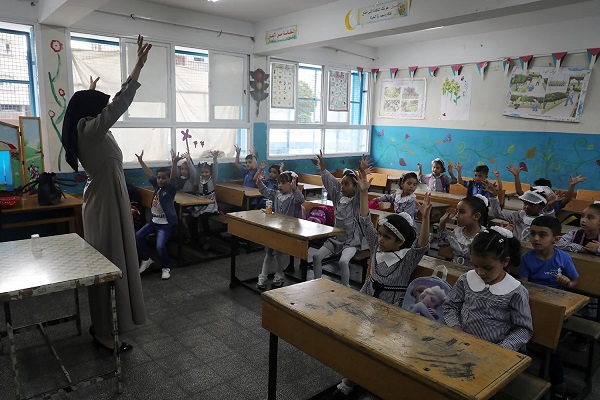

IMPACT-se just released their Review of the 2025-2026 Palestinian Authority School Curriculum (Grades 1-12). They reviewed 290 text books and 71 teacher guides (both printed and digital) currently in use by schools charged with educating Palestinian children. The results were unambiguous:
“The review finds that the 2025–2026 Palestinian Authority curriculum continues to systematically violate UNESCO principles and educational standards. Published in September 2025, the curriculum incites antisemitism and violence, promotes jihad and martyrdom, glorifies terrorism, rejects peacemaking and the two-state solution, and erases Israel from maps. It has not been substantively modified since the 2020–2021 school year, maintaining the same ideological framework first established in the 2016 reform cycle.”
In other words, the glorification of violence and deep racial hatred is, by design, woven into the fabric of every topic and virtually every lesson Palestinian children are taught.
The offensive examples were hardly rare exceptions throughout those 361 books. There were, for example:
- 50 examples (taking up a full 70 pages in the report) depicting Israelis or Jews as demonic or motiveless aggressors
- 47 examples of erasure of Israel from maps and language (declaring Palestine “from river to sea”)
- 56 examples of the encouragement of martyrdom and violent jihad
- 12 examples of the overt politicization of science and math
In addition, since 2016, 29 references to peace agreements, Israel, and Jews were removed from PA curriculum texts.
Overall, around 60 percent of the report’s examples come from material aimed at grades 9-11. Nevertheless, 17 examples of indoctrination (around 4 percent of the total) came from grades 1-4.
But what does all that have to do with Canada? Well, Canada has been a steady and reliable funder for UNRWA (United Nations Relief and Works Agency for Palestine Refugees in the Near East), UNICEF (United Nations Children’s Fund), UNESCO (United Nations Educational, Scientific and Cultural Organization), and the World Bank’s provision of educational services to Palestinians.
So what? Don’t all Western nations provide the same support? Not exactly.
- A May 2025 resolution adopted by the European Parliament demanded that EU financial assistance be made conditional on removal of hate material, and urged full compliance with standards of peace and tolerance for education.
- The U.K. has, in past years, cut or reduced its funding to UNRWA over concerns about incitement in educational textbooks.
- The U.S. hasn’t provided any support for UNRWA since the Biden administration paused funding in January, 2024.
- It seems that both Sweden and the Netherlands have either cut or are phasing out their UNRWA funding.
But in May 2024, Canada committed to $65 million in new funding – which follows a brief and meaningless “pause” in UNRWA funding (where no scheduled payments were actually interrupted). That brings the funding total since 2016 to $259 million. And there’s no public record of any of that money being conditional on changes to educational textbooks.
The Global Affairs Canada officials who make these spending decisions are the ones responsible for applying official government policy. And the message driving that policy is pretty clear (pro forma “antisemitism is not who we are” press releases notwithstanding). The Government of Canada is absolutely down with pouring millions into the promotion of race-driven violence.
Is Global Affairs Canada Wasting Your Tax Dollars Abroad?

It seems like forever since I last wrote about program spending at Global Affairs Canada (GAC). I’m not aware of any big-picture changes to department policy in the meantime, but their Project Browser tool is still there – and it’s still a welcome resource for transparency.
How Does UNRWA Spend the Funding it Receives From the Canadian Government?

The government of Canada – through Global Affairs Canada – has long been among the major financial supporters of The United Nations Relief and Works Agency for Palestine Refugees in the Near East (UNRWA). The 75 year-old United Nations agency has a yearly budget that’s grown to more than 900 million US dollars, and has long been accused of antisemitism,…
Paying for Bad Government Choices

Who picks up the tab when budgetary bets go horribly wrong? Taxpayers, of course. Duh.


Alberta Next Panel calls to reform how Canada works

Canadian government launches trial version of digital ID for certain licenses, permits

End Supply Management—For the Sake of Canadian Consumers

Georgia county admits illegally certifying 315k ballots in 2020 presidential election
-
 Business4 hours ago
ICYMI: Largest fraud in US history? Independent Journalist visits numerous daycare centres with no children, revealing massive scam
-
 Daily Caller1 day ago
US Halts Construction of Five Offshore Wind Projects Due To National Security
-
 Daily Caller1 day ago
While Western Nations Cling to Energy Transition, Pragmatic Nations Produce Energy and Wealth
-
 Alberta1 day ago
Alberta Next Panel calls for less Ottawa—and it could pay off
-
 Fraser Institute2 days ago
Carney government sowing seeds for corruption in Ottawa
-
 Bruce Dowbiggin1 day ago
Be Careful What You Wish For In 2026: Mark Carney With A Majority
-
 Energy2 days ago
Why Japan wants Western Canadian LNG
-
 Frontier Centre for Public Policy2 days ago
Tent Cities Were Rare Five Years Ago. Now They’re Everywhere