
Frontier Centre for Public Policy
Peckford: The legality and morality of our country are no longer aligned


From the Frontier Centre for Public Policy
“Our legal system may find me/us guilty, but the legality and morality of our country are no longer aligned.”
This is a part of the statement by Marco Huigenbos of the Coutts three after being found guilty of mischief for behaviour at the Alberta border during the Covid protests.

The “Coutts Three,” Marco Van Huigenbos, Alex Van Herk and George Janzen
Mr. Huigenbos hits the nail squarely on the head – – –
This country through its so called legal system has ignored the Charter of Rights and Freedoms opening words —‘Whereas Canada is founded on principles that recognize the Supremacy of God and the Rule of Law ‘ and abused Section 1 of this same Charter by violating ‘ demonstrably justify’ and in ‘a free and democratic society ‘ and hence no longer has the decency or respect towards its people that is characteristic of a democratic nation.

Thousands have been injured and many hundreds dead as a result of Governments’ mandates and lockdowns and blatant coercion and lies to use experimental health damaging vaccines. Peoples’ rights and freedoms have been trampled on and our Constitution destroyed.
These Coutts men are to be lauded for their courage, their faith and their tenacity in the face of the country’s leadership, at all levels, that has lost its way.
This present leadership political, judicial in our country, at federal, provincial and municipal levels have abused the efforts our early 19th century reformers who were fighting for our rights and freedoms and have insulted all those who fought for our country’s freedom in the great wars.
Mr. Huigenbos’s wisdom shines forth today.
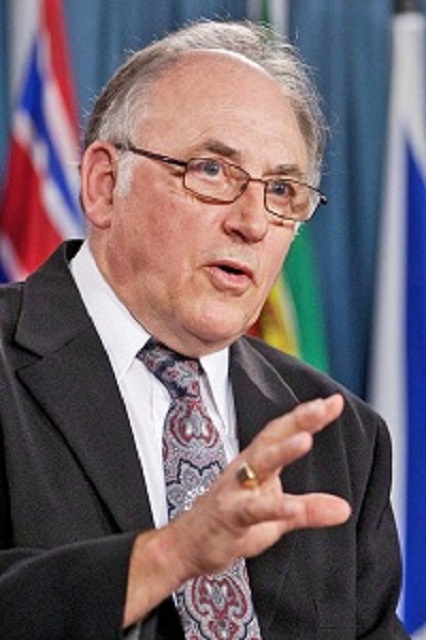
The Honourable A. Brian Peckford P.C. is the last living First Minister who helped craft the Canadian Charter of Rights


From the Frontier Centre for Public Policy
Livestock contribute far less to emissions than activists claim, and eliminating them would weaken nutrition, resilience and food security
The war on livestock pushed by Net Zero ideologues is not environmental science; it’s a dangerous, misguided campaign that threatens global food security.
The priests of Net Zero 2050 have declared war on the cow, the pig and the chicken. From glass towers in London, Brussels and Ottawa, they argue that cutting animal protein, shrinking herds and pushing people toward lentils and lab-grown alternatives will save the climate from a steer’s burp.
This is not science. It is an urban belief that billions of people can be pushed toward a diet promoted by some policymakers who have never worked a field or heard a rooster at dawn. Eliminating or sharply reducing livestock would destabilize food systems and increase global hunger. In Canada, livestock account for about three per cent of total greenhouse gas emissions, according to Environment and Climate Change Canada.
Activists speak as if livestock suddenly appeared in the last century, belching fossil carbon into the air. In reality, the relationship between humans and the animals we raise is older than agriculture. It is part of how our species developed.
Two million years ago, early humans ate meat and marrow, mastered fire and developed larger brains. The expensive-tissue hypothesis, a theory that explains how early humans traded gut size for brain growth, is not ideology; it is basic anthropology. Animal fat and protein helped build the human brain and the societies that followed.
Domestication deepened that relationship. When humans raised cattle, sheep, pigs and chickens, we created a long partnership that shaped both species. Wolves became dogs. Aurochs, the wild ancestors of modern cattle, became domesticated animals. Junglefowl became chickens that could lay eggs reliably. These animals lived with us because it increased their chances of survival.
In return, they received protection, veterinary care and steady food during drought and winter. More than 70,000 Canadian farms raise cattle, hogs, poultry or sheep, supporting hundreds of thousands of jobs across the supply chain.
Livestock also protected people from climate extremes. When crops failed, grasslands still produced forage, and herds converted that into food. During the Little Ice Age, millions in Europe starved because grain crops collapsed. Pastoral communities, which lived from herding livestock rather than crops, survived because their herds could still graze. Removing livestock would offer little climate benefit, yet it would eliminate one of humanity’s most reliable protections against environmental shocks.
Today, a Maasai child in Kenya or northern Tanzania drinking milk from a cow grazing on dry land has a steadier food source than a vegan in a Berlin apartment relying on global shipping. Modern genetics and nutrition have pushed this relationship further. For the first time, the poorest billion people have access to complete protein and key nutrients such as iron, zinc, B12 and retinol, a form of vitamin A, that plants cannot supply without industrial processing or fortification. Canada also imports significant volumes of soy-based and other plant-protein products, making many urban vegan diets more dependent on long-distance supply chains than people assume. The war on livestock is not a war on carbon; it is a war on the most successful anti-poverty tool ever created.
And what about the animals? Remove humans tomorrow and most commercial chickens would die of exposure, merino sheep would overheat under their own wool and dairy cattle would suffer from untreated mastitis (a bacterial infection of the udder). These species are fully domesticated. Without us, they would disappear.
Net Zero 2050 is a climate target adopted by federal and provincial governments, but debates continue over whether it requires reducing livestock herds or simply improving farm practices. Net Zero advocates look at a pasture and see methane. Farmers see land producing food from nothing more than sunlight, rain and grass.
So the question is not technical. It is about how we see ourselves. Does the Net Zero vision treat humans as part of the natural world, or as a threat that must be contained by forcing diets and erasing long-standing food systems? Eliminating livestock sends the message that human presence itself is an environmental problem, not a participant in a functioning ecosystem.
The cow is not the enemy of the planet. Pasture is not a problem to fix. It is a solution our ancestors discovered long before anyone used the word “sustainable.” We abandon it at our peril and at theirs.
Dr. Joseph Fournier is a senior fellow at the Frontier Centre for Public Policy. An accomplished scientist and former energy executive, he holds graduate training in chemical physics and has written more than 100 articles on energy, environment and climate science.

From the Frontier Centre for Public Policy
New script, same budget playbook. Nothing in the Carney budget breaks from the Trudeau years
Prime Minister Mark Carney’s first budget talks reform but delivers the same failed spending habits that defined the Trudeau years.
While speaking in the language of productivity, infrastructure and capital formation, the diction of grown-up economics, it still follows the same spending path that has driven federal budgets for years. The message sounds new, but the behaviour is unchanged.
Time will tell, to be fair, but it feels like more rhetoric, and we have seen this rhetoric lead to nothing before.
The government insists it has found a new path, one where public investment leads private growth. That sounds bold. However, it is more a rebranding than a reform. It is a shift in vocabulary, not in discipline. The government’s assumptions demand trust, not proof, and the budget offers little of the latter.
Former prime ministers Jean Chrétien and Paul Martin did not flirt with restraint; they executed it. Their budget cuts were deep, restored credibility, and revived Canada’s fiscal health when it was most needed. Ottawa shrank so the country could grow. Budget 2025 tries to invoke their spirit but not their actions. The contrast shows how far this budget falls short of real reform.
Former prime minister Stephen Harper, by contrast, treated balanced budgets as policy and principle. Even during the global financial crisis, his government used stimulus as a bridge, not a way of life. It cut taxes widely and consistently, limited public service growth and placed the long-term burden on restraint rather than rhetoric. Carney’s budget nods toward Harper’s focus on productivity and capital assets, yet it rejects the tax relief and spending controls that made his budgets coherent.
Then there is Justin Trudeau, the high tide of redistribution, vacuous identity politics and deficit-as-virtue posturing. Ottawa expanded into an ideological planner for everything, including housing, climate, childcare, inclusion portfolios and every new identity category.
The federal government’s latest budget is the first hint of retreat from that style. The identity program fireworks are dimmer, though they have not disappeared. The social policy boosterism is quieter. Perhaps fiscal gravity has begun to whisper in the prime minister’s ear.
However, one cannot confuse tone for transformation.
Spending still rises at a pace the government cannot justify. Deficits have grown. The new fiscal anchor, which measures only day-to-day spending and omits capital projects and interest costs, allows Ottawa to present a balanced budget while still adding to the deficit. The budget relies on the hopeful assumption that Ottawa’s capital spending will attract private investment on a scale economists politely describe as ambitious.
The housing file illustrates the contradiction. New funding for the construction of purpose-built rentals and a larger federal role in modular and subsidized housing builds announced in the budget is presented as a productivity measure, yet continues the Trudeau-era instinct to centralize housing policy rather than fix the levers that matter. Permitting delays, zoning rigidity, municipal approvals and labour shortages continue to slow actual construction. These barriers fall under provincial and municipal control, meaning federal spending cannot accelerate construction unless those governments change their rules. The example shows how federal spending avoids the real obstacles to growth.
Defence spending tells the same story. Budget 2025 offers incremental funding and some procurement gestures, but it avoids the core problem: Canada’s procurement system is broken. Delays stretch across decades. Projects become obsolete before contracts are signed. The system cannot buy a ship, an aircraft or an armoured vehicle without cost overruns and missed timelines. The money flows, but the forces do not get the equipment they need.
Most importantly, the structural problems remain untouched: no regulatory reform for major projects, no tax-competitiveness agenda and no strategy for shrinking a federal bureaucracy that has grown faster than the economy it governs. Ottawa presides over a low-productivity country but insists that a new accounting framework will solve what decades of overregulation and policy clutter have created. The budget avoids the hard decisions that make countries more productive.
From an Alberta vantage, the pivot is welcome but inadequate. The economy that pays for Confederation receives more rhetorical respect, yet the same regulatory thicket that blocks pipelines and mines remains intact. The government praises capital formation but still undermines the key sectors that generate it.
Budget 2025 tries to walk like Chrétien and talk like Harper while spending like Trudeau. That is not a transformation. It is a costume change. The country needed a budget that prioritized growth rooted in tangible assets and real productivity. What it got instead is a rhetorical turn without the courage to cut, streamline or reform.
Canada does not require a new budgeting vocabulary. It requires a government willing to govern in the country’s best interests.
Marco Navarro-Genie is vice-president of research at the Frontier Centre for Public Policy and co-author with Barry Cooper of Canada’s COVID: The Story of a Pandemic Moral Panic (2023).


Death by a thousand clicks – government censorship of Canada’s internet

Chinese Billionaire Tried To Build US-Born Baby Empire As Overseas Elites Turn To American Surrogates

Viral TikTok video shows 7-year-old cuddling great-grandfather before he’s euthanized

Politicians should be honest about environmental pros and cons of electric vehicles
-
 Agriculture1 day ago
Why is Canada paying for dairy ‘losses’ during a boom?
-
 Automotive2 days ago
Ford’s EV Fiasco Fallout Hits Hard
-
 Alberta1 day ago
Alberta’s new diagnostic policy appears to meet standard for Canada Health Act compliance
-
 Alberta15 hours ago
Housing in Calgary and Edmonton remains expensive but more affordable than other cities
-
 Business14 hours ago
State of the Canadian Economy: Number of publicly listed companies in Canada down 32.7% since 2010
-
 Censorship Industrial Complex12 hours ago
Canadian university censors free speech advocate who spoke out against Indigenous ‘mass grave’ hoax
-
 Bruce Dowbiggin16 hours ago
Hunting Poilievre Covers For Upcoming Demographic Collapse After Boomers
-
 Censorship Industrial Complex1 day ago
Top constitutional lawyer warns against Liberal bills that could turn Canada into ‘police state’