Connect with us

Alberta

Pastor James Coates to be released from jail as Crown withdraws charges

Published

7 minute read

This post is from a news release by the Justice Centre

EDMONTON: The Justice Centre today announced that Crown Prosecutors have agreed to withdraw all but one of the Public Health Act offences that Pastor James Coates has been charged with. The Justice Centre expects Pastor Coates will be released from jail in the coming days, without any conditions, pending his May 3-5 trial in Provincial Court.

The Justice Centre will defend Pastor Coates on one remaining charge of violating an Order of the Chief Medical Officer of Health by challenging the lawfulness of the public health order that he is charged with violating.

The Pastor of Grace Life Church near Edmonton has been incarcerated in the Edmonton Remand Centre for a month, since February 16. It is expected that Pastor Coates could be released from jail as early as Friday, March 19.

Grace Life is a church of nearly 400 congregants who have exercised their Charter rights and freedoms normally since July of 2020, including their freedoms of assembly, association, expression, religion and conscience. Not one congregant has been lost to Covid, but, sadly, a congregant was lost to the Alberta Government lockdown in the first week of February when he died prematurely because he couldn’t get the cancer treatment he needed due to government lockdown restrictions.

Pastor Coates and Grace Life Church are represented by the Justice Centre in respect of tickets and court summons. The Pastor and his church have been taken to court by Alberta Health Services (AHS) and ordered to close by AHS for holding regular church services and refusing to turn congregants away.

The Justice Centre sent a letter to Premier Jason Kenney on February 17, 2021, challenging him to assume responsibility for protecting the Charter rights and freedoms of Albertans, and to cease allowing an unelected health official, Dr. Deena Hinshaw, to violate rights and freedoms with health orders that are not reviewed by, or approved by, the elected Members of the Legislative Assembly.

Pastor Coates has been jailed in the Edmonton Remand Centre since February 16, after he refused to sign a bail condition that required him to effectively promise to stop exercising his Charter freedoms of conscience, religion, expression, association and peaceful assembly.

On Sunday, February 7, after the morning worship service, two RCMP officers met with Pastor Coates and a few others in his office at the Church and told Pastor Coates that he was under arrest.

The officers imposed a condition on the Pastor that he only hold church if he followed all the public health restrictions, such as permitting only 15% of his congregants to attend a Sunday morning worship service. Pastor Coates explained to the officers that he could not agree to abide by Charter-violating public health orders that prevent him from fulfilling his duty as a minister to lead his congregation in worship. As Pastor Coates did not agree to the condition imposed on him, RCMP should have taken him before a Justice of the Peace, but they did not and, instead, left the church.

Pastor Coates again held church on Sunday February 14. On Monday, February 15, the RCMP asked Pastor Coates to attend at the RCMP station. When Pastor Coates arrived, the RCMP charged him with multiple Public Health Act offences and a criminal offence related to the bail condition imposed on February 7.

A bail hearing took place on Tuesday, February 16. Crown Prosecutor Karen Thorsrud asked the court to keep Pastor Coates in jail until he could appear for trial. A Justice of the Peace ordered Pastor Coates released on bail on the condition that he only hold church if he followed all the public health restrictions. Pastor Coates could not, in good conscience, agree to such a Charterrights-violating condition of release and was therefore detained at the Edmonton Remand Centre.

Crown prosecutors have now agreed that Pastor Coates can be released without conditions and will withdraw all but one of the Public Health Act charges against him. Prosecutors have also agreed to withdraw the criminal charge in connection with the condition imposed by RCMP on February 7, and instead have charged Pastor Coates $100 for breaching the condition, which Pastor Coates has agreed to pay.

The single charge remaining has not been withdrawn, as the Justice Centre and Pastor Coates want the matter heard at trial, to determine the constitutionality of the public health order that churches only hold worship services at 15% capacity, and to compel the government to produce scientific evidence that might support these violations of Charter freedoms. The trial is scheduled to take place beginning on May 3, 2021.

“The condition that Pastor Coates effectively stop doing his job as a pastor by adhering to unscientific and unconstitutional public health restrictions should never have been imposed on him by the RCMP, or by the Court. We are hopeful that he will finally be released from jail without conditions, and can resume pastoring Grace Life church,” states Justice Centre president John Carpay.

“We look forward appearing in court in May and demanding the government provide evidence that public health restrictions that violate the freedoms of religion, peaceful assembly, expression and association are scientific and are justifiable in a free and democratic country,” concludes Carpay.

Todayville is a digital media and technology company. We profile unique stories and events in our community. Register and promote your community event for free.

Follow Author

Alberta

The case for expanding Canada’s energy exports

Published on

From the Canadian Energy Centre

By Deborah Jaremko

For Canada, the path to a stronger economy — and stronger global influence — runs through energy.

That’s the view of David Detomasi, a professor at the Smith School of Business at Queen’s University.

Detomasi, author of Profits and Power: Navigating the Politics and Geopolitics of Oil, argues that there is a moral case for developing Canada’s energy, both for Canadians and the world.

David Detomasi. Photo courtesy Smith School of Business, Queen’s University

CEC: What does being an energy superpower mean to you?

DD: It means Canada is strong enough to affect the system as a whole by its choices.

There is something really valuable about Canada’s — and Alberta’s — way of producing carbon energy that goes beyond just the monetary rewards.

CEC: You talk about the moral case for developing Canada’s energy. What do you mean? 

DD: I think the default assumption in public rhetoric is that the environmental movement is the only voice speaking for the moral betterment of the world. That needs to be challenged.

That public rhetoric is that the act of cultivating a powerful, effective economic engine is somehow wrong or bad, and that efforts to create wealth are somehow morally tainted.

I think that’s dead wrong. Economic growth is morally good, and we should foster it.

Economic growth generates money, and you can’t do anything you want to do in social expenditures without that engine.

Economic growth is critical to doing all the other things we want to do as Canadians, like having a publicly funded health care system or providing transfer payments to less well-off provinces.

Over the last 10 years, many people in Canada came to equate moral leadership with getting off of oil and gas as quickly as possible. I think that is a mistake, and far too narrow.

Instead, I think moral leadership means you play that game, you play it well, and you do it in our interest, in the Canadian way.

We need a solid base of economic prosperity in this country first, and then we can help others.

CEC: Why is it important to expand Canada’s energy trade?

DD: Canada is, and has always been, a trading nation, because we’ve got a lot of geography and not that many people.

If we don’t trade what we have with the outside world, we aren’t going to be able to develop economically, because we don’t have the internal size and capacity.

Historically, most of that trade has been with the United States. Geography and history mean it will always be our primary trade partner.

But the United States clearly can be an unreliable partner. Free and open trade matters more to Canada than it does to the U.S. Indeed, a big chunk of the American people is skeptical of participating in a global trading system.

As the United States perhaps withdraws from the international trading and investment system, there’s room for Canada to reinforce it in places where we can use our resource advantages to build new, stronger relationships.

One of these is Europe, which still imports a lot of gas. We can also build positive relationships with the enormous emerging markets of China and India, both of whom want and will need enormous supplies of energy for many decades.

I would like to be able to offer partners the alternative option of buying Canadian energy so that they are less reliant on, say, Iranian or Russian energy.

Canada can also maybe eventually help the two billion people in the world currently without energy access.

CEC: What benefits could Canadians gain by becoming an energy superpower? 

DD: The first and primary responsibility of our federal government is to look after Canada. At the end of the day, the goal is to improve Canada’s welfare and enhance its sovereignty.

More carbon energy development helps Canada. We have massive debt, an investment crisis and productivity problems that we’ve been talking about forever. Economic and job growth are weak.

Solving these will require profitable and productive industries. We don’t have so many economic strengths in this country that we can voluntarily ignore or constrain one of our biggest industries.

The economic benefits pay for things that make you stronger as a country.

They make you more resilient on the social welfare front and make increasing defence expenditures, which we sorely need, more affordable. It allows us to manage the debt that we’re running up, and supports deals for Canada’s Indigenous peoples.

CEC: Are there specific projects that you advocate for to make Canada an energy superpower?

DD: Canada’s energy needs egress, and getting it out to places other than the United States. That means more transport and port facilities to Canada’s coasts.

We also need domestic energy transport networks. People don’t know this, but a big chunk of Ontario’s oil supply runs through Michigan, posing a latent security risk to Ontario’s energy security.

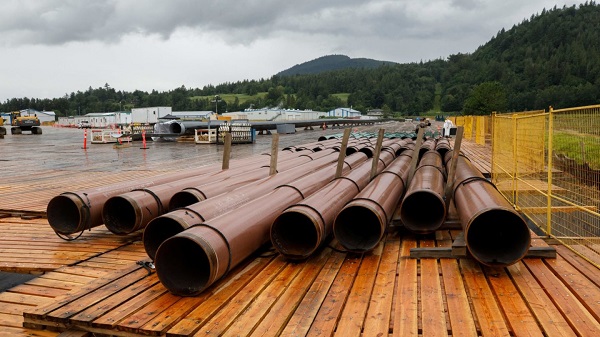
We need to change the perception that pipelines are evil. There’s a spiderweb of them across the globe, and more are being built.

Building pipelines here, with Canadian technology and know-how, builds our competitiveness and enhances our sovereignty.

Economic growth enhances sovereignty and provides the resources to do other things. We should applaud and encourage it, and the carbon energy sector can lead the way.

Continue Reading

Agriculture

Growing Alberta’s fresh food future

Published on

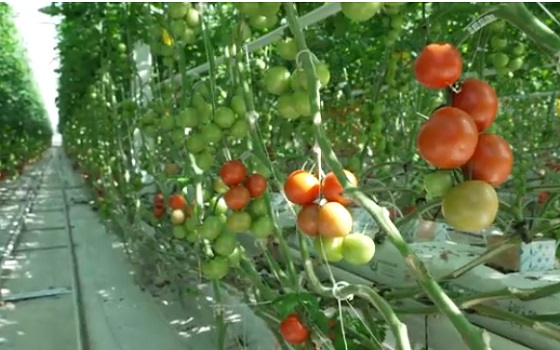
A new program funded by the Sustainable Canadian Agricultural Partnership will accelerate expansion in Alberta greenhouses and vertical farms.

Albertans want to keep their hard-earned money in the province and support producers by choosing locally grown, high-quality produce. The new three-year, $10-milllion Growing Greenhouses program aims to stimulate industry growth and provide fresh fruit and vegetables to Albertans throughout the year.

“Everything our ministry does is about ensuring Albertans have secure access to safe, high-quality food. We are continually working to build resilience and sustainability into our food production systems, increase opportunities for producers and processors, create jobs and feed Albertans. This new program will fund technologies that increase food production and improve energy efficiency.”

RJ Sigurdson, Minister of Agriculture and Irrigation

“Through this investment, we’re supporting Alberta’s growers and ensuring Canadians have access to fresh, locally-grown fruits and vegetables on grocery shelves year-round. This program strengthens local communities, drives innovation, and creates new opportunities for agricultural entrepreneurs, reinforcing Canada’s food system and economy.”

Heath MacDonald, federal Minister of Agriculture and Agri-Food

The Growing Greenhouses program supports the controlled environment agriculture sector with new construction or expansion improvements to existing greenhouses and vertical farms that produce food at a commercial scale. It also aligns with Alberta’s Buy Local initiative launched this year as consumers will be able to purchase more local produce all year-round.

The program was created in alignment with the needs identified by the greenhouse sector, with a goal to reduce seasonal import reliance entering fall, which increases fruit and vegetable prices.

“This program is a game-changer for Alberta’s greenhouse sector. By investing in expansion and innovation, we can grow more fresh produce year-round, reduce reliance on imports, and strengthen food security for Albertans. Our growers are ready to meet the demand with sustainable, locally grown vegetables and fruits, and this support ensures we can do so while creating new jobs and opportunities in communities across the province. We are very grateful to the Governments of Canada and Alberta for this investment in our sector and for working collaboratively with us.”

Michiel Verheul, president, Alberta Greenhouse Growers Association

Sustainable Canadian Agricultural Partnership (Sustainable CAP)

Sustainable CAP is a five-year, $3.5-billion investment by federal, provincial and territorial governments to strengthen competitiveness, innovation and resiliency in Canada’s agriculture, agri-food and agri-based products sector. This includes $1 billion in federal programs and activities and $2.5 billion that is cost-shared 60 per cent federally and 40 per cent provincially/territorially for programs that are designed and delivered by provinces and territories.

Quick facts

  • Alberta’s greenhouse sector ranks fourth in Canada:
  • 195 greenhouses produce $145 million in produce and 60 per cent of them operate year-round.
  • Greenhouse food production is growing by 6.2 per cent annually.
  • Alberta imports $349 million in fresh produce annually.
  • The program supports sector growth by investing in renewable and efficient energy systems, advanced lighting systems, energy-saving construction, and automation and robotics systems.

Related information

Continue Reading

Trending

X