
Opinion
NDP and Greens formed government in B.C. The Alberta Liberals and the Alberta Party will merge? For 2019 election all four parties should merge in Alberta.


The 30th general election of Alberta, Canada, will elect members to the Legislative Assembly of Alberta. It will take place on or before May 31, 2019.
We currently have the Alberta New Democratic Party in government. They went from being an opposing party with the Liberals and the Wildrose parties against the ruling conservative dynasty to forming government in 2015. What do we know?
From wikipedia;
The Alberta New Democratic Party or Alberta NDP is a social-democratic political party in Alberta, Canada, which succeeded the Alberta section of the Co-operative Commonwealth Federation and the even earlier Alberta wing of the Canadian Labour Party and the United Farmers of Alberta. From the mid-1980s to 2004, the party abbreviated its name as the “New Democrats” (ND).
The party achieved Official Opposition status in the Legislative Assembly of Alberta from 1986 to 1993. It was swept out of the legislature in 1993 and spent the next two decades in the political wilderness. While it managed to get back into the legislature in 1997, it never won more than four seats. Its time on the fringe of Alberta politics ended in the 2015 provincial election, when it won 54 of the 87 seats in the legislature to form the government of Alberta for the first time. Until 2015, Alberta had been the only province in western Canada—the party’s birthplace—where the NDP had never governed at the provincial level.
Not a lot there, and little about mission and visions on their website. The election is in 19 months so we may learn more about their plans for the future. The Calgary Herald has a poll that shows that if the election was held today, the United Conservative Party would handily win.
How does a former fringe party which campaigns on the left and centre combat the right wing remnants of the former conservative dynasty? Here’s an idea, unite the left and centre parties.
In British Columbia the NDP and the Greens have a union in government. The Alberta Party and the Alberta Liberal Party are almost a union in almost every way except by formality. Why not merge?
Let us look at the Alberta Party, the Alberta Liberal Party and the Alberta Green Party, their missions and see if there is any common ground. I think there is but it is up to politicians to decide to work together or go their separate ways.
Starting with the Alberta Party;
From Wikipedia:
The Alberta Party, formally the Alberta Party Political Association, is a political party in the province of Alberta, Canada. The party describes itself as a centrist and pragmatic party that is not dogmatically ideological in its approach to politics.
For most of its history the Alberta Party was a right-wing organization, until the rise of the Wildrose Alliance as Alberta’s main conservative alternative to the governing Progressive Conservatives attracted away the Alberta Party’s more conservative members. This left a small rump of more left-wing members in control of the Alberta Party. In 2010 the Alberta Party board voted to merge with Renew Alberta, a progressive group that had been organizing to form a new political party in Alberta. The Alberta Party thus shed its conservative past for a more centrist political outlook. The party has been cited in The Globe and Mail and The Economist as part of the break in one-party politics in Alberta.
From The Alberta Party website;
Vision;
We will form a government committed to diversity, integrity, transparency and collaboration. As leaders of positive change, we value inclusiveness, ideas over ideologies, and champion economic, environmental and social responsibility.
Mission
We will:
Model responsible and ethical government.
Generate and implement practical, constructive solutions through listening, citizen engagement, evidence-based policy and building common ground.
Tackle tough issues facing Albertans by examining root causes and maintaining a long-term view of prosperity and sustainability.
Act as guardians of the public interest.
Conduct ourselves in an open, transparent and accountable manner.
Steadfastly refuse to engage in short-sighted, politically motivated, partisan politics.
Provide economic, environmental and social leadership in order to benefit Alberta, Canada and the world.
The Alberta Party is committed to building a policy framework that is based on the following six key values:
1) Prosperity
We believe that private enterprise and entrepreneurship are the keys to our economic success. The government should foster an environment which facilitates economic investment, reduces red tape and encourages creativity.
2) Fiscal Responsibility
We believe that government must use public dollars as effectively and efficiently as possible. The government should balance the books and set aside money for a rainy day. This is best accomplished through long-term planning, common sense and transparency.
3) Social Responsibility
We believe every Albertan deserves the opportunity to succeed. Our government should aspire to provide excellent and innovative public education, public health care, and infrastructure, as well as a compassionate helping hand in times of need. We believe this can be accomplished through responsible use of public funds.
4) Sustainability
We believe that sustainability must be a core value of government. Rethinking unsustainable practices, making strategic investments in research and technology, and implementing smart policy choices will protect and enhance our environment for future generations.
5) Democracy
We believe that public business should be conducted in public. Government should ensure that the legislative process is open, fair, transparent and inclusive of the people it governs. Our government should foster debate, actively engage citizens, and make itself accountable to the people it serves.
6) Quality of life
We believe that a great quality of life requires strong communities. Through support of recreation, sports, arts and culture, government can help to build strong and vibrant communities.
Let us look at the Alberta Liberal Party;

From Wikipedia;
The Alberta Liberal Party is a provincial political party in Alberta, Canada. Founded in 1905, it was the dominant political party until the 1921 election, with the first three provincial Premiers being Liberals. Since 1921, it has formed the official opposition in the Legislative Assembly of Alberta several times, most recently from 1993 until 2012.
From the Alberta Liberal Party website;
The Alberta Liberal Party has been working for Albertans since 1905 and we believe that we must champion our strong values in government. We are fiscally-prudent, a party that proudly supports socially progressive change, and that cares deeply about our stewardship of the environment. We believe that it is our duty to run effective and efficient governments, that respects the autonomy of the individual, and that safeguards the environment. This way we build both a strong society and a vibrant economy.
1) Equal Opportunity
Liberals oppose both privilege and prejudice. Everyone should have as equal as possible an opportunity to participate in society, enjoying equal rights and freedoms, and sharing responsibilities.
2) Free Enterprise
Alberta Liberals have faith in the free enterprise system. Through it, the widest number of opportunities are provided, the greatest number of needs are satisfied, and initiative is most rewarded. Nevertheless, the market system is not perfect. The government has a role to play in preventing exploitation, protecting consumers and preserving the environment. Government also has a role to play in facilitating economic development and competition, and serving public needs which the private sector cannot or will not meet.
3) Fiscal Responsibility
Alberta Liberals believe that government has an obligation to manage the affairs of the province in a prudent and responsible manner. Wasteful spending threatens essential government programs such as health care and education for today’s constituents, and fairness dictates that future generations not be burdened with our debts.
4) Environmental Responsibility
Alberta Liberals believe that the protection of the environment is essential to the longterm health of our planet and ourselves, and to our quality of life. Environmental policy must look beyond a traditional view of economics to reflect the cultural and spiritual importance of the environment in our lives. Responsible policy-makers must consider the environment a sacred trust.
5) Change
Liberals have always been reformers. We seek to improve the system as we search for ways of improving the human condition. We are not afraid to initiate change. Without compromising our principles, our search for solutions is driven not by rigid ideology but by the question, “What is best?”
Thirdly let us look at the Green Party of Canada;
From Wikipedia;
The Green Party of Alberta is a registered political party in Alberta, Canada, that is allied with the Green Party of Canada, and the other provincial Green parties. The party was registered by Elections Alberta on December 22, 2011, to replace the deregistered Alberta Greens, and ran its first candidates for office in the 2012 provincial election under the name Evergreen Party of Alberta. The party changed its name to “Green Party of Alberta” on November 1, 2012.
From Green Party of Alberta website;
Mission
To participate in Alberta electoral politics with the aim of having such a provincial government come to power;
To educate Albertans as to the need for a government committed to Green principles
The Green Party of Alberta is committed to the 6 principles of the world-wide Green Party movement:
1) Ecological wisdom
Human beings are part of the natural world and we respect the specific value of all forms of life.
2)Non-violence
We are committed to non-violence and cooperation between states, inside societies and between individuals
3) Participatory democracy
In a healthy democracy all citizens have the right to express their views and are able to directly participate in the environmental, economic, social and political decisions which affect their lives
4) Respect for diversity
We honour all forms of diversity – for example, racial, linguistic, ethnic, sexual, religious and spiritual – within the context of individual responsibility toward all beings.
5) Social justice
We honour all forms of diversity – for example, racial, linguistic, ethnic, sexual, religious and spiritual – within the context of individual responsibility toward all beings.
6) Sustainability
We recognize the limited scope for the material expansion of society within the biosphere and the need to maintain biodiversity through the sustainable use of renewable resources.
Each of the party has differences in goals and priorities but they have enough similarities. Is it enough to form a coalition or corroborative government? Can they step away from egos and work together to offer an option to the United Conservative Party? Will we be sliding into another 40 year conservative dynasty? We will find out in May 2019.


From StosselTV
Countries all over the world are imposing digital IDs. They tie your identity to everything you do. Spain’s Prime Minister wants “An end to anonymity online!”
Tech privacy expert Naomi Brockwell @NaomiBrockwellTV warns that’s dangerous. “Privacy is not about hiding,” she tells Stossel TV producer Kristin Tokarev. “It’s about an individual’s right to decide for themselves who gets access to their data. A Digital ID… will strip individuals of that choice.”
The new government mandated digital IDs aren’t just a digital version of your driver’s license or passport. “It connects everything,” Brockwell explains. “Your financial decisions, to your social media posts, your likes, the things that you’re watching, places that you’re going… Everything you say will be tied back to who you are.”
And once everything runs through a single government ID, access to services becomes something you need permission for. That’s already a reality in China where citizens are tracked, scored, and punished for “bad” behavior.
Brockwell warns the western world is “skyrocketing in that direction.” She says Americans need to push back now.
———
To make sure you receive the weekly video from Stossel TV, sign up here: https://www.johnstossel.com/#subscrib...
———
International
China Stages Massive Live-Fire Encirclement Drill Around Taiwan as Washington and Japan Fortify




Taiwan says 89 Chinese military aircraft and 28 PLA Navy and coast guard vessels surged into the island’s air and maritime approaches.
Following massive military sales from Washington to Taiwan and rapidly scaled defensive preparations from Japan, Beijing on Monday launched a sweeping show-of-force including live-fire activity around Taiwan.
The encirclement-style operation brought 89 Chinese military aircraft and 28 PLA Navy and coast guard vessels into the waters and skies around the island, one of the heaviest single-day tallies reported in more than a year.
Taiwan’s Presidential Office condemned the operation as a “unilateral provocation” that destabilizes regional peace, while stressing that Taiwan’s security agencies had “complete situational awareness” and had made preparations. Taiwan’s Ministry of National Defense said it activated an emergency response posture and conducted immediate readiness drills.
Beijing, for its part, framed the action as a warning—an operation the PLA’s Eastern Theater Command dubbed “Justice Mission 2025,” involving the army, navy, air force, and rocket force, with designated zones for live-fire activity and sea-and-airspace restrictions.
Global coverage described the drills as rehearsing the mechanics of isolation: blockade-style pressure against key approaches and ports, integrated sea-air patrols, and “deterrence” aimed at what the PLA calls “external interference.”
In a statement circulated by former Taiwanese foreign minister Joseph Wu, now head of the nation’s national security council, the message from Taipei was readiness to deploy force.
“As China ramps up military threats against Taiwan, our armed forces are conducting Rapid Response Exercises in response,” Wu stated Monday morning. “We remain resolute and unafraid. We’ll defend our sovereignty and democracy at all times.”
Across international coverage, analysts assessed Beijing’s actions as escalation through rehearsal, designed to demonstrate a capacity to encircle Taiwan, with live-fire elements and disruption to regional routes. Coverage also emphasized the “stern warning” language aimed at “Taiwan independence” forces and foreign actors, and Taiwan’s elevated alert posture.
The choreography of this operation matters as much as the raw numbers.
The PLA appears to be practicing the operational geometry of denying outside forces access—the kind of posture meant to complicate U.S. and allied intervention in a blockade or assault scenario. That emphasis has been widely noted in contemporaneous coverage, including reporting that the Eastern Theater Command’s messaging explicitly framed the drill as “deterrence” against “external interference.”
This helps explain why the drill lands amid a knot of accelerating pressures.
A number of analysts speculated that Washington’s major arms package and Japan’s “re-militarization”—Tokyo’s rapid defense buildup in response to Beijing’s expanding military footprint—now feed into an escalating drill cycle in which China aims to demonstrate that outside support can be deterred, delayed, or priced prohibitively high.
One clear trigger is the Trump administration’s newly announced $11.1 billion arms package for Taiwan, which Beijing cast as proof of U.S. “interference.”
Another is Japan.
Regional reporting and analysis have framed the drill as a warning shot aimed not only at Taipei but at the alliance architecture around it—especially as Japanese leaders and planners speak more openly about a “Taiwan contingency” and expand defense spending and capabilities that Beijing portrays as destabilizing.
A third is the longer arc Beijing itself has helped set.
U.S. officials have repeatedly stated their assessment that Xi Jinping has directed the PLA to be capable of taking Taiwan by force by 2027—a milestone that continues to shape planning assumptions across the region.
In reporting The Bureau gathered during a September 2023 visit to Taiwan, Taiwanese military experts and officials warned that Beijing’s pressure campaign had reached a new plateau: Chinese aircraft and vessels were crossing into—and remaining in—Taiwan’s territory longer, in actions they described as cognitive warfare designed to erode the public’s will to resist.
“China makes many excuses to conduct military exercises around Taiwan, and I don’t think this is only political,” said Dr. Tzu-Chieh Hung of the Institute for National Defense Security Research, a think tank funded by Taiwan’s government. “I think they are expanding the area of their military operations.”
“We think they are trying to create a new normal, when we will become numb to their actions, and make it a fait accompli,” another senior Taiwanese official told The Bureau.
Those warnings sit directly beneath Monday’s encirclement-style operation. Beyond the raw tallies—89 aircraft and 28 PLA Navy and coast guard vessels—Taiwan’s defense community sees a pattern of repeated rehearsals that stretch time, distance, and ambiguity, steadily conditioning the region to accept blockade-style actions as irreversible.
Yet the fatalism that Taiwan cannot be defended has not been the conclusion in major U.S. war-game work—and Washington’s $11-billion Taiwan arms package signals an intent to strengthen deterrence.
Back in 2023, a widely cited wargaming study by the Center for Strategic and International Studies found Taiwan could repel a Chinese invasion—if Taiwan is prepared to fight immediately, and the United States and Japan move fast to deliver overwhelming air and missile firepower against the fleets that would attempt a blockade and landing.
“There is no question, two years ago most people would have said China has the ability to conquer Taiwan in a fait accompli,” Mark Cancian, one of the study’s authors, told The Bureau in 2023. “But we showed that is not true.”
“The Chinese defensive bubble at the start of the war is so strong, that Taiwan needs what it has to fight with for the first month or two,” Cancian said. “And the United States has to participate en masse and quickly. Japan must at least provide base capacity for U.S. forces, and Taiwan must defend itself.”


Ottawa’s Newly Released Defence Plan Crosses a Dangerous Line

All 12 Vaccinated vs. Unvaccinated Studies Found the Same Thing: Unvaccinated Children Are Far Healthier
Carney Floor Crossing Raises Counterintelligence Questions aimed at China, Former Senior Mountie Argues
Ottawa is still dodging the China interference threat
-
 Digital ID1 day ago
Canadian government launches trial version of digital ID for certain licenses, permits
-
 Alberta1 day ago
Alberta Next Panel calls to reform how Canada works
-
 International1 day ago
Georgia county admits illegally certifying 315k ballots in 2020 presidential election
-
 Agriculture2 days ago
End Supply Management—For the Sake of Canadian Consumers
-
 Business1 day ago
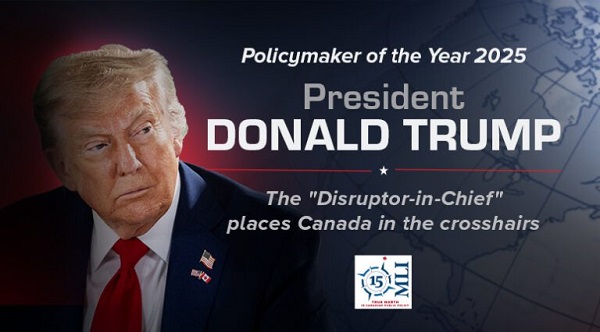
The “Disruptor-in-Chief” places Canada in the crosshairs
-
 Artificial Intelligence1 day ago
UK Police Pilot AI System to Track “Suspicious” Driver Journeys
-
 Energy1 day ago
‘The electric story is over’
-
 International2 days ago
World-leading biochemist debunks evolutionary theory