
Indigenous
Indigenous Catholic Priest questions “The murder of 215 Indigenous Children” at Kamloops Indian Residential School

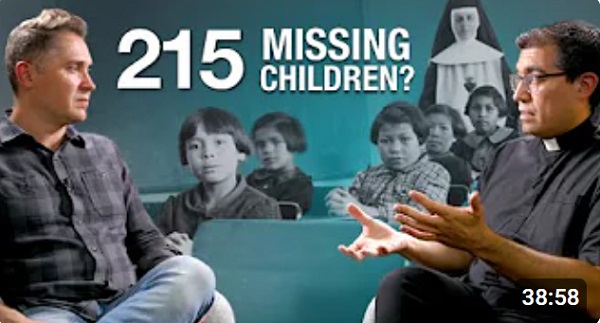
From the podcast Catholic Minute With Ken & Janelle
Indigenous Catholic priest, Fr. Cristino Bouvette, speaks to the report of the 215 missing children first released in 2021 and what we know today.
On May 27, 2021, the Kamloops Indian Band announced that ground-penetrating radar had detected the remains of 215 “missing children” at the site of a former residential school. The media quickly picked up the story, with headlines proclaiming the discovery of “mass graves.” Social media exploded. Churches were vandalized, and some were set on fire. Catholic Bishops issued apologies. But was it true?
Fr. Cristino Bouvette, a Catholic priest with Indigenous heritage, brings clarity to the controversy.
Full statement of first statement by Kamloops Indian Band, on May 2021 https://tkemlups.ca/wp-content/upload…
Updated Statement: May, 2024 on 215 anomalies were detected https://tkemlups.ca/offices-closed-on…
Canada mourns as remains of 215 children found at indigenous school https://www.bbc.com/news/world-us-can…
Kamloops Indian Residential School Mass Graves: No Bodies Found Despite $8 Million Probe https://www.msn.com/en-in/news/India/…
Terry Glavin: Canada slowly acknowledging there never was a ‘mass grave’ https://nationalpost.com/opinion/terr…
Please consider supporting our work here: https://kenandjanelle.com/

Indigenous
Internal emails show Canadian gov’t doubted ‘mass graves’ narrative but went along with it
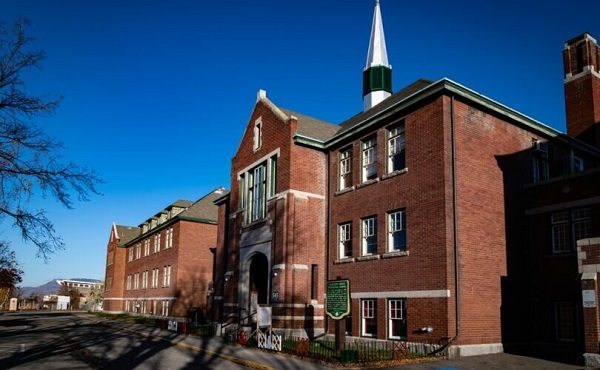
From LifeSiteNews
Parks Canada employees admitted that ground-penetrating radar results were likely false positives.
Internal emails have revealed that federal workers questioned the residential school narrative as early as 2023, despite gaslighting Canadians who questioned media’s claims.
According to confidential staff emails published by Blacklock’s Reporter on July 4, Parks Canada, the government agency which manages national parks, admitted that claims of hundreds of graves found at an Indian Residential School in Kamloops, British Columbia were unfounded and likely false.
“Authors refer to the 215 ground-penetrating radar hits that were reported in 2021 as ‘graves’ or ‘burials,’” wrote one Parks Canada consultant. “But none of these sites have been investigated further to determine that they are graves.
Like most Canadians, Parks Canada staff initially believed the alleged discovery of 215 so-called “unmarked” graves in Kamloops during the summer of 2021. The story alleged that hundreds of Indigenous children were killed and secretly buried at the residential school.
READ: Canadian councilor punished for denying unproven ‘mass graves’ narrative seeks court review
Canada’s Residential School system was a structure of boarding schools funded by the Canadian government and run by both the Catholic Church and other churches that ran from the late 19th century until the last school closed in 1996.
While some children did tragically die at the once-mandatory boarding schools, evidence has revealed that many of the children passed away as a result of unsanitary conditions due to underfunding by the federal government, not the Catholic Church.
In 2021, Parks Canada hired historians “to help identify any gaps or errors” in the claim of finding 215 unmarked graves before designating the Kamloops Indian Residential School as a historic site.
However, according to their internal emails, Parks Canada discovered that the technology used to discover the “graves” is often misleading and cannot be relied upon.
“Ground-penetrating radar often throws up false positives, anomalies that are not indicative of anything significant,” a consultant wrote. “I suggest that until there is further investigation of the sites at Kamloops the report refer to them as ‘possible graves’ or ‘probable graves’ or ‘likely graves’ rather than ‘graves.’”
As a result, Parks Canada changed their report to list the anomalies as “probable unmarked graves” rather than “unmarked graves.”
“The challenge is that ground-penetrating radar does not provide evidence of potential unmarked graves,” said the staff email. “It provides evidence of anomalies. I am quoting the archaeologists here.”
“Regarding the topic of ground-penetrating radar, I’ve made a suggested revision,” wrote another manager. “It might be preferable to not use the term ‘anomalies’ for now.” Staff were also advised to “stay extra quiet” on the designation of the Residential School as a national historic site.
To date, there have been no mass graves discovered at residential schools. However, following claims blaming the deaths on the Catholic clergy who ran the schools, over 100 churches have been burned or vandalized across Canada in seeming retribution.
READ: Despite claims of 215 ‘unmarked graves,’ no bodies have been found at Canadian residential school
Despite their conclusions, Parks Canada refused to publicly contradict the residential school narrative. On their website discussing the schools, the government agency does not mention the unmarked graves and also fails to debunk the claims of mass unmarked graves.
Furthermore, while the agency internally questioned and doubted the validity of the claims, Canadians who publicly opposed the mainstream narrative were condemned as denialists and often punished.
Despite the lack of physical evidence, in 2022, Canada’s House of Commons under Liberal Prime Minister Justin Trudeau, formalized the controversy and declared the residential school program to be considered a historic act of “genocide.”
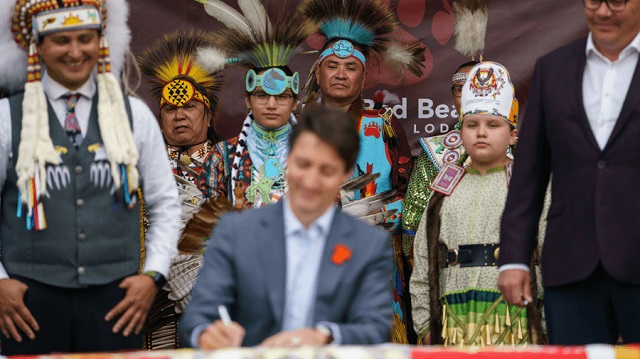
From the Fraser Institute
By Tom Flanagan
Since 2015, the federal government has paid nearly $18 billion settling an increasing number of ‘specific claims’ by First Nations, including more than $7 billion last year alone, finds a new study released today by the Fraser Institute, an independent, non-partisan Canadian public policy think tank.
“Specific claims are for past treaty breaches, and as such, their number should be finite. But instead of declining over time, the number of claims keeps growing as lucrative settlements are reached, which in turn prompts even more claims,” said Tom Flanagan, Fraser Institute senior fellow, professor emeritus of political science at the University of Calgary and author of Specific Claims—an Out-of-Control Program.
The study reveals details about “specific claims,” which began in 1974 and are filed by First Nations who claim that Canadian governments—past or present—violated the Indian Act or historic treaty agreements, such as when governments purchased reserve land for railway lines or hydro projects. Most “specific claims” date back 100 years or more. Specific claims are contrasted with comprehensive claims, which arise from the absence of a treaty.
Crucially, the number of specific claims and the value of the settlement paid out have increased dramatically since 2015.
In 2015/16, 11 ‘specific claims’ were filed with the federal government, and the total value of the settlements was $27 million (in 2024 dollars, to adjust for inflation). The number of claims increased virtually every year since so that by 2024/25, 69 ‘specific claims’ were filed, and the value of the settlements in 2024/25 was $7.061 billion. All told, from 2015/16 to 2024/25, the value of all ‘specific claims’ settlements was $17.9 billion (inflation adjusted).
“First Nations have had 50 years to study their history, looking for violations of treaty and legislation. That is more than enough time for the discovery of legitimate grievances,” Flanagan said.
“Ottawa should set a deadline for filing specific claims so that the government and First Nations leaders can focus instead on programs that would do more to improve the living standards and prosperity for both current and future Indigenous peoples.”

Specific Claims: An Out-of-Control Program
- Specific claims are based on the government’s alleged failure to abide by provisions of the Indian Act or a treaty.
- The federal government began to entertain such claims in 1974. The number and value of claims increased gradually until 2017, when both started to rise at an extraordinary rate.
- In fiscal year 2024/25, the government settled 69 claims for an astonishing total of $7.1 billion dollars.
- The evidence suggests at least two causes for this sudden acceleration. One was the new approach of Justin Trudeau’s Liberal government toward settling Indigenous claims, an approach adopted in 2015 and formalized by Minister of Justice Jodi Wilson-Raybould’s 2019 practice directive. Under the new policy, the Department of Justice was instructed to negotiate rather than litigate claims.
- Another factor was the recognition, beginning around 2017, of “cows and plows” claims based on the allegation that agricultural assistance promised in early treaties—seed grain, cattle, agricultural implements—never arrived or was of poor quality.
- The specific-claims process should be terminated. Fifty years is long enough to discover legitimate grievances.
- The government should announce a short but reasonable period, say three years, for new claims to be submitted. Claims that have already been submitted should be processed, but with more rigorous instructions to the Department of Justice for legal scrutiny.
- The government should also require more transparency about what happens to these settlements. At present, much of the revenue paid out disappears into First Nations’ “settlement trusts”, for which there is no public disclosure.

Tom Flanagan


RFK Jr. says Hep B vaccine is linked to 1,135% higher autism rate
Alberta Independence Seekers Take First Step: Citizen Initiative Application Approved, Notice of Initiative Petition Issued

RFK Jr. Unloads Disturbing Vaccine Secrets on Tucker—And Surprises Everyone on Trump

National Health Care Fraud Takedown Results in 324 Defendants Charged in Connection with Over $14.6 Billion in Alleged Fraud

-
 Crime1 day ago
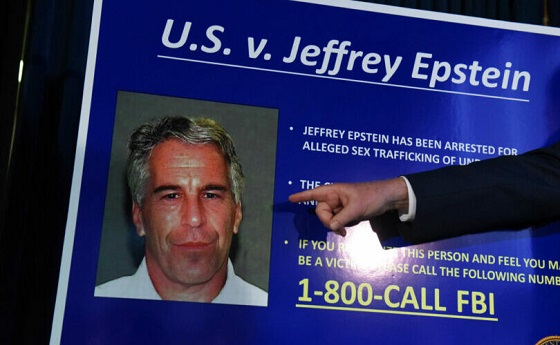
“This is a total fucking disaster”
-
 International2 days ago
Chicago suburb purchases childhood home of Pope Leo XIV
-
 Fraser Institute1 day ago
Before Trudeau average annual immigration was 617,800. Under Trudeau number skyrocketted to 1.4 million annually
-
 MAiD1 day ago
Canada’s euthanasia regime is already killing the disabled. It’s about to get worse
-
 Daily Caller2 days ago
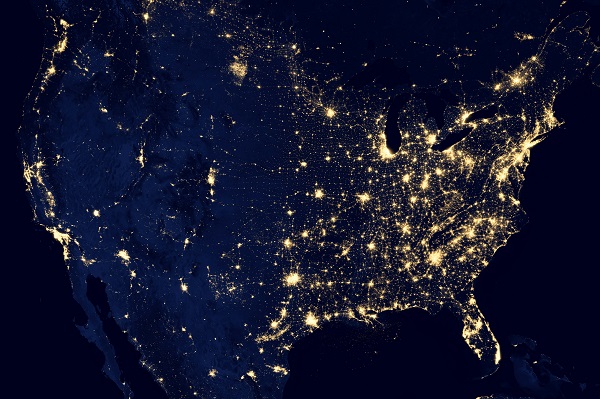
Blackouts Coming If America Continues With Biden-Era Green Frenzy, Trump Admin Warns
-
 Daily Caller2 days ago
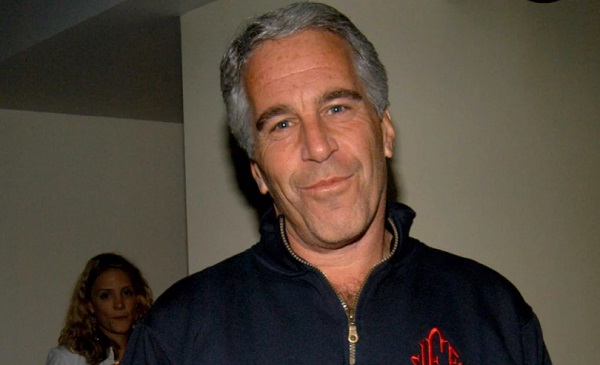
‘I Know How These People Operate’: Fmr CIA Officer Calls BS On FBI’s New Epstein Intel
-
 Red Deer1 day ago
Join SPARC in spreading kindness by July 14th
-
 Economy1 day ago
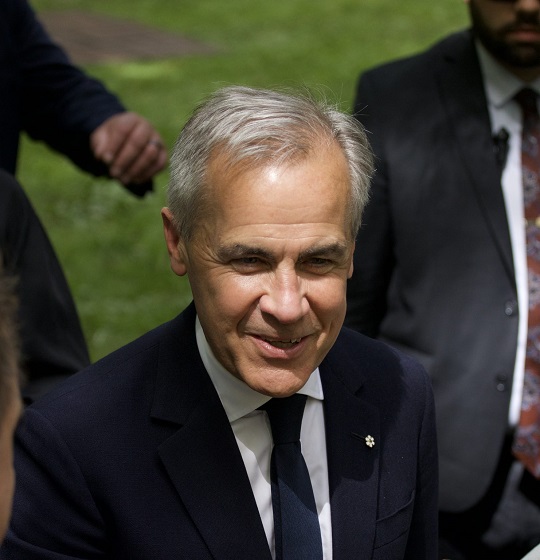
The stars are aligning for a new pipeline to the West Coast