
COVID-19
Freedom Convoy leaders’ lawyers argue there are five major ‘gaps’ in Crown’s case


From LifeSiteNews
These gaps include ‘the Crown treating the events as a single protest,’ a ‘failure to address the presumption of innocence,’ and an ‘oversimplification of evidence,’ among other things, the Democracy Fund noted
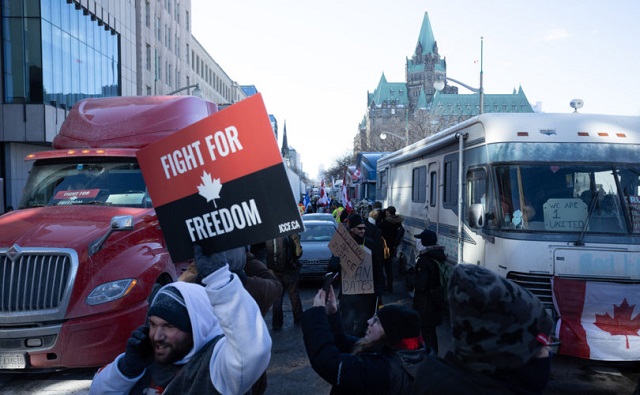
On day 32 of the trial against Freedom Convoy leaders Tamara Lich and Chris Barber, the defense counsel for the leaders exposed gaps in the Crown’s main argument that the protests were unlawful even though there was no violence during the demonstrations against COVID mandates that took place in early 2022.
Per a day 32 trial update from the Democracy Fund (TDF), which is crowdfunding Lich’s legal costs, Crown lawyers in court last Friday tried to argue that certain text message exchanges from Barber to Pat King, a protestor not related to the main Freedom Convoy, “pointed to a common unlawful purpose” between them.
Counsel for Lich, Eric Granger, identified five gaps in the Crown’s arguments.
“These gaps included the Crown treating the events as a single protest, a failure to address the presumption of innocence, an oversimplification of evidence, misattributing the common design, and erroneously assuming collaboration between Lich and Barber for an unlawful purpose,” stated TDF.
Granger also made an argument against the Crown’s assertion “that the absence of violence or peaceful nature of the protest didn’t make it lawful, emphasizing that the onus was on the Crown to prove the protest’s unlawfulness.”
When it comes to charges against Lich for blocking streets and roadways, TDF noted that Granger “maintained that these actions could be criminal only if done wrongfully or without police authorization.”
The reality is that Lich and Barber worked with police on many occasions so that the protests were within the law.
Thus far, counsel for the Freedom Convoy leaders have been detailing to the court how text message exchanges from one of the leaders showed he was trying to ensure protesters were as respectful as possible and that he wanted to work with police.
The Crown in court has been holding steadfast to the notion in trying to prove that Lich and Barber had somehow influenced the protesters’ actions through their words as part of a co-conspiracy. This claim has been rejected by the defense as weak.
To back them up, the Crown has been hoping to use what is called a “Carter application” to help them make their case. The Crown’s so-called “Carter Application” asks that the judge consider “Barber’s statements and actions to establish the guilt of Lich, and vice versa,” TDF stated.
TDF has said that a Carter application is very “complicated” and requires that the Crown prove “beyond a reasonable doubt” that there was a “conspiracy or plan in place and that Lich was a party to it based on direct evidence,” and as such, the defense is asking the judge to dismiss the application.
Crown hints it might want to change its ‘position’
On Friday in court the Crown hinted that it might be looking to change its position ahead of its Carter application.

Defense counsel for Barber, Diane Magas, as noted by TDF, “stood and informed the court of an email received from the Crown the previous night after 10:54 pm.”
“The email hinted at a potential change in the Crown’s position ahead of the Carter application, pending its progression. Magas emphasized the importance for the defense to be informed about the case to meet concerning the Carter application,” noted TDF.
An agreement was reached between the Crown lawyers and Judge Heather Perkins-McVey.
Magas, when she spoke before the court on Friday, also made a point to highlight her “disagreement with the Crown’s stance on the absence of violence as only an aggravating factor.”
“She clarified that an assembly becomes unlawful only if the peace is disturbed tumultuously,” noted TDF.
As for Granger, he emphasized that the Crown “failed to demonstrate a common unlawful purpose.”
On Day 31 of the trial government lawyers attempted to paint the two as heading a kind of “occupation” in Ottawa, an assertion the leaders’ lawyers swiftly rejected.
During Day 29, Lich’s legal counsel argued that her use of the rallying cry “hold the line” during the 2022 protests did not imply she was calling for people to engage in illegal activity.
In court last week, however, Perkins-McVey reminded the Crown that not everyone involved in the Freedom Convoy was working together. The Crown agreed this was the case.
Lich and Barber are facing multiple charges from the 2022 protests, including mischief, counseling mischief, counseling intimidation and obstructing police for taking part in and organizing the anti-mandate Freedom Convoy. As reported by LifeSiteNews at the time, despite the non-violent nature of the protest and the charges, Lich was jailed for weeks before she was granted bail.
In early 2022, the Freedom Convoy saw thousands of Canadians from coast to coast come to Ottawa to demand an end to COVID mandates in all forms. Despite the peaceful nature of the protest, Prime Minister Justin Trudeau’s government enacted the Emergencies Act on February 14.
During the clear-out of protesters after the EA was put in place, one protester, an elderly lady, was trampled by a police horse, and one conservative female reporter was beaten by police and shot with a tear gas canister.
Lich and Barber’s trial has thus far taken more time than originally planned. LifeSiteNews has been covering the trial extensively.

From LifeSiteNews
A judge ruled that the Ontario Court of Justice is already ‘satisfied’ with Chris Barber’s sentence and taking away his very livelihood would be ‘disproportionate.’
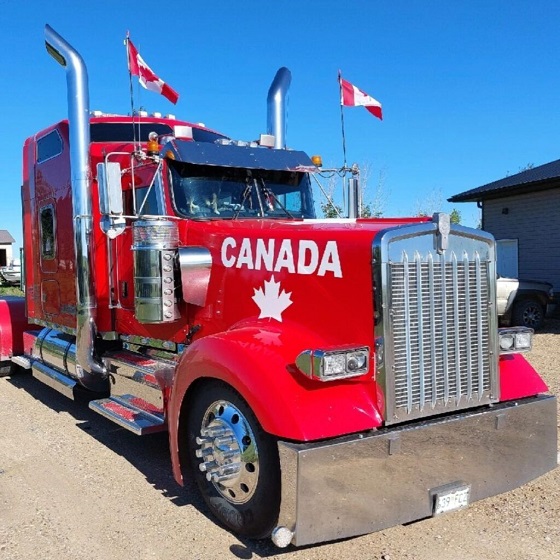
A Canadian judge has dismissed a demand from Canadian government lawyers to seize Freedom Convoy leader Chris Barber’s “Big Red” semi-truck.
On Friday, Ontario Court of Justice Judge Heather Perkins-McVey denied the Crown’s application seeking to forfeit Barber’s truck.
She ruled that the court is already “satisfied” with Barber’s sentence and taking away his very livelihood would be “disproportionate.”
“This truck is my livelihood,” said Barber in a press release sent to LifeSiteNews.
“Trying to permanently seize it for peacefully protesting was wrong, and I’m relieved the court refused to allow that to happen,” he added.
Criminal defense lawyer Marwa Racha Younes was welcoming of the ruling as well, stating, “We find it was the right decision in the circumstances and are happy with the outcome.”
John Carpay, president of the Justice Centre for Constitutional Freedoms (JCCF), said the decision is “good news for all Canadians who cherish their Charter freedom to assemble peacefully.”
READ: Freedom Convoy protester appeals after judge dismissed challenge to frozen bank accounts
“Asset forfeiture is an extraordinary power, and it must not be used to punish Canadians for participating in peaceful protest,” he added in the press release.
As reported recently by LifeSiteNews, the Canadian government claimed that Barber’s truck is an “offence-related property” relating to his involvement in the 2022 protests against Canada’s COVID mandates.
At this time, the court ruling ends any forfeiture proceedings for the time being, however Barber will continue to try and appeal his criminal conviction and house arrest sentence.
Barber’s truck, a 2004 Kenworth long-haul he uses for business, was a focal point in the 2022 protests. He drove it to Ottawa, where it was parked for an extended period of time, but he complied when officials asked him to move it.
On October 7, 2025, after a long trial, Ontario Court Justice Perkins-McVey sentenced Barber and Tamara Lich, the other Freedom Convoy leader, to 18 months’ house arrest. They had been declared guilty of mischief for their roles as leaders of the 2022 protest against COVID mandates, and as social media influencers.
Lich and Barber have filed appeals of their own against their house arrest sentences, arguing that the trial judge did not correctly apply the law on their mischief charges.
Government lawyers for the Crown have filed an appeal of the acquittals of Lich and Barber on intimidation charges.
The pair’s convictions came after a nearly two-year trial despite the nonviolent nature of the popular movement.
From LifeSiteNews
Protestor Evan Blackman’s legal team argues Trudeau’s Emergencies Act-based bank account freezes were punitive state action tied directly to protest participation.
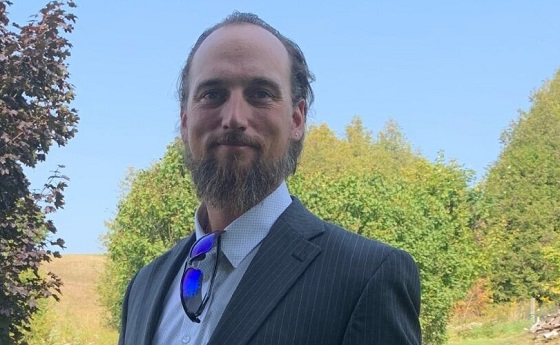
A Freedom Convoy protester whose bank accounts were frozen by the Canadian government says a judge erred after his ruling did not consider the fact that the funds were frozen under the Emergencies Act, as grounds for a stay of proceedings.
In a press release sent out earlier this week, the Justice Centre for Constitutional Freedoms (JCCF) said that Freedom Convoy protestor Evan Blackman will challenge a court ruling in his criminal case via an appeal with the Ontario Superior Court of Justice.
“This case raises serious questions about how peaceful protest is treated in Canada and about the lasting consequences of the federal government’s unlawful use of the Emergencies Act,” noted constitutional lawyer Chris Fleury. “The freezing of protestors’ bank accounts was part of a coordinated effort to suppress dissent, and courts ought to be willing to scrutinize that conduct.”
Blackman was arrested on February 18, 2022, during the police crackdown on Freedom Convoy protests against COVID restrictions, which was authorized by the Emergencies Act (EA). The EA was put in place by former Prime Minister Justin Trudeau’s Liberal government, which claimed the protests were violent, despite no evidence that this was the case.
Blackman’s three bank accounts with TD Bank were frozen due to his participation in the Freedom Convoy, following a directive ordered by Trudeau.
As reported by LifeSiteNews, in November of this year, Blackman was convicted at his retrial even though he had been acquitted at his original trial. In 2023, Blackman’s “mischief” and “obstructing police” charges were dismissed by a judge due to lack of evidence and the “poor memory of a cop regarding key details of the alleged criminal offences.”
His retrial resulted in Blackman getting a conditional discharge along with 12 months’ probation and 122 hours of community service, along with a $200 victim fine surcharge.
After this, Blackman’s application for a stay of proceedings was dismissed by the court. He had hoped to have his stay of proceedings, under section 24(1) of the Charter of Rights and Freedoms, allowed. However, the judge ruled that the freezing of his bank accounts was legally not related to his arrest, and because of this, the stay of proceedings lacked standing.
The JCCF disagreed with this ruling, noting, it “stands in contrast to a Federal Court decision finding that the government’s invocation of the Emergencies Act was unreasonable and violated Canadians’ Charter rights, including those targeted by the financial measures used against Freedom Convoy protestors.”
As of press time, a hearing date has not been scheduled.
In 2024, Federal Court Justice Richard Mosley ruled that Trudeau was “not justified” in invoking the Emergencies Act.
In early 2022, the Freedom Convoy saw thousands of Canadians from coast to coast come to Ottawa to demand an end to COVID mandates in all forms. Despite the peaceful nature of the protest, Trudeau’s federal government enacted the EA in mid-February.
After the protesters were cleared out, which was achieved through the freezing of bank accounts of those involved without a court order as well as the physical removal and arrest of demonstrators, Trudeau revoked the EA on February 23, 2022.


Death by a thousand clicks – government censorship of Canada’s internet

Chinese Billionaire Tried To Build US-Born Baby Empire As Overseas Elites Turn To American Surrogates
Viral TikTok video shows 7-year-old cuddling great-grandfather before he’s euthanized

Politicians should be honest about environmental pros and cons of electric vehicles
-
Censorship Industrial Complex2 days ago
Death by a thousand clicks – government censorship of Canada’s internet
-
Daily Caller2 days ago
Chinese Billionaire Tried To Build US-Born Baby Empire As Overseas Elites Turn To American Surrogates
-
Great Reset2 days ago
Viral TikTok video shows 7-year-old cuddling great-grandfather before he’s euthanized
-
 Digital ID2 days ago
Canada releases new digital ID app for personal documents despite privacy concerns
-
 Community2 days ago
Charitable giving on the decline in Canada
-
 Alberta17 hours ago
Alberta’s huge oil sands reserves dwarf U.S. shale
-
 Alberta2 days ago
Schools should go back to basics to mitigate effects of AI
-
 Bruce Dowbiggin2 days ago
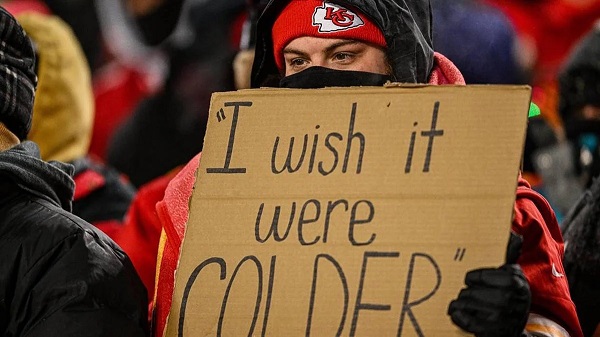
NFL Ice Bowls Turn Down The Thermostat on Climate Change Hysteria